
“`html
Kiro Autonomous Agent: Revolutionizing Software Development
Estimated reading time: 10 minutes
Key Takeaways
- The modern software development landscape demands unprecedented speed and complexity.
- The Kiro autonomous agent for software developers emerges as a groundbreaking solution to these challenges.
- Autonomous agents are moving beyond mere suggestions to become active contributors in coding, debugging, and deployment, fundamentally transforming how teams work. (Source: https://www.youtube.com/watch?v=Bpmlhrmv7RI)
- Kiro offers significant benefits, including accelerated development velocity, reduced coordination drag, enhanced code quality, protected developer focus time, and continuous learning.
- Understanding persistent context is key to grasping the power of advanced AI agents like Kiro.
- Kiro prioritizes a secure development environment AI, integrating robust security measures from its core architecture.
Table of contents
- Kiro Autonomous Agent: Revolutionizing Software Development
- Key Takeaways
- Understanding Autonomous Agents in Software Development
- Introducing the Kiro Autonomous Agent
- The Benefits of AI in Software Development (with Kiro as a prime example)
- How to Automate Coding Tasks with Kiro
- Ensuring a Secure Development Environment with AI
- The Future of Software Development with Autonomous Agents
- Frequently Asked Questions
In today’s fast-paced technological world, the demands on software development teams are greater than ever. Projects are more complex, deadlines are tighter, and the expectation for rapid iteration is the new standard. In this dynamic environment, a groundbreaking solution has emerged: the Kiro autonomous agent for software developers. This advanced AI technology is not just assisting developers; it’s fundamentally changing how software is conceived, built, and deployed. AI’s broader impact on software development is undeniable, moving beyond simple code completion to sophisticated, independent task execution. This post aims to provide a comprehensive look at what the Kiro autonomous agent is, the immense benefits it offers to software development, and how it effectively automates complex coding tasks. Autonomous agents are actively reshaping how teams approach coding, debugging, and deployment, representing a significant leap beyond traditional suggestion engines to become true collaborators. (Source: https://www.youtube.com/watch?v=Bpmlhrmv7RI)
Understanding Autonomous Agents in Software Development
At its core, an autonomous agent in the context of software development is an AI system capable of independently planning, executing, and managing development tasks without the need for constant human intervention. This autonomy distinguishes them from simpler AI tools that merely offer suggestions or complete predefined snippets.
A critical concept that underpins the power of these agents is persistent context AI agents explained. This feature allows the agent to maintain a rich and evolving understanding of the project and its environment over time, differentiating them significantly from standard AI tools that often operate with a limited, transient memory.
The persistent context of these agents can be understood through four key dimensions:
- Codebase Context: The agent possesses a deep understanding of the project’s architecture, established coding patterns, and organizational standards.
- Team Context: It learns from feedback and interactions across various team tools, including code reviews, discussions on Slack, issue tracking in Jira, and documentation in Confluence. This allows it to adapt to team-specific preferences and workflows. (Source: https://kiro.dev/autonomous-agent/)
- Temporal Context: The agent remembers past decisions, actions, and the outcomes of previous tasks, enabling it to build upon prior work and avoid repeating mistakes.
- Cross-Repository Context: For complex systems involving multiple repositories, the agent can coordinate changes and maintain consistency across these different codebases. (Source: https://kiro.dev/autonomous-agent/)
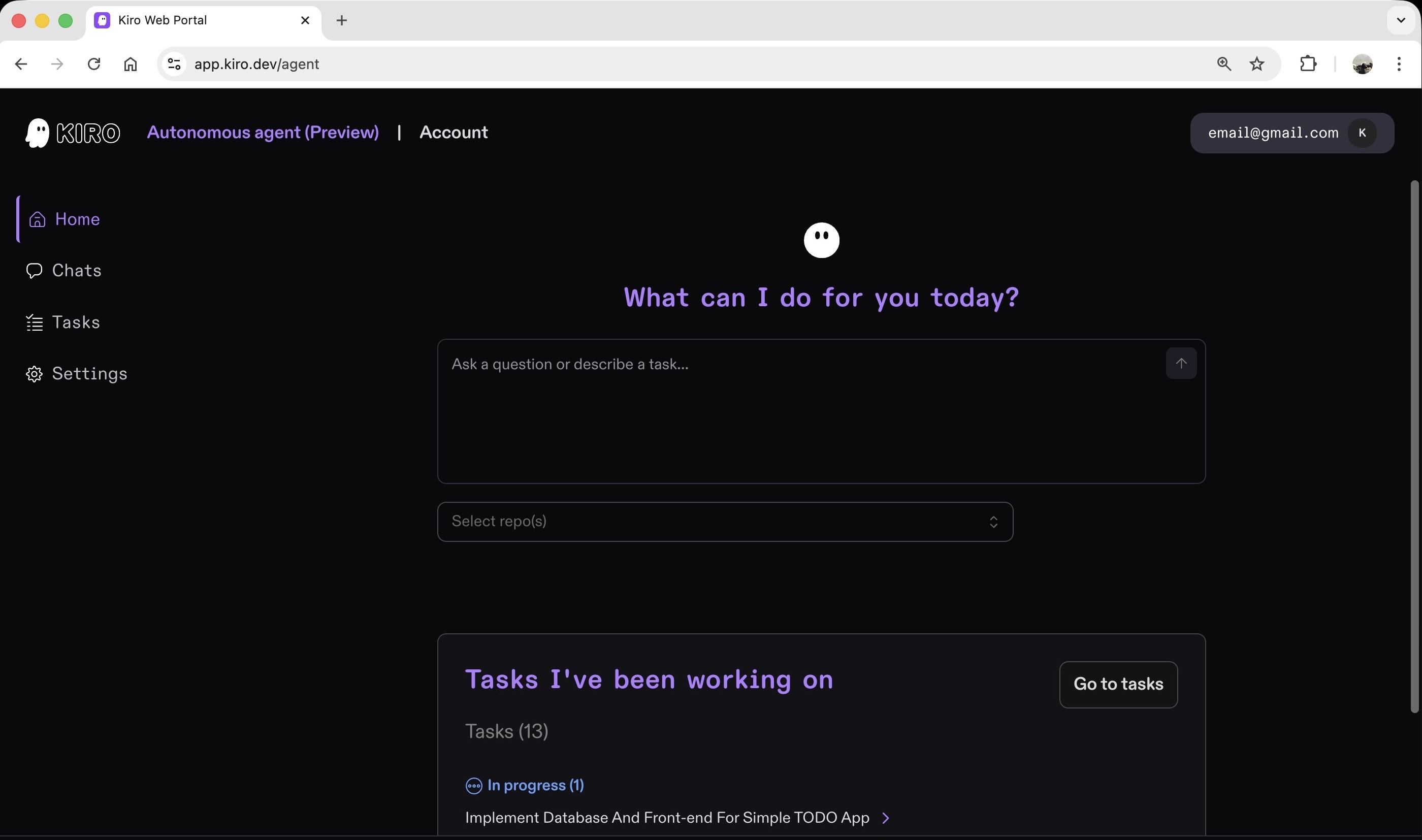
Furthermore, these autonomous agents contribute to a secure development environment AI. Security is not an afterthought but a foundational element integrated into their design and operation. This includes:
- Isolated Sandbox Environments: Tasks are executed in secure, isolated sandboxes to prevent unintended side effects or security breaches.
- Configurable Network Access Controls: Granular control over network access ensures that agents can only interact with necessary resources.
- Encrypted Secret Management: Sensitive credentials are handled securely, encrypted, and exposed only when strictly required for task execution.
- Comprehensive Audit Trails: Detailed logs of all actions provide transparency and accountability. (Source: https://kiro.dev/blog/introducing-kiro-autonomous-agent/)

Introducing the Kiro Autonomous Agent
Let’s delve deeper into the specifics of the Kiro autonomous agent for software developers. Its architecture and core functionalities are designed to tackle the most demanding software development challenges. The benefits of AI in software development are amplified by Kiro’s sophisticated approach, which goes beyond simple automation to intelligent, context-aware task execution.
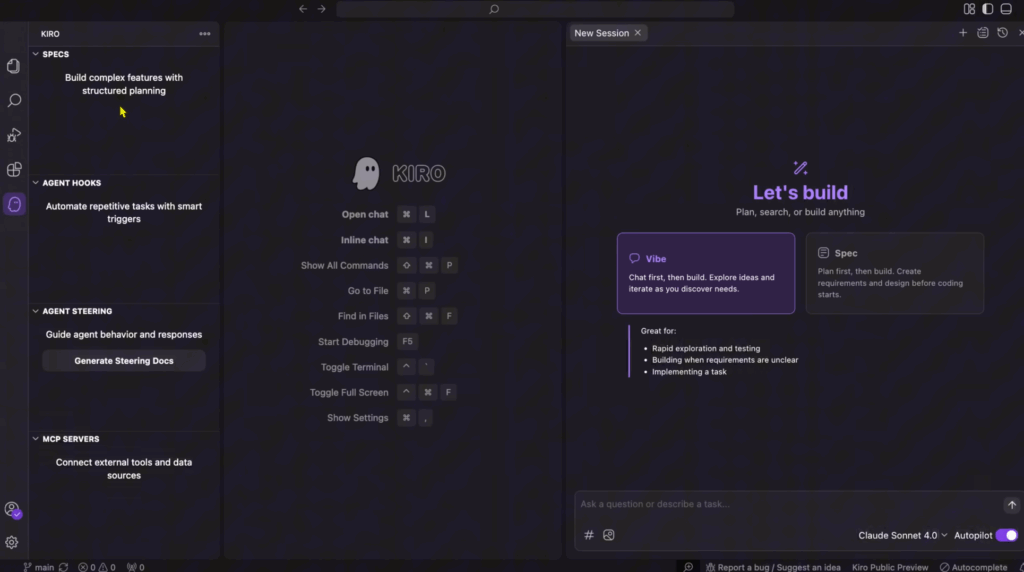
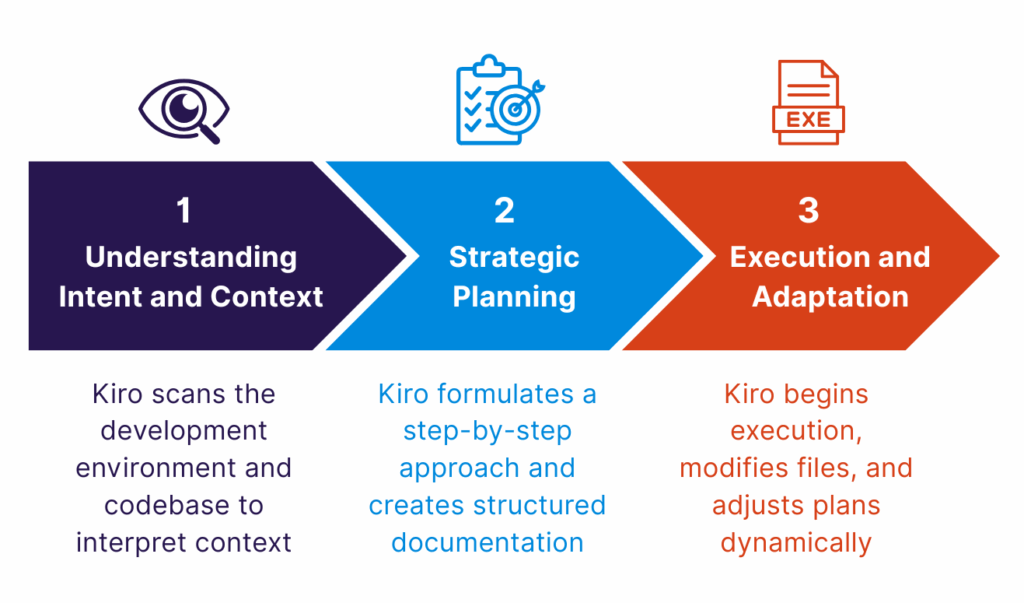
The Kiro workflow is a marvel of structured AI-driven development:
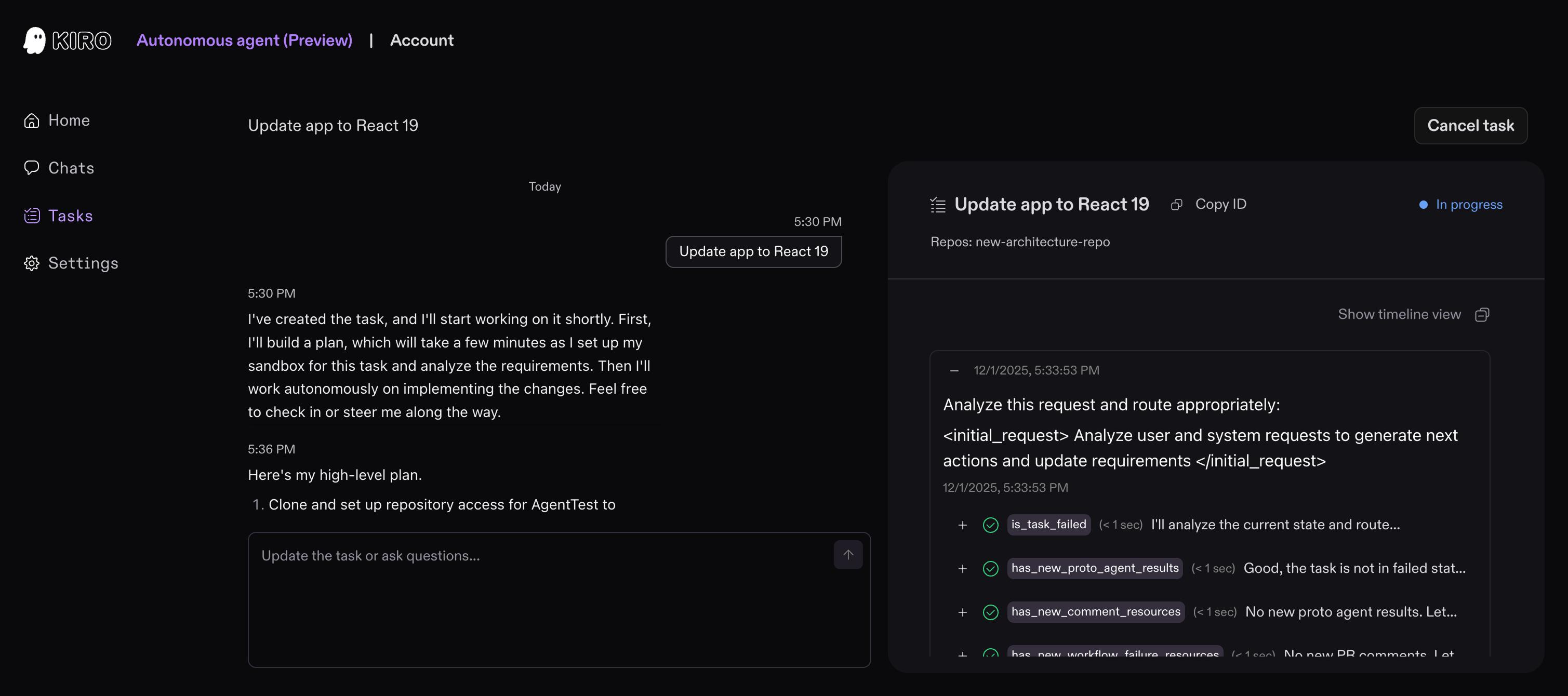
- Initialization and Analysis: Kiro begins by setting up an isolated sandbox environment that precisely mirrors the development setup. It then clones the relevant repositories and performs a comprehensive analysis of the codebase. This deep dive allows Kiro to understand the project’s structure, identify dependencies, and recognize existing patterns. (Source: https://kiro.dev/blog/introducing-kiro-autonomous-agent/)
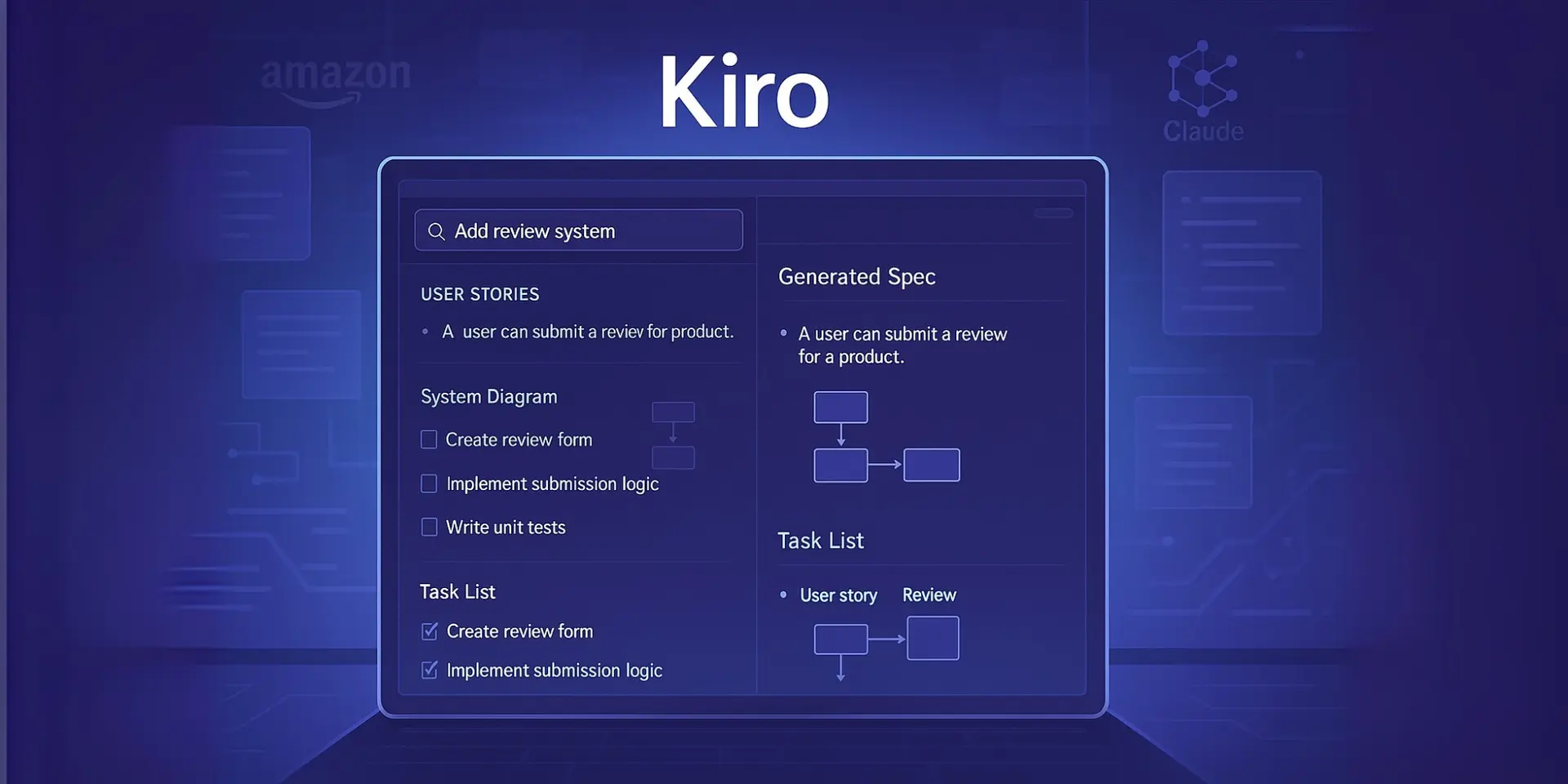
- Intelligent Planning and Decomposition: Once the project is understood, Kiro intelligently breaks down complex work requests into smaller, discrete tasks. Each task comes with clear requirements and acceptance criteria, and these tasks are sequenced logically to ensure efficient progress. (Source: https://kiro.dev)
- Specialized Sub-Agent Coordination: Kiro operates with a team of specialized sub-agents, each with a distinct role, working in concert to achieve the overall goal:
- Research and Planning Agent: This agent is responsible for gathering necessary information, formulating a strategic approach to the task, and proactively seeking clarification when needed.
- Implementation Agent: Based on the specifications and established patterns, this agent writes the actual code. It adheres to project standards and requirements.
- Verification Agent: This crucial agent ensures the quality and correctness of the implemented code. It runs tests, checks the output, and verifies that all acceptance criteria have been met. (Source: https://kiro.dev/blog/introducing-kiro-autonomous-agent/)
- Integration and Feedback: Upon completion, Kiro doesn’t just commit code; it opens detailed pull requests, complete with thorough rationale explaining its decisions and changes. Critically, Kiro learns from team feedback on these pull requests, refining its approach for future tasks. (Source: https://kiro.dev/autonomous-agent/)
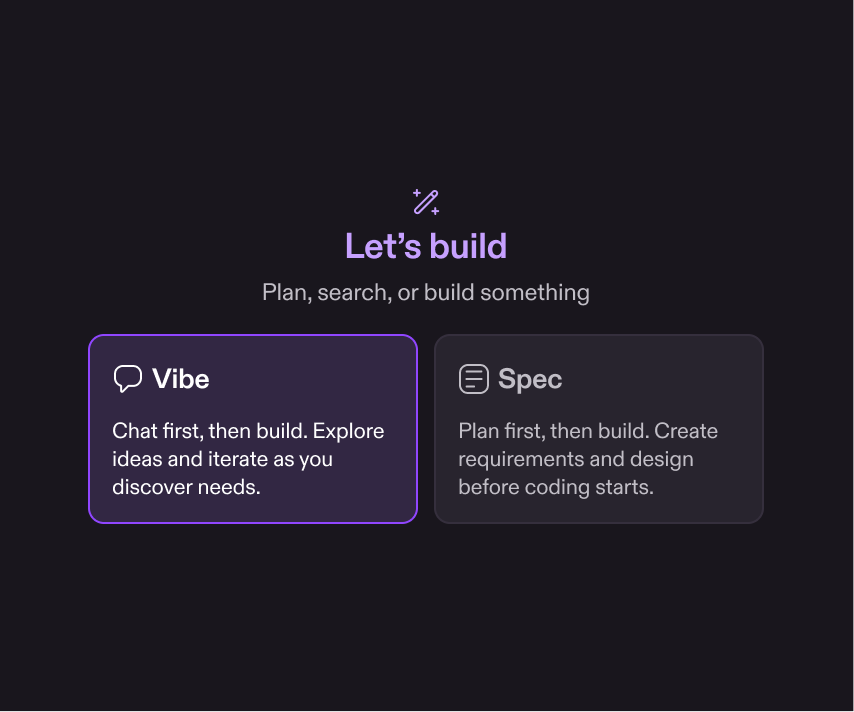
Kiro distinguishes itself through several unique selling propositions:
- Asynchronous Execution: Tasks are designed to run in the background. This means developers can configure Kiro and then step away, allowing the agent to perform its work without requiring constant oversight or interrupting the developer’s flow. Proper configuration and testing are facilitated by this capability. (Source: https://kiro.dev/blog/introducing-kiro-autonomous-agent/)
- Parallel Task Management: Kiro has the remarkable ability to execute multiple tasks concurrently. This capability extends across different repositories, significantly accelerating development cycles and increasing throughput. (Source: https://kiro.dev/blog/introducing-kiro-autonomous-agent/)
- Stack Integration: Seamless integration with existing developer tools is paramount. Kiro connects effortlessly with platforms like GitHub, GitLab, Jira, Slack, Confluence, and Microsoft Teams, ensuring a unified and comprehensive development context. (Sources: https://kiro.dev/blog/introducing-kiro-autonomous-agent/, https://kiro.dev/autonomous-agent/)
- Configurable Execution Environment: Reducing the setup burden is a key focus. Kiro automatically detects or infers the necessary setup requirements, whether through DevFiles, Dockerfiles, or detailed project structure analysis, minimizing manual configuration effort for developers. (Source: https://kiro.dev/blog/introducing-kiro-autonomous-agent/)

Kiro is positioned as a frontier agent, poised to transform development at scale by handling complex, multi-faceted tasks autonomously. (Sources: https://techcrunch.com/2025/12/02/amazon-previews-3-ai-agents-including-kiro-that-can-code-on-its-own-for-days/, https://aws.amazon.com/ai/frontier-agents/)
The Benefits of AI in Software Development (with Kiro as a prime example)
The overarching benefits of AI in software development are becoming increasingly apparent, and Kiro serves as a prime example of how these advantages are realized in practice. The integration of advanced AI agents like Kiro offers tangible improvements across the entire software development lifecycle.
Specific advantages that Kiro brings to the table include:
- Accelerating Development Velocity: Kiro dramatically speeds up the completion of routine and complex development tasks. By enabling parallel workstreams and autonomously handling significant portions of the development process, it allows teams to deliver features much faster without compromising developer focus. (Source: https://kiro.dev/blog/introducing-kiro-autonomous-agent/)
- Reducing Coordination Drag: A significant bottleneck in many projects is the coordination required for changes across multiple services or repositories. Kiro eliminates this by planning and executing coordinated edits. It integrates context from tools like Confluence and Slack to ensure that changes are consistent and aligned with project goals, reducing the need for constant human synchronization. (Sources: https://kiro.dev/autonomous-agent/, https://kiro.dev/blog/introducing-kiro-autonomous-agent/)
- Enhancing Code Quality and Reliability: Kiro’s meticulous approach to testing, adherence to consistent code standards, and its ability to learn from team feedback significantly improve the overall quality and reliability of the codebase. This leads to fewer bugs, more robust code, and consequently, reduced review cycles and faster iteration. (Source: https://kiro.dev/blog/introducing-kiro-autonomous-agent/)
- Protecting Developer Focus Time: Developers often get bogged down by routine fixes, dependency updates, and other repetitive tasks. Kiro autonomously handles these, freeing up valuable developer time. This allows human engineers to concentrate on higher-level, more creative, and complex problem-solving, driving innovation and strategic development. (Source: https://kiro.dev/autonomous-agent/)
- Learning and Adaptation: A key characteristic of Kiro is its continuous learning capability. It constantly absorbs information from the codebase, issue tickets, pull request feedback, and team discussions. This enables it to better understand and adapt to team-specific patterns, coding standards, and evolving project requirements. (Source: https://kiro.dev/autonomous-agent/)
How to Automate Coding Tasks with Kiro
Understanding how to automate coding tasks is crucial for leveraging the full potential of tools like the Kiro autonomous agent. Kiro offers practical, detailed capabilities for automating a wide array of development activities.
Here are specific use cases demonstrating Kiro’s automation power:
- Feature Implementation at Scale: Imagine implementing new backend API endpoints, updating corresponding client libraries, and generating all necessary documentation. Kiro can orchestrate this entire process, from initial analysis and planning to code generation, rigorous testing, and the creation of a detailed pull request. (Sources: https://kiro.dev/blog/introducing-kiro-autonomous-agent/, https://kiro.dev/autonomous-agent/)
- Automated Bug Triage and Fixing: When production bugs arise, Kiro can analyze stack traces, pinpoint root causes, generate appropriate fixes, run regression tests, and submit pull requests to address the issue swiftly. (Source: https://kiro.dev/blog/introducing-kiro-autonomous-agent/)
- Refactoring and Technical Debt: Kiro can identify deprecated patterns or areas of technical debt. It can then plan and execute sequential refactoring tasks across multiple repositories, ensuring that the behavior remains consistent and verified, and maintains detailed audit trails for these changes. (Source: https://kiro.dev/blog/introducing-kiro-autonomous-agent/)
- Testing and Quality Assurance: Kiro can analyze code paths to generate comprehensive test cases. It can implement these tests using the project’s preferred testing frameworks and report on code coverage metrics, enhancing overall software quality. (Source: https://kiro.dev/blog/introducing-kiro-autonomous-agent/)
- Documentation Generation and Maintenance: Keeping documentation up-to-date is often a challenge. Kiro can automatically regenerate various types of documentation, including API documentation, Architecture Decision Records (ADRs), setup guides, and even concise changelog summaries. (Source: https://kiro.dev/blog/introducing-kiro-autonomous-agent/)
- Integration with Existing Workflows: Kiro is designed for seamless integration. Through its MCP (Modular Component Platform) integrations, it can connect with specialized tools and proprietary systems without requiring custom integration code, fitting into existing development pipelines effortlessly. (Source: https://kiro.dev/blog/introducing-kiro-autonomous-agent/)
Ensuring a Secure Development Environment with AI
The concept of a secure development environment AI is paramount, especially when introducing powerful autonomous agents into the workflow. Kiro addresses security concerns proactively and robustly:
- Isolation and Sandbox Execution: Every task executed by Kiro takes place within a dedicated, containerized environment. This isolation ensures that any potential issues are contained within the sandbox, preventing them from impacting the broader development infrastructure or other ongoing tasks. (Source: https://kiro.dev/blog/introducing-kiro-autonomous-agent/)
- Granular Access Controls: Kiro offers three distinct levels of network access control to precisely define the resources an agent can reach:
- Integration Only: Access limited strictly to the integrated tool (e.g., GitHub).
- Common Dependencies: Allows access to common external services and package repositories.
- Open Internet with Allowlists: Provides broader internet access but restricted by pre-defined allowlists for enhanced security. (Source: https://kiro.dev/blog/introducing-kiro-autonomous-agent/)
- Secret Management and Encryption: Sensitive credentials and API keys are encrypted at rest. They are only decrypted and made available to the agent during the specific task execution that requires them. This minimizes the exposure of sensitive information. (Source: https://kiro.dev/blog/introducing-kiro-autonomous-agent/)
- Automated Security Analysis: Kiro can actively identify potential vulnerabilities within the code. It enforces coding standards and helps maintain secure practices by leveraging its persistent context to understand and apply project-specific security policies. (Sources: https://kiro.dev/blog/introducing-kiro-autonomous-agent/, https://kiro.dev/autonomous-agent/)
- Compliance and Auditability: The detailed explanations provided in Kiro’s pull requests and its comprehensive audit trails are crucial for compliance. These documented actions ensure that all changes are transparent, verifiable, and can be easily audited, meeting regulatory and internal governance requirements. (Source: https://kiro.dev/blog/introducing-kiro-autonomous-agent/)

The Future of Software Development with Autonomous Agents
The advent of Kiro and similar autonomous agents heralds a significant shift in the software development industry, reshaping the role of the human developer and unlocking new potentials for innovation. The long-term impact points towards a future where AI and humans collaborate more deeply.
Developers will likely see their roles evolve towards higher-level strategic tasks. This includes:
- Architectural Decisions: Focusing on system design, high-level architecture, and defining the overall technical vision.
- Complex Problem-Solving: Tackling novel, intricate challenges that require human ingenuity and deep domain expertise.
- Team Coordination for AI-Assisted Development: Guiding and managing AI agents, ensuring their work aligns with project goals, and overseeing the collaborative workflow.
- Advanced Quality Assurance: Performing sophisticated testing, validation, and ensuring the ethical and functional integrity of AI-generated solutions. This represents an evolution towards more fulfilling and impactful work. (Source: https://kiro.dev/autonomous-agent/)

The adoption of agent-assisted development promises to dramatically increase innovation velocity. Teams will be able to deliver features at an unprecedented pace, and even larger, more complex systems can be maintained by smaller, more agile teams. This efficiency gain allows organizations to respond more rapidly to market demands and technological shifts.
Ultimately, the future envisions a truly collaborative future between human developers and AI agents. This hybrid development model empowers humans to provide the vision, strategy, and creative direction, while AI agents handle the mechanical implementation, repetitive tasks, and ongoing maintenance. This synergy maximizes productivity and allows human potential to be focused where it matters most.
Frequently Asked Questions
Q: What exactly is the Kiro autonomous agent for software developers?
A: The Kiro autonomous agent is an advanced AI system designed to independently plan, execute, and manage complex software development tasks, including coding, debugging, and deployment, with minimal human oversight. It leverages persistent context to understand projects deeply and coordinate actions across various development tools and repositories. (Keywords: Kiro autonomous agent for software developers, benefits of AI in software development, how to automate coding tasks, persistent context AI agents explained, secure development environment AI)
Q: What are the primary benefits of using AI, like Kiro, in software development?
A: The key benefits include significantly accelerated development velocity, reduced coordination overhead and bottlenecks, enhanced code quality and reliability through consistent application of standards and thorough testing, protected developer focus time by offloading routine tasks, and continuous learning and adaptation to project needs. (Keywords: benefits of AI in software development, Kiro autonomous agent for software developers)
Q: How does Kiro help automate coding tasks?
A: Kiro automates coding tasks through intelligent planning, decomposition, and execution. It can implement features, fix bugs, perform refactoring, generate tests, and create documentation. Its specialized sub-agents work together to analyze, implement, and verify code, ensuring efficient and accurate task completion. (Keyword: how to automate coding tasks)
Q: What makes Kiro’s “persistent context” so important?
A: Persistent context allows Kiro to maintain a deep and evolving understanding of the codebase, team conventions, past decisions, and interactions across different tools. This enables it to perform tasks more intelligently, cohesively, and in alignment with project history and team preferences, unlike traditional AI tools with limited memory. (Keyword: persistent context AI agents explained)
Q: How does Kiro contribute to a secure development environment?
A: Kiro ensures security through isolated sandbox execution, granular network access controls, encrypted secret management, and comprehensive audit trails. It can also perform automated security analysis to identify vulnerabilities and enforce secure coding practices, creating a robust secure development environment AI. (Keyword: secure development environment AI)
Q: Will autonomous agents like Kiro replace human developers?
A: No, the expectation is that autonomous agents will augment, not replace, human developers. The role of developers will likely shift towards higher-level tasks such as architectural design, complex problem-solving, strategy, and overseeing AI-assisted development. This creates a collaborative environment where human creativity is amplified. (Source: https://kiro.dev/autonomous-agent/)
Q: How does Kiro integrate with existing development workflows?
A: Kiro seamlessly integrates with popular development tools and platforms like GitHub, GitLab, Jira, Slack, Confluence, and Teams. Its modular component platform (MCP) allows connection to specialized tools and proprietary systems without custom integration efforts, ensuring it fits into existing pipelines.
Q: Can Kiro handle tasks across multiple repositories simultaneously?
A: Yes, Kiro is designed for parallel task management and can execute multiple tasks concurrently across different repositories. This capability is crucial for managing complex microservice architectures and ensuring consistency across distributed codebases.
Q: What kind of code quality improvements can be expected with Kiro?
A: Kiro enhances code quality through consistent adherence to coding standards, comprehensive automated testing, and continuous learning from feedback. This results in more reliable code, fewer bugs, and reduced time spent on manual code reviews.
Q: How does Kiro manage sensitive information like API keys?
A: Kiro employs robust secret management. Sensitive credentials are encrypted at rest and are only decrypted and made available to the agent during the specific task execution that requires them, minimizing exposure and enhancing security.
Q: What is the future outlook for autonomous agents in software development?
A: The future points towards a hybrid development model where human developers focus on strategic, creative, and complex tasks, while autonomous agents handle the execution, maintenance, and routine aspects of development. This collaborative approach is expected to accelerate innovation and improve overall productivity.
Explore the capabilities of the Kiro autonomous agent and discover how it can transform your software development workflow. Visit kiro.dev to learn more or request a demo.
“`