

“`html
Cloudflare Outage Impact Analysis: December 5, 2025
Estimated reading time: 8 minutes
Key Takeaways
- A significant Cloudflare outage on December 5, 2025, caused global website disruptions.
- The outage resulted in a surge of 500 errors for approximately 20 minutes.
- Affected services included Cloudflare’s CDN, DDoS protection, and web security.
- High-profile sites like Zoom and LinkedIn experienced downtime.
- This incident highlights broader internet downtime causes and technology infrastructure vulnerabilities.
- Organizations must prioritize redundancy and disaster recovery strategies.
Table of contents
- Cloudflare Outage Impact Analysis: December 5, 2025
- Key Takeaways
- What Happened During the Cloudflare Outage?
- The Ripple Effect: Cloudflare Services Down Effects
- Broader Internet Downtime Causes: Beyond Cloudflare
- Under the Hood: Technology Infrastructure Vulnerabilities
- Major Website Outage Analysis: Lessons from Cloudflare
- Looking Ahead: Strengthening Internet Resilience
- Frequently Asked Questions
The internet, a seemingly robust and always-on entity, experienced a stark reminder of its fragility on **5 December 2025**. A significant disruption originating from Cloudflare, a major provider of Content Delivery Network (CDN) and security services, led to a noticeable spike in **500 errors** across a vast number of websites globally. This incident, which lasted approximately **20 minutes, from 8:48 UTC to 9:10 UTC**, served as a critical case study in **Cloudflare outage impact analysis** and illuminated deeper issues concerning **internet downtime causes** and **technology infrastructure vulnerabilities**. This post aims to dissect the event, explore its immediate **cloudflare services down effects**, and extract crucial lessons for enhancing internet resilience.
What Happened During the Cloudflare Outage?
The incident on December 5th, 2025, was not an isolated event. It followed a similar, albeit less impactful, disruption on **November 18, 2025**, which also saw widespread 500 errors. This pattern raises concerns about the stability and underlying architecture of critical internet infrastructure.
The timeline of the December 5th outage, as meticulously tracked by entities like ThousandEyes, paints a clear picture:
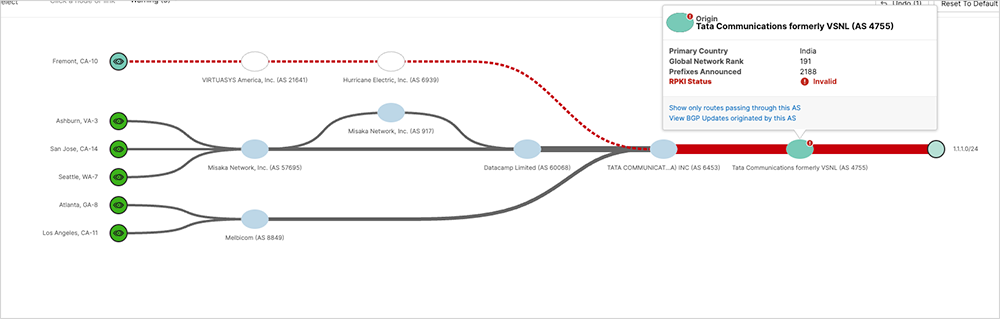
- Issues were first detected around **8:48 UTC**, signaling the beginning of the widespread problem. (Source: https://www.thousandeyes.com/blog/cloudflare-outage-analysis-december-5-2025)
- The resolution was achieved approximately **20 minutes later, around 9:10 UTC**, bringing services back online. (Source: https://www.thousandeyes.com/blog/cloudflare-outage-analysis-december-5-2025)
- The recurrence of similar issues, such as the **Cloudflare outage** on **November 18, 2025**, suggests a potential systemic vulnerability. (Source: https://www.thousandeyes.com/blog/cloudflare-outage-analysis-december-5-2025)
The scope of the outage was extensive, affecting websites that relied on Cloudflare’s core offerings:
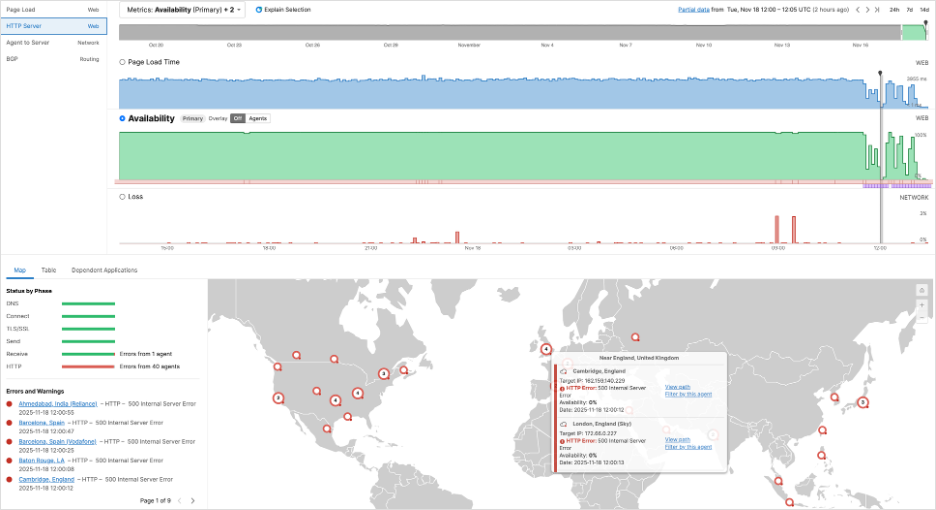
- Websites utilizing Cloudflare’s **CDN, DDoS protection, and web security** stack began returning 500 errors to users worldwide. This meant that even healthy origin servers were inaccessible through Cloudflare’s network. (Source: https://www.thousandeyes.com/blog/cloudflare-outage-analysis-december-5-2025)
- High-profile services, including **Zoom and LinkedIn**, were reported to be among the affected platforms, demonstrating the far-reaching impact of Cloudflare’s services. (Source: https://abcnews.go.com/Technology/wireStory/cloudflare-investigates-outage-brought-sites-including-zoom-linkedin-128135349)
For the end-user, the experience was universally negative:
- Websites simply refused to load.
- Users encountered the dreaded “Internal Server Error” message.
- API requests timed out, disrupting programmatic interactions.
- Login failures prevented access to accounts and services.
- Overall website performance was significantly degraded.
The Ripple Effect: Cloudflare Services Down Effects
The immediate consequences for businesses relying on Cloudflare were substantial. Even a brief outage can translate into significant financial and operational losses.

- E-commerce sites experienced a direct hit to their bottom line. Failures in payment processing and the inability for customers to even access product pages led to lost sales and abandoned shopping carts. The very infrastructure designed to enhance user experience and speed up delivery became a barrier.
- SaaS and collaboration platforms, which are crucial for modern business operations, also faltered. Essential tools like video conferencing and real-time collaboration software became unavailable. This crippled productivity, leading to missed meetings, delayed project crucial updates, and a general halt in day-to-day workflows. (Source: https://abcnews.go.com/Technology/wireStory/cloudflare-investigates-outage-brought-sites-including-zoom-linkedin-128135349)
The impact varied across different sectors:
- E-commerce: Payment gateways and CDNs failing meant that online stores were either sluggish or completely inaccessible, directly impacting revenue.
- SaaS/Collaboration: Downtime for platforms like Zoom and other B2B tools led to missed calls, significant operational delays, and frustration for remote and hybrid workforces.
- Media & Content: News outlets and content-driven websites were unable to reach their audiences, impacting readership and advertising revenue.
- Security: Ironically, in cases where Cloudflare was a critical part of the security stack, the outage could have inadvertently blocked legitimate access to origin servers that were functioning correctly.
Quantifying the impact, the **20-minute global outage** on December 5th, coupled with the preceding November incident, underscores a critical point: even short disruptions affecting major infrastructure providers have disproportionately large consequences. Millions of users and thousands of businesses worldwide are impacted, highlighting the deeply interconnected nature of the internet.
Broader Internet Downtime Causes: Beyond Cloudflare
While the December 5th incident is a specific example, it serves as a valuable lens through which to examine the more general **internet downtime causes**. The complexity of modern internet infrastructure means that failures can stem from a variety of sources:

- Configuration and software bugs: This is a recurring theme. Errors in routing rules, Web Application Firewall (WAF) configurations, or flawed code deployments can propagate rapidly through global networks, causing widespread issues. Both the November and December incidents at Cloudflare pointed towards such internal configuration errors as root causes. (Source: https://www.thousandeyes.com/blog/cloudflare-outage-analysis-december-5-2025, https://news.ycombinator.com/item?id=46162656)
- Network issues: These can range from complex Border Gateway Protocol (BGP) misconfigurations, where routes are advertised incorrectly, to issues with network peering agreements between different Internet Service Providers (ISPs). Physical disruptions, such as cuts to fiber optic cables, can also create significant outages, though these are typically more localized.
- Hardware failures: The backbone of the internet relies on massive amounts of hardware. Failures in routers, switches, servers, or even datacenter power and cooling systems can lead to service interruptions. While redundancy is built in, a cascade failure or a failure in a critical, shared component can still cause downtime.
- Cyberattacks: Malicious actors pose a constant threat. Distributed Denial of Service (DDoS) attacks can overwhelm servers with traffic, making them unavailable. Route hijacking, where an attacker redirects internet traffic through their own network, can disrupt connectivity. Exploiting zero-day vulnerabilities in critical software can also lead to widespread compromise and outages.
- Human error: Despite sophisticated automation, human intervention is still a significant factor. Mistakes made during software deployments, inadequate change control processes that don’t foresee potential impacts, or operational oversights can all trigger outages. The repeated nature of some infrastructure provider outages often points to human error in configuration or change management.
It’s important to note that Cloudflare itself has previously acknowledged that architectural complexities and software bugs have been contributing factors in similar past incidents. This transparency, while commendable, also highlights the inherent challenges in managing such vast and complex systems. (Source: https://news.ycombinator.com/item?id=46162656)
Under the Hood: Technology Infrastructure Vulnerabilities
Beyond the immediate causes of an outage, several underlying **technology infrastructure vulnerabilities** exacerbate the impact of such events. These are systemic issues inherent in the way the internet is built and managed today.

- Centralization and single points of failure: The internet’s growth has led to a degree of consolidation. A relatively small number of major providers dominate critical services like Content Delivery Networks (CDNs), Domain Name System (DNS) resolution, and cloud hosting. When one of these giants experiences an outage, its impact is amplified because so many websites and services rely on it. This creates significant single points of failure in the global internet ecosystem.
- Complex dependency chains: Modern web applications are not monolithic. They are intricate ecosystems of interconnected services. A website might rely on a DNS provider, which in turn uses a CDN for asset delivery, which then connects to various third-party APIs for dynamic content or functionality. This layered dependency means that a failure in any single component, even one that seems minor, can cascade through the chain, causing a complete service breakdown. The outage on December 5th is a prime example of a failure at one layer (CDN/security) impacting all layers above it.
- Global propagation: The very systems that enable rapid global deployment of services and configurations can also be a vulnerability. A single configuration error or a buggy software update pushed through a global control plane can instantaneously affect users and services across the entire planet. This rapid, global propagation means there’s often very little time to react once an issue begins to spread.
The concentration of critical functions—such as **DNS, CDN, WAF, and DDoS protection**—with a single provider like Cloudflare, while offering operational efficiencies and cost benefits, inherently concentrates risk. This is a trade-off that many organizations have made, often without fully appreciating the potential consequences of a widespread failure at their chosen provider.
Major Website Outage Analysis: Lessons from Cloudflare
Analyzing how Cloudflare handled the December 5th outage, and comparing it to previous incidents, offers valuable insights. Cloudflare typically provides updates through its status page and detailed blog posts following major incidents. Their response pattern often involves quick detection, mitigation efforts, and incremental updates.
From an incident response perspective:

- The relatively swift resolution time of approximately **20 minutes** on December 5th suggests that Cloudflare possesses robust internal monitoring systems and effective rollback capabilities. This speed in addressing a global issue is a testament to their operational infrastructure. (Source: https://www.thousandeyes.com/blog/cloudflare-outage-analysis-december-5-2025)
- However, the recurrence of significant global incidents, particularly the two major outages in late 2025, inevitably raises questions about the underlying **architecture and testing** protocols employed by the company. While quick fixes are important, addressing the root causes to prevent future occurrences is paramount. (Source: https://www.thousandeyes.com/blog/cloudflare-outage-analysis-december-5-2025, https://news.ycombinator.com/item?id=46162656)
For businesses that rely on Cloudflare, several key lessons emerge:

- No single provider is infallible: The most critical takeaway is that even the most sophisticated and seemingly reliable infrastructure providers can experience failures. Blindly trusting a single vendor for essential services is a risky strategy.
- Embrace redundancy and disaster recovery: Businesses must proactively build redundancy into their online presence. This can involve utilizing multi-CDN strategies, employing secondary or backup DNS services, and establishing robust failover paths that can direct traffic away from a provider experiencing issues. Simply having these options available is not enough; they must be regularly tested.
- Test failover scenarios rigorously: Many organizations may have failover plans in place but fail to test them under realistic conditions. Outages are not the time to discover that your backup plan doesn’t work. Regular, simulated failover tests are crucial to ensure resilience.
Looking Ahead: Strengthening Internet Resilience
The Cloudflare outage serves as a stark reminder that building a resilient internet requires a multi-faceted approach, involving both individual organizations and the broader industry.
Actionable steps for organizations include:

- Implement multi-provider strategies: Where feasible, diversify your critical service providers. This means considering multi-CDN solutions, using different providers for DNS, and having alternative communication channels for essential services like email or critical messaging systems that are not solely reliant on a single provider.
- Design for graceful degradation: Modern systems should be designed to handle partial failures. This could involve serving static fallback pages when dynamic content fails, prioritizing cached content delivery, or enabling limited offline functionality for critical applications. The goal is to maintain some level of service availability even when core components are compromised.
- Invest in independent monitoring solutions: Relying solely on a provider’s own status page or internal monitoring is insufficient. Independent, third-party monitoring services that can perform synthetic tests from various global locations provide a more objective view of service availability and performance. These tools can detect issues before they are widely apparent or when a provider’s own systems are affected.
- Develop robust incident response plans: Clear, well-documented incident response runbooks and communication plans are essential. These plans should specifically address scenarios involving outages of critical third-party providers, outlining steps for detection, escalation, communication, and failover.
At the infrastructure level, improvements could involve:
- Enhanced change management and isolation: Implementing stricter controls around the deployment of global configurations is crucial. Techniques like canary releases, phased regional rollouts, and comprehensive pre-deployment testing can help isolate the impact of errors.
- Stronger safeguards for global deployments: Developing automated safeguards that can detect anomalies in global configuration changes before they fully propagate could prevent widespread outages.
- Industry collaboration and transparency: Following major incidents, greater transparency from providers regarding root causes and mitigation strategies can foster collective learning. Industry-wide collaboration on best practices for resilience and standardized response protocols can help prevent future occurrences and minimize their impact.
Frequently Asked Questions
Q1: What exactly is a 500 error?

A 500 Internal Server Error is a generic HTTP status code that indicates that something went wrong on the web server, but it cannot be more specific about the exact problem. It essentially means the server encountered an unexpected condition that prevented it from fulfilling the request.
Q2: How significant is Cloudflare’s role in the internet infrastructure?
Cloudflare is one of the largest global networks, providing a wide range of services including CDN, DDoS mitigation, DNS, and web application firewalling to millions of websites. Its significant market share means that disruptions can affect a substantial portion of the internet.
Q3: Can a short outage truly have a widespread impact?

Yes, absolutely. Because of the interconnectedness of the internet and the reliance on a few major infrastructure providers, even a brief outage at a critical juncture can cascade. Websites might be inaccessible, payment gateways might fail, and essential communication tools could cease to function, impacting businesses and users globally.
Q4: What is a CDN and why is it important?
A Content Delivery Network (CDN) is a distributed network of servers that work together to deliver web content more quickly and efficiently. CDNs store cached copies of website content (like images, videos, and CSS files) on servers located closer to users, reducing latency and improving loading times. Cloudflare is one of the largest CDN providers.
Q5: What can my business do to protect itself from similar outages?

Your business can implement strategies such as using multiple CDN providers, having a backup DNS service, designing applications for graceful degradation, and investing in independent monitoring tools. Regularly testing your disaster recovery and failover plans is also crucial.
The **Cloudflare outage impact analysis** from December 5th, 2025, serves as a critical reminder of the internet’s inherent complexities and fragilities. The concentrated reliance on a few key infrastructure providers, coupled with the potential for configuration errors and software bugs, means that even brief disruptions can have far-reaching consequences. Understanding the fundamental **internet downtime causes** and **technology infrastructure vulnerabilities** is not merely an academic exercise; it is an essential step towards building and maintaining a more robust and reliable online world. The path forward requires a commitment to **redundancy, diversification, and transparency** from all stakeholders – providers, businesses, and users alike – to foster a more resilient digital future.

Game-Changing AI-Powered Productivity Apps
Microsoft Copilot Debuts Android App
Google Pixel 9 Release: Beat iPhone 16 to Market?
“`