

How Open Source AI Models are Revolutionizing Autonomous Agents
Estimated reading time: 9 minutes
Key Takeaways
- The rise of autonomous agents—software systems using AI to act on a user’s behalf—is fundamentally changing how we interact with technology.
- The central thesis is that the accessibility and collaborative nature of open source technology are dramatically accelerating this transition, demonstrating how **open source AI models revolutionizing autonomous agents** across key sectors.

- Foundational frameworks like LangChain and AutoGen provide the necessary infrastructure for **tool integration**, planning, and **multi-agent collaboration**.
- High-performance languages, exemplified by initiatives like the **Lumo Rust based agent library for autonomous AI**, are crucial for deploying agents in safety-critical, low-latency environments.
- Advanced perception (VLMs like those researched in **Nvidia Alpamayo-R1 VLM autonomous driving research**) and sophisticated generative models (like proposed **Apple STARFlow-V text to video model features**) are turning agents into versatile simulators and decision-makers.
Table of contents
- How Open Source AI Models are Revolutionizing Autonomous Agents
- Key Takeaways
- The Dawn of the Autonomous Agent
- Foundational Frameworks: The Backbone of Autonomous Systems
- Lumo Rust based agent library for autonomous AI: Performance Meets Safety
- Advanced Perception: VLMs in High-Stakes Autonomy
- Nvidia Alpamayo-R1 VLM autonomous driving research and the Open Ecosystem
- Generation as Simulation and Storytelling
- Apple STARFlow-V text to video model features: Benchmarking Generation
- Comparative Analysis: Best Open Source Text to Video Models 2024
- Synthesis and the Next Wave of Deployment
- Frequently Asked Questions (FAQ)
The Dawn of the Autonomous Agent
The rapid emergence of autonomous agents is not just a technological trend; it’s a foundational shift. Defined as software systems that use AI to perceive their environment, reason, plan, and act toward a goal on a user’s behalf, these systems possess core traits that distinguish them from mere chatbots or simple automation scripts. These defining characteristics include **goal pursuit, reasoning, planning, and memory** (Source).

For years, sophisticated agents remained locked in closed research labs or proprietary corporate ecosystems. However, the central thesis emerging today is clear: The accessibility and collaborative nature of open source technology are dramatically accelerating this transition, demonstrating precisely how **open source AI models revolutionizing autonomous agents** across key sectors.
Open source has radically shifted agents from closed prototypes to **widely deployable infrastructure** (Source). This democratization allows developers worldwide to audit, customize, and improve the very fabric of these intelligent systems. This velocity of development is already visible across crucial industrial and consumer domains:
- **Software Engineering:** Agents capable of autonomously resolving bugs, managing pull requests, and performing end-to-end feature development.
- **Workflow Automation:** Handling complex, multi-step business processes without human intervention.
- **Data Analysis:** Agents that can hypothesize, query databases, and generate actionable insights automatically.
- **Web Automation:** Systems that navigate complex interfaces and perform tasks across multiple websites reliably.
- **IoT:** Creating sophisticated, interconnected environments, driving the trend toward unstoppable AI-powered smart homes (Source).

This post will explore the foundational libraries that make agents possible, delve into advanced perception models like Vision-Language Models (VLMs) needed for real-world interaction, and examine specialized generative models (text-to-video) that enable agents to simulate and plan.
Foundational Frameworks: The Backbone of Autonomous Systems
Advanced agents are far more than just sophisticated prompting techniques applied to Large Language Models (LLMs). They require robust infrastructure to maintain complex internal states and execute long-term goals. To achieve true autonomy, they need:
- **Tool Integration:** The capacity to connect to external APIs, databases, or local filesystems.
- **State and Memory (Vector Stores):** Mechanisms for both short-term context retention and long-term knowledge retrieval.
- **Multi-Step Planning Loops:** Iterative execution frameworks that allow the agent to assess failure, re-plan, and pursue goals over extended periods.
- And often, **Multi-Agent Collaboration:** Architectures allowing specialized agents to communicate and solve problems collectively.
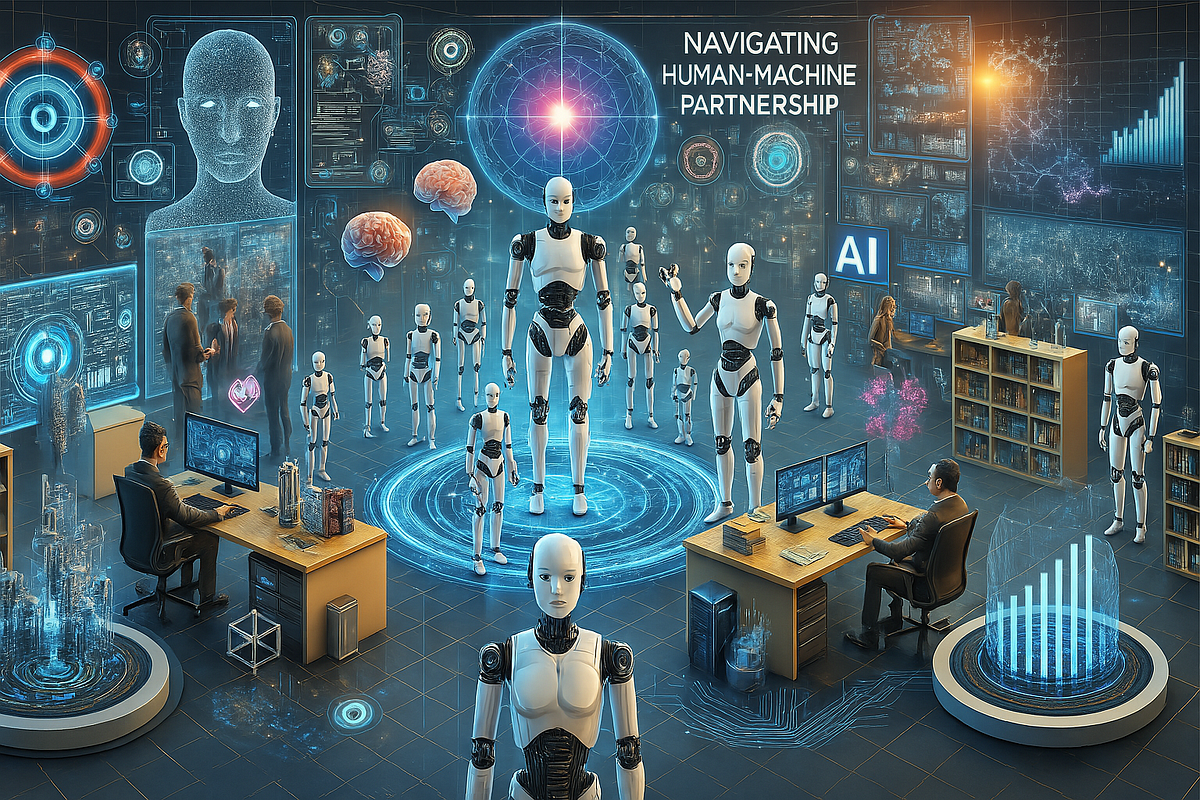
The standardization of these core requirements is the primary contribution of open source frameworks. They abstract away the complexity of memory management and planning, accelerating deployment significantly (Source). This robust structure enables modern agentic AI trends (Source), providing the necessary depth for complex tasks. Developers rely on these tools for streamlined development (Source).
Key Open Source Frameworks Driving Agent Infrastructure:
“The true power of autonomous AI lies not just in the intelligence of the model, but in the standardized, open scaffolding that allows that intelligence to interact reliably with the messy, real world.”
The current landscape is rich with powerful open-source tools (Source):
- **LangChain/LangGraph:** Highly composable libraries providing standardized methods for chaining model calls, managing conversational memory, and implementing advanced tool calling and control flow logic.
- **AutoGen:** Microsoft’s framework specifically designed to facilitate seamless, conversational interaction between multiple specialized AI agents, ideal for complex software development or research tasks.

- **SuperAGI/CrewAI:** These higher-level platforms provide developer-friendly interfaces and abstractions for building production-grade autonomous systems, focusing on robust task execution and monitoring.
Lumo Rust based agent library for autonomous AI: Performance Meets Safety
While Python dominates the ML research space, deploying long-running, safety-critical, and high-throughput agents requires systems-level performance. This need has catalyzed the emergence of high-performance languages in the agent infrastructure layer.
The concept represented by **Lumo Rust based agent library for autonomous AI** illustrates a vital industry trend. Why is Rust becoming the language of choice for critical agent backends?
- **Performance and Low-Level Control:** Rust compiles to native machine code, offering C/C++ speed without the traditional overhead. This is essential for high-throughput backends, or when agents must be deployed on resource-constrained edge devices (like manufacturing sensors or smart home hubs).
- **Safety and Reliability:** Rust’s unique ownership and borrow-checking system guarantees memory safety, preventing segmentation faults and data races common in other languages. For long-running, autonomous processes that cannot fail, this reliability is paramount.
- **Robust Concurrency:** Agents often involve parallel tasks (monitoring sensors, executing plans, updating memory). Rust’s concurrency primitives allow developers to handle these complex parallel workloads safely, without common synchronization bugs.
A library like Lumo would offer specialized traits for detailed agentic components: optimized data structures for **state and memory management** (separating fast episodic memory from persistent long-term knowledge), type-safe **tool orchestration** ensuring predictable interactions with external systems, and powerful concurrency features tailored for running parallel agent tasks with safe shared state.
Advanced Perception: VLMs in High-Stakes Autonomy
To move autonomous agents beyond coding and data analysis into real-world, high-stakes applications—such as robotics, manufacturing, or autonomous driving (Source)—they need eyes and a sophisticated understanding of their sensory input. This is where **Vision-Language Models (VLMs)** come into play, allowing the agent to process video and images simultaneously with natural language instructions and world knowledge.

VLMs provide several crucial capabilities for autonomous driving agents:
- Interpreting **complex visual scenes**: They don’t just detect objects; they understand the *relationship* between objects (e.g., “The cyclist is signaling a left turn, even though they are currently positioned on the right side of the lane”).
- Providing **explainability**: VLMs can bridge the gap between action and understanding, answering crucial “why” questions about agent behavior (“Why did the car slow down here? Because the sidewalk curb disappears, indicating a potential pedestrian crossing.”).
- Following nuanced **natural language navigation instructions**: Moving beyond simple GPS commands to handle instructions like, “Take the third left after the blue building, but only if the bike lane is clear.”
- Handling **long-tail edge cases**: Traditional, narrow vision models fail when faced with unusual objects or weather. VLMs leverage their massive pre-trained knowledge base to generalize and infer meaning in novel situations.
Nvidia Alpamayo-R1 VLM autonomous driving research and the Open Ecosystem
A focus area within this critical domain is the investigation into **Nvidia Alpamayo-R1 VLM autonomous driving research**. While details on internal projects might be limited or evolving, this line of research represents the intensive effort required to integrate VLM capabilities reliably into automotive platforms. *It underscores the realization that perception must be tied inextricably to language and reasoning.*
Even if the resulting automotive product is proprietary, open-source aligned research significantly accelerates safety and adoption in autonomy:
- **Open Datasets and Benchmarks:** The community relies heavily on shared resources like nuScenes or Argoverse. These open datasets allow all researchers—academic and corporate—to test and compare VLM performance transparently.
- **Shared Research:** Publishing research findings, even if the underlying model weights are not fully open, allows for rapid peer review and the transfer of safety best practices across the industry.
- **Partial Code/Checkpoints:** The release of specialized layers, data loaders, or fine-tuning techniques allows the wider research community to reproduce safety analyses and transfer VLM advances faster into diverse production stacks.
The foundational principle is that the safer the VLM perception component is, the more trustworthy the resulting autonomous agent becomes, and open collaboration is the fastest path to achieving that safety standard.
Generation as Simulation and Storytelling
Beyond processing the world, agents must be able to *create* the world, or at least representations of it. Generative models—specifically text-to-video models—enable autonomous agents to function as storytellers, simulators, and advanced planners. This capability is pivotal for both debugging and communication.

Concrete use cases for high-fidelity text-to-video models (Source) in agent workflows include:
- **Planning Visualization:** An agent tasked with a complex manufacturing redesign can turn its multi-step, abstract plan into a short, tangible video storyboard. This allows human operators to quickly review the proposed actions, identify potential physical conflicts, or refine the goal *before* real-world execution begins.
- **Simulation and Training:** Generating synthetic, realistic environments (e.g., highly specific traffic scenes, robotic arm failure modes, or complex fluid dynamics) to stress-test agent policies. This is crucial for training robustness cheaply and safely.
- **Content Generation:** For agents focused on marketing, education, or media, they can autonomously create explainer videos, tutorial clips, or dynamic marketing content directly from a text brief.
Apple STARFlow-V text to video model features: Benchmarking Generation
When considering the requirements for agents, the features must exceed those needed for simple creative output. We can use the demands implied by a high-performance system, such as **Apple STARFlow-V text to video model features**, as a benchmark for the capabilities needed for agents in high-demand environments. These include:
- **High Temporal Consistency:** Objects must move naturally and adhere to physical laws across frames. If an agent generates a simulation where a ball defies gravity, the simulation is useless for training an autonomous robot.
- **Fast Generation Speed:** Agents often need to iterate and generate **counterfactual scenarios** (“what if the robot path is blocked?”) rapidly. High latency generation significantly bottlenecks the agent’s ability to plan proactively.
- **High Resolution and Detail:** Critical for generating realistic simulation environments where fine detail (shadows, reflections, textures) matters for visual perception training.
This capability effectively turns the autonomous agent into a powerful simulator, capable of generating internal mental models and automatically producing necessary training content for itself or other agents.
Comparative Analysis: Best Open Source Text to Video Models 2024
The availability of open source generative models is critical for ensuring that agents built by smaller teams or academic researchers have access to cutting-edge capabilities (Source). When evaluating the **best open source text to video models 2024**, criteria critical for agent adoption differ from those for simple artistic use:
| Criterion | Relevance to Autonomous Agents |
|---|---|
| **Licensing** | Crucial differentiator. A production agent requires commercially permissive licenses, unlike research-only models which are prohibitive for enterprise use. |
| **Ease of Fine-Tuning** | The ability to adapt the model for domain-specific tasks (e.g., generating high-fidelity video of a specialized manufacturing floor or simulating specific city traffic patterns) is mandatory for effective simulation. |
| **Latency and Hardware** | Determines deployment feasibility. Low latency is required for real-time planning visualization, and efficient hardware requirements allow for local or edge deployment, avoiding expensive cloud APIs. |
Synthesis and the Next Wave of Deployment
The evolution of autonomous agents is not the result of a single breakthrough, but rather the synergistic culmination of three major contributions, all accelerated by open-source collaboration (Source):
“Open source ensures that the core mechanisms of autonomy—planning, memory, and perception—are auditable, reproducible, and constantly sharpened by a global community. This is non-negotiable for building trustworthy, goal-directed AI systems (Source).”
- **Infrastructure Standardization:** Open frameworks (LangChain, AutoGen, and systems like the emerging Rust-aligned libraries) are transforming complex agent patterns into reliable, reusable code.
- **Perception Enrichment:** Open VLM research (like that conducted by Nvidia) is equipping agents with a richer, language-aligned understanding of visual information, vital for safety-critical domains.
- **Generative Simulation:** Open text-to-video models are transforming agents into versatile simulators and sophisticated storytellers, enabling internal testing and external communication.
Looking forward, we can expect a tighter coupling between these layers. Open agent frameworks will integrate more seamlessly with edge-deployable runtimes (enabled by languages like Rust) and specialized, domain-specific open models (e.g., a VLM specifically optimized for manufacturing floors, or a video generator trained only on robotics failure modes).
This maturation points toward several imminent deployment waves:

- **Personal Research Agents:** Autonomous systems capable of conducting literature reviews, synthesizing large datasets, and writing first drafts of complex analyses.
- **Complex Industrial Automation:** Agents managing entire supply chain segments, factory schedules, and optimizing energy grids autonomously.
- **Enterprise-Grade, Auditable Agents:** Deployments in finance, healthcare, and security where the transparency and accountability afforded by open-source code are mandated for safety and regulatory compliance.
As these technologies mature, the core thesis holds true: **open source AI models revolutionizing autonomous agents** is not a future possibility—it is an accelerating reality, transforming experimental curiosities into the reliable backbone of future global infrastructure. We encourage developers and enterprises alike to explore the cited open-source tools and frameworks themselves to start building the next generation of autonomous systems.
Frequently Asked Questions (FAQ)
- What differentiates an autonomous agent from a standard AI chatbot?
- Why is the performance of Rust important for autonomous agents?
- How do Vision-Language Models (VLMs) specifically aid autonomous driving research?
- What is the main benefit of using text-to-video models in agent planning?
An autonomous agent possesses core traits of **goal pursuit, reasoning, planning, and memory**. Unlike a chatbot, which responds to prompts, an agent can initiate multi-step actions, utilize external tools (APIs), and persist its state over long periods to achieve a high-level objective without constant human intervention.
Rust offers system-level speed and guaranteed memory safety. For production agents, particularly those deployed in latency-sensitive or safety-critical applications (like industrial control or autonomous vehicle components), Rust ensures high throughput, low failure rates, and reliable long-running processes due to its unique concurrency and ownership models.
VLMs provide the agent with a sophisticated perception layer, allowing it to fuse complex visual data (images/video) with semantic language understanding. This enables better scene interpretation, provides inherent explainability for decision-making, and significantly improves the agent’s ability to handle complex, unforeseen edge cases that standard vision models would miss.
The main benefit is simulation and visualization. Text-to-video models allow agents to generate internal *mental models* of their future actions, testing complex plans virtually before execution. This is critical for generating counterfactual scenarios and ensuring safety, while also allowing agents to autonomously create training data or visual reports for human stakeholders.