

Google Search Algorithm Leak 2024: Exposed Ranking Factors and SEO Impact
Estimated reading time: 8 minutes
Key Takeaways
- The Google search algorithm leak 2024 is the most significant SEO revelation in decades, exposing over 2,500 pages of internal documentation.
- Concrete evidence now confirms Google ranking factors including user interaction metrics, author attribution, and Chrome browser data.
- User engagement signals like clicks, bounce rate, and session duration are paramount through systems like Navboost.
- Google uses Chrome browser data for ranking, contradicting prior statements and raising privacy concerns.
- Author credibility is systematically measured via entity recognition and E-A-T scoring.
- Mobile performance is critical, with specific metrics impacting indexing and rankings.
- The leak confirms the existence of a “sandbox” for new sites and AI-driven content evaluation.
- SEO strategy must shift towards holistic quality, user-centric content, and verifiable expertise.
Table of contents
- Google Search Algorithm Leak 2024: Exposed Ranking Factors and SEO Impact
- Key Takeaways
- What Exactly Is the Google Search Algorithm Leak 2024 and How Did It Happen?
- Overview of Google Ranking Factors Exposed 2024 from the Leak
- Google Algorithm Update Impact on SEO: Key Confirmations and Shifts
- The Shocking Google Chrome Browser Data Ranking Factor Revelation
- Google Entity Information and Author Attribution Ranking Signals Unpacked
- Immediate Actions to Adapt Your SEO Strategy Post-Leak
- Long-Term Shifts: Holistic Quality Over Factor-Chasing
- Key Takeaways on the Leak
- Frequently Asked Questions
- Final Thought and Call to Action
In May 2024, the SEO world was rocked by an unprecedented event: over 2,500 pages of Google’s internal search algorithm documentation were inadvertently leaked, marking the most significant development in SEO in decades. This Google search algorithm leak 2024 has exposed the proprietary ranking system’s “black box,” revealing secrets that Google has kept confidential for years.

This leak provides concrete evidence of Google’s ranking mechanisms, directly tying to user search intent of understanding implications on search engine optimization. In this guide, we’ll break down the Google ranking factors exposed 2024 from the leak and explore what it means for your SEO strategy.
We will delve into the Google search algorithm leak 2024, including Google ranking factors exposed 2024, Google algorithm update impact on SEO, the role of Google Chrome browser data ranking factor, and Google entity information and author attribution ranking signals, to help SEO professionals adapt their strategies effectively.
What Exactly Is the Google Search Algorithm Leak 2024 and How Did It Happen?
The Google search algorithm leak 2024 refers to thousands of internal Google documents that detail the Content Warehouse API, a core component of Google’s ranking system. According to sources, this leak consists of 2,596 modules and 14,014 attributes that the algorithm considers for ranking search results, providing an unprecedented look into Google’s evaluation process. (cite)
The timeline of the leak is as follows:
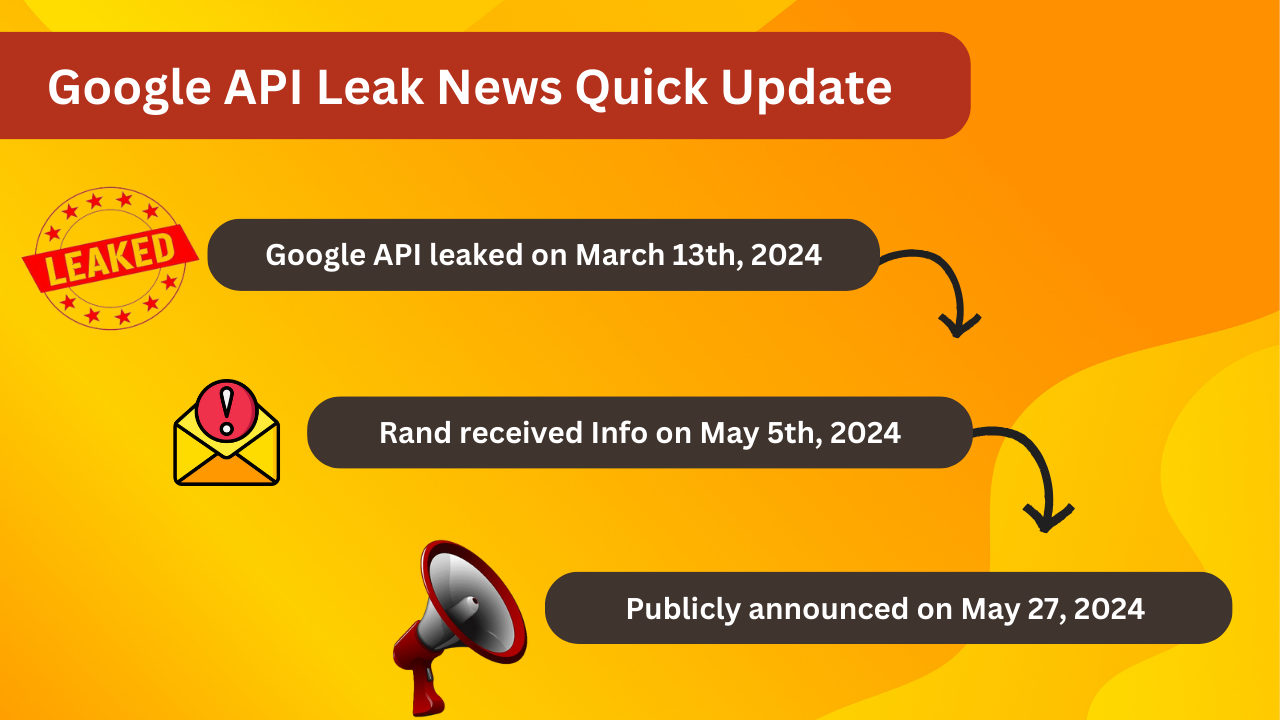
- In March 2024, an automated bot named Yoshi-Code-Bot uploaded the leak to GitHub, where it remained unnoticed.
- It wasn’t until late May 2024 that search experts Rand Fishkin and Mike King analyzed and publicized the documents, bringing them to the forefront of the SEO community. (cite)
This leak is rare because it offers direct insight into how Google evaluates and ranks web content, confirming long-held suspicions and revealing new factors. The Google search algorithm leak 2024 is a game-changer for anyone involved in search engine optimization.

Overview of Google Ranking Factors Exposed 2024 from the Leak
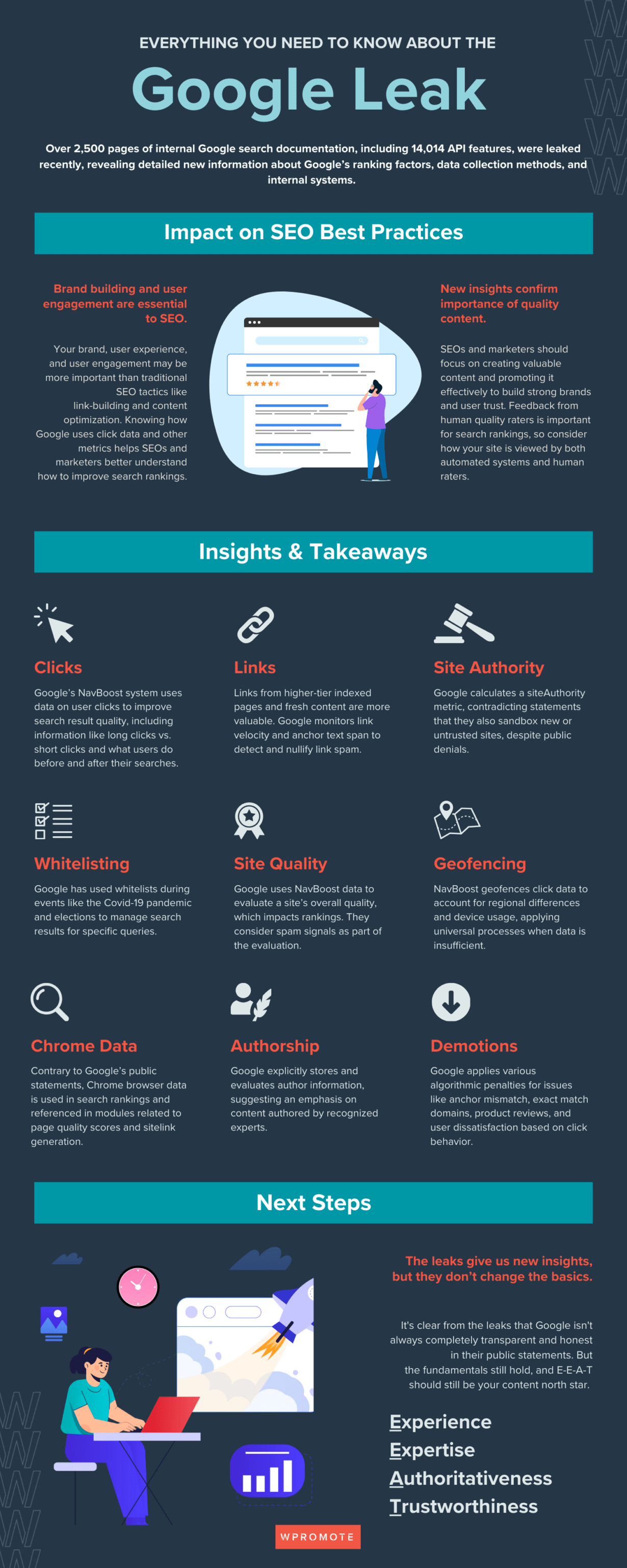
The documents from the leak confirm many SEO best practices and unveil new ranking factors. For clarity, we’ve grouped them into categories. As emphasized in content analysis for SEO, understanding these factors is crucial for effective strategy.
Content and Authority Metrics
High-quality content production remains fundamental, and authoritative backlinks continue to influence rankings. User experience optimization is core, and E-A-T signals—Expertise, Authoritativeness, Trustworthiness—are measured via specific scoring. Additionally, author entity recognition cross-references bylines against professional licensing databases and industry publications. (cite) (cite) This aligns with how to plan blog posts for authority.
User Interaction via Navboost
Google tracks clicks as a ranking signal through Navboost, which is mentioned 84 times in the documents. It measures the “holy trinity” of dissatisfaction: bounce rate (users leaving quickly), session duration (time spent), and pogo-sticking (returning to search results immediately after clicking). (cite) (cite) Understanding these signals is key to search intent SEO.
Site Authority and Quality
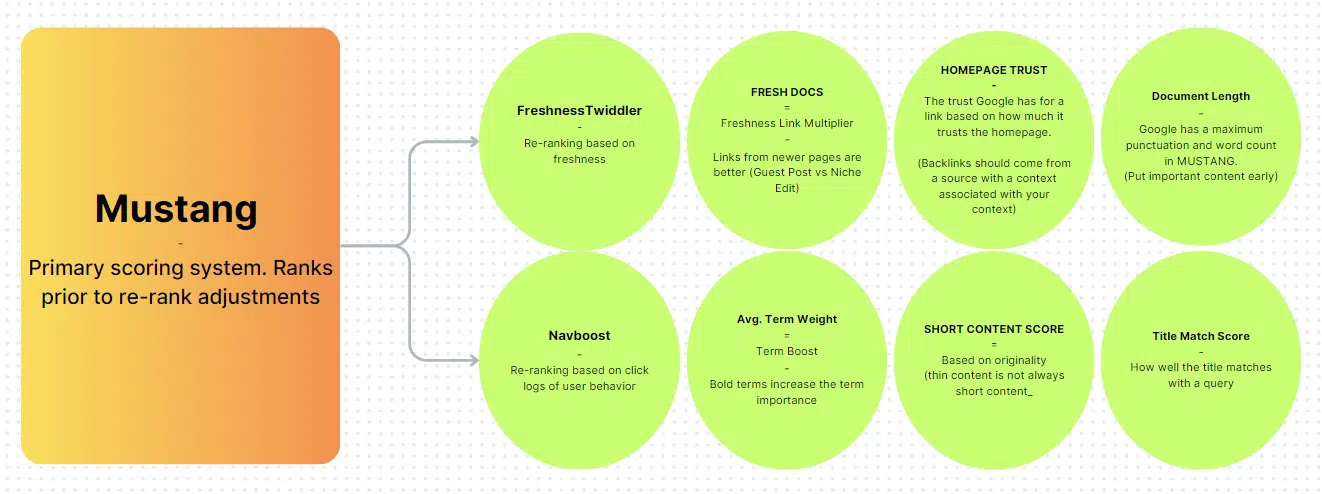
SiteAuthority scores rank websites, content freshness and timely updates get priority, and spam scores penalize low-quality content. (cite) (cite)
Mobile Performance
Google tracks specific mobile metrics impacting indexing; mobile page speed compared to desktop, with slowdowns causing penalties. (cite)
Real-Time Tweaks
Hundreds of “twiddlers” allow real-time ranking adjustments based on user behaviors and queries for personalization. (cite)
Google Algorithm Update Impact on SEO: Key Confirmations and Shifts
The leak ties directly to the Google algorithm update impact on SEO by confirming several key aspects. First, it validates the existence of a “sandbox” for new sites, which temporarily limits visibility to prevent manipulation—something Google had previously denied. (cite)
Second, it reveals AI-driven content evaluation that assesses context, user intent, and satisfaction beyond keywords. (cite)
The broader consequences are clear: this reinforces the need for holistic quality over tricks, reshaping strategies toward user satisfaction amid ongoing updates. SEOs must focus on creating content that genuinely meets user needs rather than exploiting algorithmic loopholes.

The Shocking Google Chrome Browser Data Ranking Factor Revelation
One of the most startling revelations from the leak is that Google uses Google Chrome browser data ranking factor, contradicting prior statements. This data includes user browsing behavior, engagement metrics, site-wide authority from interactions, landing patterns, and post-visit behavior—such as if users bounce to competitors, they rank higher. (cite) (cite)
The implications are significant: click patterns, session duration, and navigation after leaving a site directly influence rankings. This means that user experience on your site can impact how Google ranks it in real-time, emphasizing the importance of retaining visitors and providing value.
Google Entity Information and Author Attribution Ranking Signals Unpacked
The leak details Google entity information and author attribution ranking signals where Google recognizes author entities and cross-references credentials like licenses and publications for E-A-T scoring. (cite)
This stresses the need for building verifiable expertise profiles. SEOs should ensure that authors have clear bylines with credentials linked to authoritative sources, as this can boost the site’s authority and trustworthiness in Google’s eyes.
Immediate Actions to Adapt Your SEO Strategy Post-Leak
Based on the leak insights, here are step-by-step actions to adapt your SEO strategy for the Google algorithm update impact on SEO:

- Prioritize user engagement: Reduce bounce rate and pogo-sticking by ensuring your content matches search intent. Monitor session durations and optimize for longer engagement. SEO data analysis can help here.
- Optimize mobile-first: Test mobile page speeds and fix any gaps between mobile and desktop performance. (cite)
- Build author profiles: Use clear bylines with credentials and link authors to professional profiles. (cite)
- Create high-quality content: Focus on original, expert-driven content that earns natural backlinks. (cite)
- Refresh content regularly: Keep content up-to-date to signal freshness and quality. (cite)
Long-Term Shifts: Holistic Quality Over Factor-Chasing
The leak shows that Google employs sophisticated measurement of user satisfaction, credibility, and value. Therefore, the long-term shift must be towards user-centric content that earns natural engagement and backlinks. This aligns with all keywords like Google ranking factors exposed 2024, emphasizing that chasing individual factors is less effective than focusing on overall quality.
As one SEO expert put it, “The leak confirms what we’ve suspected: Google’s algorithm is designed to reward websites that users love.”
Key Takeaways on the Leak
- User metrics are paramount: Clicks, bounce rate, and session duration directly influence rankings.
- Chrome data is real: Google uses browser data for ranking, despite prior denials.
- Author credibility is systematic: Entity recognition and E-A-T scoring are built into the algorithm.
- Mobile is non-negotiable: Performance gaps between mobile and desktop can penalize sites.
- Freshness signals quality: Regularly updated content is favored by Google.
- Sandbox confirmed: New sites undergo a temporary visibility limit.
- Success comes from valuable, intent-matching content that satisfies users.
Frequently Asked Questions
Does the leak change the algorithm? No, the leak reveals existing mechanisms; it doesn’t change how Google ranks sites. (cite)
Should I be concerned about Google’s response? There’s no cheat code from the leak; the best approach is to stick to SEO best practices. (cite)
What about factor weightings? The documents don’t specify weightings among the 14,014 attributes; they are context-dependent. (cite)
What about Chrome data privacy? The use of Chrome data raises concerns as user behavior influences results, highlighting privacy issues. (cite)
Final Thought and Call to Action
The Google search algorithm leak 2024 validates the importance of user-first SEO. It’s time to audit your site for engagement, author E-A-T, mobile speed, and content freshness. Subscribe for SEO updates, share your strategies in the comments, or download a free checklist for leak-inspired optimizations.