

Quantum Leap 2025: Pivotal Breakthroughs and the Road to Utility
Estimated reading time: 12 minutes
Key Takeaways
- 2025 was a pivotal year, marking a clear shift from theoretical research to verifiable, practical quantum advantage with real-world implications.
- Landmark hardware demonstrations, particularly Google’s Willow chip, have moved the goalposts, proving quantum systems can solve problems impossible for classical supercomputers.
- Error correction is no longer a distant dream. Record fidelities, novel architectures, and topological qubits are creating the foundation for stable, scalable machines.
- Commercialization accelerated, with cloud-accessible quantum power now driving discoveries in pharmaceuticals, materials science, and complex optimization.
- The global race intensified, with U.S. leaders setting a blistering pace, pressuring competitors worldwide and signaling the dawn of a new computational era.
Table of contents
- Quantum Leap 2025: Pivotal Breakthroughs and the Road to Utility
- Key Takeaways
- 2025: The Inflection Point for Practical Quantum Computing
- Headline Achievements: Verifiable Advantage Meets Commercial Reality
- Taming the Quantum Beast: Breakthroughs in Quantum Error Correction
- Quantum in the Cloud: Real-World Applications Take Flight
- The Global Race: China’s Quantum Ambitions and Operating Systems
- Deep Dive: The Google Willow Chip and a New Era of Supremacy
- Trends and Players Shaping the Quantum Landscape
- Industry Impact and the Road Ahead
- Frequently Asked Questions
The year 2025 has proven to be a definitive turning point, cementing itself as the year quantum computing graduated from the lab. The latest quantum computing news 2025 is dominated not by promises, but by proven, accelerating hardware advances, critical error suppression milestones, and the first wave of genuine commercial applications from giants like Google, Quantinuum, IBM, and D-Wave. This latest quantum computing news 2025 signifies a fundamental shift: we are now in the era of verifiable quantum utility.
At its core, quantum computing harnesses the bizarre laws of quantum mechanics. Instead of classical bits (0 or 1), it uses quantum bits or qubits. These qubits can exist in a state of superposition (both 0 and 1 simultaneously) and become entangled with each other. This allows a quantum computer to explore a vast number of possibilities at once, offering the potential for exponentially faster computations for specific, complex problems in chemistry, optimization, and cryptography. The progress in 2025, as detailed in reports from Constellation Research and Network World, has brought that potential shockingly close to reality.
Headline Achievements: Verifiable Advantage Meets Commercial Reality
The major themes of the year can be summarized in a few seismic events. These aren’t just incremental steps; they are the foundational pillars of the coming quantum age:
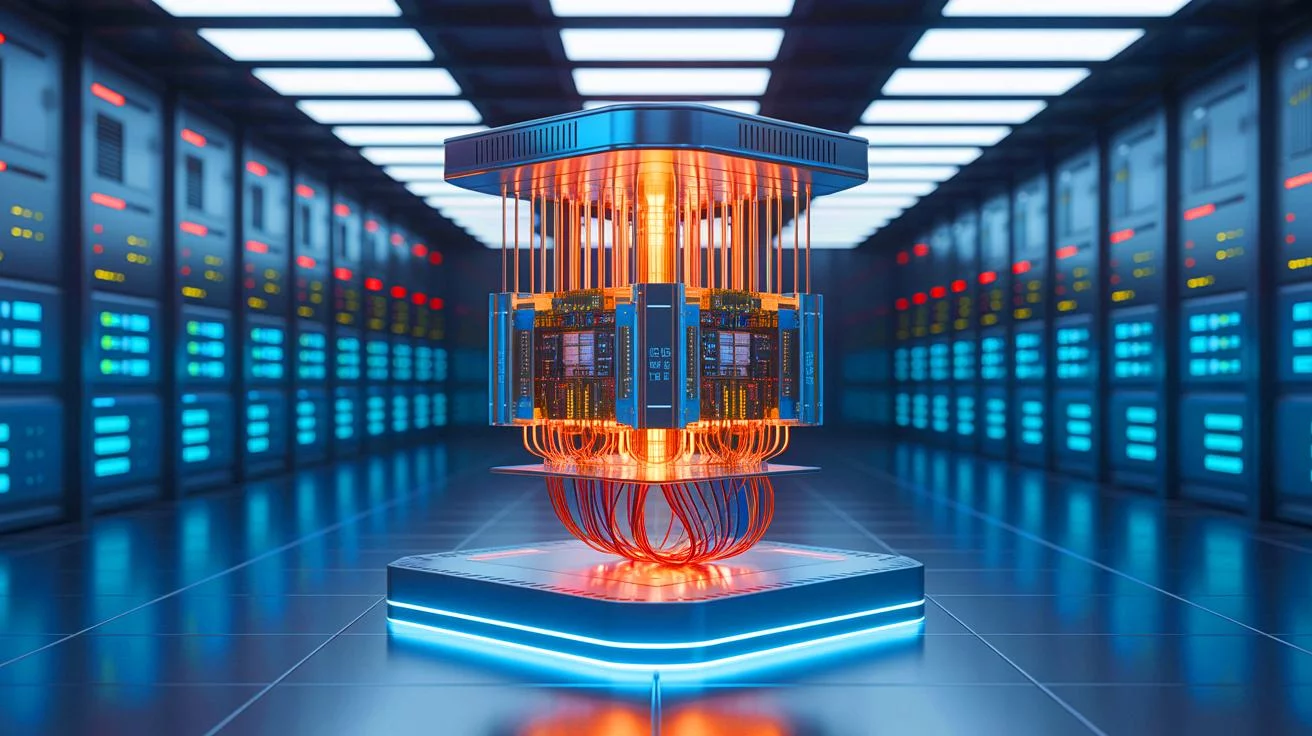
- Google’s Willow Chip & The Quantum Echoes Algorithm: This wasn’t just a lab experiment. Google demonstrated verifiable quantum advantage—proving its system could solve a practical problem (complex molecular simulations) that would be fundamentally impossible for any classical supercomputer in a reasonable timeframe. This Google Willow chip quantum supremacy demonstration is a landmark, detailed in their research blog.
- Quantinuum’s Helios System Launch: Touted as the world’s most accurate commercial quantum computer, Helios represents the pinnacle of current trapped-ion technology, delivering unprecedented fidelity for enterprise applications.
- The Error Correction Revolution: Across the board, 2025 saw record-breaking advances in controlling qubits and suppressing errors. From MIT’s 99.998% fidelity to Microsoft’s topological qubits, these breakthroughs in quantum error correction are the unsung heroes making everything else possible, as covered in the year’s top breakthroughs.
As industry analysis notes, these achievements are interconnected. The accuracy of systems like Helios and the error suppression in Willow are what allow for verifiable advantage. This trifecta defines the latest quantum computing news 2025.
Taming the Quantum Beast: Breakthroughs in Quantum Error Correction
Qubits are notoriously fragile. “Noise” from their environment causes decoherence and errors, which is the primary obstacle to building large, useful quantum computers. Quantum error correction (QEC) is the suite of techniques to detect and correct these errors in real-time. The breakthroughs in quantum error correction in 2025 have been nothing short of revolutionary.
Google’s Willow Chip, first introduced in late 2024 but rigorously validated in 2025, is a prime example. Its advanced error suppression techniques enabled the “Quantum Echoes” algorithm to perform computations on molecular structures 15,000 to 28,000 times faster than the best possible classical methods for specific, verifiable tasks like calculating Out-of-Time-Order Correlators (OTOCs). This wasn’t a random speedup; it was a demonstrable, insurmountable cliff. As reported by Google Research, this work “validates that we are on a viable path toward large-scale, useful quantum computers.”
The progress extends far beyond one company:
- MIT & 99.998% Fidelity: Researchers set a new world record for qubit control, achieving two-qubit gate fidelity of 99.998%. This near-perfect control dramatically reduces operational errors.
- Caltech’s Movable Qubit Array: Using a 6,100-qubit neutral atom array, Caltech demonstrated stability for 13 seconds—an eternity in quantum time—by physically moving qubits to perform error correction, a novel and promising approach.
- Microsoft’s Topological Quest: The Majorana 1 chip represents a bet on a different future. By harnessing “anyons” to create topological qubits, Microsoft aims for qubits with inherent stability, a potential game-changer for fault tolerance.
- IBM’s Road to Starling: IBM continues its steady march toward its 2029 goal of the “Starling” fault-tolerant system, which it projects will be 20,000 times more capable than today’s machines, building on years of incremental QEC improvements.
These milestones, part of the broader wave of latest AI technology news 2025, are collectively solving the core reliability problem. They are the essential groundwork that transforms raw quantum physics into a usable engineering discipline, a central theme of the latest quantum computing news 2025.
Quantum in the Cloud: Real-World Applications Take Flight
Perhaps the most tangible sign of progress is the rapid expansion of quantum computing applications in cloud services. Quantum cloud services provide on-demand access to quantum hardware over the internet, typically integrated with classical high-performance computing (HPC) resources in a hybrid model. This democratizes access, allowing researchers and corporations to experiment and solve problems without owning a quantum computer.

In 2025, these services moved beyond experimentation to deliver tangible results:
- D-Wave’s Advantage2 & Leap Cloud: D-Wave’s annealing quantum computer, available via its Leap cloud service, was shown to outperform exascale GPU supercomputers in complex magnetic simulations. It’s now also offered for on-premises deployment, a sign of growing enterprise demand.
- IBM’s European Expansion & Networking: IBM deployed Europe’s first Quantum System Two in Spain and announced a partnership with Cisco to develop quantum-safe networks, integrating quantum computing directly into future IT infrastructure.
- Quantinuum’s Helios for Enterprise: Companies like Amgen are using Helios via the cloud for quantum-AI-driven drug discovery, while BMW is applying it to simulate new fuel cell materials. This is quantum computing solving industrial R&D problems today.
- Nvidia’s Quantum-Classical Push: At GTC 2025, Nvidia heavily promoted its platforms for hybrid quantum-classical computing, recognizing the symbiotic future of both technologies.
- IonQ & Specialized Solutions: IonQ expanded its cloud offerings, including work on quantum networking and collaborations to design next-generation medical devices.
Challenges like qubit scalability and persistent error rates remain, but the benefits are becoming clear. For instance, companies like Classiq are developing tools to create highly compressed quantum circuits, enabling much faster Monte Carlo simulations for finance on near-term hardware. These practical quantum computing applications in cloud services are a perfect example of how AI is transforming businesses by providing fundamentally new computational tools for discovery and optimization.
The Global Race: China’s Quantum Ambitions and Operating Systems
While the latest quantum computing news 2025 has been dominated by U.S. advances, it has intensified the global technological race. A frequent point of discussion is progress on a China quantum computer operating system. While specific, verified details of a new Chinese OS in 2025 are scarce in open Western sources, the context is critical.

A quantum operating system is the crucial software layer that sits between the hardware and the end-user. It manages the immense complexity of controlling thousands of qubits, orchestrating error correction routines, scheduling tasks, and executing algorithms. It’s the “brain” of the quantum computer. China’s significant investments in quantum technology, exemplified by earlier systems like Jiuzhang, mean developing a robust, native OS is a logical and necessary step for technological independence and competitiveness.
The stunning pace set by Google, Quantinuum, and others in 2025, particularly in breakthroughs in quantum error correction, applies pressure on all global competitors. The race is not just about hardware but about the entire stack—from the physical qubits to the software that makes them useful. Therefore, any developments in a China quantum computer operating system must be seen as a strategic move within this broader, high-stakes competition highlighted in global reviews of 2025.
Deep Dive: The Google Willow Chip and a New Era of Supremacy
The Google Willow chip quantum supremacy demonstration warrants a closer look, as it represents a paradigm shift. “Quantum supremacy” or “quantum advantage” refers to the moment a quantum computer performs a specific, well-defined calculation faster than any conceivable classical computer.

Willow, building on error suppression breakthroughs from 2024, powered the “Quantum Echoes” algorithm. This algorithm solved problems related to the electron interactions in 15- and 28-atom molecular structures. The results were so precise they could be validated against real-world Nuclear Magnetic Resonance (NMR) data—a gold standard in chemistry.
This is the key: It wasn’t an abstract math problem. It was a real physics simulation with direct applications in medicine and materials science. Google proved that for this class of problem, classical computers have hit a wall, while scalable quantum hardware has a clear, verifiable path forward. This achievement, as documented in their landmark paper, validates years of research and investment in breakthroughs in quantum error correction. The next step is to use these error-suppressed physical qubits to build long-lived, fault-tolerant “logical qubits,” the final milestone before widespread utility.
Trends and Players Shaping the Quantum Landscape
The latest quantum computing news 2025 is also defined by converging trends and a vibrant ecosystem of players:
- Hybrid Quantum-Classical Systems: The dominant model for the near future. Classical HPC handles control, pre-processing, and post-processing, while the quantum processor tackles specific, intractable sub-routines.
- AI Integration: Machine learning is being used to optimize quantum circuits, interpret results, and even discover new quantum algorithms. This synergy is powering many of the quantum computing applications in cloud services.
- Cybersecurity Focus: With NIST finalizing post-quantum cryptography standards, companies like Quantinuum are offering verifiable quantum randomness generation (used by JPMorgan), while others explore quantum-blockchain hybrids.
Key Players Driving the News:
- IBM: Continues its “quantum-centric supercomputing” vision, backed by a $30B+ U.S. R&D initiative.
- Rigetti Computing: Made strides with its 36-qubit multi-chip quantum processor, a scalable fabrication approach.
- IonQ: Secured $372M in funding and is a leader in the precision of trapped-ion systems.

Record levels of public and private investment flowed in 2025, and the field’s importance was underscored by a Nobel Prize awarded for foundational work in superconducting circuits. These trends are rightly considered among the 10 cutting edge AI technologies shaping the future and are becoming integral to the infrastructure of the explosive Web3 revolution.
Industry Impact and the Road Ahead
The industry impact of the latest quantum computing news 2025 is already being felt in specific sectors:
- Cloud & Optimization: As seen, quantum cloud services are delivering speedups in logistics, financial modeling, and material discovery.
- Cybersecurity: A double-edged sword. While NIST’s new algorithms prepare for a post-quantum world, the “harvest now, decrypt later” threat looms, driving urgent migration timelines. Quantum randomness generation is enhancing encryption today.

Looking forward, the roadmap is becoming clearer. The industry is targeting the demonstration of fault-tolerant logical qubits by the end of the decade (e.g., IBM’s 2029 Starling goal). Quantum-AI software frameworks will mature, and neutral-atom arrays like those from Atom Computing and Pasqal promise a highly scalable hardware path. The narrative has shifted from “if” to “when,” and the “when” is arriving faster than many predicted, as analysts have noted.
The latest quantum computing news 2025 tells a story of convergence: error correction breakthroughs enabling verifiable advantage, which in turn is powering real cloud-based applications. This signals a definitive shift from proofs-of-concept to early-stage enterprise viability. While the journey to full, fault-tolerant utility requires more breakthroughs—especially in scaling logical qubits—the path is now illuminated. The call to action is clear: stay vigilant on the ongoing breakthroughs in quantum error correction, experiment with quantum computing applications in cloud services, monitor global developments including those around a China quantum computer operating system, and deeply understand the implications of the Google Willow chip quantum supremacy demonstration. For those who want to grasp the foundational science behind these headlines, exploring analyses of mind-blowing quantum breakthroughs is essential.
Frequently Asked Questions
What is the difference between quantum supremacy and quantum advantage?
The terms are often used interchangeably, but there’s a nuance. Quantum supremacy typically refers to a quantum computer outperforming a classical computer on any task, even if it’s not useful. Quantum advantage (or practical quantum advantage) implies the quantum computer solves a practical, valuable problem faster or better. The 2025 demonstrations by Google are considered verifiable quantum advantage because they solved a real-world chemistry simulation problem.
Are quantum computers going to replace my classical computer or laptop?
No. Quantum computers are not general-purpose machines. They are exceptionally good at specific types of problems involving massive complexity, optimization, or simulation (like modeling molecules or cracking certain encryptions). For everyday tasks like browsing the web, writing documents, or gaming, classical computers will remain far superior and more efficient for the foreseeable future. They will work together in hybrid systems.
What is the biggest challenge still facing quantum computing?
While breakthroughs in quantum error correction in 2025 were massive, scaling error correction to thousands of logical qubits remains the paramount challenge. Current systems use error-suppressed physical qubits. Creating a single, stable logical qubit requires entangling hundreds or thousands of physical qubits with extremely high fidelity to correct errors in real-time. Achieving this at scale is the final engineering hurdle before fully fault-tolerant, universally useful quantum computers become a reality.
How can businesses start preparing for quantum computing today?
Businesses should take two parallel paths: Exploration and Defense. For exploration, engage with quantum computing applications in cloud services from providers like IBM, AWS, Microsoft, and D-Wave. Identify potential use cases in R&D (material science, drug discovery), optimization (supply chain, logistics), or machine learning. For defense, immediately begin a cybersecurity audit to understand exposure to “harvest now, decrypt later” attacks and plan a migration to NIST-approved post-quantum cryptographic standards for long-term data protection.
What should I watch for in 2026?
Key metrics for the latest quantum computing news 2025 will focus on scaling the 2025 breakthroughs. Watch for: 1) Announcements of the first primitive logical qubits demonstrated in hardware. 2) Further increases in qubit counts and fidelities across all hardware types (superconducting, trapped-ion, neutral-atom). 3) More industry-specific case studies proving ROI from quantum-cloud hybrids. 4) Progress on quantum networking to link separate quantum processors. 5) Policy and investment announcements from governments worldwide responding to the accelerated U.S. lead.