
AI Drone Delivery Networks: The Future of Last-Mile Logistics
Estimated reading time: 12 minutes
Key Takeaways
- AI drone delivery networks are poised to address the critical driver shortage and the inefficiencies of last-mile logistics, offering a transformative solution for modern supply chains.
- These networks leverage artificial intelligence as their operational brain, enabling autonomous navigation, real-time route optimization, and coordinated fleet management beyond simple remote control.
- They deliver quantified benefits: delivery speeds 45–75% faster than ground alternatives, up to 30% better battery efficiency, and significant cost and environmental reductions.
- Real-world applications from medical emergencies to urban retail demonstrate autonomous delivery innovation in action, saving lives and reshaping consumer expectations.
- While challenges like regulations and weather persist, the technology’s trajectory points toward mainstream adoption within the next decade, making early integration a strategic imperative for logistics businesses.
Table of contents
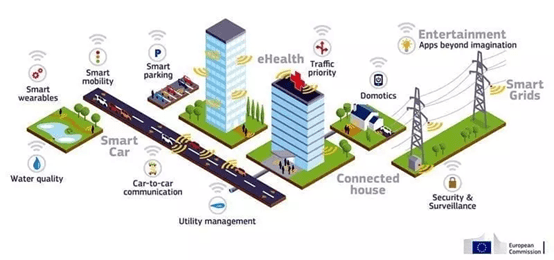
The American Trucking Association predicts a staggering shortage of 160,000 drivers by 2030, with over 60% of current drivers aged 45 or older. This looming crisis underscores a critical vulnerability in our global supply chains. Compounding this issue is the fact that last-mile logistics—the final leg of delivery from distribution hubs to customers’ doorsteps—is the most expensive and complex segment of modern delivery. Enter AI drone delivery networks, the transformative solution addressing both capacity and efficiency challenges head-on. This guide dives deep into how these intelligent systems work, their real-world impact, and why they represent the next leap in logistics automation.
What Are AI Drone Delivery Networks?
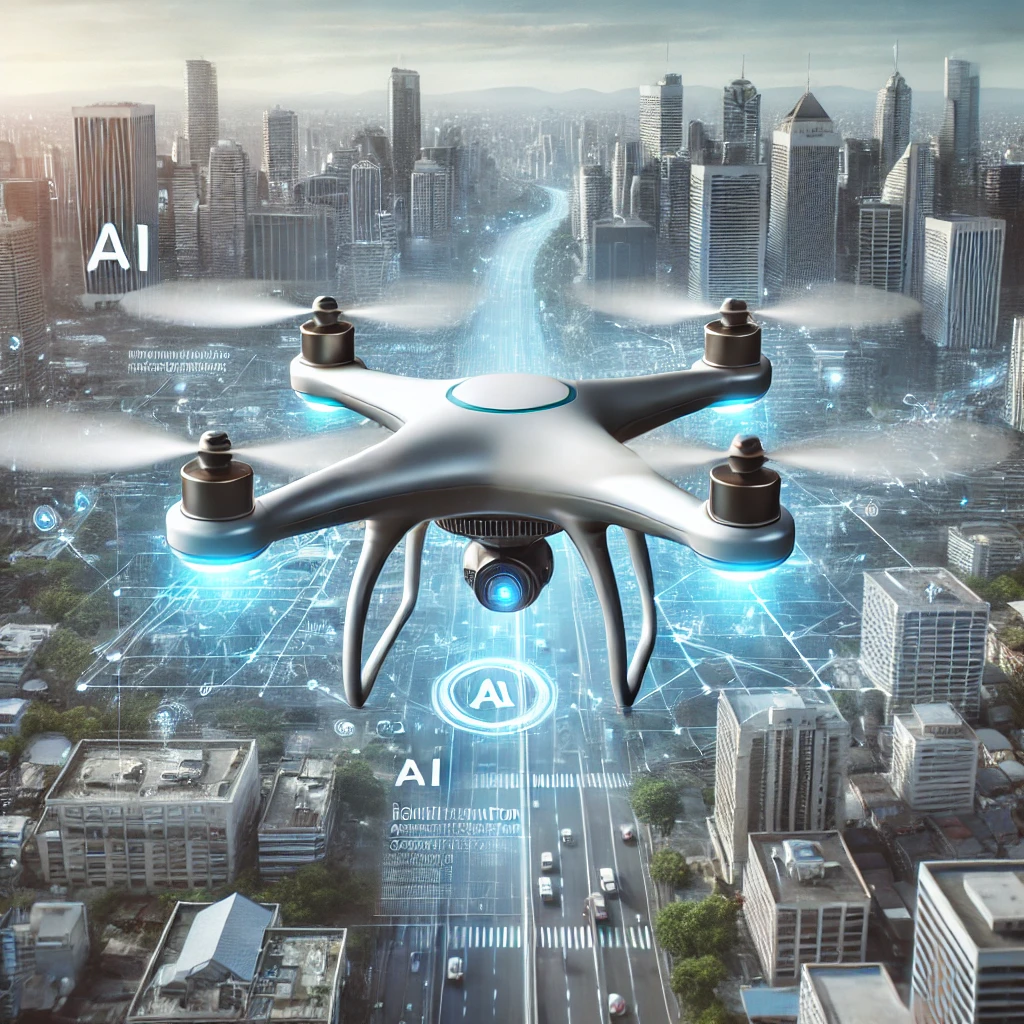
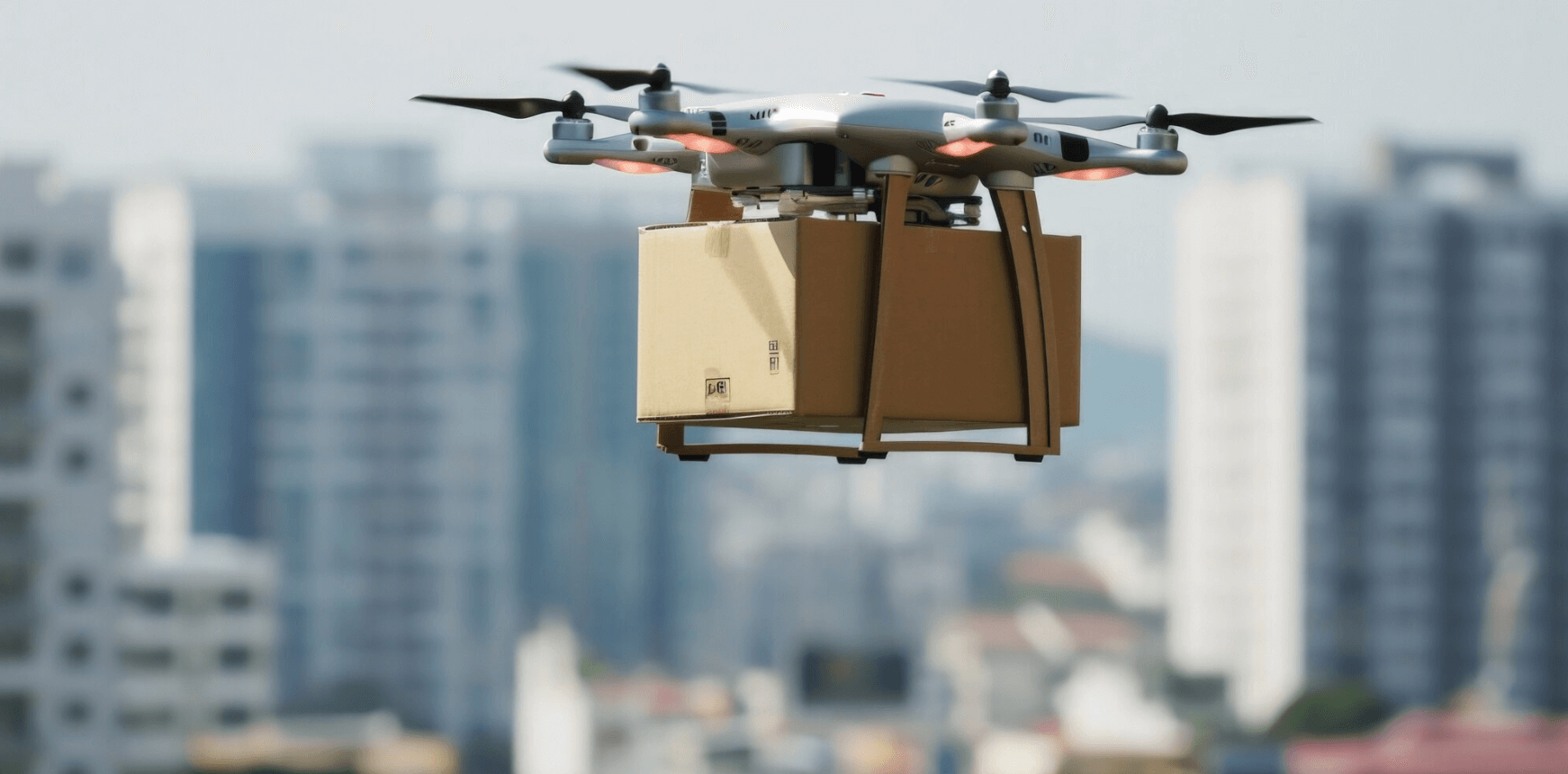
Let’s clear a common misconception: these are not merely remote-controlled drones. AI drone delivery networks are sophisticated, coordinated systems where artificial intelligence functions as the operational brain. They manage autonomous navigation, collision avoidance, fleet coordination, and dynamic route optimization across multiple vehicles simultaneously. Think of AI as the air traffic controller and pilot combined, making split-second decisions that human operators couldn’t match. This intelligence layer is what unlocks their true potential.
The Intelligence Layer: How AI Powers These Networks
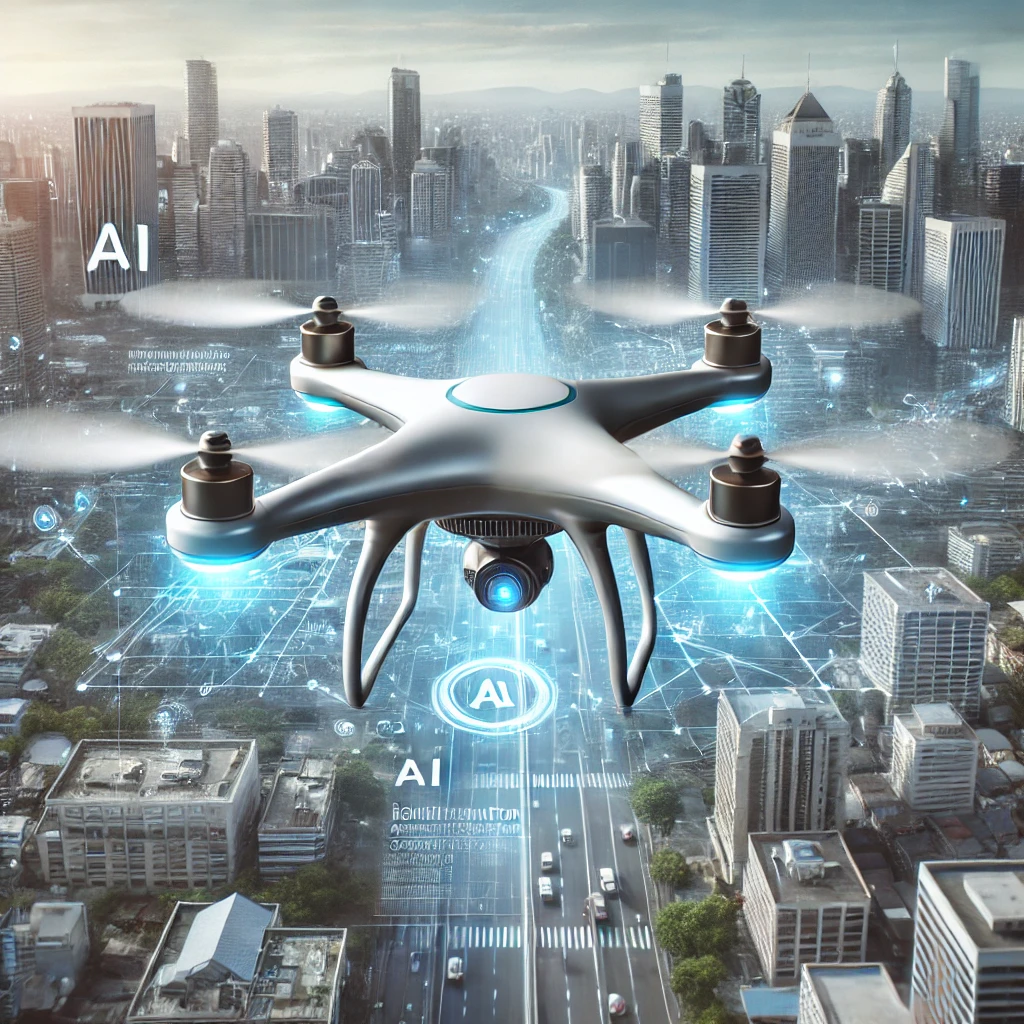
The AI component isn’t a single tool; it’s a multi-faceted engine handling four critical functions:
- Real-time route optimization: Continuously evaluates a dynamic tapestry of variables—wind speed and direction, air traffic, no-fly zones, battery levels, and live weather conditions—to chart the most efficient path.
- Machine learning algorithms: These algorithms learn and improve over time. For instance, UPS reports their AI-routed drones now complete deliveries using 30% less battery power than earlier models, a testament to iterative learning.
- Autonomous decision-making: Enables drones to navigate complex urban environments, sidestep unexpected obstacles like birds or construction cranes, and execute precise landings without human intervention.
- Network coordination: Drones within a network share real-time data, coordinate flight paths to avoid conflicts, and disseminate predictive intelligence, operating as a unified swarm rather than independent units.
This autonomous delivery innovation is the cornerstone of viable urban drone use cases. Further research highlights how AI-driven coordination turns theoretical concepts into practical systems.
The Last-Mile Logistics Problem: Why This Technology Matters
Last-mile logistics is often the bottleneck of the entire supply chain. It accounts for up to 53% of total shipping costs despite covering the shortest distance. Traditional ground-based delivery is riddled with challenges:
- Traffic congestion creates unpredictable delays, a problem AI solutions for traffic congestion aim to solve, but drones circumvent entirely.
- Labor-intensive processes drive up costs and are susceptible to the worsening driver shortage.
- High fuel consumption from idling vehicles and circuitous routes undermines environmental sustainability goals.
- Time constraints make promised rapid delivery windows economically punishing for many retailers.
This is precisely where last mile logistics robots, with drones as a flagship example, emerge as the automated solution. Insights show that AI drone delivery networks directly target these pain points, offering a smarter, more resilient alternative.

How AI Drone Networks Solve These Problems
The solutions are as tangible as they are transformative:
- Speed and Direct Routing: Drones fly as the crow flies, bypassing ground traffic entirely. Amazon Prime Air deliveries in test markets have been completed 45% faster than ground alternatives. In Rwanda, Zipline’s medical drones slashed delivery times by 75% compared to conventional ground transportation. This route revolution is redefining speed.
- Reduced Operational Costs: The 30% battery efficiency improvement directly lowers charging costs and extends range. AI-driven route optimization can reduce overall fuel consumption by up to 20% across logistics operations. Furthermore, labor costs decline as drones autonomously handle suitable deliveries, mitigating the driver shortage. See the cost benefits and additional economic insights.
- Environmental Benefits: Direct aerial routes minimize fuel burn and associated emissions. This aligns perfectly with corporate sustainability targets, making autonomous delivery innovation a green technology. Explore the environmental impact.
- 24/7 Operations and Remote Access: Unshackled from human fatigue and traffic patterns, drone networks can operate around the clock. They can also reach geographically isolated or disaster-stricken areas where traditional delivery is impractical or impossible. This capability opens new markets and serves critical needs.
Real-World Applications: Autonomous Delivery Innovation in Action
The proof of concept is no longer in labs; it’s in the skies. Here are compelling examples where autonomous delivery innovation is already making a difference.
Medical and Emergency Supply Delivery: Life-Saving Autonomous Delivery
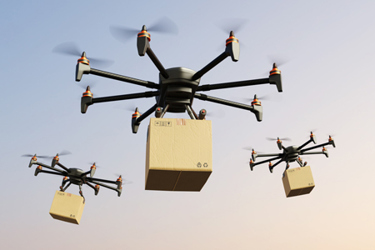
Zipline’s autonomous medical delivery network stands as perhaps the most mission-critical application. Operating primarily in Rwanda and expanding to other regions, it has completed over 500,000 deliveries of life-saving medical supplies. Its drones navigate to remote clinics unreachable by ground, delivering blood products, vaccines, and emergency medications with a speed that often determines patient outcomes. This is autonomous delivery innovation at its most profound. Read more about Zipline’s life-saving work.
Urban Retail and Food Delivery: Scaling in Dense Metropolitan Areas
Amazon Prime Air exemplifies the scaling of autonomous delivery in dense urban environments. Its strategy employs predictive AI to pre-position high-demand merchandise at suburban drone hubs before customers even click “buy.” By analyzing patterns like weekend shopping spikes and local events, it reduces final delivery time calculations from hours to minutes. Early results confirm deliveries are 45% faster than ground alternatives, showcasing practical urban drone use cases for the masses. See how Amazon is pioneering this space.
Pharmaceutical and Urgent Parcel Delivery: Time-Sensitive Applications
AI drone networks excel where time is of the essence. Early-market applications include prescription medications requiring rapid delivery to patients, urgent legal or confidential documents, and small high-value parcels where the cost per delivery is less constrained. This niche represents a powerful form of autonomous delivery innovation, creating new logistics paradigms for time-sensitive goods. Explore these time-sensitive applications.
Emerging Infrastructure Innovations: Advanced System Capabilities
The backbone of these networks is evolving rapidly. Innovations include automated docking stations for seamless vehicle-to-network integration, secure payload mechanisms that ensure package integrity during flight, and deep integration with warehouse management systems for a fully automated handoff from inventory to delivery. These advancements signify the maturation of AI drone delivery networks from experimental prototypes to operational, industrial-grade systems. Learn about infrastructure advancements and AI-fueled delivery drones.

Quantified Benefits: Why Organizations Are Adopting AI Drone Networks
Beyond the conceptual appeal, the decision to adopt is driven by hard metrics. The quantified benefits of AI drone delivery networks present a compelling business case:
- Delivery Speed: 45–75% faster than ground alternatives.
- Battery Efficiency: 30% reduction in power consumption through AI optimization.
- Inventory Operations: Drones enable 95% faster inventory counting compared to traditional manual methods.
- Warehouse Fulfillment: AI-driven management can speed up fulfillment processes by 60%.
- Cost Reduction: Comprehensive AI logistics optimization can achieve up to 15% cost cuts across operations.
- Environmental Impact: Route and efficiency gains contribute to a 20% reduction in fuel consumption across affected logistics segments.

Sources: Bulbul Delivery, Keymakr Blog, and WJAETS Research (2025).
But the benefits extend beyond the spreadsheet. They include 24/7 operational capability, a direct counter to the aging workforce crisis, and the ability to deliver to remote and underserved communities, expanding market reach and social impact.
Current Challenges Preventing Widespread Adoption
Despite the clear advantages, the path to ubiquity is not without obstacles. Acknowledging these challenges is crucial for realistic progress.
- Regulatory Framework: Airspace management for autonomous aircraft is still evolving. Certification requirements for beyond-visual-line-of-sight (BVLOS) operations are not fully standardized globally, and liability structures for accidents involving autonomous systems are still being defined. Breakthroughs in autonomous vehicle regulations are paving the way, but consistency is key. More on regulatory hurdles and industry perspectives.
- Public Acceptance: Community concerns about noise pollution from frequent drone operations, safety anxieties over autonomous flight in populated areas, and privacy fears regarding potential aerial surveillance are significant social hurdles to overcome. Addressing these public concerns is part of the rollout strategy.
- Weather Limitations: Current drone technology remains vulnerable to environmental conditions. Rain can damage electronics, high winds compromise stability and navigation, and severe weather grounds fleets entirely, unlike all-weather ground vehicles. Weather-related constraints are a focus of ongoing R&D.
- Payload Restrictions: Most commercial drones today can only carry packages under 5-10 pounds, limiting their applicability to smaller shipments. This restricts market penetration in industries requiring bulk or heavy-item delivery. Payload challenges drive innovation in drone design.
- Integration Complexity: Seamlessly coordinating autonomous aerial networks with existing ground-based logistics, legacy warehouse management systems, and enterprise resource planning software requires substantial investment in systems integration and interoperability. Integration insights highlight this technical challenge.

The Transformative Potential: Where This Technology Is Heading
AI drone delivery networks represent more than an incremental upgrade; they signify a fundamental transition in logistics infrastructure. We are moving from reactive, labor-dependent systems to predictive, autonomous, and hyper-connected networked operations. Navigating the future of AI involves understanding this shift. Research corroborates this transformative trajectory.

The expansion timeline is becoming clearer:
- Currently: Dominated by early-adoption niches where the value proposition is overwhelming—medical delivery, urgent parcels, and specialized retail.
- Near Future (5-7 years): Mainstream adoption in last-mile logistics as regulatory frameworks mature, public acceptance grows, and technology costs continue to fall.
- Projected Ubiquity (Next Decade): AI drone delivery networks could become as prevalent in our skies as delivery vans are on our roads, particularly for urban and suburban routes.
The adoption curve is steepening. For logistics businesses and retailers, the strategic question has evolved. It is no longer whether to adopt autonomous delivery innovation, but how quickly to integrate AI drone delivery networks into their operational fabric. The landscape of AI-powered transportation in 2025 will be shaped by these early decisions. The organizations that act now to understand and implement these last mile logistics robots will establish a formidable competitive advantage in the efficiency-driven market of tomorrow.
Frequently Asked Questions
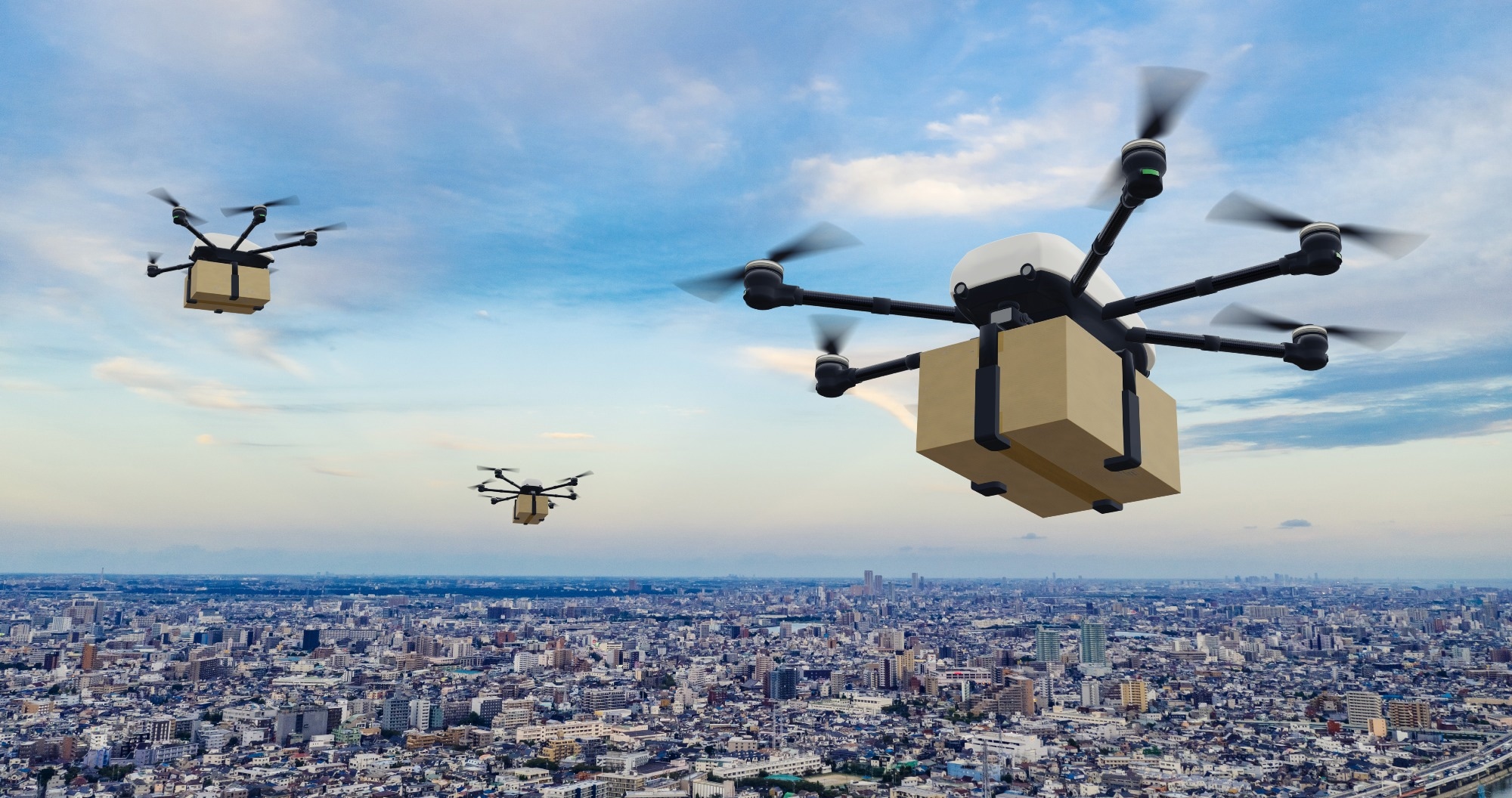
Q: What exactly distinguishes an AI drone delivery network from a regular delivery drone?
A: A regular delivery drone is typically remotely piloted or follows a pre-set GPS path. An AI drone delivery network uses artificial intelligence as its core operating system, enabling autonomous decision-making, real-time adaptation to changing conditions, and coordinated fleet-wide intelligence where drones communicate and optimize collectively.
Q: How do AI drones handle delivery in crowded cities with tall buildings?
A: Through advanced AI functions like sensor fusion (combining data from cameras, LiDAR, and radar) and sophisticated obstacle avoidance algorithms. They create dynamic 3D maps of their environment, allowing them to navigate urban canyons, avoid sudden obstacles, and identify safe landing zones, which is a key aspect of urban drone use cases.
Q: Are AI drone delivery networks safe and secure from hacking or theft?
A> Security is a top priority. Networks employ end-to-end encryption for communications, secure authentication protocols, and AI-powered anomaly detection to identify and respond to potential cyber threats. Physical theft is mitigated via geofencing, remote disable features, and often non-valuable payloads during transit.
Q: What kind of items can currently be delivered by these AI drone networks?
A: Currently, most networks are optimized for small, lightweight, and high-value or time-sensitive items. This includes prescriptions, small retail goods, documents, emergency medical supplies, and prepared food. Payload capacities are increasing with technological advancements.
Q: Will AI drone delivery networks replace human delivery drivers entirely?
A> In the foreseeable future, they are unlikely to replace all drivers. Instead, they will create a hybrid logistics ecosystem. Drones will handle appropriate routes and packages (e.g., urgent, lightweight, remote), while human drivers will continue to manage larger, bulkier, or more complex deliveries. The goal is augmentation and optimization, not outright replacement.