

The Nervous System of the City: How AI Urban Traffic Sensor Networks Unlock Smarter Mobility
Estimated reading time: 10 minutes
Key Takeaways
- AI urban traffic sensor networks form the critical data-gathering layer, using cameras, radar, LiDAR, and more to monitor real-time conditions.
- Machine learning models like CNNs and RNNs process this data at the edge, enabling predictive analytics and automated traffic responses.
- Integration into broader smart city mobility tech platforms via IoT and V2X communication allows for dynamic signal control and priority routing.
- Data from sensors merges with other sources in connected transport data systems, creating a holistic view for planners and the public.
- Tangible benefits include dramatically reduced congestion, faster emergency response, improved safety, and lower emissions.
- The future points to deeper integration with autonomous vehicles and AI simulation tools, driving towards carbon-neutral, predictive cities.
Table of contents
- The Nervous System of the City: How AI Urban Traffic Sensor Networks Unlock Smarter Mobility
- Key Takeaways
- From Chaos to Clarity: The AI Sensor Backbone
- Beyond Sensing: The AI and ML Brain
- Integrating into the Smart City Ecosystem
- The Synthesis: Connected Transport Data Systems
- Tangible Impact: Benefits and Real-World Proof
- Navigating the Roadblocks: Challenges and Solutions
- The Road Ahead: Future Integrations
- Frequently Asked Questions
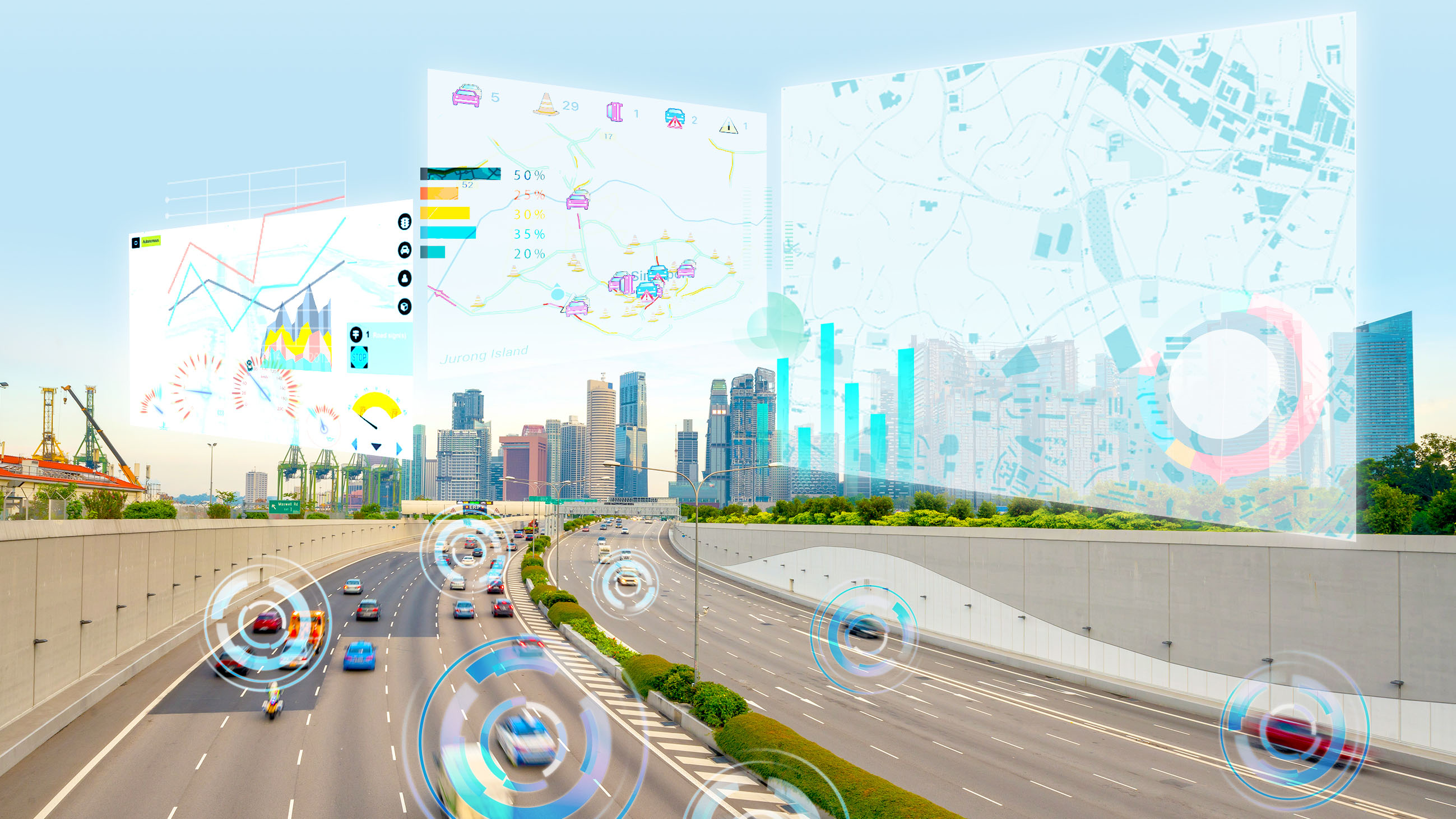
Picture the daily grind: honking horns, gridlocked intersections, and the frustrating crawl of bumper-to-bumper traffic. This chaos isn’t just an annoyance; it’s a massive drain on the economy, public safety, and our environment. But what if the city itself could see, think, and react in real-time to manage this flow? This is the promise unlocked by AI urban traffic sensor networks—the critical nervous system for contemporary urban transport. By collecting real-time data from a diverse array of sensors, these networks enable predictive and adaptive responses that directly tackle congestion, safety, and efficiency challenges at the heart of modern smart city mobility tech.
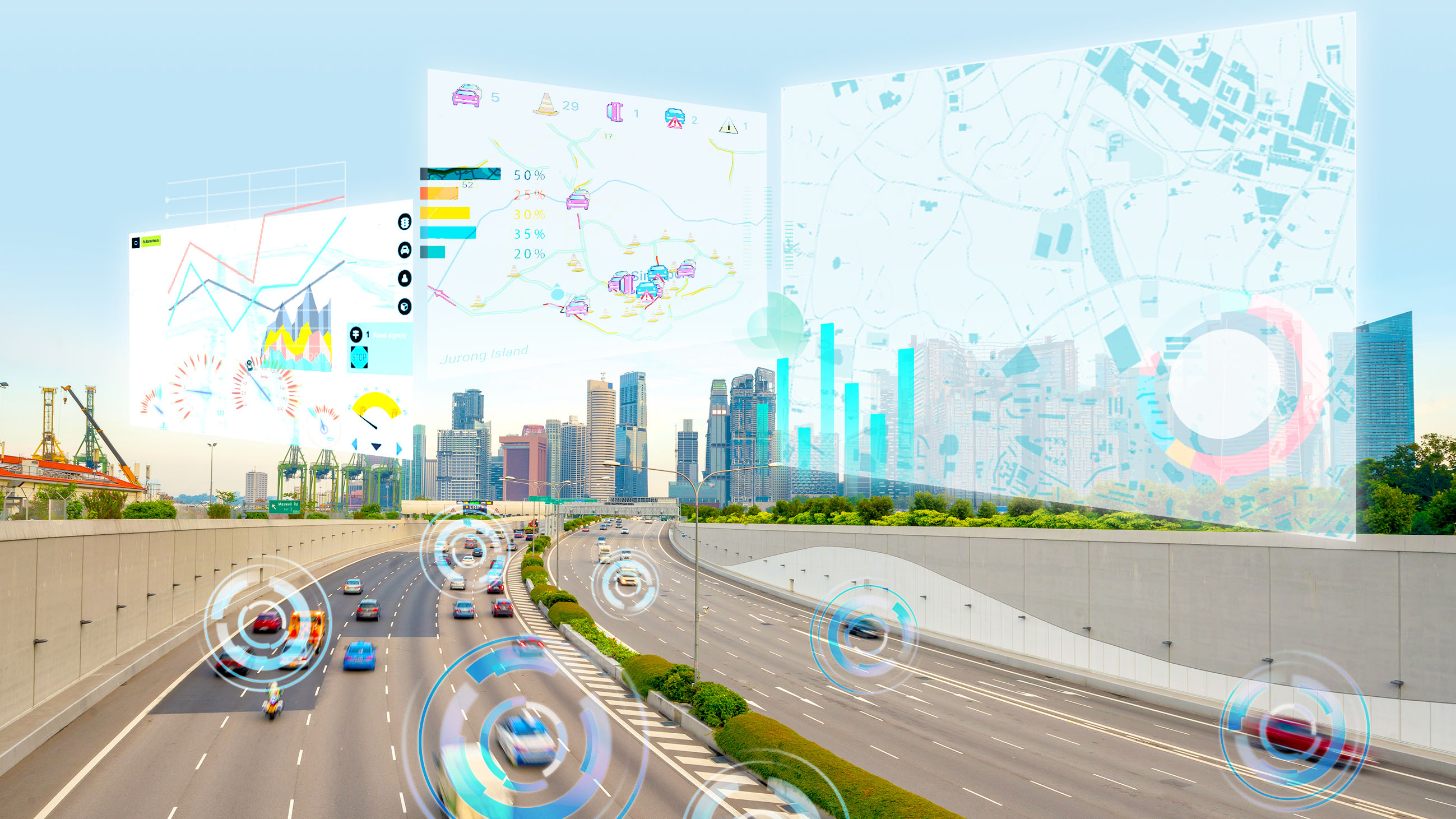
So, how do these intelligent networks gather and process vast streams of data to transform chaotic city traffic into a seamless, intelligent flow? The answer lies in a sophisticated, multi-layered infrastructure where raw sensor data is fused and analyzed by artificial intelligence, feeding into broader connected transport data systems that empower city-wide decision-making. This journey from sensor to signal to solution forms the indispensable backbone of the efficient, livable cities of tomorrow.
From Chaos to Clarity: The AI Sensor Backbone
At the foundation of any intelligent traffic management system is the sensor network itself. Modern AI urban traffic sensor networks are far more than just cameras at intersections. They represent a multi-layered web of perception, deployed across roads, intersections, and key corridors for comprehensive monitoring. This suite typically includes:
- Visual Sensors: High-definition and thermal cameras capture vehicle counts, classification, speed, and pedestrian movement, even in low-light conditions.
- Radar & LiDAR: These sensors provide precise speed and location data, unaffected by weather or light, crucial for tracking object trajectories and filling perception gaps.
- In-Road Sensors: Inductive loops and geomagnetic sensors embedded in pavement detect vehicle presence and passage with high reliability.
- Acoustic Sensors: Used to detect specific events like crashes or excessive honking, adding an auditory layer to situational awareness.
The power of this approach lies in hybrid sensor fusion. For instance, a network might use geomagnetic sensors for broad coverage and radar for precision, cross-validating data to deliver accurate, reliable traffic insights. This diverse sensor tapestry forms the foundational data-gathering layer that makes advanced smart city mobility tech possible.
Beyond Sensing: The AI and ML Brain
Raw sensor data is just noise without intelligence. This is where artificial intelligence and machine learning become the central nervous system. Sophisticated algorithms process the incoming data streams in real-time, shifting the system from basic detection to predictive analytics and automated adjustment.
Key AI models powering this transformation include:
- Convolutional Neural Networks (CNNs): Models like YOLO V5 are used for real-time vehicle and pedestrian detection, achieving high accuracy (with mean average precision scores around 0.88) directly from video feeds.
- Recurrent Neural Networks (RNNs): Long Short-Term Memory (LSTM) networks analyze time-series data to predict traffic conditions. These models can forecast congestion patterns 12 hours ahead with low error rates (e.g., Mean Squared Error of 4.52).
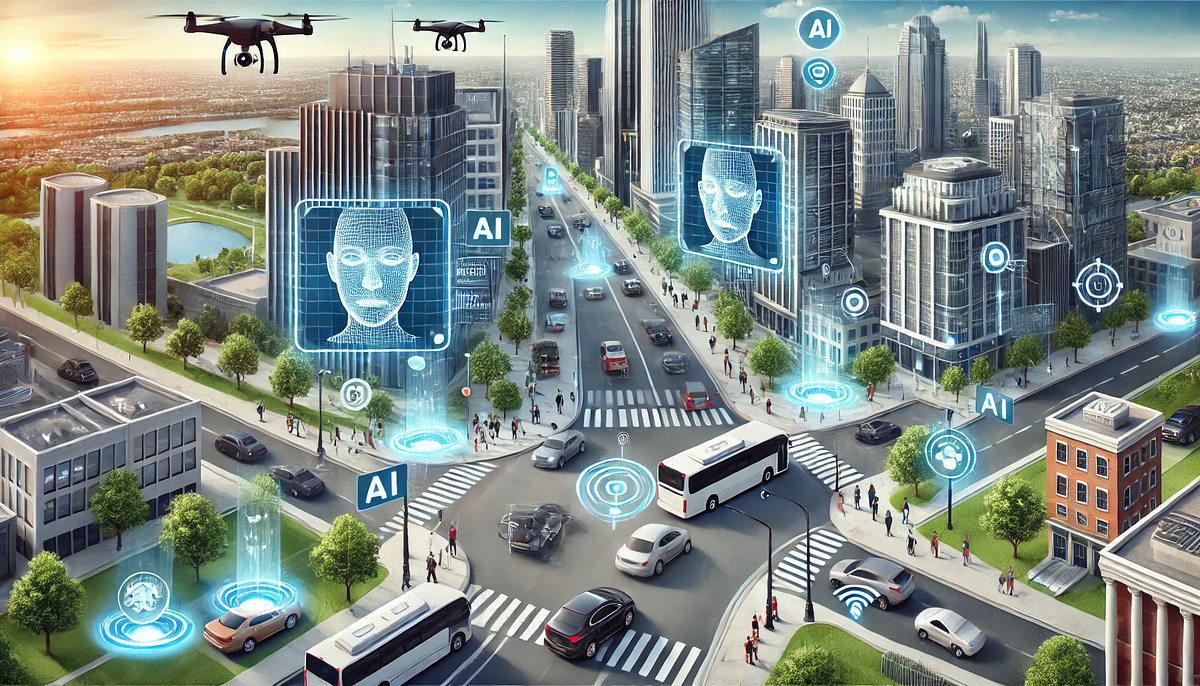
Crucially, this processing increasingly happens via edge computing—where AI algorithms run on local devices at the intersection itself. This minimizes latency, allowing for immediate decisions like changing a signal phase the moment an ambulance is detected, without waiting for data to travel to a distant cloud server and back. This edge intelligence is what transforms a passive sensor into an active component of the city’s AI urban traffic sensor network.
Integrating into the Smart City Ecosystem
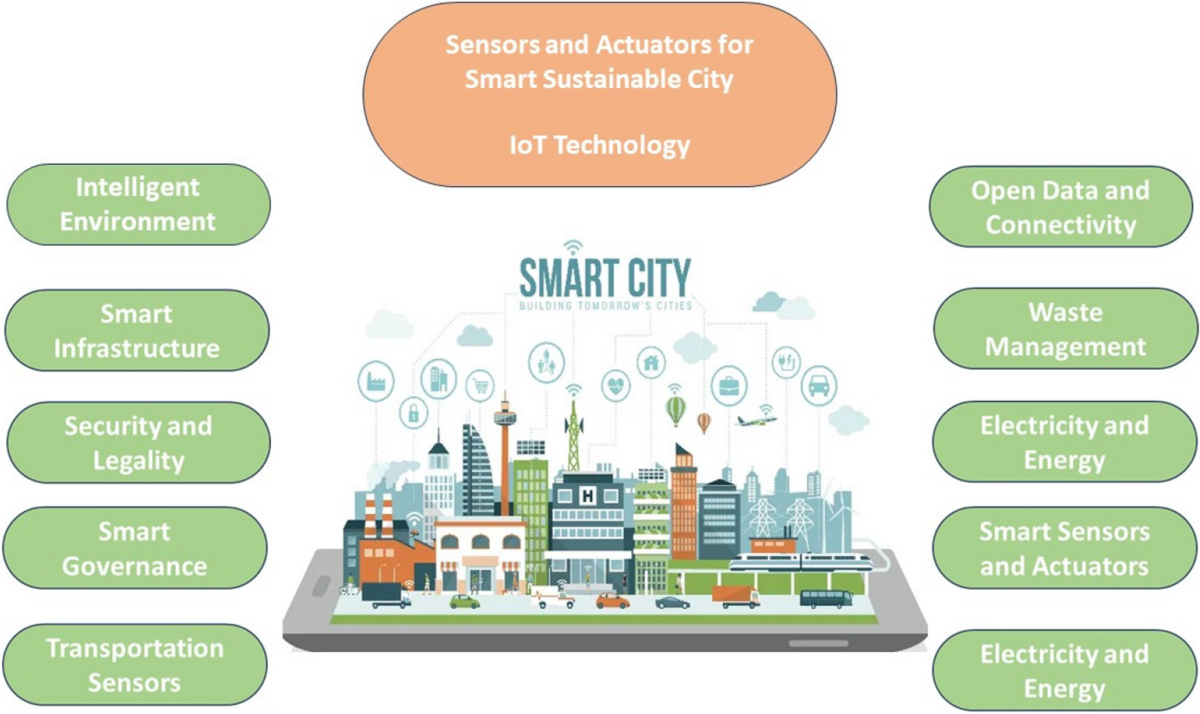
The true potential of sensor data is realized when it escapes silos and integrates into the broader urban fabric. This is achieved through Internet of Things (IoT) connectivity and V2X (vehicle-to-everything) communication, linking the AI urban traffic sensor network directly to other elements of smart city mobility tech.

This integration enables:
- Adaptive Traffic Signal Control (ATSC): Signals change their timing in real-time based on live conditions. Edge AI at an intersection can create “green waves” for approaching platoons of vehicles, drastically reducing stops and idling.
- Dynamic Message Signs & Navigation Apps: Congestion data from sensors is instantly relayed to variable message signs (VMS) and commercial navigation apps like Waze or Google Maps, advising drivers of delays and alternative routes.
- Public Transit Prioritization: Sensors can detect approaching buses and extend green lights or trigger early green phases, making public transport more reliable and efficient.
Consider New York City’s IoT backbone, which connects over 14,000 intersections for citywide oversight. Or the example of an AI-powered intersection acting as the “eyes and ears” of the city, prioritizing emergency vehicles by pre-emptively clearing a path through traffic. This interconnectedness is the hallmark of mature smart city mobility tech.
The Synthesis: Connected Transport Data Systems
While sensors provide the raw feed, their value multiplies when combined. This is the role of connected transport data systems. These platforms aggregate, analyze, and visualize information from AI urban traffic sensor networks alongside external sources like GPS from buses, ride-share APIs, and connected vehicles.

The result is a holistic, near real-time dashboard of city mobility. Planners can see not just where cars are, but understand travel times, spot recurring crash hotspots, and analyze the impact of construction or events. Platforms like Urban SDK exemplify this, combining traffic counts, travel times, crash reports, and even equity layers (like school zones) into a single analytical environment.
Architecturally, these systems span multiple layers: the sensing layer (our sensor networks), the networking layer (IoT/V2X), the processing layer (cloud/edge AI), and the application/control layer that delivers insights and triggers actions. This synthesis is what moves cities from managing isolated intersections to optimizing the entire network, fueling true data-driven urban planning and providing the public with transparent, actionable information.
Tangible Impact: Benefits and Real-World Proof
The theoretical promise of these technologies is compelling, but the real-world results are what solidify their value. Cities implementing integrated smart city mobility tech are seeing transformative outcomes:
- Reduced Congestion & Travel Time: Pittsburgh’s SURTRAC AI system cut wait times by 40% and travel times by 25%. Los Angeles’ ATSAC system saves an estimated 9.5 million driver hours yearly through adaptive signals. These are prime examples of the revolutionary AI solutions for traffic congestion being deployed today.
- Improved Emergency Response: With V2X communication, traffic signals can pre-emptively turn green for approaching fire trucks and ambulances, shaving critical minutes off response times.
- Enhanced Safety for All: Sensors monitor pedestrian crossing patterns and visibility, allowing cities to adjust signal timing for safer crossings and align with Vision Zero goals to eliminate traffic fatalities.
- Lower Emissions & Fuel Use: Optimized traffic flow means less idling and stop-and-go driving. The optimized flows in Pittsburgh’s system, for example, led to a measurable reduction in vehicle emissions.
- Data-Driven Planning: With robust connected transport data systems, cities can perform before-and-after studies to quantitatively measure the impact of new bike lanes, transit routes, or zoning changes, removing guesswork from policy.

This virtuous cycle is key: AI in the sensor network detects building congestion, adjusts local signals, and simultaneously updates city-wide dashboards and navigation apps. This seamless flow of information and action is the ultimate goal of an integrated mobility ecosystem.
Navigating the Roadblocks: Challenges and Solutions
Deploying city-wide AI urban traffic sensor networks is not without significant hurdles. Acknowledging and addressing these challenges is essential for sustainable implementation.
- Data Privacy & Security: Vast collections of video and movement data raise legitimate privacy concerns. The solution lies in robust data governance policies, anonymization techniques at the edge (e.g., blurring faces and license plates in real-time), and secure, encrypted data transmission.
- High Infrastructure & Maintenance Costs: The upfront cost of sensors, edge computing hardware, and network infrastructure is substantial. Cities must view this as a long-term capital investment with a clear ROI in reduced congestion and improved safety. Phased rollouts and public-private partnerships can help manage costs.
- Interoperability & Vendor Lock-in: With many proprietary systems on the market, ensuring different sensors and software can communicate is a major challenge. Advocacy for open standards and modular, hybrid architectures that allow for best-in-class components is critical.
The path forward requires building scalable, ethical connected transport data systems from the ground up. Secure data fusion frameworks and increased edge processing are technical solutions that minimize latency and central data vulnerabilities, addressing both performance and privacy concerns simultaneously.
The Road Ahead: Future Integrations
The evolution of urban mobility is accelerating, and AI urban traffic sensor networks are poised to become even more central. The future points toward deeper, more expansive integration.
A key frontier is the seamless interaction with autonomous vehicles (AVs). Through enhanced V2X communication, sensor networks will broadcast real-time intersection geometry, signal phase, and pedestrian data directly to AVs, far beyond what their onboard sensors can see. This will be a cornerstone for breakthrough autonomous vehicle technology, enabling safer and more efficient navigation.

Furthermore, we are moving towards city-scale AI simulation. Tools like Google’s Mobility AI project aim to create digital twins of urban transportation networks. These simulations, fed by live data from sensor networks, can model the impact of policy changes, new infrastructure, or major events before a single shovel hits the ground. This predictive capability is vital for designing carbon-neutral cities and represents the next leap in unbeatable AI-powered transportation systems.
This evolution mirrors the intelligence and connectivity we’re seeing in other domains, like the unstoppable rise of AI-powered smart homes, but applied to the vastly more complex urban scale. The symbiotic relationship between sensing, AI, and integrated data systems will be the driving force behind sustainable, resilient, and truly livable urban environments.
Frequently Asked Questions
What’s the difference between traditional traffic cameras and an AI urban traffic sensor network?
Traditional cameras often just record video for later human review. An AI network uses a suite of sensors (cameras, radar, etc.) with built-in artificial intelligence that analyzes video and data in real-time to automatically count vehicles, detect incidents, measure speeds, and trigger immediate responses—like changing a traffic signal—without human intervention.
Are these sensor networks a privacy threat?
Privacy is a paramount concern. Responsible implementations address this by using edge processing to anonymize data (e.g., converting video of a person into a simple “pedestrian” datum) right at the sensor before any data is transmitted. Clear public policies on data use, retention, and access are also essential components of any trusted system.
How long does it take for a city to see benefits after installing this technology?
Benefits can be immediate for specific functions like emergency vehicle prioritization. For area-wide congestion reduction, benefits become statistically significant within the first few months of operation as the AI learns local patterns. Systems like Pittsburgh’s SURTRAC showed measurable travel time reductions within the first year of deployment.
Can these systems help with climate change goals?
Absolutely. A major source of urban emissions is idling and stop-and-go traffic. By smoothing traffic flow, optimizing signal timing, and promoting efficient routing, these systems directly reduce fuel consumption and tailpipe emissions. This makes them a key technology for cities aiming to meet carbon neutrality targets.
What’s the first step for a city wanting to implement smart city mobility tech?
It typically starts with a strategic plan and a pilot project. Cities often identify a chronically congested corridor or a high-risk intersection as a testbed. They deploy a limited sensor network and adaptive signal system, measure the results, build public understanding, and use that success to secure funding and political will for a broader rollout. Engaging with local communities and stakeholders from the beginning is crucial for success.