
Compost at Home: A Beginner’s Guide to Sustainable Gardening and Reducing Food Waste
Estimated reading time: 8 minutes
Key Takeaways
- Composting at home can divert up to 30% of household waste from landfills, turning scraps into nutrient-rich soil.
- It’s a cornerstone of sustainable gardening, enriching soil with essential nutrients for healthier plants.
- No prior experience or large yard needed—beginner composting is accessible with simple setups like bins or tumblers.
- Follow the 1:2 ratio of greens to browns to maintain balance and avoid common pitfalls like odors or pests.
- Regular maintenance, including turning and moisture control, leads to finished compost in 2-6 months.
- Using compost in your garden closes the loop, helping you reduce food waste while boosting plant growth.
Table of contents
- Compost at Home: A Beginner’s Guide to Sustainable Gardening and Reducing Food Waste
- Key Takeaways
- Introduction: Turning Scraps into Garden Gold
- What is Composting and Why Start?
- Core Materials: Greens vs. Browns & The 1:2 Ratio Rule
- Step-by-Step Guide to Building and Maintaining a Compost Pile
- Space-Saving Alternatives for Apartments and Small Homes
- Common Mistakes and Troubleshooting for Beginners
- Using Finished Compost in Your Sustainable Garden
- Recap and Call to Action
- Frequently Asked Questions
Introduction: Turning Scraps into Garden Gold
Imagine turning your weekly kitchen scraps—veggie peels, coffee grounds, eggshells—into black gold for your garden, diverting up to 30% of household waste from landfills while enriching soil for healthier plants; this is the power of learning to compost at home, a cornerstone of sustainable gardening that helps you reduce food waste effortlessly. Even if you’re new to beginner composting, this guide provides step-by-step instructions, no yard required, with tips to avoid common pitfalls. Composting at home can divert significant waste, as households throw away enough food scraps annually to fill landfills [source]. Let’s dive into what composting really is and why it’s perfect for beginners.
What is Composting and Why Start?
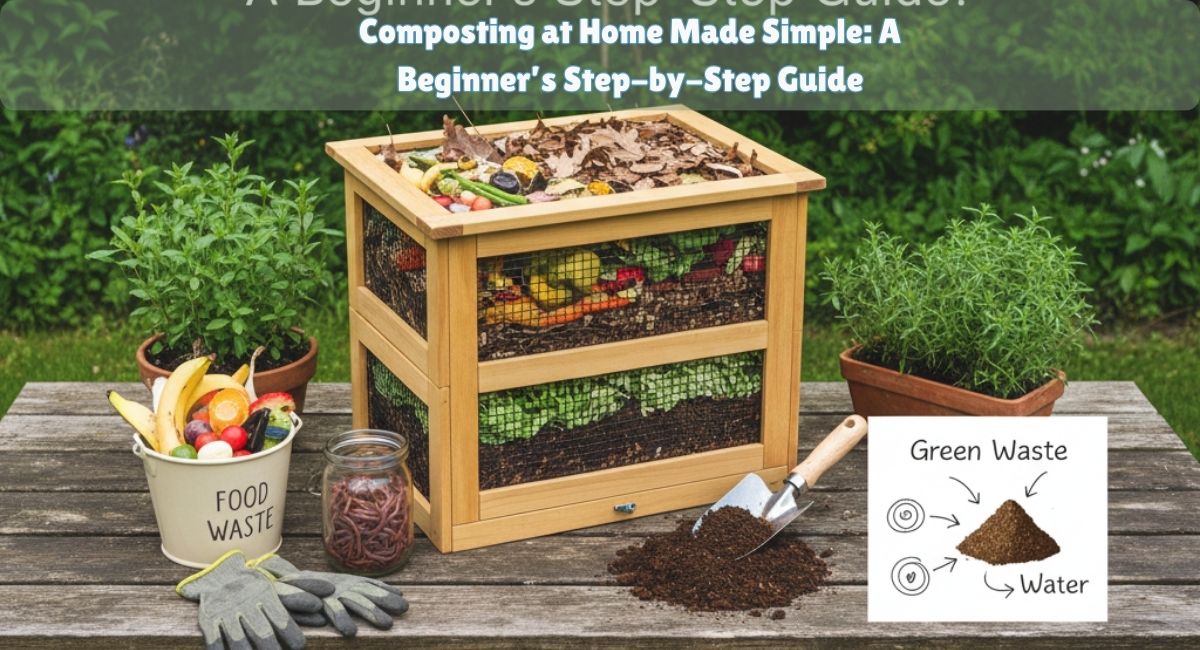
Composting is the natural process where microbes, bacteria, and fungi break down organic materials like kitchen scraps and yard waste into nutrient-rich humus (dark, crumbly soil amendment) through aeration, moisture, and a balance of carbon and nitrogen [source]. Why start? It improves soil fertility for sustainable gardening by adding essential nutrients like nitrogen, phosphorus, and potassium; helps households reduce food waste by up to 30% by repurposing scraps instead of trashing them; and reduces methane emissions from landfills, making it eco-friendly [source]. No prior experience or large space needed—options exist for apartments; even a small pile works for beginner composting [source]. To succeed, master the core materials: greens and browns.
Core Materials: Greens vs. Browns & The 1:2 Ratio Rule
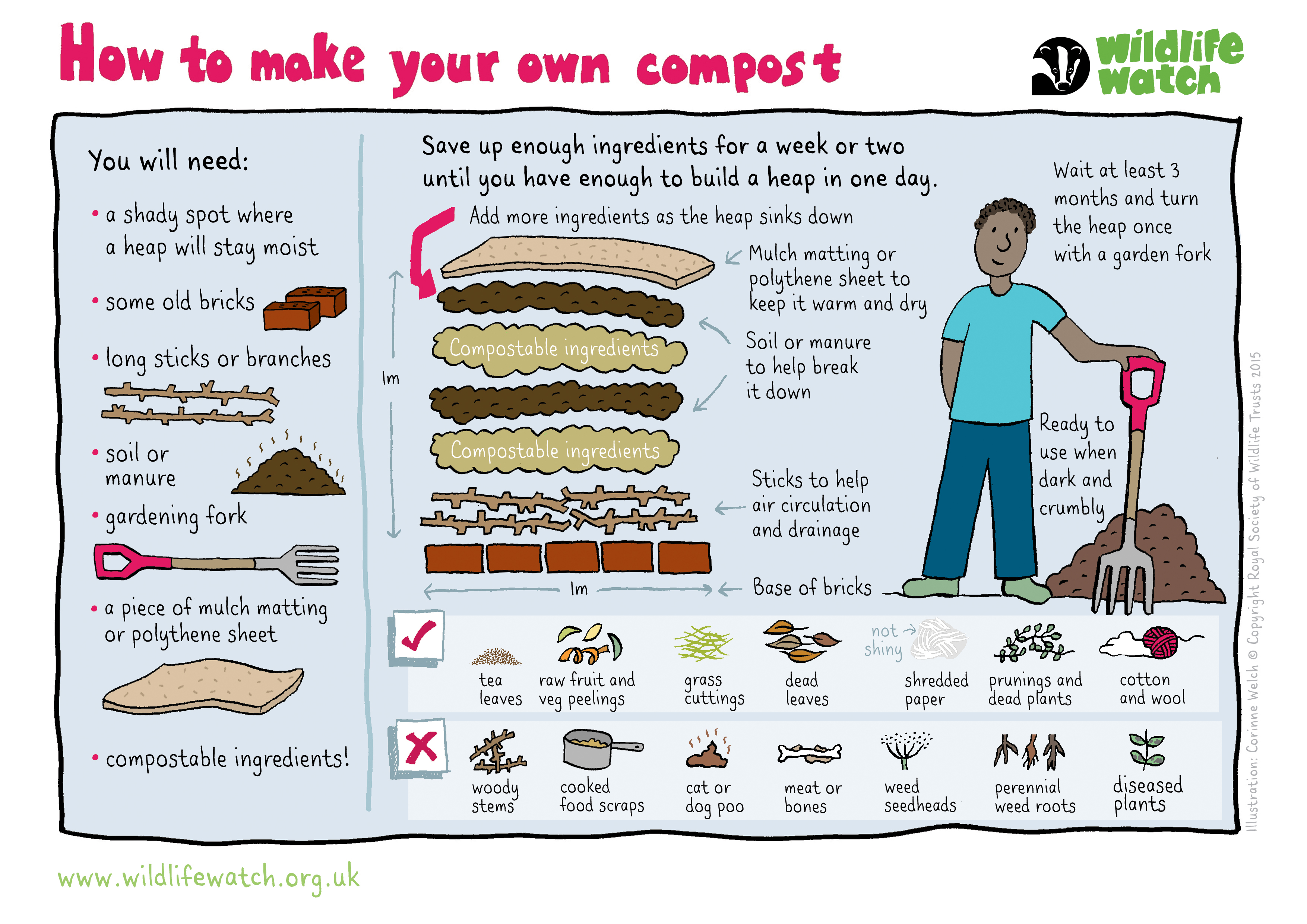
Use 1 part greens (nitrogen-rich, moist materials) to 2 parts browns (carbon-rich, dry materials) by volume to fuel decomposition without smells or pests [source] [source] [source] [source] [source]. Start with browns: carbon sources like dry leaves, twigs, wood chips, cardboard, or newspaper; begin your pile with a 4-6 inch base layer for essential airflow and drainage [source] [source]. Add greens: nitrogen sources like vegetable scraps, fruit peels, grass clippings, coffee grounds, or manure; chop into small pieces to speed breakdown and reduce food waste from kitchen sources [source]. Avoid: meat, dairy, oily foods, pet waste, or diseased plants to prevent pests, odors, and pathogens [source] [source].

| Material Type | Examples | Ratio & Tips |
|---|---|---|
| Browns (Carbon-rich) | Dry leaves, twigs, wood chips, cardboard | 2 parts by volume; use as bulky base layer (4-6 inches) for airflow and to absorb moisture [source] [source] |
| Greens (Nitrogen-rich) | Veggie/fruit scraps, grass clippings, coffee grounds | 1 part by volume; chop small, always cover with browns to avoid smells and support beginner composting [source] [source] |

This balance creates compost ideal for garden beds, closing the loop on waste for sustainable gardening. If you’re also looking to enhance your home with smart, budget-friendly devices, check out our guide on How to Shop for Tech Gadgets on a Budget.
Step-by-Step Guide to Building and Maintaining a Compost Pile
- Choose location—sunny spot with 3-4 hours of direct sun daily, good drainage, airy (not against walls), near water source and garden, at least 2 feet from structures [source] [source].
- Pick setup—DIY pallet bin (3x3x3 feet ideal size to retain heat), tumbler for easy turning, or countertop unit for apartments to enable compost at home anywhere [source].
- Layer like lasagna—start with 4-6 inch coarse browns base, add 3-4 inches greens, then more browns; moisten like a wrung-out sponge (40-60% moisture) [source] [source] [source] [source].
- Maintain—water weekly to keep moist, turn pile every 1-2 weeks (monthly for beginners) with a pitchfork for oxygen; aim for internal temperature of 130-160°F for fast breakdown [source].
- Harvest—after 2-6 months, bottom layer turns to dark, earthy-smelling compost; sift out unfinished bits to reuse, apply 2-3 inches to garden soil for sustainable gardening [source].

Beginner tip: Keep pile at 3 feet cubed to generate heat naturally for beginner composting success [source] [source]. For more smart solutions to automate your home, explore The Ultimate Guide to the Best Smart Plugs for Home Automation.
Space-Saving Alternatives for Apartments and Small Homes
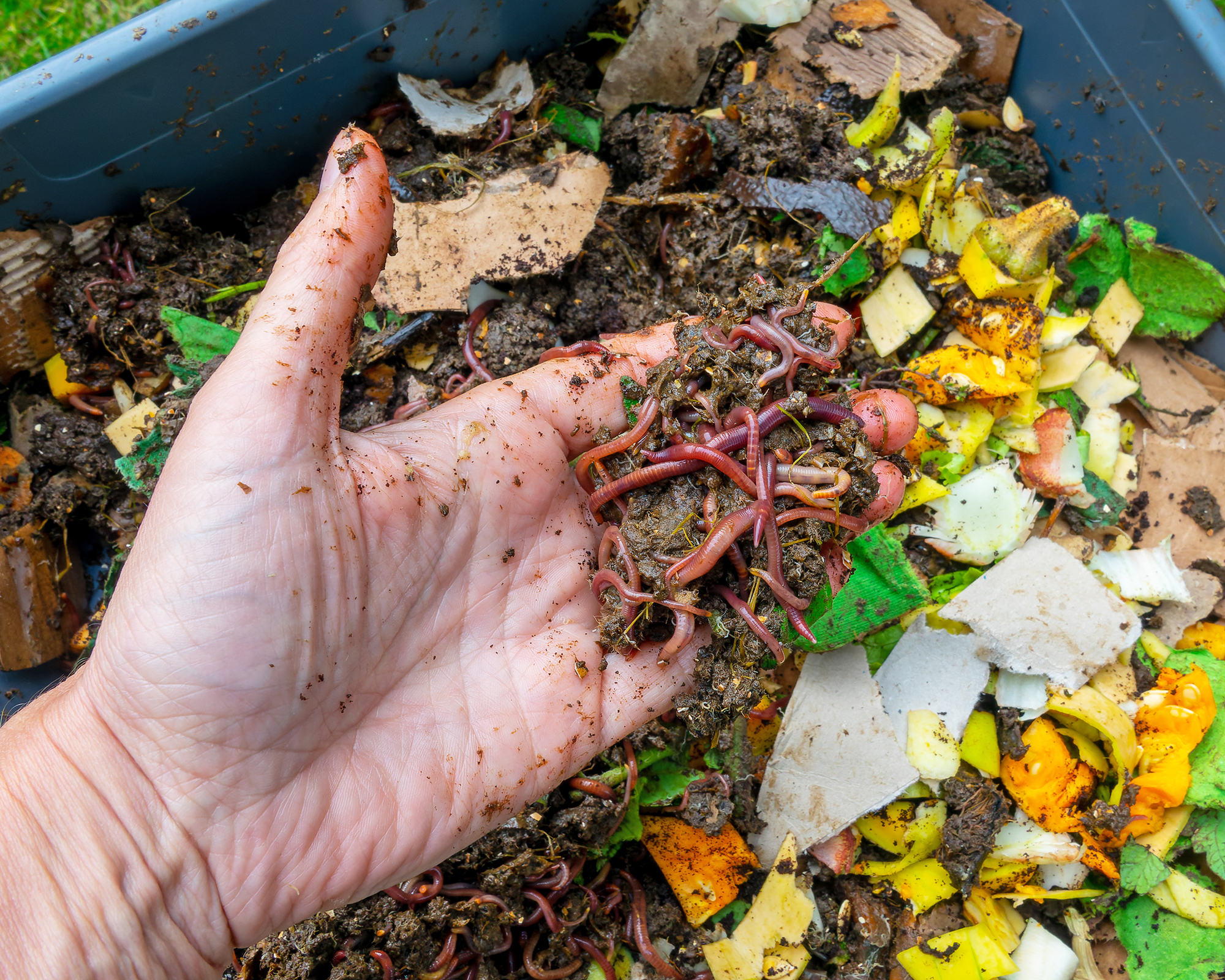
Apartment options: Vermicomposting (worm bins with red wigglers eating scraps indoors), countertop electric composters, tumblers on balconies, or drop off at community gardens—all ways to reduce food waste without a yard [source]. Tip: Start small with a 5-gallon bucket drilled for air to ease into beginner composting. If you’re on a tight budget, our Buying guide for budget friendly gadgets can help you find affordable tools.

Common Mistakes and Troubleshooting for Beginners
- Too wet or smelly: Add more browns and turn for aeration [source].
- Pests attracted: Bury greens deeply, never add meats/dairy/oils, secure bin lids [source] [source].
- Slow decomposition: Chop materials smaller, ensure 1:2 ratio, increase turning for oxygen [source] [source].
:strip_icc()/compost-pile-rake-86cd59eb-8dac48cb789444edb109016d843b7743.jpg "Compost at Home Made Simple: The Ultimate Beginner's Guide to Sustainable Gardening and Reducing Food Waste 8")
Pro tip: Ideal compost smells earthy; if not, adjust as above to keep your compost at home thriving. Just as you secure your compost, securing your smart devices is crucial—learn more in The Simple Ultimate Guide to Secure Smart Home Devices.
Using Finished Compost in Your Sustainable Garden
Application: Mix 2-3 inches into topsoil around plants, use as mulch, or top-dress lawns; expect visible growth improvements in weeks as it boosts microbes and nutrients [source]. Full circle: Scraps that helped you reduce food waste now fuel bountiful harvests, embodying sustainable gardening. For more innovative ways to enhance your living space, see The Ultimate Guide to Finding the Best Smart Plugs for Home Automation.
:strip_icc()/compost-soil-shovel-c0bdd251-5a38b6d7d23a4344a9550d3d65da9211.jpg "Compost at Home Made Simple: The Ultimate Beginner's Guide to Sustainable Gardening and Reducing Food Waste 9")
Recap and Call to Action
Quick recap: Balance greens/browns, layer in a 3×3 bin, maintain moisture/air, harvest in months for sustainable gardening wins that reduce food waste. Start your beginner composting pile this weekend—grab a bin, sort your scraps, and share your progress in the comments below; for supplies, check local garden stores or online eco-shops.

Frequently Asked Questions
- How long for beginner composting? 2-6 months depending on maintenance [source].
- Can I compost at home in an apartment? Yes, with worm bins or tumblers [source].
- Does it really help reduce food waste? Absolutely, up to 30% of household waste [source].