
High Brightness OLED Tech 2026: Key Innovations and Performance Boosts for Next-Gen TVs
Estimated reading time: 12 minutes
Key Takeaways
- High brightness OLED tech 2026 targets peak luminance of 4,500 nits via tandem architectures and advanced light extraction, doubling efficiency over prior generations.
- Traditional OLED limitations, like 80% light loss, are overcome with innovations such as KAIST’s near-planar outcoupling structures, enabling brighter displays without sacrificing form factors.
- Tv panel innovation in 2026 includes RGB Tandem 2.0, 4th-gen MLA with META Booster, and quasi-planar designs, driving significant display performance improvements in brightness, color, and efficiency.
- Consumer benefits will feature HDR peak brightness up to 4,500 nits, expanded color gamuts (e.g., REC 2020 coverage up to 85%), higher SDR luminance, and reduced burn-in risk for next-gen TVs and monitors.
- Consumer tv tech updates will bring brighter OLEDs to market in various sizes and refresh rates, with premium pricing initially but broader availability expected due to efficiency gains.

Table of contents
- High Brightness OLED Tech 2026: Key Innovations and Performance Boosts for Next-Gen TVs
- Key Takeaways
- Introduction: The Quest for Brighter OLEDs
- The Brightness Bottleneck: Why Traditional OLEDs Struggle
- Breaking Barriers: Tandem Architectures and Light Extraction
- Innovations Unpacked: Key TV Panel Advancements for 2026
- Performance Leap: What the Numbers Mean for Your Viewing Experience
- Market Impact: What Consumers Can Expect from Next-Gen TVs
- Beyond 2026: The Future of Display Technology
- Frequently Asked Questions
Introduction: The Quest for Brighter OLEDs
The excitement around high brightness OLED tech 2026 is palpable, with flagship TV panels poised to achieve peak luminance up to 4,500 nits through revolutionary tandem architectures and optimized light extraction—doubling efficiency over prior generations. This progress report on tv panel innovation and display performance improvements propels consumer TVs toward unprecedented brightness while preserving OLED’s signature contrast and flexibility, directly addressing your search for the latest in display tech.
Our goal is to explore the consumer tv tech updates driving the next generation, with high brightness oled tech 2026 at the forefront. But what limitations are being overcome to make this possible?
The Brightness Bottleneck: Why Traditional OLEDs Struggle
Traditional OLEDs lose over 80% of generated light to internal reflections and absorption within stacked organic layers, capping brightness and efficiency. High brightness oled tech 2026 is the solution via core shifts like KAIST’s near-planar light outcoupling structures, which extract over twice the light from finite pixel sizes without protruding elements or pixel interference, maintaining flat, flexible form factors.
Think of it like trying to shine a light through a dense fog—most of it gets scattered and lost. That’s the challenge OLEDs have faced for years.
- Internal Reflections: Light bounces between layers, never reaching the viewer.
- Absorption: Organic materials soak up photons, reducing output.
- Heat Buildup: Inefficient light conversion leads to excess heat, shortening lifespan.
These issues have kept OLED brightness lower than competing technologies, but 2026 is set to change that.

Breaking Barriers: Tandem Architectures and Light Extraction
Tandem OLED stacks—layering multiple emissive units—deliver display performance improvements, boosting peak brightness from 4,000 nits in 2025 to 4,500 nits in 2026 (a 12.5% gain) and raising average APL measurements by 16%. This isn’t just incremental—it’s a game-changer for brighter screens. These foundational changes stem from breakthroughs in panel design—let’s dive into the specifics.

- Tandem Stacks: By stacking two or more OLED layers, each unit contributes to light output, effectively multiplying efficiency without increasing power draw dramatically.
- Light Extraction Techniques: Innovations like enhanced microlens arrays (MLA+) and near-planar structures act as “light guides,” channeling more photons outward. It’s like adding mirrors and lenses to a flashlight to focus the beam.
- Driving Algorithms: Advanced electronics optimize current flow across layers, ensuring uniform brightness and color accuracy even at high outputs.
These technologies work in concert to push brightness boundaries while maintaining OLED’s renowned black levels and viewing angles.
Innovations Unpacked: Key TV Panel Advancements for 2026
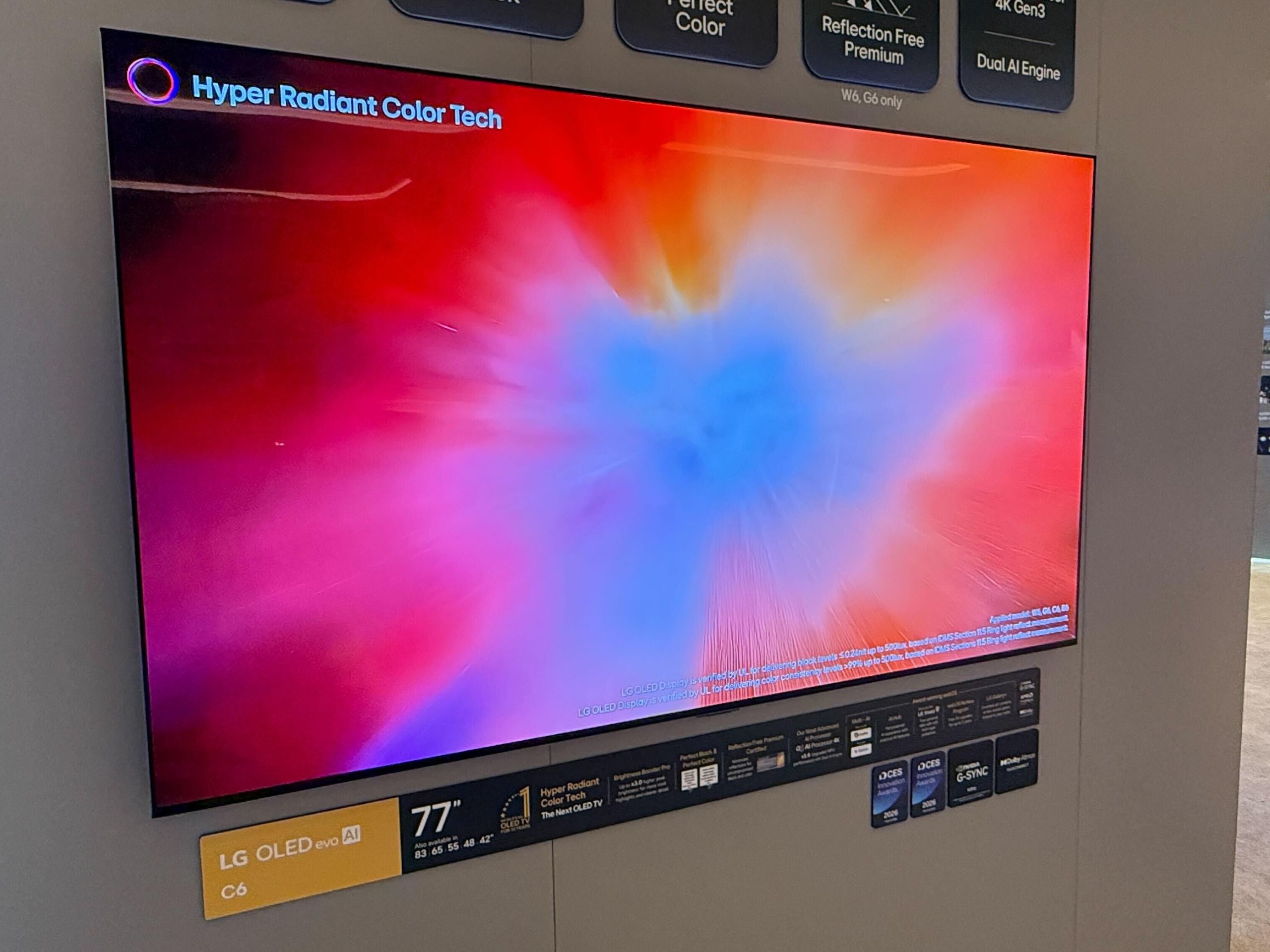
Tv panel innovation in 2026 centers on tandem WOLED/WLED with primary RGB Tandem 2.0, featuring optimized pixel designs, advanced driving algorithms, and MLA+ (enhanced microlens arrays). LG Display’s evolutions include 3rd-gen MLA with META Booster for superior light extraction, refined in 4th-gen panels for tandem stacks. KAIST’s quasi-planar structures achieve hemispherical-lens-level efficiency in thin profiles, ideal for small pixels, while reducing heat and extending lifespan. These enable 2026 monitor panels at 1,500 nits peak (up from 1,300 nits) and TV panels in sizes like 27-inch 1440p or 39-inch ultrawide 5K2K, with upgraded pixel layouts for clarity. For a deep dive into a specific ultra-bright 2026 model, check out our analysis of the Leaked LG G6 EVO AI OLED TV 3300 Nits Brightness: The Game-Changing OLED and Gaming Display for CES 2026. These innovations deliver the promised high brightness oled tech 2026 without compromising OLED advantages.
A simple table for scannability:
| Innovation | Description | Benefit |
|---|---|---|
| Tandem WOLED/WLED RGB Tandem 2.0 | Layered emissive units with optimized pixels and MLA+ | Higher efficiency and brightness |
| 4th-gen MLA with META Booster | Refined light extraction for tandem stacks | Superior output in TVs |
| KAIST quasi-planar structures | Near-planar outcoupling without protrusions | Double light extraction, less heat |

Why this matters: These aren’t just lab experiments—they’re engineered for mass production, ensuring that next-gen TVs will be brighter, more efficient, and longer-lasting. The integration of AI-driven features, as seen in models like the LG G6 EVO, further enhances smart capabilities, making 2026 a landmark year for display tech.
Performance Leap: What the Numbers Mean for Your Viewing Experience
Now, imagine these innovations in action—what do they mean for your viewing experience? The display performance improvements for viewers are substantial: HDR peak brightness hits 4,500 nits on flagships (vs. prior 4,000 nits), with full APL at 335 nits (up from 275 nits) and sustained gains across ranges. Color volume surges—BT.2020 coverage from 75% to 83%, DCI-P3 over 99.5%, REC 2020 at 85% (from 74%)—for vivid SDR/HDR. Blacks deepen via tandem panels and glossy/anti-glare options, SDR luminance reaches 380 nits (from 260-270 nits), and efficiency cuts power use while minimizing burn-in risk through better heat management. For more on how AI is enhancing the smart TV experience, read Unbeatable AI-Powered Home Entertainment: Revolutionary Smart TV Innovations Transforming Your Viewing Experience.
Picture watching an HDR sunset with colors popping like never before—the deep oranges and reds shining with intense brightness against a perfectly black sky, or gaming in a bright room where details no longer get washed out.
A comparative table:
| Metric | 2025 Baseline | 2026 Improvement |
|---|---|---|
| Peak Brightness (TV Flagship) | 4,000 nits | 4,500 nits (+12.5%) |
| Peak Brightness (Monitors) | 1,300 nits | 1,500 nits (+15%) |
| REC 2020 Coverage | ~75% | ~83-85% |
| Full APL Brightness | 275 nits | 335 nits |
| SDR Luminance | 260-270 nits | Up to 380 nits |

These improvements translate to real-world benefits: brighter HDR highlights that make specular details sparkle, expanded color palettes for more lifelike images, and reduced eye strain in varied lighting conditions. The efficiency gains also mean lower energy bills and a smaller environmental footprint—a win for both viewers and the planet.
Market Impact: What Consumers Can Expect from Next-Gen TVs
These specs aren’t staying in labs—they’re hitting the market soon. Here’s what consumers can expect. Translating into consumer tv tech updates: brighter tandem OLED TVs and monitors (e.g., ASUS ROG Swift PG27UCDM at 4K/240Hz with RGB Tandem), enhancing glare resistance and HDR accuracy. Expect wider adoption in 27-39 inch panels with 144-480Hz refresh, matte/glossy finishes, and human-friendly dimming. For a comprehensive look at a leading 2026 OLED TV, see our guide: LG OLED Evo G6 TV: The Ultimate Guide to Its Stunning Innovations. Pricing will see premium flagships higher initially, but efficiency gains support broader availability; content compatibility excels with expanded gamuts for HDR10+/Dolby Vision. Note flexible applications extend to mobiles, prolonging battery life. The market will segment, with features like reduced burn-in and viewing upgrades in bright rooms.

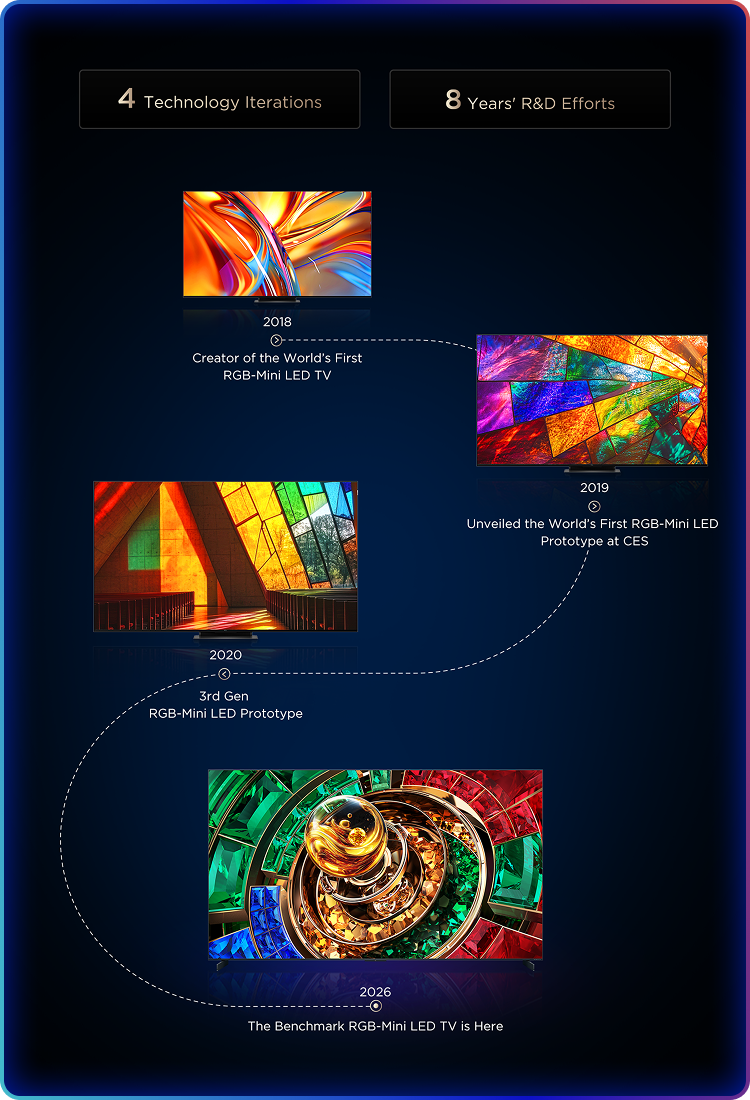
It’s worth noting that Mini-LED is also pushing boundaries in brightness; learn about a competing 2026 home theater technology in SQD Mini LED TV 2026: The Revolutionary Future of Home Theater Displays.
- Product Diversity: From gaming monitors to large-screen TVs, high-brightness OLEDs will cater to various use cases, including professional creative work where color accuracy is paramount.
- Content Readiness: With streaming services increasingly offering HDR content, these displays will fully utilize advanced formats like Dolby Vision, making every movie night immersive.
- Longevity: Improved heat management and material science mean these panels could last longer than ever, addressing common concerns about OLED burn-in.
As the technology matures, we may see prices drop, making high-brightness OLEDs more accessible to mainstream consumers by the late 2020s.
Beyond 2026: The Future of Display Technology
Wrapping up, tv panel innovation like tandem RGB 2.0 and near-planar outcoupling converges with display performance improvements to deliver high brightness oled tech 2026 as a milestone, enabling 4,500-nit TVs with superior color, blacks, and efficiency. This promises richer viewing experiences for users tracking trends.
As consumer tv tech updates continue, watch for perovskite/quantum dot hybrids pushing brightness even further. The innovations powering these displays are also foundational for other spatial computing devices; explore this in Revolutionary Apple Vision Pro Spatial Computing: A Game-Changing Review. Stay ahead of high brightness oled tech 2026 by subscribing for the latest display tech breakdowns.
Frequently Asked Questions
What exactly is high brightness OLED tech 2026, and how does it differ from current OLEDs?
High brightness OLED tech 2026 refers to next-generation OLED displays that incorporate tandem architectures and advanced light extraction methods to achieve peak brightness levels up to 4,500 nits—significantly higher than the 1,000-2,000 nits common in today’s OLEDs. Unlike traditional OLEDs, which lose most light internally, these innovations minimize waste, resulting in brighter images without sacrificing contrast or color accuracy.
Will these brighter OLEDs suffer from increased burn-in or shorter lifespans?
Not necessarily. In fact, high brightness oled tech 2026 includes better heat management and more efficient light conversion, which can reduce the risk of burn-in. Tandem structures distribute electrical load across multiple layers, lowering stress on individual pixels. Additionally, materials like those in KAIST’s quasi-planar designs dissipate heat more effectively, potentially extending panel lifespan compared to older OLEDs.
How do tandem OLEDs improve color volume and HDR performance?
Tandem OLEDs stack multiple emissive layers, allowing each layer to be optimized for specific color channels or brightness levels. This layered approach enhances color purity and luminance simultaneously, leading to wider color gamuts (e.g., REC 2020 coverage up to 85%) and higher peak brightness for HDR content. It’s like having multiple projectors working together to create a more vibrant and dynamic image.
When can consumers expect to buy TVs with these 2026 OLED technologies, and at what price points?
First products featuring these technologies are likely to debut in late 2025 or early 2026, with wider availability throughout 2026. Initially, expect premium pricing—possibly 20-30% higher than current flagship OLEDs—due to advanced manufacturing. However, as production scales and efficiencies improve, prices should gradually decrease, making them more accessible by 2027. For early adopters, brands like LG and ASUS will lead the charge with models like the LG OLED Evo G6 TV.
How does high brightness OLED compare to emerging Mini-LED and MicroLED displays?
High brightness OLED excels in perfect blacks and infinite contrast due to per-pixel lighting, while Mini-LED can achieve higher peak brightness in some scenarios but may struggle with halo effects. MicroLED offers similar benefits to OLED but at higher costs and smaller production scales. For 2026, OLED’s combination of brightness, contrast, and flexibility makes it a strong contender, especially for consumer TVs. To explore alternatives, see our analysis of SQD Mini LED TV 2026.