

Building the Third Pole: The India-Europe AI Ecosystem and the Quest for Tech Independence 2026
Estimated reading time: 12 minutes
Key Takeaways
- The India Europe AI ecosystem is a strategic response to US-China tech dominance, aiming for collaborative tech independence 2026.
- Its core goal is building a complete sovereign AI stack—full control from chips to software.
- Chip collaboration merges Europe’s hardware prowess with India’s manufacturing scale and incentives.
- Software cooperation spans AI models, talent mobility, and ethical governance frameworks.
- The 2026 vision includes reduced supply chain dependencies, flagship joint AI models, and AI-ready workforces.
Table of contents
- Building the Third Pole: The India-Europe AI Ecosystem and the Quest for Tech Independence 2026
- Key Takeaways
- The Rise of a Strategic Partnership
- Why a Sovereign AI Stack is Non-Negotiable
- Pillar 1: Chip Collaboration – The Hardware Bedrock
- Pillar 2: Software Cooperation – The Digital Fabric
- The 2026 Vision: Convergence and Tech Independence
- Frequently Asked Questions
The global technology landscape is increasingly a story of two giants: the United States and China. Their concentrated power in semiconductors, AI models, and digital platforms creates a binary world of dependencies. But a new, strategic narrative is emerging from high-level summits in Brussels and New Delhi—the forging of an India Europe AI ecosystem. This partnership is a deliberate, collaborative response aimed at building joint tech sovereignty and reducing over-reliance on US/Chinese systems, with a clear target: achieving meaningful tech independence 2026.
This ecosystem isn’t just a diplomatic talking point. It’s a concrete framework born from events like the Official India AI Pre-Summit Event in Brussels and the pivotal India AI Impact Summit in New Delhi (February 18-19, 2026), where EU leaders explicitly emphasized the need to build independent AI capacities amid global divides. As noted in a World Economic Forum analysis, this represents a profound strategic opportunity. The partnership positions India and Europe not as isolated blocs, but as a sovereign alternative focused on collaborative independence through integrated advancements in hardware and software.
This post will explore the “why” behind the urgent need for a sovereign AI stack, detail the two critical pillars of this ecosystem—chip collaboration and software cooperation—and outline the practical vision for tech independence 2026. But first, let’s pose the central question: In a world dominated by two tech superpowers, how can India and Europe actually build their own resilient, innovative, and independent AI future?
The Rise of a Strategic Partnership
The India Europe AI ecosystem is a direct answer to geopolitical and economic vulnerabilities. It is defined as a partnership to gain full-spectrum control over the technology stack—from the silicon chips and hardware to the software, data, and final applications. The goal is to reduce critical vulnerabilities that come from over-reliance on either American or Chinese technological ecosystems.
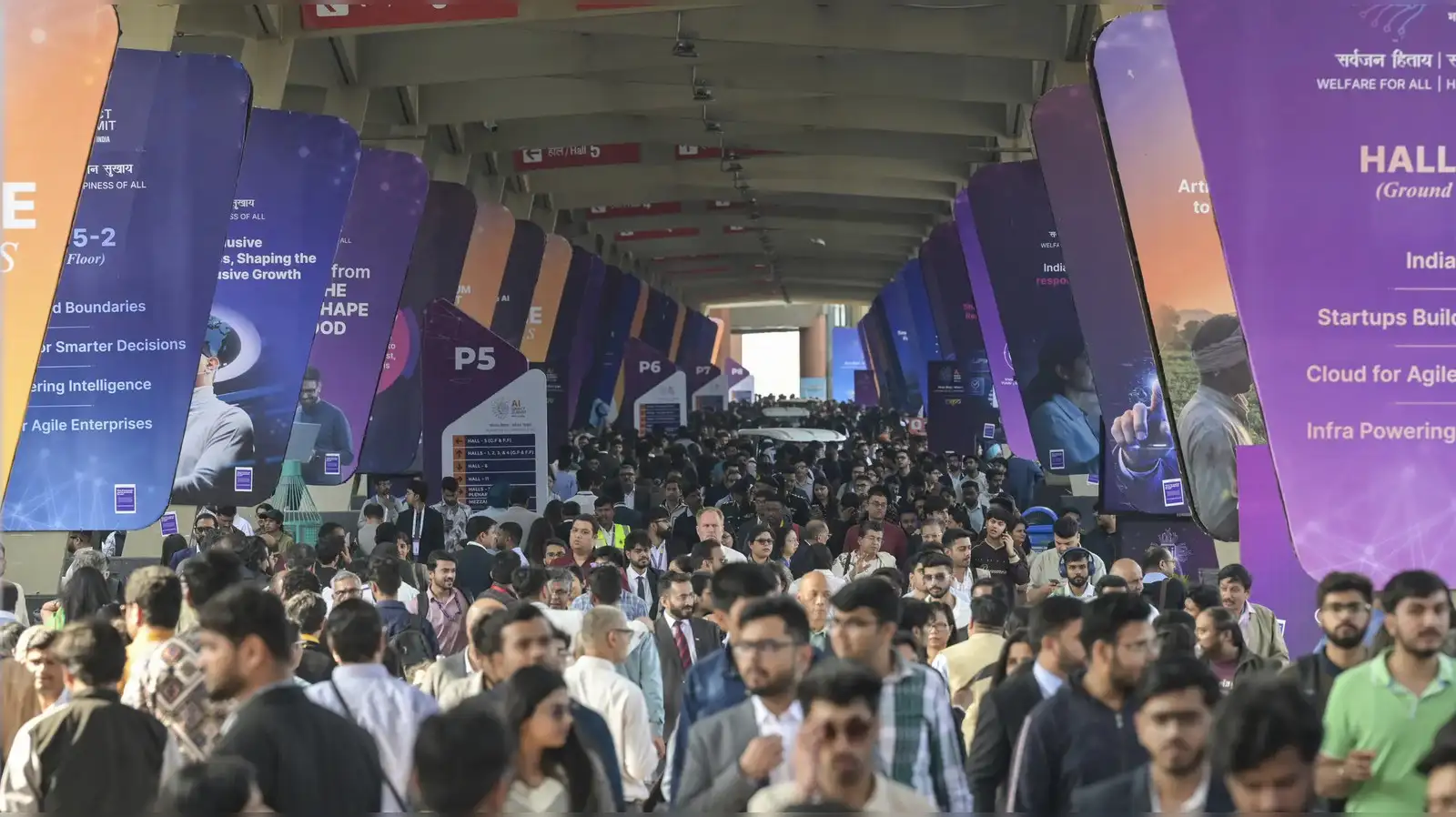
As discussions at the Brussels Pre-Summit highlighted, neither Europe nor India is self-sufficient. Europe may lead in research and regulation but lacks scale and certain manufacturing capabilities. India possesses immense talent and digital infrastructure at scale but has gaps in deep-tech hardware and foundational AI research. This interdependence is the partnership’s strength. The official declarations from these summits frame this not as isolationism, but as the construction of a “third pole” in the global tech order—one built on shared values of openness, transparency, and human-centric innovation.
Why a Sovereign AI Stack is Non-Negotiable
A sovereign AI stack means having autonomous control over every layer of technology that powers artificial intelligence. It’s the difference between renting your digital future and owning the blueprint. The risks of not having one are stark:
- Supply Chain Blackmail: Over 90% of the world’s most advanced semiconductors are produced in a single geopolitical hotspot.
- Software Lock-in: Dependence on foreign AI frameworks and cloud platforms can lead to data sovereignty issues and sudden cost or access changes.
- Talent Drain: Without a vibrant home ecosystem, the best researchers and engineers migrate to existing tech hubs.
The India Europe AI ecosystem is uniquely positioned to mitigate these risks because its strengths are perfectly complementary. This isn’t just theory; it’s the foundation of their collaboration:
- Europe’s Strengths: World-class research institutions, a robust regulatory framework like the EU AI Act, deep-tech intellectual property in semiconductors, and a strong tradition of ethical tech development.
- India’s Strengths: The world’s largest engineering talent pool, unparalleled digital public infrastructure like India Stack (Aadhaar and UPI serving 1.3 billion users), massive data diversity, and a proven ability to innovate frugally at scale.
Combining Europe’s “deep tech” with India’s “scale tech” is the formula for a viable sovereign AI stack. This joint sovereignty push is urgent—it’s the only way to avoid being perpetually caught in a binary US-China pull and to secure a future built on their own terms.
Pillar 1: Chip Collaboration – The Hardware Bedrock
You cannot have AI sovereignty without hardware sovereignty. This is where chip collaboration becomes the physical bedrock of the entire India Europe AI ecosystem. It involves merging Europe’s established semiconductor manufacturing equipment, design expertise, and hardware prowess with India’s aggressive Production-Linked Incentive (PLI) schemes—government subsidies that provide cash incentives tied to production milestones to encourage local manufacturing—and its growing ambitions in fabrication.

As analyzed by the World Economic Forum and the French Institute of International Relations (IFRI), the synergies are powerful:
- Joint R&D in Next-Gen Chips: Collaborative work on open-source architectures like RISC-V (an instruction set architecture that allows for highly customizable processors) can bypass proprietary Western designs and Chinese manufacturing dependencies.
- Supply Chain Diversification: Europe can diversify its chip packaging and testing to India, while India can access European precision tooling and materials.
- India as a “Sandbox” for Scale: European innovations can be tested and deployed at India’s population scale, providing invaluable real-world data. Conversely, India can leverage Europe’s mature ecosystems to advance its own digital sovereignty goals.
Specific initiatives are already laying the groundwork. The France-India Joint Statement of February 2026 announced binational centers on digital sciences, directly supporting hardware-tech ties. India’s PLI schemes aim to build local fabrication plants (fabs) capable of producing chips under 5nm processes. Imagine joint ventures that yield secure, diversified chip supplies critical for AI hardware like GPUs and TPUs. This hardware foundation is crucial for building the kind of powerful, independent computing systems discussed in our analysis of the Apple M5 chip AI performance boost.
Pillar 2: Software Cooperation – The Digital Fabric
If chips are the skeleton, software is the nervous system. Software cooperation within the India Europe AI ecosystem spans the entire digital layer: AI frameworks (like TensorFlow or PyTorch), foundational models, datasets, interoperability standards (ensuring different systems work together seamlessly), and open-source projects. This includes developing digital public goods and, critically, multilingual language models tailored for Europe and India’s incredible linguistic diversity—22 official Indian languages and 24 EU languages.

Key efforts are focused on the most valuable resource: talent. India currently supplies an estimated 30% of Europe’s AI workforce in key hubs like Ireland. The partnership aims to formalize and deepen this through:
- Skills Dialogues & Mutual Recognition: Creating pathways for the mutual recognition of engineering and research qualifications.
- AI Literacy Frameworks: Exchanging best practices for educating both the workforce and the public on AI.

Joint innovation is already happening in applied fields. The partnership is pioneering:
- Ethical AI Governance: Aligning Europe’s risk-based regulatory approach with India’s innovation-friendly model.
- Health AI Applications: Partnerships between institutions like India’s AIIMS and France’s Sorbonne University for cancer screening and digital health centers.
- Startup & Academic Bridges: Fueled by EU-India MoUs and a High-Level Education Dialogue.
How powerful could shared, open-source datasets be in accelerating ethical AI development without US/China gatekeeping? This collaborative approach to software and AI models is a key part of the broader future of AI trends shaping global innovation.
The 2026 Vision: Convergence and Tech Independence
The ultimate goal of the India Europe AI ecosystem is convergence. The pillars of chip collaboration (hardware) and software cooperation must fuse to build a complete, functional sovereign AI stack. This is the pathway to tech independence 2026. The vision, as outlined in summit discussions, includes:
- Reduced Dependencies: Aiming to drop critical chip imports from near 100% foreign reliance to under 50% via locally supported fabs and partnerships.
- Flagship Joint AI Models: Developing open-weight Large Language Models (LLMs) trained on joint, ethically sourced datasets that reflect Indo-European linguistic and cultural contexts.
- Secure Supply Chains: Diversified and resilient networks for materials, manufacturing, and intellectual property.
- AI-Ready Workforces: Integrated education programs and mobility schemes creating a seamless talent pool.