
The Ultimate Guide to Search Intent: Unlock Higher SEO Rankings
Estimated reading time: 12 minutes
Key Takeaways
- Mastering search intent is the #1 secret to ranking higher, as Google rewards content that perfectly matches the user’s underlying goal.
- All searches can be classified into four primary types of search intent: Informational, Navigational, Transactional, and Commercial.
- Proper search intent classification involves analyzing SERP features, top-ranking pages, and keyword modifiers to decode what users truly want.
- Aligning your content’s format and message with the correct intent drastically improves engagement, reduces bounce rates, and drives conversions.
- Regular search intent audits of your existing content can resurrect underperforming pages and future-proof your strategy against AI-driven search changes.
Table of contents
- The Ultimate Guide to Search Intent: Unlock Higher SEO Rankings
- Key Takeaways
- What is Search Intent? The Foundation of Modern SEO
- Search Intent Classification: The 4 Critical Types
- Informational Intent: The Quest for Knowledge
- Navigational Intent: The Direct Path
- Transactional Intent: The Ready-to-Buy Signal
- Commercial Intent: The Investigation Phase
- How to Identify Search Intent: A Practical Guide
- Applying Search Intent to Supercharge Your SEO
- Pitfalls and Pro Tips for Mastering Search Intent Classification
- Frequently Asked Questions
You’ve poured your heart into a blog post. The research is impeccable, the writing is sharp, and you’re sure it’s the best piece on the topic. Yet, it lingers on page two of Google, unseen and unread. The culprit? A fundamental disconnect between your brilliant content and the simple reason a user typed those words into the search bar. The solution lies in mastering search intent.

So, what exactly is search intent? It’s the underlying purpose or goal behind a user’s search query. It answers the question: *”What does this person actually want to achieve?”* Understanding this is no longer optional; it’s the cornerstone of any successful SEO strategy. Google’s algorithms are explicitly designed to prioritize content that satisfies user intent, making it the single most reliable path to higher rankings, more traffic, and meaningful engagement. This guide is your deep dive into learning and applying search intent and the crucial types of search intent to transform your content strategy from guesswork into a science.
What is Search Intent? The Foundation of Modern SEO
Think of search intent as the “why” behind the “what.” A user searching for “best running shoes” and another searching for “buy Nike Air Zoom Pegasus 39” have vastly different intentions, even though both queries involve running shoes. The first is exploring; the second is ready to purchase. Failing to recognize this difference is why so much great content fails to rank.
This is why search intent classification isn’t just an advanced SEO tactic—it’s the foundational first step for any piece of content you create. Before you write a single word, you must answer: What is the user’s goal? By the end of this guide, you’ll be able to confidently categorize any keyword into its core intent and craft content that Google must rank highly because it delivers exactly what the searcher desires.
Search Intent Classification: The 4 Critical Types
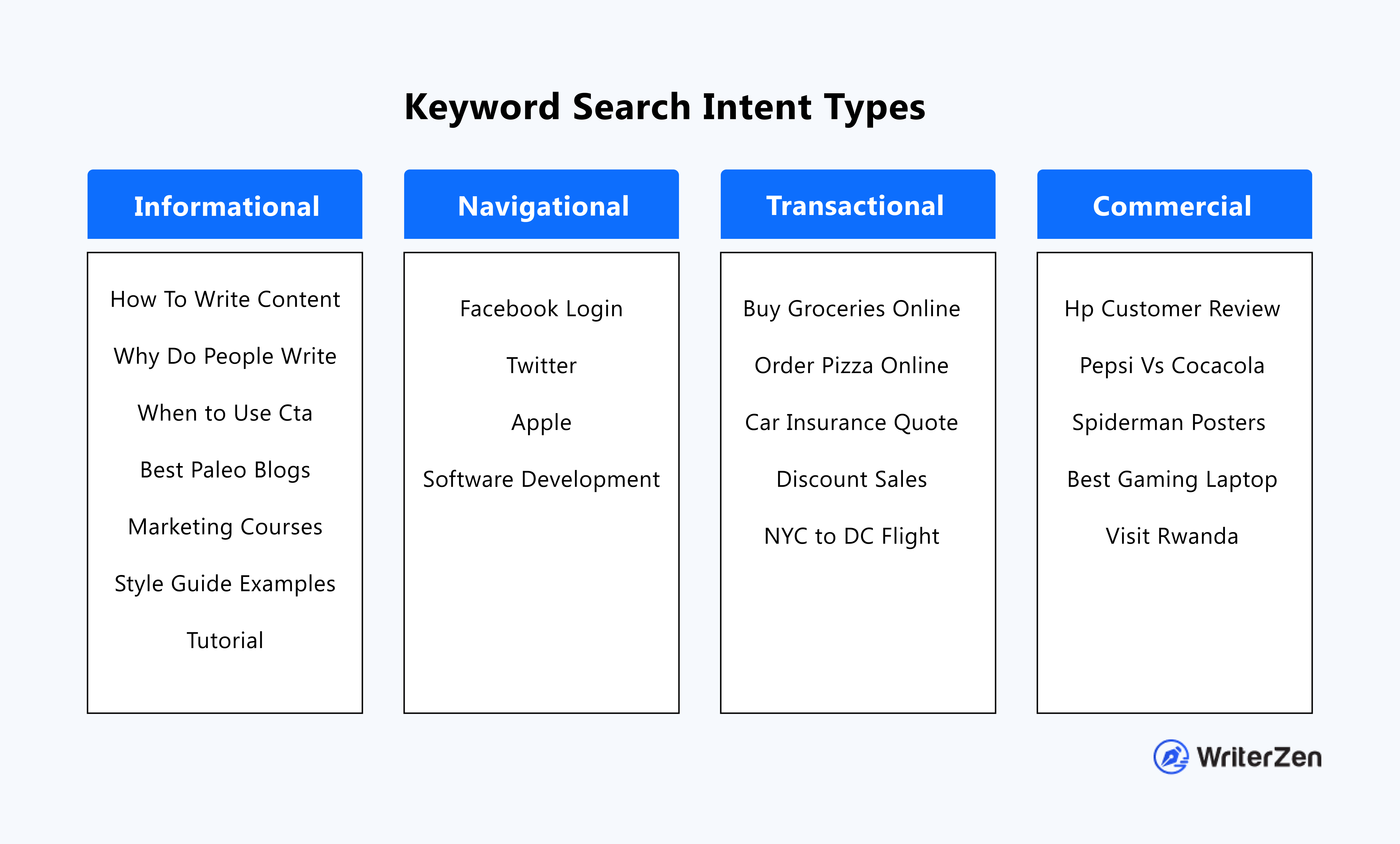
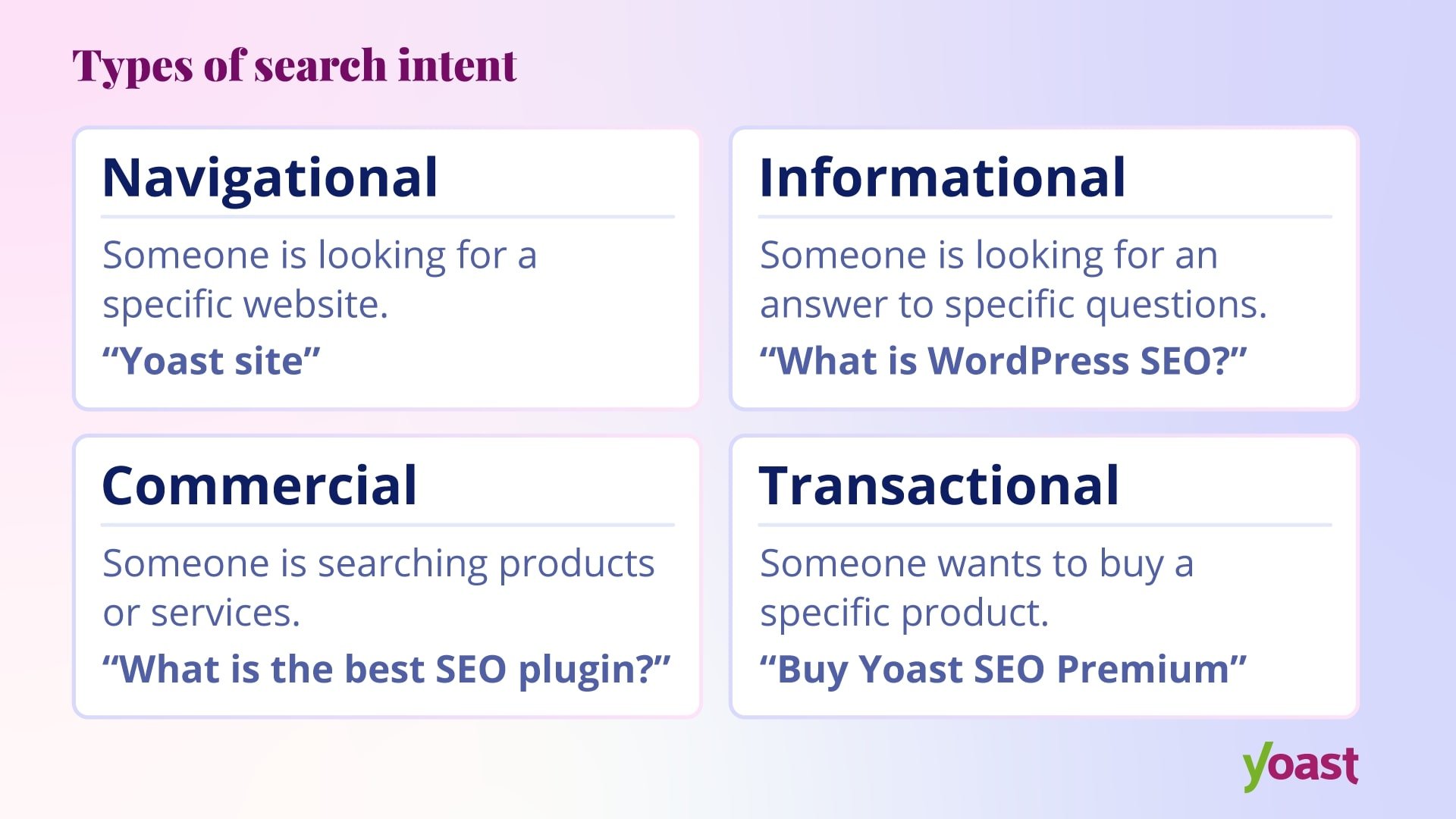
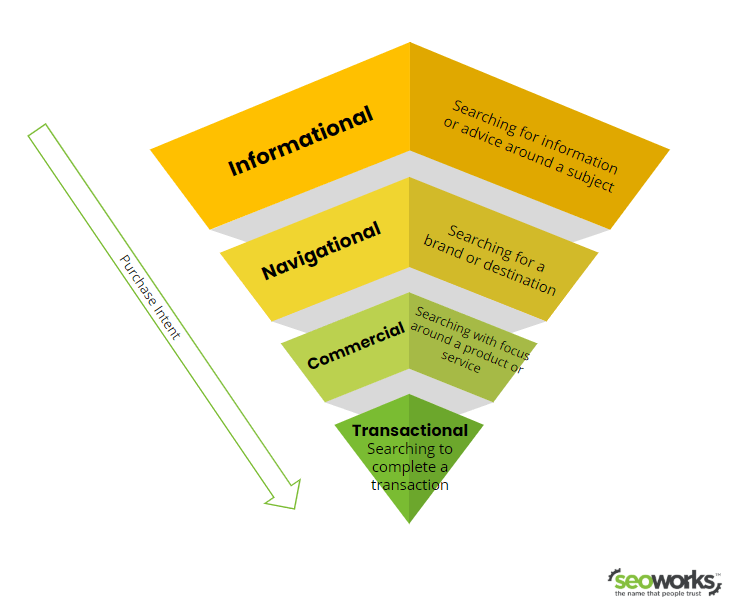
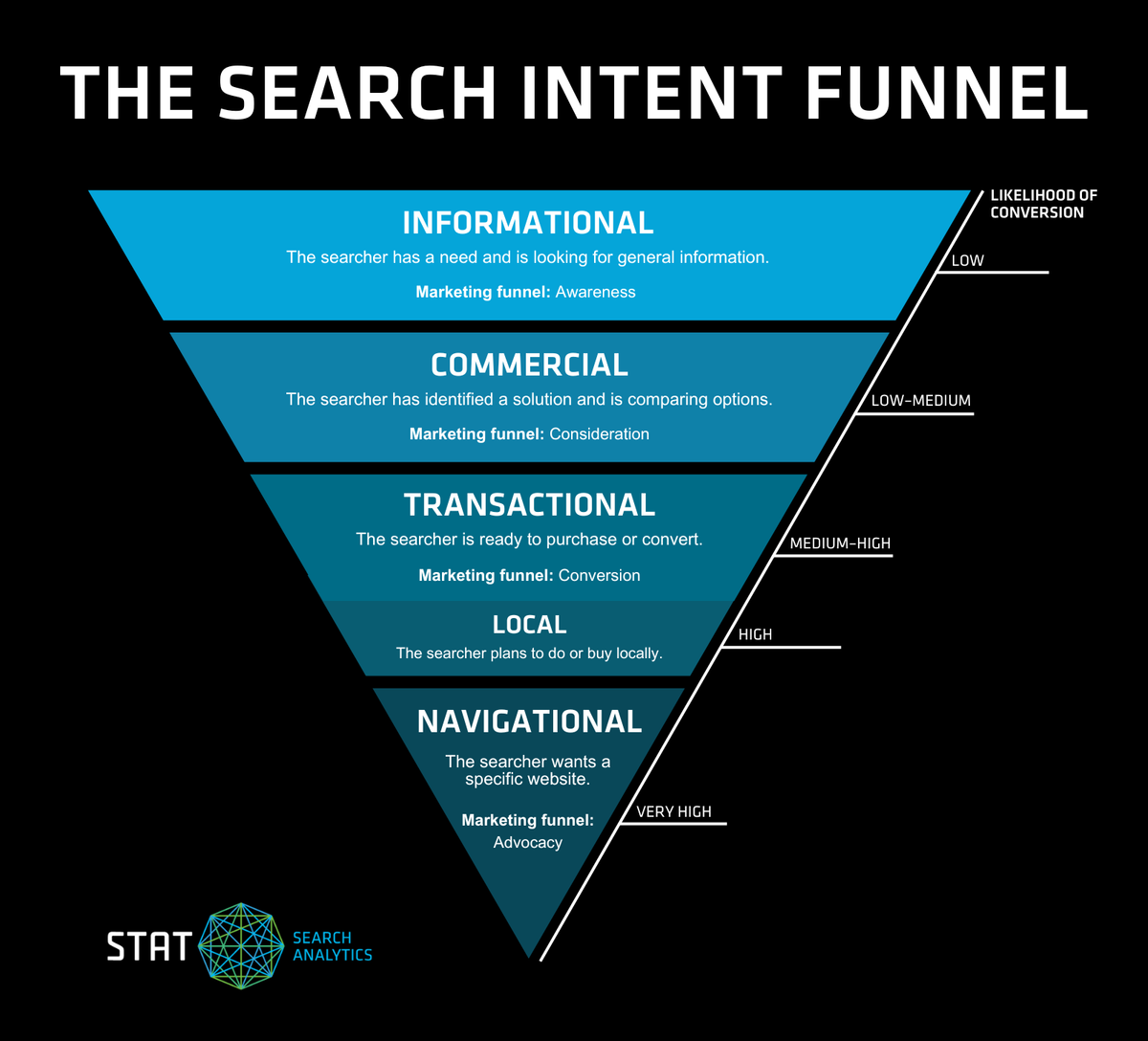
Search intent classification is the systematic process of categorizing user queries based on their primary purpose. While nuances exist, the consensus across industry leaders points to four main types of search intent:
- Informational Intent: The user seeks knowledge, answers, or instructions. (e.g., “what is”, “how to”, “guide”)
- Navigational Intent: The user aims to reach a specific website or page. (e.g., “Facebook login”, “Semrush blog”)
- Transactional Intent: The user intends to complete a commercial action. (e.g., “buy”, “download”, “sign up”)
- Commercial Intent: The user is comparing options before a potential transaction. (e.g., “best”, “vs”, “reviews”)
Let’s dissect each type with the precision a savvy copywriter needs to execute flawlessly.
Informational Intent: The Quest for Knowledge
This is the most common type of search. The user’s goal is to learn, understand, or discover. They are in the early stages of their journey, gathering information with no immediate desire to make a purchase.
- Query Examples: “What is search intent?”, “How to classify search intent”, “Benefits of yoga for beginners”.
- Content Format: In-depth blog posts, how-to guides, tutorials, definitions, listicles (e.g., “10 Ways to…”), video explanations, and research-backed articles.
- SERP Indicators: Featured snippets (“answer boxes”), “People also ask” boxes, knowledge panels, and organic results from educational sites or forums.
- Copywriter’s Goal: Become the definitive answer. Provide comprehensive, clear, and authoritative information. Use a helpful, educator’s tone. This is your chance to build trust and authority, positioning your brand as a reliable expert. The call-to-action (CTA) here is soft—think “Read our related guide” or “Download a free PDF cheat sheet.”
Navigational Intent: The Direct Path
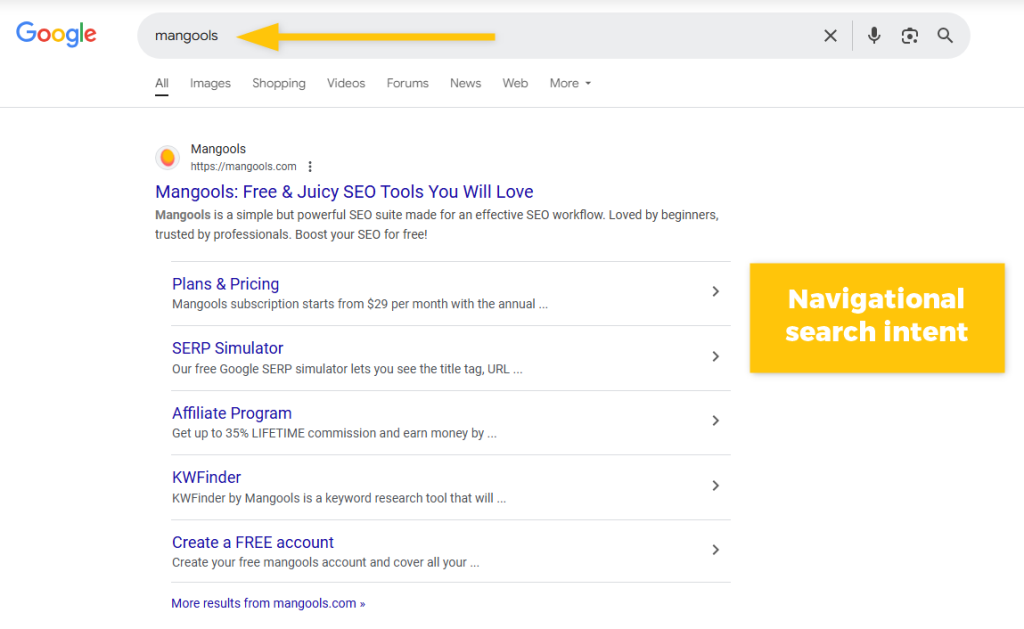
The user knows exactly where they want to go; they’re just using Google as a shortcut. The brand or destination is already in their mind.
- Query Examples: “Pragm SEO post”, “YouTube”, “Netflix login”, “Apple support”.
- Content Format: The target website’s homepage, login page, specific product page, or contact page. It’s rarely a blog post.
- SERP Indicators:The #1 result is almost always the official site. The search result snippet often includes sitelinks (links to internal pages).
- Copywriter’s Goal: If you *are* the brand (e.g., Netflix), ensure your page titles and meta descriptions are clear. If you’re *not* the brand, ranking for these terms is extremely difficult and often not worthwhile unless you’re providing critical news or commentary about that brand (e.g., “Netflix price increase 2024 news”).
Transactional Intent: The Ready-to-Buy Signal
The user has reached the decision stage. They intend to complete an action, which is most often a purchase but can also be a sign-up, download, or appointment booking.
- Query Examples: “Buy SEO tools”, “search intent course discount”, “download WordPress plugin”, “schedule a demo”.
- Content Format: Product pages, category pages, pricing pages, landing pages with clear CTAs (“Buy Now”, “Start Free Trial”, “Get Quote”).
- SERP Indicators: Google Shopping ads and results, “Add to cart” buttons in snippets, heavy presence of e-commerce sites (Amazon, Best Buy), and local pack results for “near me” services.
- Copywriter’s Goal: Remove friction and inspire action. Highlight unique selling propositions (USPs), social proof (reviews, testimonials), guarantees, and clear pricing. The tone is confident and benefit-driven. Every word should guide the user toward the conversion.
Commercial Intent: The Investigation Phase
Also called “commercial investigation,” this sits between informational and transactional intent. The user has identified a need and is now actively researching and comparing specific products, services, or brands before making a final decision.
- Query Examples: “Best tools for search intent analysis”, “Ahrefs vs Semrush”, “WordPress hosting reviews”, “MacBook Pro M3 specs”.
- Content Format: “Best X” listicles, detailed product/service comparisons, “X vs Y” articles, in-depth review posts, and buying guides.
- SERP Indicators: A mix of “best of” blog posts from affiliate sites, official product pages, and sometimes comparison tables generated by Google.
- Copywriter’s Goal: Be the unbiased (or strategically biased) consultant. Present detailed comparisons, pros/cons, and data-driven recommendations. Build immense trust by demonstrating thorough knowledge. The CTA often leads to a specific recommended product (“Check Current Price on Amazon”) or a vendor-neutral next step (“Download our comparison checklist”).
How to Identify Search Intent: A Practical Guide
Classifying search intent isn’t about guessing; it’s about investigation. Here’s your step-by-step process for accurate search intent classification:
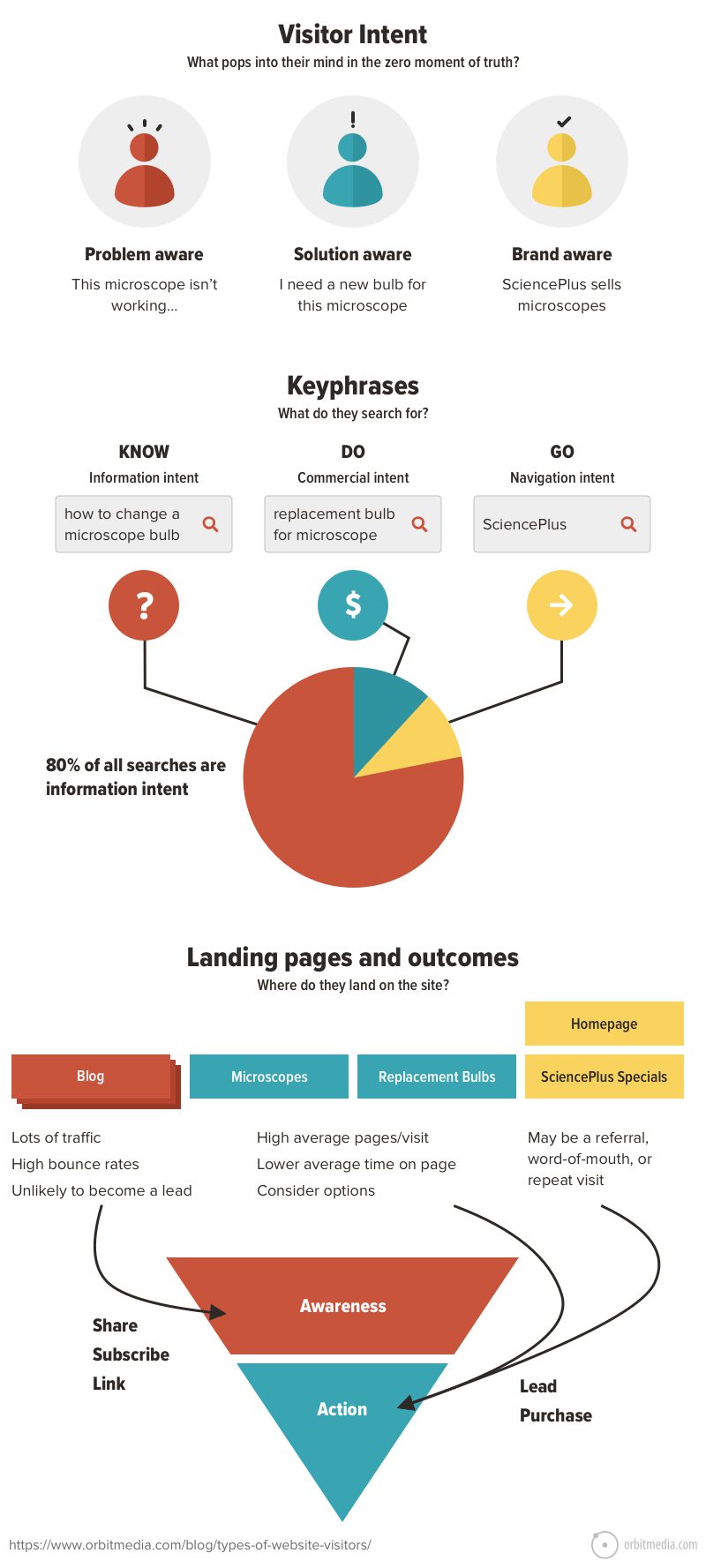
- Analyze the SERP (Search Engine Results Page): This is the most critical step. Type your target keyword into Google and scrutinize the top 10 results.
- Are they mostly blog posts and guides? That’s a strong signal for informational intent.
- Are they product pages from major retailers? That’s clear transactional intent.
- Are they “best of” lists and review sites? You’re looking at commercial intent.
Also, note SERP features: Featured Snippets (informational), Shopping Results (transactional), Local Packs (transactional/local).
- Dissect the Keyword Itself: Certain words act as strong “intent modifiers.”
- Informational: what, how, why, guide, tutorial, definition.
- Commercial: best, top, vs, review, compared to.
- Transactional: buy, price, cheap, deal, discount, order, subscribe.
- Use SEO Tools: Platforms like Semrush and Ahrefs often have features that analyze keyword intent or show you the types of pages currently ranking. Google’s own “Autocomplete” and “People also ask” are free goldmines for understanding related queries and their intents.
- Match Content Format to Intent: Once you’ve classified the intent, your content’s structure must follow suit. A long-form, step-by-step guide is perfect for informational intent but will fail miserably for a transactional intent query where the user expects a clean, simple product page. Planning your blog post around intent is non-negotiable.

Applying Search Intent to Supercharge Your SEO
Understanding search intent is theory; applying it is where the magic happens. Here’s how to operationalize it in your content strategy:
1. Optimize New Content From the Ground Up:
Before writing, classify your primary keyword’s intent. Let that dictate everything:
* Informational: Structure with clear H2/H3 subheadings, use FAQs, include data and quotes, and end with a soft CTA.
* Transactional: Lead with benefits, showcase product features visually, display trust badges and reviews, and use a prominent, clear CTA button.
* Commercial: Create comparison tables, list detailed pros/cons, and provide a transparent methodology for your recommendations.
2. Rewrite and Repurpose Underperforming Content:
Conduct a content audit. Find well-written pieces that aren’t ranking. The problem is often a search intent mismatch. A post targeting “best project management software” (commercial) that’s written like a broad overview (informational) will struggle. Reclassify the intent and rewrite the page to match the format and depth of the current top-ranked pages.
3. Build Intent-Specific Content Clusters:
Create a pillar page targeting a broad informational intent topic (e.g., “Ultimate Guide to SEO”). Then, create cluster content targeting related commercial (“Best SEO Tools”) and transactional (“Buy Semrush Pro Plan”) keywords. This creates a topical authority hub that satisfies users at every stage of their journey.
4. Conduct a Full Intent Audit:
Map your entire keyword list to the four types of search intent. Does your site have the right mix of content to capture traffic at each stage (informational -> commercial -> transactional)? Are you missing key intent categories for your niche? This audit reveals strategic gaps and opportunities.

Pitfalls and Pro Tips for Mastering Search Intent Classification
Even with the best framework, mistakes happen. Here’s what to avoid and how to level up.
Common Pitfalls:
- The Mismatch: The #1 error. Writing a product-heavy, salesy page for an informational query. Users click, see the hard sell, and bounce immediately—a terrible signal to Google.
- Ignoring SERP Evolution: Search intent isn’t static. The rise of AI Overviews, voice search (“Hey Google, find me a plumber near me”), and visual search is changing how intents are expressed and satisfied. Your keyword research strategy must account for this.
- Overlooking Hybrid Intents: Some queries blend intents. “iPhone 15 price” could be informational (just checking) or transactional (ready to buy). Analyze the SERP closely—if it shows buying options, treat it as transactional.
Advanced Pro Tips:
- Go Beyond the Primary Keyword: Analyze the intent of the “People also ask” questions and “Related searches.” They often reveal deeper, more specific user needs you can address in your content to make it comprehensively satisfy the topic.
- Use Advanced Tool Features: Explore newer platforms and methodologies, like those discussed in analyses of search intent classification methods for 2026, to stay ahead of trends. Leverage AI tools to help analyze large sets of keywords for intent patterns.
- Monitor Performance Religiously: After publishing intent-optimized content, watch metrics like average time on page, bounce rate, and conversion rate. Improvements here are the ultimate proof that you’ve matched intent correctly.
Mastering search intent is the master key that unlocks higher rankings, more qualified traffic, and superior engagement. It transforms your content from being “about” a topic to being the *solution* to a user’s immediate need. Imagine a site that languished for years suddenly seeing its key pages climb to the top of Google—not from more backlinks, but simply from realigning its content with the true types of search intent. In an AI-driven search landscape where satisfying user need is paramount, this skill doesn’t just improve your SEO; it future-proofs it.
Your first step? Pick your top 5 target keywords right now and conduct a search intent classification audit. Are you currently matching what Google and users demand? Share your findings or biggest “aha!” moment in the comments, or download our free search intent checklist to guide your next content project.
Frequently Asked Questions
What is the most common type of search intent?
The most common type is Informational Intent. A vast majority of daily searches are made by users seeking answers, learning how to do something, or simply exploring a topic without any immediate commercial goal.
Can a single keyword have multiple search intents?
Yes, but one intent usually dominates. For example, “iPhone 15” could be navigational (going to Apple’s site), informational (learning specs), or commercial (comparing models). The current SERP features and top results will tell you which intent Google is currently prioritizing for that query. Your content should target the dominant intent.
How does voice search affect search intent classification?
Voice search queries are often longer, more conversational, and more question-based (e.g., “Hey Google, how do I fix a leaky faucet?”). This strengthens the prevalence of informational intent in voice search. Optimizing for these natural language questions with clear, concise answers is crucial.
What’s the difference between commercial and transactional intent?
Commercial Intent is the research phase *before* a transaction (“best vacuum cleaners 2024”). Transactional Intent signals the user is ready to take action *now* (“buy Dyson V15 Absolute”). Commercial intent content helps users decide; transactional intent content helps them complete the purchase.
Is it possible to target multiple intents on one page?
It’s generally not recommended, as it can dilute your page’s focus and confuse both users and search engines. The best practice is to have one primary page for each core intent. However, a well-structured commercial review page (best X) can effectively include a clear section with transactional CTAs (e.g., “Check Price”) once the user has been guided to a recommendation.