

The Strategic Blueprint for Enterprise Cloud Evolution in 2026
Estimated reading time: 12 minutes
Key Takeaways
- The conversation has matured from basic migration to strategic optimization, where enterprise cloud evolution is the new imperative.
- Hybrid cloud adoption is the non-negotiable foundation, projected to grow into a $300B+ market, enabling regulatory compliance and cost control.
- Multi cloud strategies are now an operational necessity, with 87% of enterprises already running workloads across multiple providers to avoid lock-in and optimize costs.
- Cloud interoperability, powered by Kubernetes and IaC, is the technical linchpin that makes complex multi cloud strategies feasible and manageable.
- Enterprise AI cloud is the primary driver of infrastructure decisions, requiring flexible access to best-in-class services and GPUs across providers.
- The ultimate goal is cloud resilience—achieving vendor independence, geographic redundancy, and robust disaster recovery through a cohesive architectural vision.
- Success hinges on viewing all these elements—hybrid, multi-cloud, interoperability, AI, and resilience—as interconnected parts of a single strategic journey.
Table of contents
- The Strategic Blueprint for Enterprise Cloud Evolution in 2026
- Key Takeaways
- Beyond Migration: The New Imperative of Enterprise Cloud Evolution
- The Foundation: Hybrid Cloud Adoption as Strategic Enabler
- The Operational Core: Multi Cloud Strategies for Agility and Control
- The Technical Linchpin: Cloud Interoperability
- The Intelligence Layer: Enterprise AI Cloud as Primary Driver
- The Paramount Outcome: Cloud Resilience
- Synthesis: The Interconnected Cloud Ecosystem
- Frequently Asked Questions
The landscape of enterprise technology has undergone a profound shift. The question is no longer “should we migrate to the cloud?” but rather, “how do we strategically optimize and evolve our cloud ecosystem for maximum business value?” This marks the critical phase of enterprise cloud evolution—a journey from basic adoption to strategic maturity. At the heart of this evolution lies the deliberate embrace of multi cloud strategies, which have transitioned from a forward-looking concept to an operational necessity. In fact, 87% of enterprises already run workloads across multiple clouds. This progression is built upon the solid foundation of hybrid cloud adoption. The thesis is clear: success in the modern era requires viewing hybrid cloud adoption, multi cloud strategies, cloud interoperability, enterprise ai cloud, and cloud resilience not as isolated initiatives, but as interconnected elements of a single, cohesive strategic vision.

The Foundation: Hybrid Cloud Adoption as Strategic Enabler
Hybrid cloud adoption is the essential first step in the evolutionary journey, defined by the strategic blending of on-premises infrastructure, private clouds, and public cloud services. It is far from a temporary compromise; it is a long-term architectural choice driven by concrete business needs. The market reflects this, with projections showing the hybrid cloud sector growing from $130 billion to a staggering $310–330 billion by 2030. Gartner underscores this trajectory, predicting that 40% of enterprises will adopt hybrid compute architectures for mission-critical workflows by 2028—a dramatic leap from just 8% today.
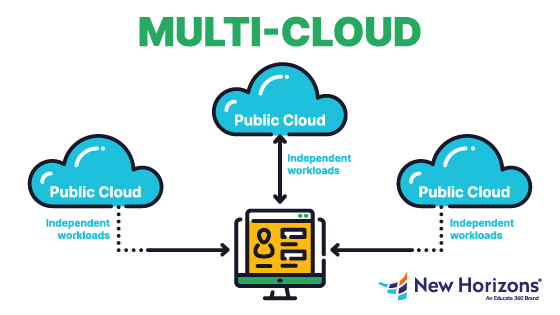
This widespread adoption addresses three core enterprise imperatives:
- Regulatory & Compliance Sovereignty: Many industries face strict data residency and sovereignty laws. A hybrid model allows sensitive workloads and data to remain on-premises or in a private cloud, while less regulated processes leverage the scale of the public cloud.
- Cost Optimization & Financial Control: It enables a “cloud-smart” approach. Stable, predictable workloads with low scaling needs can reside on cost-effective on-prem infrastructure, while variable, bursty applications scale elastically into the public cloud, optimizing overall spend.
- Operational Continuity & Control: Enterprises can modernize at their own pace, maintaining critical legacy systems while gradually building cloud-native applications alongside them. This mitigates risk and allows for skill development without business disruption.
Positioned correctly, hybrid cloud adoption is the strategic foundation that provides the flexibility necessary to execute more advanced multi cloud strategies. It is the platform upon which true cloud agility is built.
The Operational Core: Multi Cloud Strategies for Agility and Control
Building on a hybrid foundation, multi cloud strategies represent the deliberate architectural decision to leverage multiple public cloud providers (like AWS, Azure, Google Cloud) in conjunction with private and edge environments. This transcends mere vendor selection; it’s a comprehensive framework focused on strategic workload placement, rigorous cost governance, and preserving strategic flexibility to avoid vendor lock-in. The goal is to select the best service for each specific workload based on performance, cost, feature set, and compliance—not on a single-vendor relationship.

Effective multi cloud strategies are built on four key pillars:
- Unified Governance & Infrastructure as Code (IaC): Consistency is paramount. IaC tools like Pulumi, Terraform, or AWS CDK enable teams to define and provision infrastructure across AWS, Azure, GCP, and on-premises using a common language. This standardizes deployments, eliminates configuration drift, and is the bedrock for automating the orchestration of complex resources, including those for AI. It creates a single source of truth for your entire estate.
- Financial Management & FinOps: Visibility is the first step to control. FinOps practices provide a holistic view of spending and resource allocation across all cloud providers. This isn’t just about cost reduction; it’s about optimizing investment to drive business value, turning cloud financial management into a competitive advantage. You can’t manage what you can’t see, and in a multi-cloud world, seeing everything in one pane of glass is non-negotiable.
- Policy-Driven Security & Compliance: Security cannot be an afterthought. A multi-cloud strategy demands centralized, policy-driven guardrails that enforce security and compliance standards automatically across all environments. By integrating security checks directly into CI/CD pipelines, you ensure that every deployment—regardless of target cloud—adheres to your organization’s security posture from the start.
- The “Cloud-Right” Mindset: This is the strategic heart of a multi cloud strategy. It moves beyond the simplistic “lift-and-shift” to evaluate each workload against specific business outcomes. As noted in strategic guides, the focus should be on questions like: Will this move reduce operational overhead? Accelerate time-to-market? Improve compliance posture? The decision of where to place a workload (public cloud A, public cloud B, on-prem, edge) is dictated by the answer to these business-centric questions.
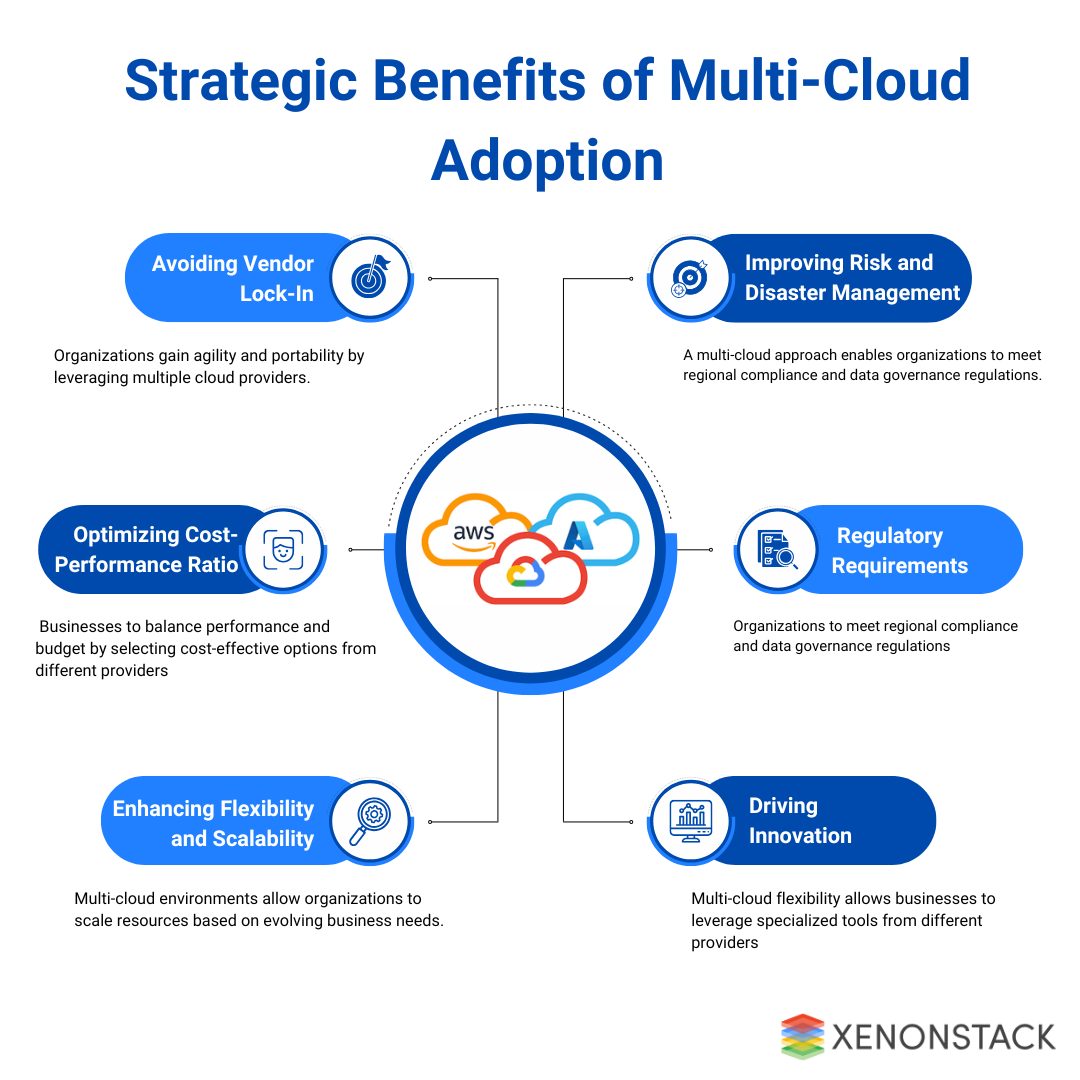
This disciplined approach to multi cloud strategies directly contributes to cloud resilience, creating an architecture that is robust, cost-effective, and inherently flexible.
The Technical Linchpin: Cloud Interoperability
Cloud interoperability is the essential technical capability that transforms the strategic vision of multi cloud strategies into operational reality. It’s what allows enterprises to deploy applications consistently and move workloads fluidly across different cloud and on-premises environments without being bogged down by proprietary complexities. Without interoperability, a multi-cloud environment devolves into a collection of disconnected silos, negating its strategic benefits.
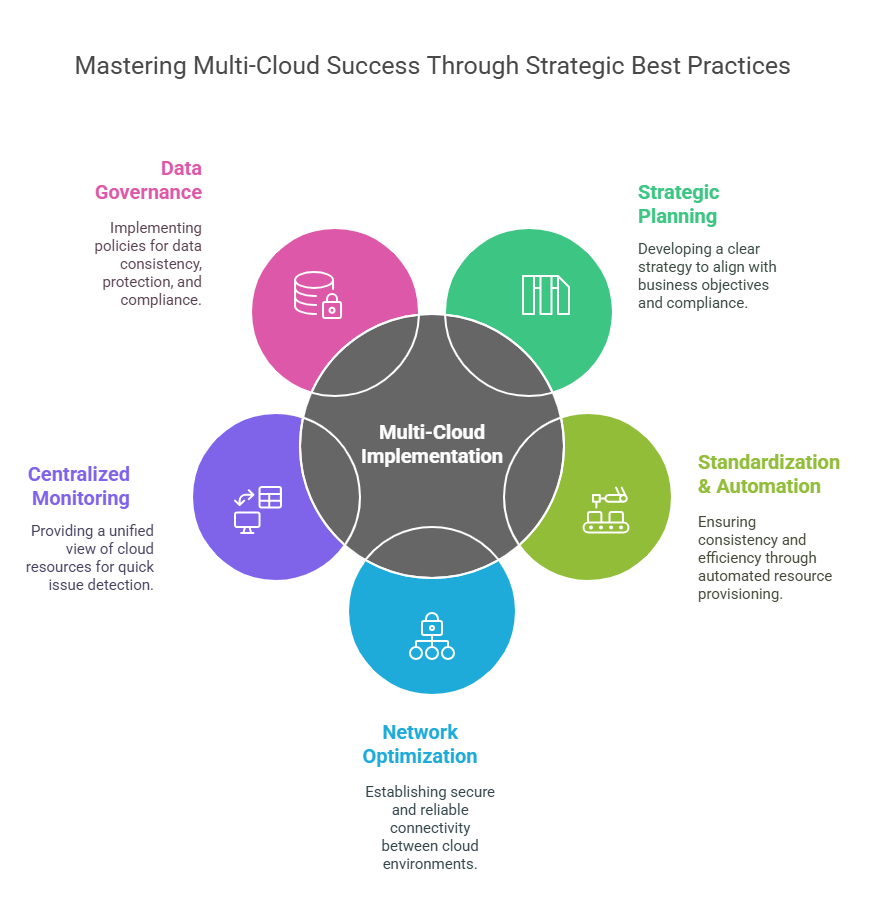
This interoperability is enabled by a suite of critical technologies:
- Kubernetes as the Universal Abstraction Layer: Kubernetes has emerged as the de facto standard for container orchestration, providing a consistent operational model across any infrastructure. Its evolution to include GPU-aware scheduling and advanced orchestration is particularly crucial for managing complex enterprise ai cloud workloads across different providers, dramatically reducing management complexity.
- Internal Developer Platforms (IDPs): To prevent developer productivity from collapsing under the weight of multi-cloud complexity, forward-thinking enterprises build IDPs. These platforms offer curated catalogs of reusable, compliant infrastructure components and application patterns. Developers can self-serve what they need using standardized templates, without needing deep expertise in each cloud provider’s unique services.
- API-First Architectures & Data Portability: True interoperability requires that data and services can move. An API-first approach, combined with technologies that abstract data layers (like CockroachDB for distributed SQL, Kafka for streaming, and specialized vector databases for AI), ensures that applications aren’t locked into a single cloud’s proprietary data services. Your IaC should seamlessly integrate with these portable technologies, weaving them into your multi-cloud fabric.
In essence, cloud interoperability is the glue that binds a multi cloud strategy together. It unlocks the strategic flexibility promised by moving beyond a single vendor, making the entire ecosystem manageable and efficient.
The Intelligence Layer: Enterprise AI Cloud as Primary Driver
In 2026 and beyond, the most significant force shaping enterprise cloud evolution is the ascent of the enterprise ai cloud. Organizations are moving beyond experimental AI prototypes to integrating AI and machine learning into the core of their products and operations. This shift demands a cloud infrastructure that is as intelligent and flexible as the models it supports. A well-architected multi cloud strategy is uniquely positioned to unlock the full potential of AI.
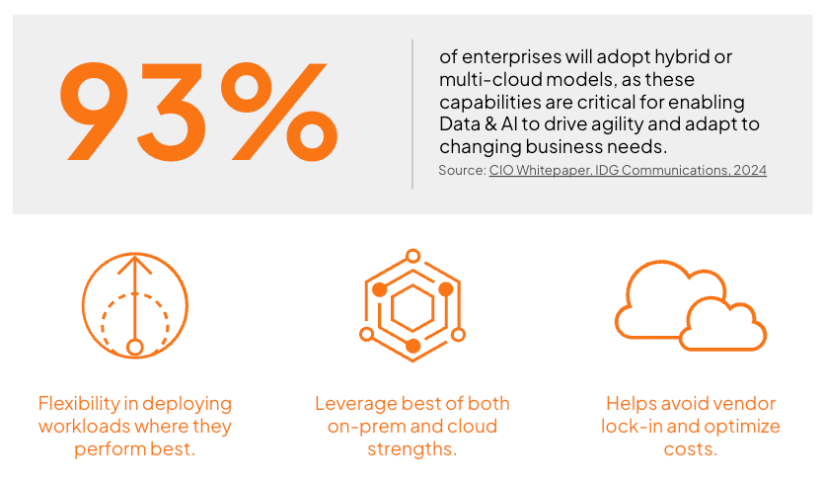
Multi cloud strategies provide several decisive advantages for AI:
- Access to Best-in-Class Services: No single provider leads in every AI/ML service, GPU instance type, or inference optimization. A multi-cloud approach allows enterprises to use AWS SageMaker for one task, Google Cloud’s TPUs for another, and Azure OpenAI Service for yet another, all within the same workflow.
- Orchestration of Complex AI Infrastructure: Modern AI workloads require more than just a VM with a GPU. They need coordinated data pipelines, feature stores, vector databases for embeddings, and sophisticated model-serving infrastructure. A unified multi-cloud platform, enabled by the cloud interoperability discussed earlier, can provision and manage this complex tapestry across providers, sourcing compute cost-effectively based on real-time needs and availability.
- Intelligent Model Serving & Scaling: Deploying models into production requires inference routers, API gateways, and robust autoscaling that can span cloud boundaries. This ensures high availability and performance for end-users, regardless of where the underlying compute is provisioned.
- AI-Specific Governance & Security: The data and models powering AI are supremely valuable and sensitive. Strong, consistent identity management, secrets management, and access controls—automated through IaC—are critical. This ensures reproducibility of AI training environments and secures AI assets across the entire multi-cloud landscape.
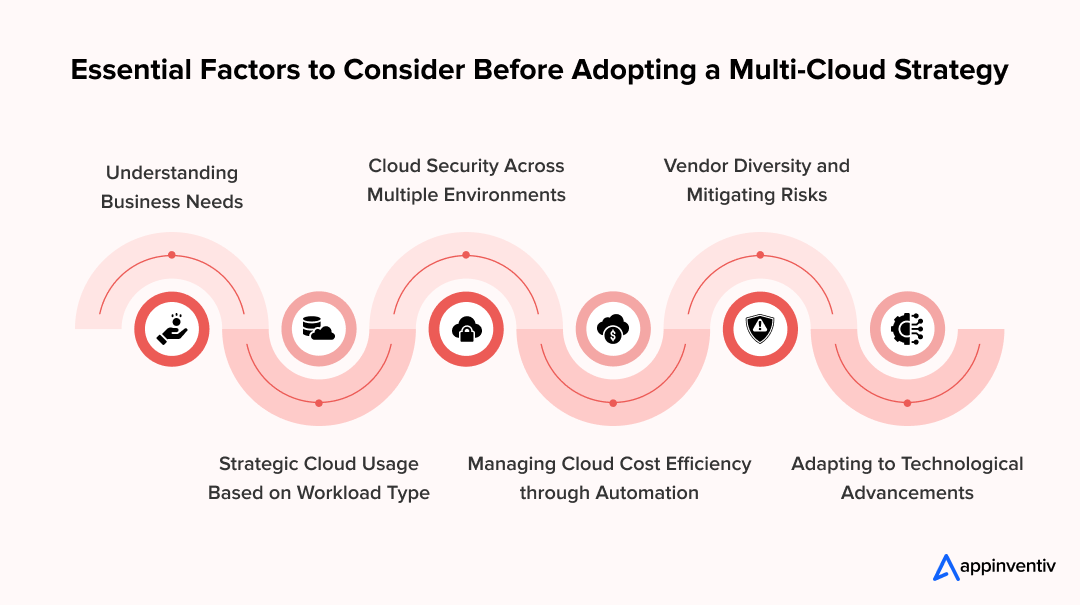
The rise of the enterprise ai cloud is not just another workload; it is the primary driver demanding the flexibility, scale, and specialized capabilities that only a mature, interoperable multi cloud strategy can provide.
The Paramount Outcome: Cloud Resilience
The ultimate objective of this entire evolutionary journey is cloud resilience—the ability of your business operations to withstand disruptions, mitigate risks, and maintain continuity. A single-cloud approach inherently creates concentration risk: vendor lock-in, regional outages, and pricing leverage held by the provider. <