

Multi Cloud Strategies: The Enterprise Blueprint for Agility and Resilience
Estimated reading time: 10 minutes
Key Takeaways
- Multi cloud strategies are no longer a luxury but a strategic necessity for enterprises seeking to avoid vendor lock-in, optimize costs, and leverage best-in-class services.
- Understanding the distinction and synergy between multi cloud strategies and hybrid cloud adoption is crucial for effective cloud architecture planning.
- Cloud interoperability is the technical backbone that makes multi-cloud manageable, enabling workload portability and consistent security.
- An enterprise ai cloud approach thrives within a multi-cloud framework, allowing businesses to cherry-pick specialized AI services from different providers.
- Implementing robust cloud resilience is a primary outcome, distributing workloads to mitigate outages and ensure business continuity.
- A successful implementation requires a clear roadmap focused on standardized management, governance, and developing cross-cloud expertise.
Table of contents
- Multi Cloud Strategies: The Enterprise Blueprint for Agility and Resilience
- Key Takeaways
- The Cloud Evolution: From Single Provider to Strategic Multi-Cloud
- Multi-Cloud vs. Hybrid Cloud: Decoding the Difference
- The Backbone: Cloud Interoperability
- Powering Innovation: The Enterprise AI Cloud
- Ensuring Uptime: Cloud Resilience
- Synthesizing the Pillars: The Holistic Multi-Cloud Advantage
- Your Roadmap to Implementation
- Frequently Asked Questions
The enterprise cloud landscape is undergoing a profound transformation. Businesses are rapidly moving beyond basic, single-provider setups into sophisticated, dynamic environments designed for maximum agility, innovation, and control. This shift is driven by a desire to avoid vendor lock-in, access best-in-class services for specific needs, and build a future-proof digital foundation. At the heart of this evolution lies the strategic adoption of multi cloud strategies—the deliberate use of cloud services from multiple providers to meet distinct business or technological needs.
But what does a successful multi-cloud approach truly entail? It’s more than just spreading workloads across AWS, Azure, and Google Cloud. It’s a deliberate architectural philosophy built on key pillars: integrating hybrid cloud adoption, mastering cloud interoperability, harnessing the power of an enterprise ai cloud, and guaranteeing cloud resilience. Are you ready to future-proof your cloud infrastructure and gain a decisive competitive edge?

The Cloud Evolution: From Single Provider to Strategic Multi-Cloud
The journey often begins with a single public cloud provider—a straightforward solution for getting workloads out of the data center. However, as cloud maturity grows, so do the limitations of a single-vendor approach. Organizations find themselves constrained by proprietary technologies, fluctuating costs, and the risk of having all their digital eggs in one basket. A service outage or a change in a provider’s pricing model can have catastrophic consequences.
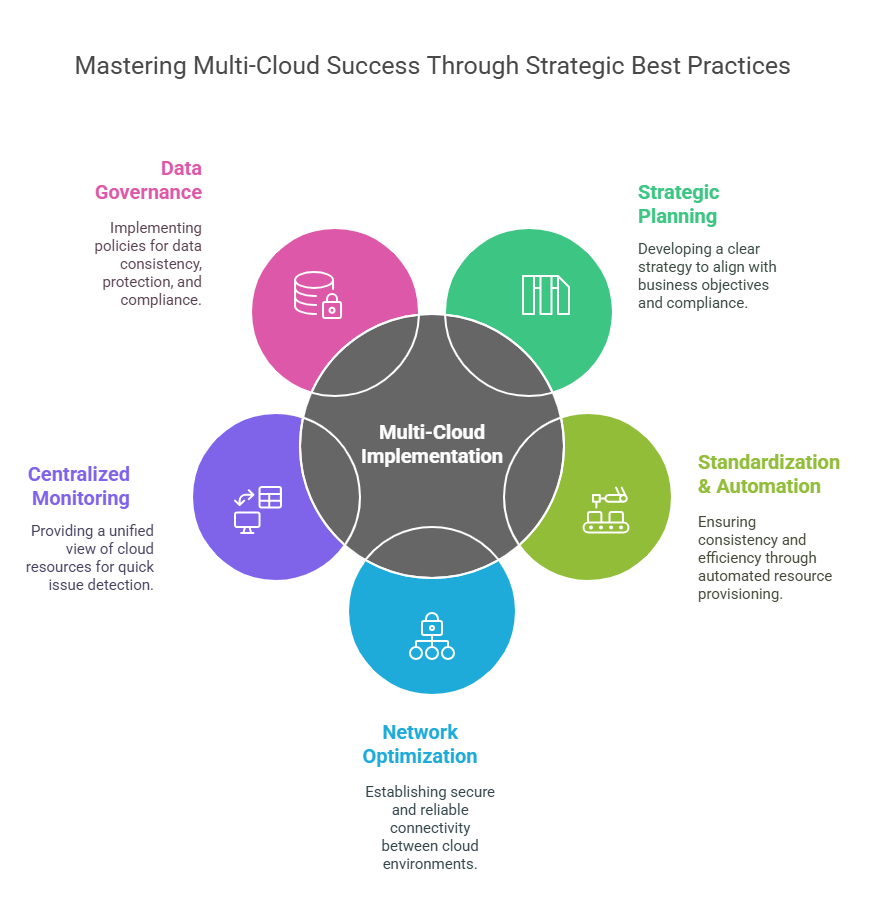
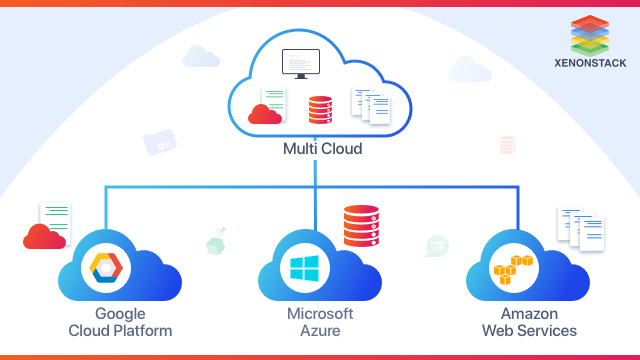
This realization sparks the move toward a multi cloud strategy. It’s a conscious decision to diversify, not for the sake of complexity, but for strategic advantage. Imagine using AWS for its unparalleled compute and ecosystem, leveraging Oracle Cloud for its high-performance database and AI capabilities, and utilizing another specialized provider for cost-effective, compliant archival storage. This is the power of multi-cloud: selecting the right tool for the right job, across the entire technology stack.
Multi-Cloud vs. Hybrid Cloud: Decoding the Difference
A common point of confusion lies in distinguishing multi cloud strategies from hybrid cloud adoption. While they are complementary and often coexist, they address different architectural models.
- Multi Cloud Strategies: This refers to using services from multiple public cloud providers (like AWS, Microsoft Azure, Google Cloud Platform, Oracle Cloud, IBM Cloud). The goal is to leverage the specific strengths of each provider for different tasks, avoiding over-reliance on any single vendor. As Oracle defines it, it’s about “using cloud services from more than one cloud vendor.” IBM notes it allows businesses to “choose the best fit for each workload.”
- Hybrid Cloud Adoption: This model blends private cloud infrastructure (on-premises or hosted) with public cloud services, creating a single, unified environment. It’s often driven by needs like data sovereignty, legacy application support, or specific performance requirements. F5 explains that hybrid cloud can be a phase or component within a broader multi-cloud strategy, while Google Cloud clarifies the distinction between the two models.
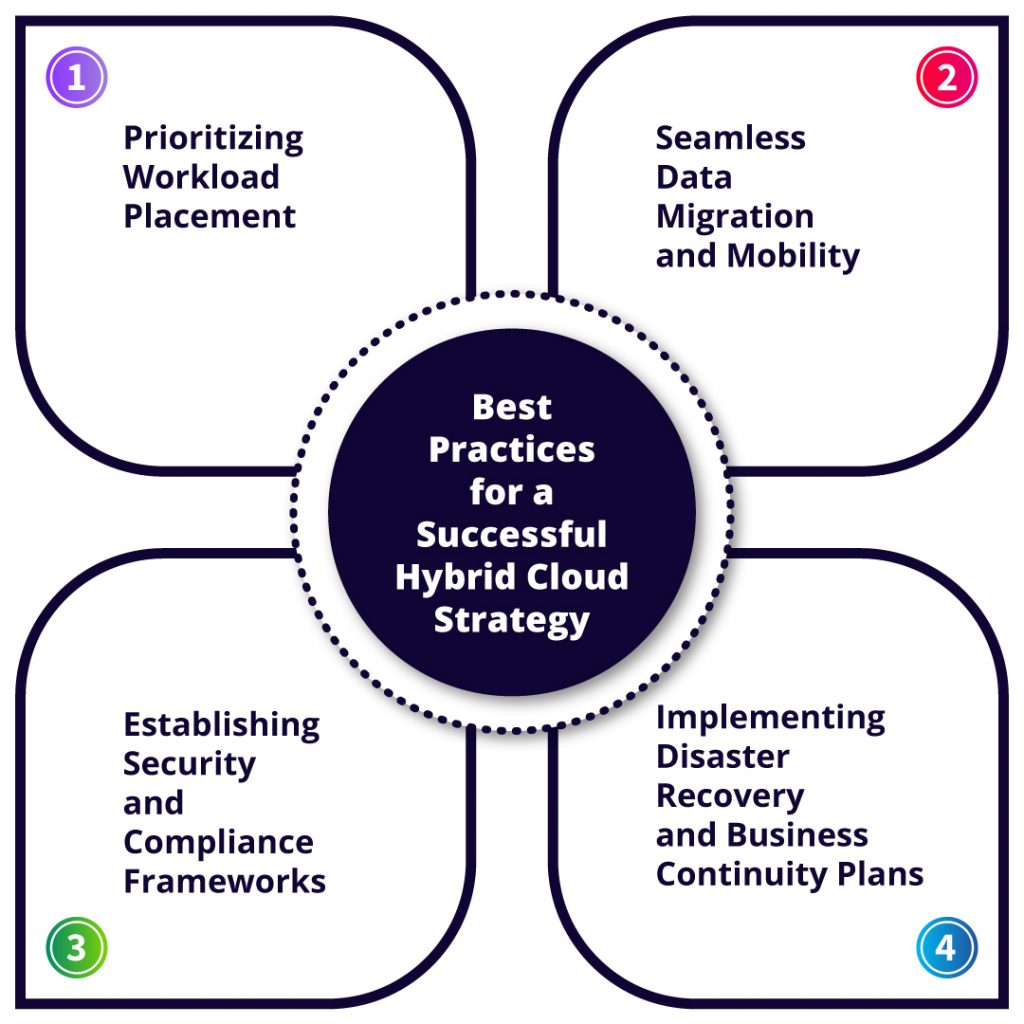
Synergy in Practice: A company might use a hybrid model (private cloud for sensitive financial data + public cloud for web applications) as part of a larger multi-cloud strategy that also uses a separate public cloud provider for its AI research and development workloads. The hybrid model addresses compliance, while the multi-cloud approach optimizes for innovation.
The Backbone: Cloud Interoperability
Managing multiple clouds without descending into chaos requires a robust technical backbone: cloud interoperability. This is the capability to manage, secure, and move workloads across different cloud environments seamlessly. As HPE emphasizes, a true multi-cloud strategy relies on standardized management for workload portability, consistent security (like IAM and encryption policies), and centralized monitoring, orchestration, and cost management.
Challenges of Interoperability:
- Data Portability: Moving large datasets between clouds can be slow and expensive due to egress fees and format inconsistencies.
- Security Policy Fragmentation: Maintaining uniform security and compliance policies across different platforms with unique tools and APIs.
- Management Silos: Teams needing separate skills and consoles for each cloud, leading to operational inefficiency.
- Cost Sprawl: Difficulty in gaining a unified view of spending across all cloud providers, leading to budget overruns.
Solutions for Seamless Interoperability:
- Containerization (Kubernetes): Packaging applications into containers ensures they run consistently anywhere, abstracting away the underlying cloud infrastructure.
- Infrastructure-as-Code (Terraform, Ansible): Defining and provisioning resources using code enables repeatable, consistent deployments across any cloud.
- Cloud-Agnostic Services: Using services designed to work across clouds, such as cloud-agnostic databases or middleware.
- API Management & Service Meshes: Creating a unified layer for services to communicate, regardless of where they are hosted.
- Unified Management Platforms: Leveraging tools like HPE GreenLake or Morpheus, which provide a single pane of glass for operations, security, and cost governance across clouds, as highlighted by HPE.
Mastering cloud interoperability is what transforms a complex, fragmented multi cloud strategy into a cohesive, manageable, and powerful enterprise asset.
Powering Innovation: The Enterprise AI Cloud
Artificial Intelligence and Machine Learning are becoming core to enterprise competitiveness. An enterprise ai cloud strategy supercharges this by allowing organizations to select specialized AI/ML services from different providers. Why be limited to one cloud’s AI toolkit when you can combine the best?
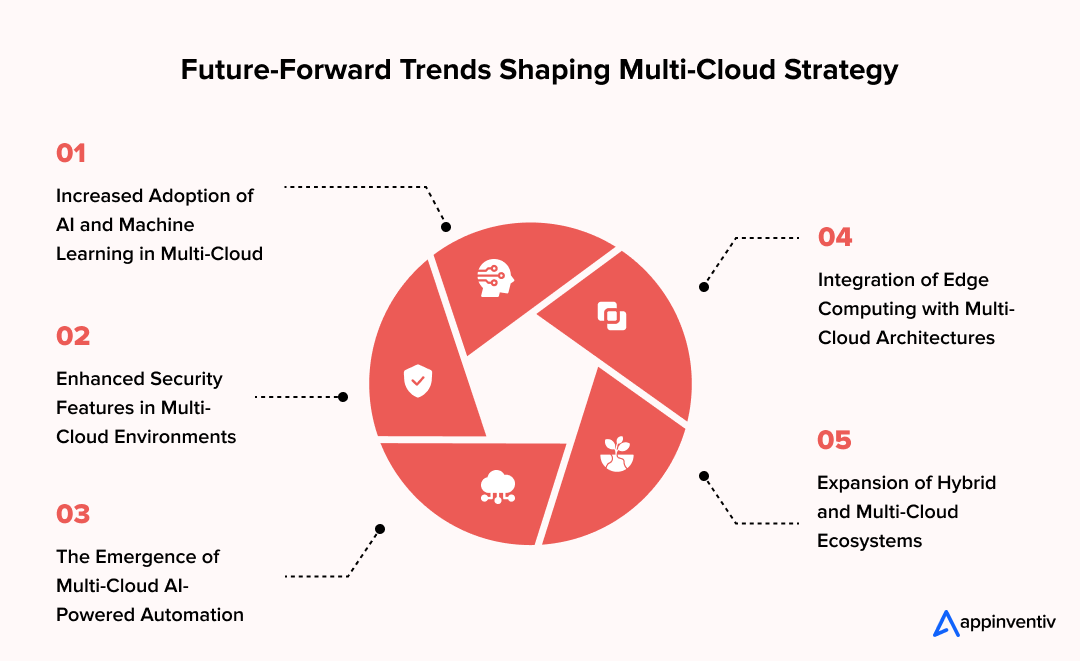
Oracle points out that multi-cloud enables businesses to “choose the best AI and machine learning services for their specific needs,” while IBM notes it provides the flexibility to leverage cutting-edge AI innovations from any source.
Considerations for a Multi-Cloud AI Strategy:
- Specialized Services: Use Google Cloud’s Vertex AI for its strength in NLP and pre-trained models, Azure AI for seamless integration with enterprise Microsoft ecosystems, and AWS SageMaker for its breadth of tools and scalability.
- Data Pipeline Complexity: Building pipelines that can feed data to training environments in different clouds, requiring strong data governance and interoperability.
- Model Portability: Ensuring trained models can be deployed for inference on different cloud or edge environments to optimize latency and cost.
- Avoiding AI Lock-in: Using open-source frameworks (like TensorFlow, PyTorch) and standardized formats helps prevent being tied to a single provider’s proprietary AI stack.
Real-World Example: A healthcare company could use AWS to process and store medical imaging data at scale, leverage Google Cloud’s specialized healthcare AI APIs for initial image analysis, and run final diagnostic models on a high-performance Oracle Cloud instance, all while maintaining a unified data governance layer. For more on how AI is transforming business operations, see our guide: How AI is Transforming Businesses.
Ensuring Uptime: Cloud Resilience
Perhaps one of the most compelling drivers for multi cloud strategies is the achievement of superior cloud resilience. By design, distributing workloads and data across multiple providers and geographic regions inherently mitigates the risk of a catastrophic failure. No single cloud provider is immune to outages.
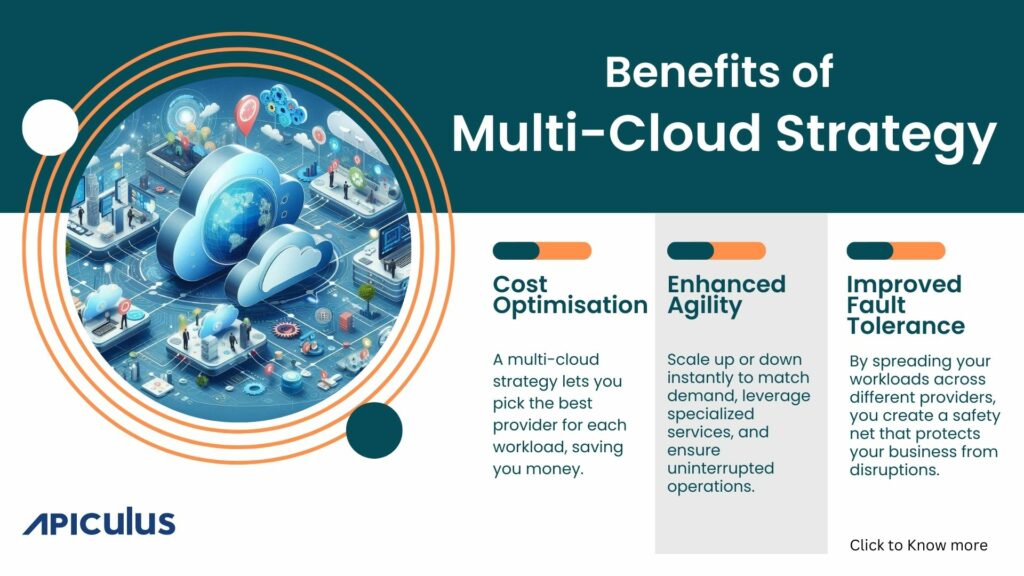
HPE identifies resilience as a key outcome, and Oracle highlights how it protects against regional disruptions and single-provider failures.
Key Resilience Strategies Enabled by Multi-Cloud:
- Geographic Redundancy: Deploying active-active or active-passive workloads in different regions across different clouds.
- Enhanced Disaster Recovery (DR): Using one cloud as a live environment and another as a fully configured, ready-to-failover DR site. This is far more robust than traditional single-cloud DR.
- High Availability (HA) Architectures: Designing applications to automatically failover components to a healthy environment in another cloud during a partial outage.
- Robust, Distributed Data Backups: Implementing a 3-2-1 backup rule (three copies, on two different media, one offsite) across cloud boundaries to protect against data corruption or ransomware.
The benefit is clear: dramatically reduced business impact from service interruptions. While achieving this requires careful architecture (especially around data synchronization), the peace of mind and guaranteed uptime are invaluable. Learn more about safeguarding your data with next-gen practices in our article on