
Neuralink high volume brain implants by 2026 Musk plan: Breakthroughs, Timelines, and Impacts
Estimated reading time: 9 minutes
Key Takeaways
- Elon Musk’s December 31, 2025 announcement sets a bold course: Neuralink high volume brain implants by 2026 Musk plan aims for mass production with near-total surgical automation, a potential quantum leap for brain-machine interfaces.
- The plan builds on the latest Neuralink N1 milestones but faces a critical BCI manufacturing scale timeline with hurdles like FDA approval and software calibration.
- Current progress includes 12 patients implanted globally as of September 2025 and $650M in Series E funding, providing a foundation for scaling ambitions reported by KSL and Fintool.
- If successful, the neural tech industry impact could be transformative, accelerating competitors and spawning new markets in neurosurgery and cognitive enhancement.
- Scaling at this pace necessitates urgent attention to ethics and tech governance, including long-term safety, data security, and equitable access to prevent societal divides.
Table of contents
Introduction: The Pivot to High-Volume Brain Implants
As the clock struck midnight on December 31, 2025, Elon Musk didn’t just ring in the New Year—he heralded a new era for neurotechnology. In a landmark announcement, Musk revealed that Neuralink is shifting gears to launch high-volume production of brain implants in 2026, coupled with almost entirely automated surgical procedures. This Neuralink high volume brain implants by 2026 Musk plan isn’t just an incremental update; it’s a pivotal breakthrough in brain-machine interfaces (BCIs) that could fundamentally transform human capability, as covered by KSL and Fintool. This ambition builds directly on the latest Neuralink N1 news and milestones, setting the stage for a manufacturing revolution.

But the core question electrifying the tech and medical communities is this: Can Neuralink realistically scale from delicate prototypes to mass production by 2026, and what would this mean for the entire neural tech landscape? This inquiry hinges on understanding the intricate BCI manufacturing scale timeline and forecasting the profound neural tech industry impact, all while navigating the thorny thicket of ethics and tech governance that such rapid advancement demands.
To appreciate the audacity of this vision, consider the current foothold: as of September 2025, Neuralink has successfully implanted its device in 12 patients worldwide across clinical trials. This effort is backed by a formidable $650 million Series E funding round in June 2025, valuing the company at a staggering $9.65 billion. These facts, reported by KSL and Fintool, provide crucial credibility and context. They paint a picture of a company transitioning from proof-of-concept to the precipice of industrial-scale deployment. The excitement surrounding these BCI breakthroughs is palpable, but it’s tempered by the monumental challenges ahead. Let’s smoothly transition to unpacking the precise timeline, the potential ripple effects across the industry, and the ethical imperatives that must guide this journey, satisfying the deep curiosity about Musk’s ambitious vision.
Deconstructing Musk’s Announcement and Technical Foundation
Elon Musk’s New Year’s Eve statement was strikingly specific: Neuralink will enter high-volume production of its brain implants in 2026 and transition to almost entirely automated surgical procedures. This declaration is the cornerstone of the Neuralink high volume brain implants by 2026 Musk plan, a blueprint for democratizing BCIs through scale, as detailed by sources like KSL, Fintool, and Tomorrow’s Affairs.

What technological leaps make this bold timeline conceivable? The answer lies in two key advances that reduce risk and enable automation:
- A Less Invasive Surgical Technique: Traditional brain surgery often requires removing a section of the dura, the brain’s protective outer membrane. Neuralink’s approach is revolutionary because its ultra-fine threads are designed to pass through the dura without its removal. This minimizes trauma, reduces the risk of infection and scarring, and crucially, simplifies the procedure for scalability, as noted in reports from Fintool and Tomorrow’s Affairs.
- The Precision of the R1 Surgical Robot: The unsung hero of this plan is Neuralink’s custom-built surgical robot. Its capabilities border on science fiction: it can insert a single electrode thread into the brain in just 1.5 seconds, achieve insertion depths exceeding 50 millimeters to reach target neurons, and dynamically adapt to 99% of brain anatomical variations across the population. This isn’t just a tool; it’s the engine of the BCI manufacturing scale timeline.
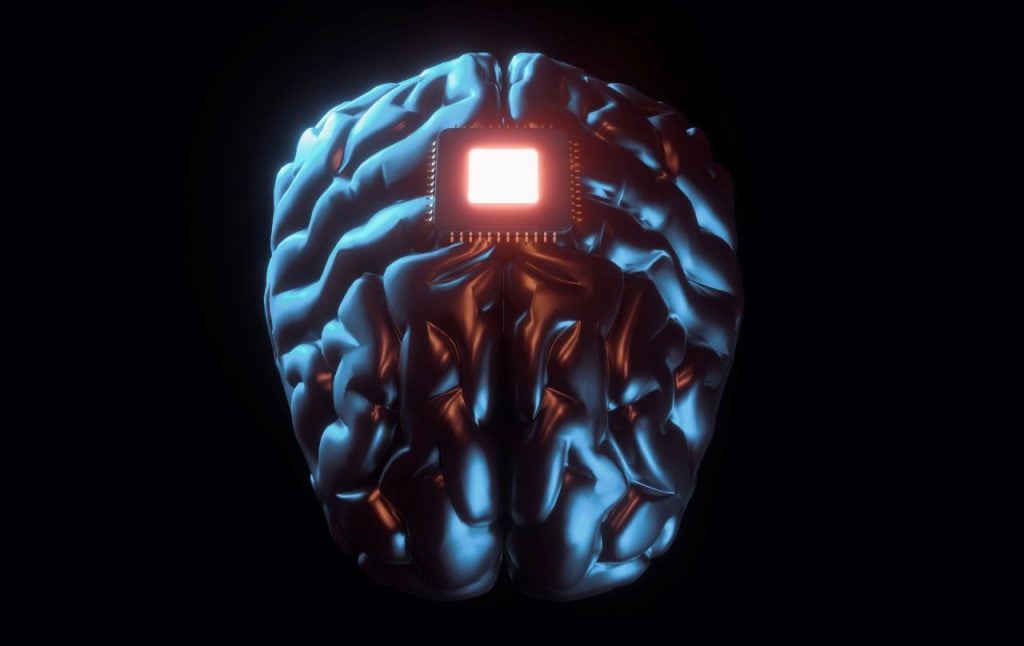
As Tomorrow’s Affairs elaborates, this robot transforms surgery from a slow, surgeon-dependent art into a rapid, repeatable process. How the robot fits into the BCI manufacturing scale timeline is clear: automation slashes procedure time, enhances consistency, and removes a major human bottleneck. This technical foundation—combining biological ingenuity with mechanical precision—sets a formidable stage. However, it’s just the first act in a complex drama of scaling, regulation, and market transformation.
Break Down the BCI Manufacturing Scale Timeline and Challenges
The journey from a dozen patients to high-volume output is encapsulated in the BCI manufacturing scale timeline. This isn’t a simple flip of a switch; it’s a multi-phase odyssey with defined stages and formidable roadblocks.
The Step-by-Step Timeline:
- Phase 1: Clinical Trials (2024-2025): As of September 2025, Neuralink has 12 patients implanted globally. Trials are spread across four major medical centers in three countries, including 5 participants in the U.S. PRIME Study and 6 in a Canadian trial, as per Fintool and KSL. This phase focuses on safety, feasibility, and gathering initial efficacy data.
- Phase 2: Regulatory Hurdles & Pivotal Studies (2025-2026): To move to commercial sales, Neuralink must secure FDA approval—a green light it has not yet received. This process requires submitting data from larger, pivotal clinical trials designed to prove substantial equivalence or effectiveness, which typically demand years of patient follow-up.
- Phase 3: High-Volume Production & Automated Surgery (2026 Target): This is Musk’s declared goal: ramping up implant manufacturing and deploying automated surgical systems at scale. Success here depends entirely on clearing Phase 2’s regulatory barriers.

The Daunting Challenges on the Timeline:
Scaling a medical device, especially one that interfaces directly with the brain, is fraught with obstacles that go beyond engineering. Here are the critical hurdles:
- Regulatory Labyrinth: The FDA’s approval pathway for a novel, invasive Class III device is rigorous and lengthy. Neuralink needs not just initial approval for trials but a Premarket Approval (PMA) for commercial sale—a process Fintool highlights as a major unknown in the 2026 timeline.
- Software and Calibration Bottlenecks: The hardware is only half the system. Reports indicate that software calibration for individual patients remains a challenge. For instance, patient Noland Arbaugh’s system required up to 45 minutes of daily retraining to maintain optimal performance. Scaling this personalized calibration to thousands of users is a massive software engineering problem.
- Trial Capacity Limits: The current trial size is tiny—only 11 patients were slated for the key U.S. PRIME study. Gathering statistically significant safety and efficacy data from such small cohorts takes time, potentially slowing the regulatory review and the overall BCI manufacturing scale timeline.
- Manufacturing at Medical Grade: Transitioning from lab-built N1 prototypes to assembly-line production of sterile, reliable, and biocompatible implants is a monumental task in supply chain and quality control.

Analyzing feasibility requires a balanced view. On one hand, the $650 million war chest from Series E funding provides immense resources. The surgical robot’s precision (1.5s/thread, 50mm depth) offers a clear path to procedural scalability. On the other hand, expert-acknowledged uncertainties around regulatory pathways, prolonged data needs, and persistent software problems pose significant, perhaps schedule-sliding, hurdles. The BCI manufacturing scale timeline is ambitious, and its success hinges on Neuralink’s ability to navigate this gauntlet of technical and bureaucratic challenges simultaneously.
Explore the Neural Tech Industry Impact
If Neuralink successfully executes its 2026 plan, the neural tech industry impact will reverberate far beyond its own headquarters. Success on this scale would serve as a powerful proof-of-concept, catalyzing the entire field of brain-computer interfaces.
Accelerating the Competitive Landscape: A commercially viable, high-volume Neuralink would validate the market and technical approach, forcing competitors to accelerate their own timelines. Companies like Synchron (developing a stent-based BCI) and Paradromics (working on high-bandwidth interfaces) would face increased pressure to deliver, potentially unlocking more investment and innovation across the board, as inferred from the scaling context in Fintool.

Spillover Effects and New Markets: The technologies developed for Neuralink’s scale-up would create ripple effects across multiple sectors:
- Neurosurgery Advancements: The automated insertion robot, capable of placing threads with 50mm depth in 1.5 seconds, could revolutionize precision neurosurgery for other conditions, like deep brain stimulation for Parkinson’s disease.
- Biocompatible Materials Science: The development of threads that can safely pass through the dura will drive innovation in ultra-fine, flexible, and long-lasting biomaterials, benefiting all implantable medical devices.
- Neural Data Processing & AI: Solving the calibration problem for thousands of users will necessitate breakthroughs in machine learning algorithms for real-time neural decoding. This could spawn new applications in cognitive assessment, mental state monitoring, and even cognitive enhancement for healthy individuals. This push is part of a broader wave of innovation detailed in 10 cutting-edge AI technologies shaping the future.

The Neuralink high volume brain implants by 2026 Musk plan is fundamentally about democratization. Scaling from 12 patients to high-volume production would drastically lower costs and increase accessibility, moving BCIs from rare medical miracles toward more commonplace therapeutic tools. As KSL notes, this shift could transform the treatment paradigm for paralysis, neurological disorders, and beyond. The neural tech industry impact would be a classic case of a rising tide lifting all boats, but it would also redraw the competitive map and create entirely new economic and research frontiers.
Address Ethics and Tech Governance Imperatives
The breakneck pace of scaling proposed by Neuralink brings urgent ethics and tech governance questions to the fore. Technological possibility does not equate to ethical acceptability, and for a technology interfacing directly with the human mind, governance is not an afterthought—it’s a prerequisite.
Core Ethical Concerns:
- Long-Term Safety Unknowns: Implants that pass through the dura are chronically invasive. The long-term (decades-long) biological response—risks of chronic inflammation, scar tissue (gliosis), or material degradation—remains largely uncharted territory. Mass deployment without comprehensive long-term data poses a significant ethical risk.
- Brain Data Security and Privacy: High-volume production means high-volume neural data generation. This data is arguably the most personal information imaginable—a window into thoughts, intentions, and emotions. Robust, hack-proof security frameworks are non-negotiable. This challenge intersects with broader debates on data ownership, explored in contexts like the explosive Web3 revolution.
- Societal Equity and the “Neuro-Divide”: Even with mass production, cost and access barriers could create a world of “brain haves and have-nots,” where cognitive enhancements or essential therapeutic BCIs are available only to the wealthy, exacerbating social inequality. This is a critical consideration highlighted by the scaling challenges noted in Fintool.

Governance and Regulatory Needs:
- Evolving FDA Frameworks: Regulators must develop new pathways and standards for evaluating rapidly iterating, software-dependent neurodevices. The current model, built for static hardware, may be too slow.
- Informed Consent for Novel Tech The consent process must ensure patients truly understand the risks of a 50mm-deep brain implant and an automated procedure that adapts to 99% of brain anatomies. This is a profound communication challenge.
- Philosophical and Societal Debates: As Tomorrow’s Affairs points out, human-computer integration at this level forces us to confront questions about identity, agency, and what it means to be human. Society needs inclusive forums to discuss these issues before the technology becomes widespread.
Balancing the immense optimism of this technology with caution is essential. The potential to restore movement and communication is a revolutionary AI medical breakthrough. Yet, the societal implications are a prime example of how AI is changing the world in ways that demand careful stewardship. Ongoing discussions, as referenced by Fintool, emphasize the need for proactive governance on issues like software retraining and trial transparency to prevent ethical lapses during scaling. The ethics and tech governance imperative is not a barrier to progress but the guardrail that ensures progress benefits all of humanity.
Frequently Asked Questions
What exactly did Elon Musk announce regarding Neuralink’s 2026 plan?
On December 31, 2025, Elon Musk announced that Neuralink plans to begin high-volume production of its brain implants in 2026 and implement almost entirely automated surgical procedures for their implantation. This ambitious roadmap aims to scale brain-machine interface technology dramatically.
What is the “BCI manufacturing scale timeline” and why is it challenging?
The BCI manufacturing scale timeline refers to the phased process of moving from clinical trials with a handful of patients to mass production of medical-grade brain implants. Key challenges include securing FDA commercial approval, which requires extensive trial data; scaling up software calibration for thousands of users; and manufacturing complex, sterile devices reliably at high volume.
How could Neuralink’s success impact other companies in the neural tech industry?
Success would validate the commercial and technical viability of invasive BCIs, likely accelerating investment and development timelines across the entire neural tech sector. Competitors like Synchron and Paradromics would be pressured to innovate faster, potentially leading to a more dynamic and advanced market overall.
What are the biggest ethical concerns about mass-producing brain implants?
Primary ethical concerns include: 1) Long-term safety of chronically implanted devices in the brain, 2) Security and privacy of highly sensitive neural data, and 3) Societal equity, ensuring fair access to avoid exacerbating existing inequalities and creating a “neuro-divide.”
Has the FDA approved Neuralink’s implant for commercial use?
As of the latest reports from 2025, Neuralink has received FDA approval to conduct clinical trials (like the PRIME Study) but has not yet received Premarket Approval (PMA) for commercial sale. This approval is a critical and pending milestone for the 2026 mass production plan.
How does Neuralink’s surgical robot enable high-volume procedures?
The R1 surgical robot automates the most delicate part of the procedure: inserting electrode threads. It can insert a thread in 1.5 seconds, adapt to individual brain anatomy, and perform with superhuman precision. This automation reduces surgery time, improves consistency, and allows surgeons to oversee multiple procedures, enabling scale.
Where can I learn more about the broader context of AI advancements mentioned?
The blog post references several key contexts: the Neuralink N1 foundation, cutting-edge AI technologies, the Web3 revolution’s impact on data, AI medical breakthroughs, and how AI is changing the world.