
The Stair Climbing Robot Vacuum: Your Multi-Story Home’s New Best Friend
Estimated reading time: 8 minutes
Key Takeaways
- The stair climbing robot vacuum solves the fundamental limitation of traditional models that halt at stair edges, enabling true whole-home automation.
- Powered by advanced ai navigation robotics, these devices use mechanisms like wheel-legs, caterpillar tracks, or scissor-lifts to traverse steps.
- They represent the pinnacle of smart home cleaning tech, integrating seamlessly with apps and voice assistants for multi-floor management.
- Key benefits include complete level-to-level coverage and time savings, but current trade-offs involve premium pricing, slower stair ascent, and increased bulk.
- This technology is a tangible signal of the next leap in home automation robotics, with models demonstrated at IFA 2025 and CES 2026 nearing consumer readiness.
Table of contents
- The Stair Climbing Robot Vacuum: Your Multi-Story Home’s New Best Friend
- Key Takeaways
- Introduction: The End of the Stair Barrier
- How Does a Stair Climbing Robot Vacuum Actually Work?
- Seamless Smart Home Integration: The Brain Behind the Braun
- Benefits and Practical Considerations: Is It Right for You?
- The Broader Picture: Stair Climbers and the Future of Home Robotics
- Frequently Asked Questions
For years, the dream of a fully automated clean has died at the top of the stairs. Your trusty robot vacuum would dutifully clean one level, only to be thwarted by a cliff sensor—a safety feature that uses infrared light to detect and avoid falls. But what if your vacuum could simply… climb over the problem? Enter the revolutionary stair climbing robot vacuum, a pinnacle of smart home cleaning tech driven by sophisticated ai navigation robotics. This comprehensive guide, updated for early 2026, dives into how this technology works, its integration into your home, the benefits and trade-offs, and what it signals for the future of domestic automation.

Introduction: The End of the Stair Barrier
That moment of frustration is universal. You hear the tell-tale beep, look over, and see your robot vacuum paused at the stair edge, its job half-done. Traditional models are designed to stop—a necessary safety precaution. The new generation of stair climbing robot vacuums flips this script entirely. Instead of avoiding the drop, they actively conquer it, using innovative mechanical systems and real-time intelligence to move between floors. This isn’t a minor upgrade; it’s a fundamental rethinking of what a home cleaning robot can be, transforming it from a single-level helper into a true whole-house custodian.
How Does a Stair Climbing Robot Vacuum Actually Work?
The core technology is a dramatic departure. Where standard vacuums halt, climbers engage. Engineers have developed several compelling mechanisms, each with its own advantages.
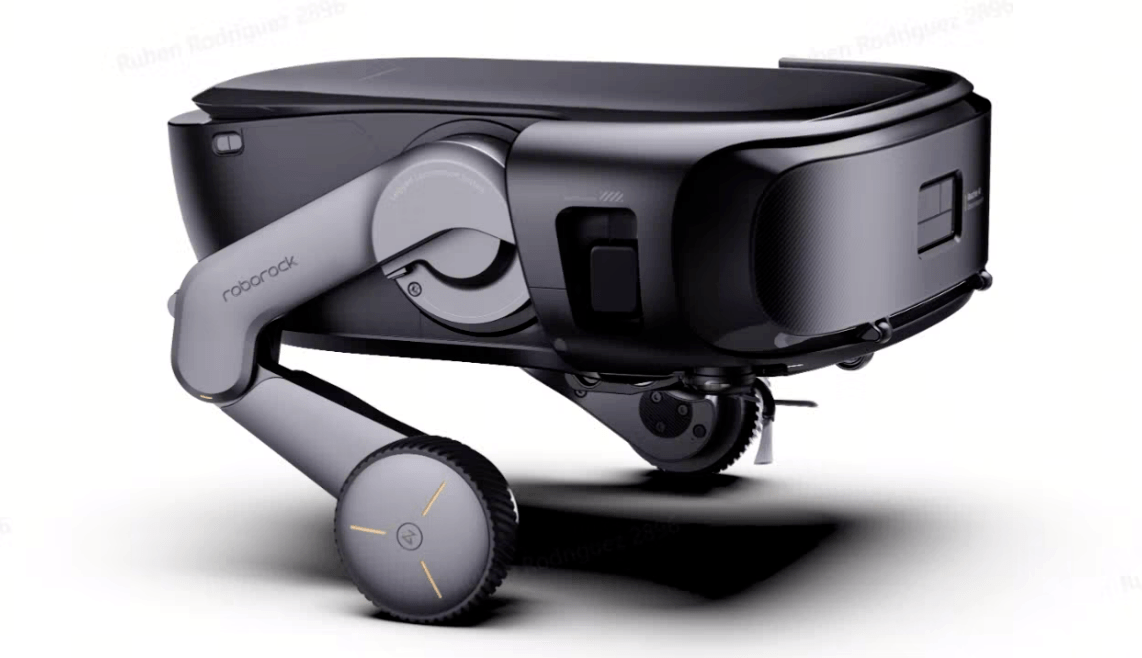
1. The Wheel-Leg (“Wheg”) Architecture: Agile Like an Insect
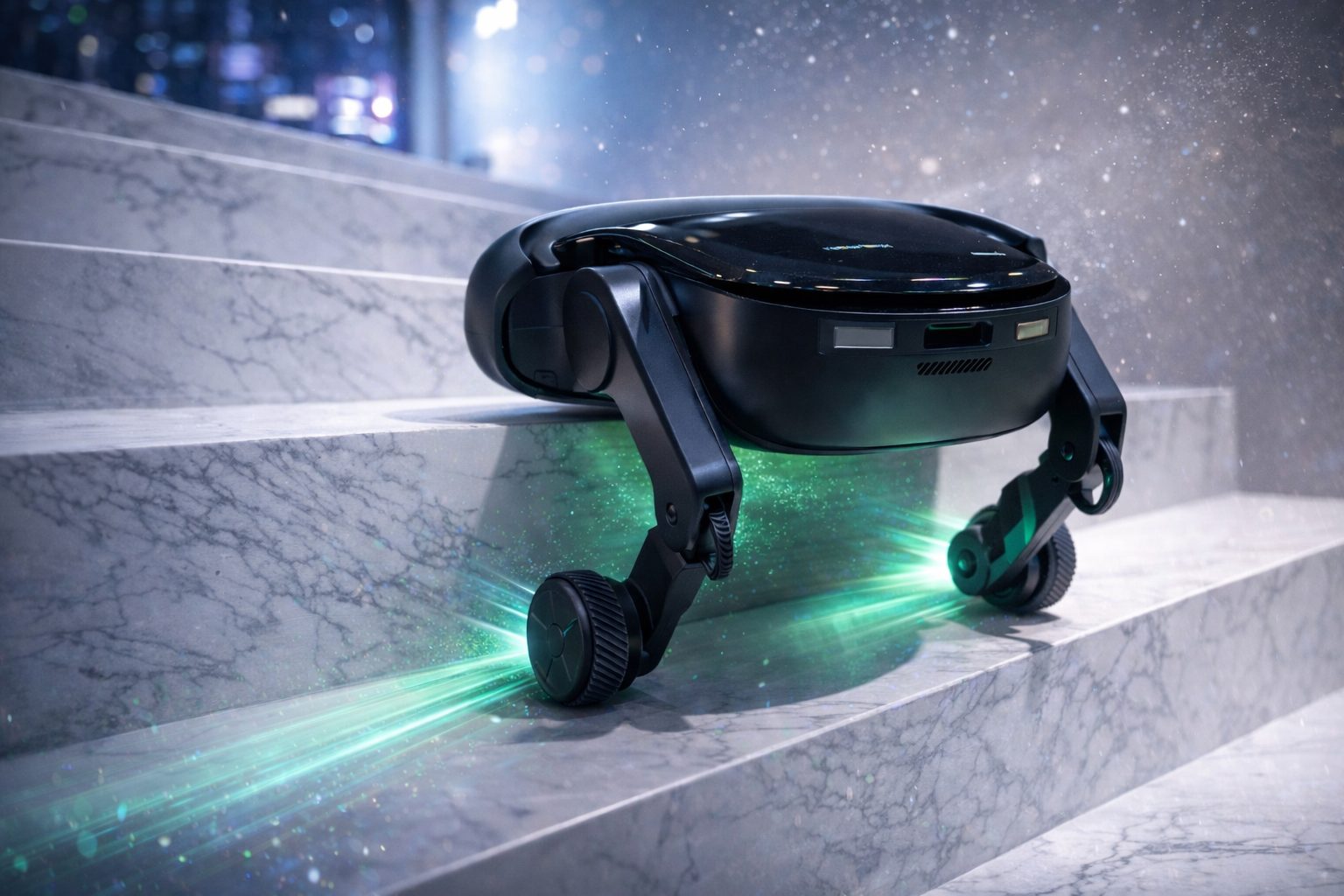
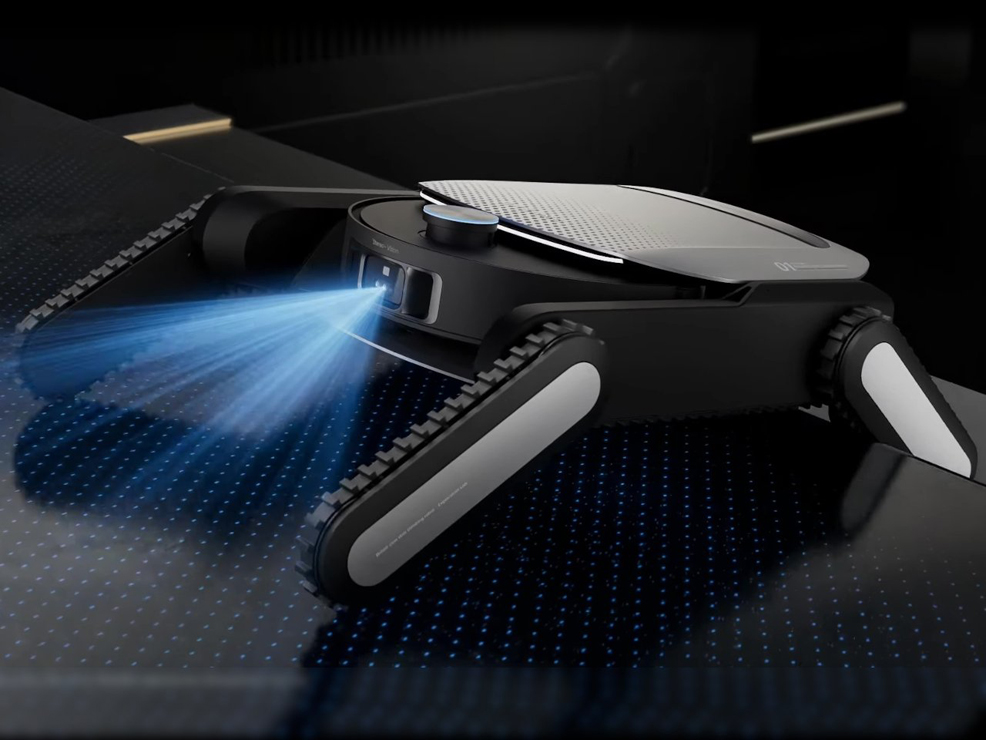
Exemplified by prototypes like Roborock’s Saros Rover, this system uses independent wheeled limbs. Think of them as agile, insect-like legs with wheels on the ends. The magic is in the ai navigation robotics that power them. Sensors and 3D cameras scan the surroundings in real-time, measuring step height, distance, and material. The AI then calculates the precise adjustments needed for speed, balance, and wheel position.
- Capabilities: Handles stairs, ramps, slopes, and even curved or spiral designs with apparent ease. As seen in demos, it can make dynamic jumps and turns.
- Engineering Triumph: Overcoming the challenge of compact, powerful actuators that provide both lifting force and delicate balance, all while housing full vacuuming components.
2. Caterpillar-Track Platforms: The Steady Ascender
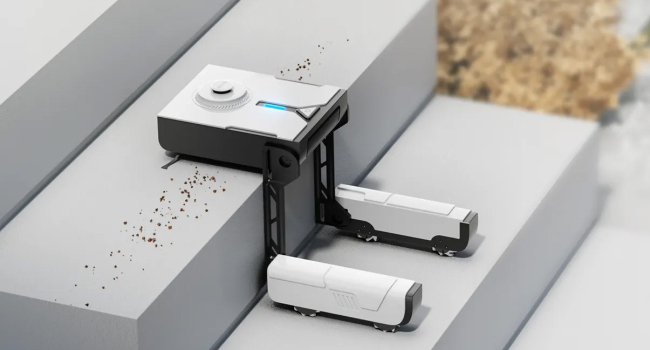
Dreame’s approach, showcased with concepts like the Cyber X, is different. Here, a standard robot vacuum docks onto a separate treaded platform. When it encounters stairs, the platform’s front treads grip the next riser, tilting and pulling the entire unit up step-by-step.
- Key Advantage: It requires no modifications to your stairs and maintains a stable, centered grip throughout the climb, as detailed in Dreame’s guide.
- Design Focus: Reliability and consistent performance over varied surfaces, including carpeted steps.

3. Scissor-Lift Legs: The Methodical Climber
MOVA’s Zeus 60 prototype uses a more methodical, scissor-lift mechanism. Legs extend down to raise the vacuum’s platform, front wheels move forward onto the next step, and the body is pulled up. It’s slower but incredibly stable for heights up to 10 inches (25 cm).
- Ideal For: Homes with tall, curved, or uneven stairs where stability is paramount. Video demonstrations show its deliberate, sure-footed pace.
- Trade-off: The mechanism can be bulkier and noisier than other designs.
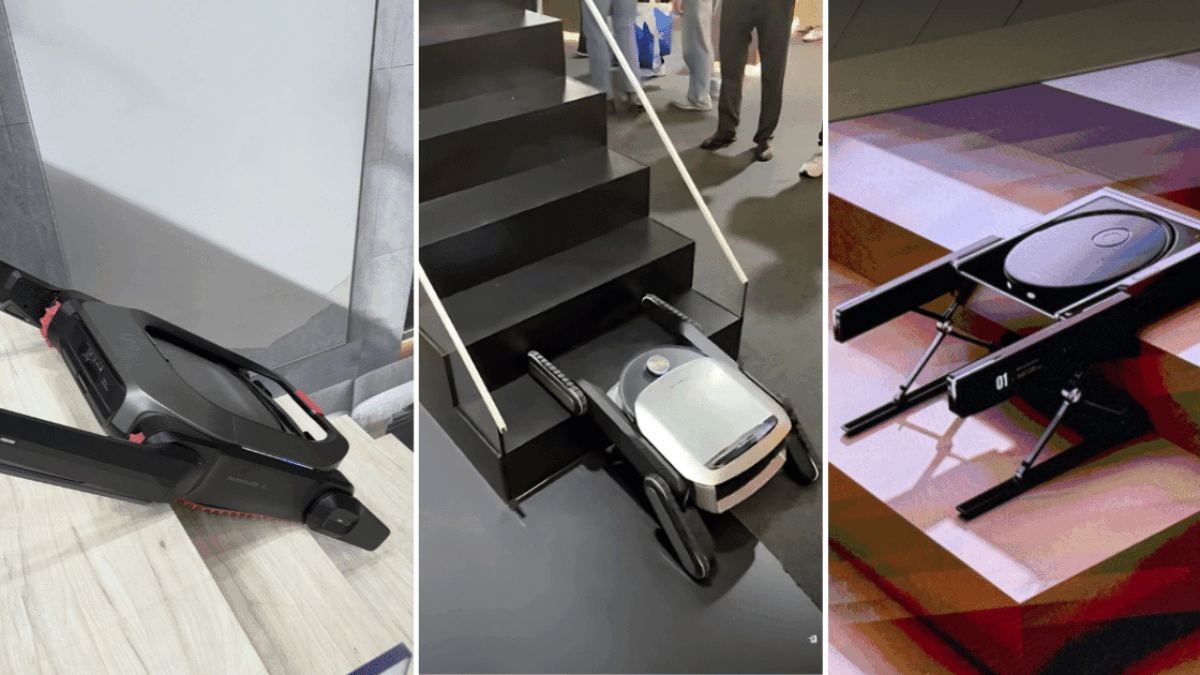
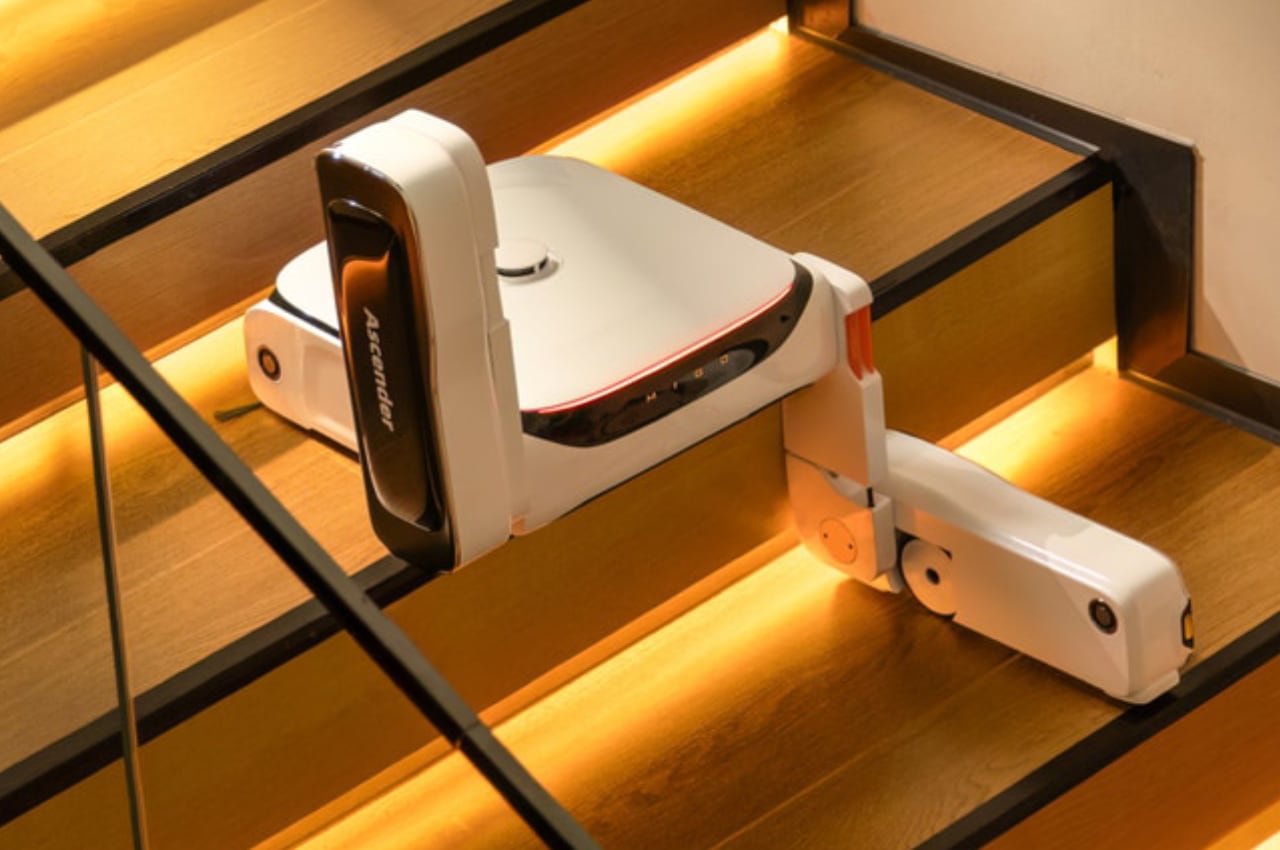
Beyond these, innovators are exploring compact prototypes like Stairrobotics’ Blue Chip, which uses alternating axes for lifting, and concepts with tri-star wheels or bogie suspensions. The overarching challenge, as noted by Stuff.tv, is balancing speed, stability, noise, and a form factor that still fits under your sofa. The solution lies in ever-more sophisticated AI that can strategize for countless real-world scenarios.
Seamless Smart Home Integration: The Brain Behind the Braun
A stair climbing robot vacuum isn’t just a mechanical marvel; it’s a hub of smart home cleaning tech. Its true potential is unlocked within your connected ecosystem.
- App Control & Scheduling: Start, stop, or schedule a whole-home clean from your phone, whether you’re upstairs or across town.
- Voice Assistant Compatibility: Use simple commands with Alexa or Google Home to initiate cleaning on specific levels.
- Automated Routines: Integrate it with other smart devices—imagine it starting a clean after your smart lock signals you’ve left for work.
The enabler is ai navigation robotics. These vacuums create detailed, persistent 3D maps of every floor. Using spatial analysis and real-time obstacle recognition (to avoid toys, cords, or furniture), they optimize the most efficient path not just around a room, but between entire levels. This is the intelligence behind models like the Saros Rover, turning raw climbing power into a seamless cleaning experience. Previews like the Dreame X50 Ultra’s ProLeap system—retractable legs for small bumps—hint at the incremental steps toward this full climbing future, as seen in industry showcases.
Benefits and Practical Considerations: Is It Right for You?
The promise is transformative: complete multi-story home coverage without you lifting a finger. This isn’t just about convenience; it’s about reclaiming time and enhancing accessibility for multi-level living. It represents a revolutionary step in home automation, as highlighted in discussions on the evolution of smart home technology. However, as with any emerging technology, there are important factors to weigh.
| Consideration | Details |
|---|---|
| Price Point | Expect a premium. This is cutting-edge tech. While not yet on retail shelves, prototypes demonstrated at IFA 2025 and CES 2026 suggest market entry is imminent, with consumer models likely in 2026 (source). |
| Maintenance & Compatibility | Functions on most stair materials (wood, tile, carpet) without modifications. Routine upkeep—emptying bins, cleaning brushes—mirrors standard vacuums (source). |
| Limitations |
|

The Broader Picture: Stair Climbers and the Future of Home Robotics
The stair climbing robot vacuum is more than a niche product; it’s a harbinger for the field of home automation robotics. Models like the agile Saros Rover or the steadfast Dreame and MOVA platforms signal a shift from single-function appliances to versatile, multi-functional domestic robots.
As reported by Popular Mechanics, this technology paves the way for robots that don’t just clean floors but can hop over obstacles, fetch items, or even assist with other household tasks. The rapid progress showcased at major tech events confirms we are moving decisively from prototype to product. The core achievement—giving a robot the intelligence and mechanics to navigate the complex, multi-level environment of a human home—unlocks a future where our automated helpers are truly unstoppable.

Frequently Asked Questions
Can a stair climbing robot vacuum clean the stairs themselves?
No, that’s a crucial distinction. Current designs are focused on traversing stairs to access different home levels. The cleaning brushes and suction are designed for flat floors. Cleaning the narrow treads of a staircase remains a separate challenge.
Is it safe? Could it fall down the stairs?
Safety is paramount. These devices use a combination of the very cliff sensors they overcome for detection, along with advanced ai navigation robotics for precise positioning and balance calculation. The mechanical systems are designed to maintain a secure grip throughout the ascent and descent, making a fall extremely unlikely under normal operation.
When will stair climbing robot vacuums be available to buy?
Based on demonstrations at IFA 2025 and planned showcases for CES 2026, the first consumer models are targeting a release in 2026. They are transitioning from compelling prototypes, like those from Roborock and Dreame, to finalized products.
Will it work on all types of stairs?
Most prototypes are designed for common residential stairs—straight, curved, or with carpet. However, extremely steep, spiral, or damaged stairs may pose a challenge. The AI system assesses each step in real-time and will only proceed if it calculates a safe path.
How does the vacuum know where to go on different floors?
This is where smart home cleaning tech shines. The vacuum creates and stores a detailed 3D map of each level of your home. When it climbs to a new floor, it recognizes its location from the map and executes the cleaning plan you’ve set for that specific area via the companion app.