
“`html
The AI Revolution in Content Creation: Shaping Tomorrow’s Narratives
Estimated reading time: 12 minutes
Key Takeaways
- The integration of artificial intelligence into content creation is accelerating rapidly.
- In 2025, a significant **90% of content marketers plan to use AI** to support their efforts. [Source: https://www.siegemedia.com/strategy/ai-writing-statistics]
- AI in content creation leverages technologies like **natural language processing (NLP)** and **machine learning (ML)** to automate and assist content generation.
- AI offers unprecedented efficiency, speed, and scalability, allowing for the creation of vast amounts of content quickly.
- Hyper-personalization at scale is becoming a reality, with AI tailoring content to specific audience segments.
- AI tools are also proving invaluable for boosting creativity, idea generation, and overcoming writer’s block.
- In marketing, AI enhances content optimization, copywriting, strategy development, and customer engagement.
- AI writing assistants are augmenting human capabilities, not replacing them, by offering sophisticated editing and generation support.
- The generative AI market is projected for substantial growth, indicating a future heavily influenced by AI.
- Ethical considerations, including originality, misinformation, and transparency, are paramount in the AI content era.
- Balancing the benefits of AI (speed, scale, personalization) with its challenges (originality, accuracy, ethics) is crucial.
- The future of content lies in a collaborative partnership between humans and AI, unlocking new creative potential.
Table of contents
- The AI Revolution in Content Creation: Shaping Tomorrow’s Narratives
- Key Takeaways
- Understanding AI Content Creation: The Core Concepts
- The Transformation of Content Production: How AI is Changing Content
- The Strategic Imperative: AI in Marketing
- Empowering Creators: The Role of AI Writing Assistants
- Gazing Ahead: The Future of Content with AI
- Weighing the Scales: Benefits and Challenges of AI in Content Creation
- Frequently Asked Questions
Understanding AI Content Creation: The Core Concepts
The integration of artificial intelligence into content creation is not a futuristic fantasy but a present-day reality. At its core, AI in content creation is the application of sophisticated artificial intelligence technologies to automate, assist, or entirely generate written and visual marketing materials with remarkable efficiency and scale.
This process hinges on advanced technologies, most notably **natural language processing (NLP)** and **machine learning (ML)**. NLP enables AI to understand, interpret, and generate human language, while ML allows these systems to learn from vast datasets, continuously improving their output over time. Together, these technologies empower AI to craft everything from blog posts and social media updates to complex marketing copy and even visual assets.
It’s crucial to differentiate AI-generated content from human-created content. While human creativity thrives on subjective experiences, emotional nuance, unique perspectives, and serendipitous inspiration, AI-generated content is characterized by its algorithmic basis, immense scalability, and unparalleled speed. AI can process and generate information at speeds that are simply impossible for humans, making it an incredibly powerful tool for content marketers.
The rise of **AI content creation** is fundamentally reshaping how we think about producing and consuming information. It’s no longer just about what can be created, but *how* it can be created, and at what scale and pace. This shift demands a new understanding of the capabilities and limitations of AI in the creative process.
The Transformation of Content Production: How AI is Changing Content
The impact of AI on content production is nothing short of revolutionary. It’s transforming the very fabric of how content is conceived, drafted, and disseminated. The key shifts are evident in several critical areas:
Unprecedented Efficiency and Speed: AI tools, particularly those powered by advanced models like the GPT architecture, can draft content at speeds that far outstrip human capabilities. Imagine generating an entire blog post outline or initial draft in minutes, not hours or days. This efficiency is not just a theoretical benefit; it’s a practical reality for many. Statistics reveal the extent of this adoption: **71.7% of marketers use AI for outlining**, and a substantial **57.4% for drafting**. [Source: https://www.siegemedia.com/strategy/ai-writing-statistics] This signifies a profound change in workflow, allowing teams to focus more on strategy and refinement.
 "Revolutionary AI in Content Creation: Harnessing the Power for an Exciting Future 4")
Massive Scalability: Generative AI facilitates the creation of large volumes of content with an ease previously unimaginable. Businesses can now produce personalized content for numerous audience segments simultaneously, or rapidly expand their content libraries to cover a wider range of topics and keywords. Projections suggest this trend will continue to accelerate, with estimates indicating that by 2026, up to **90% of online content may be AI-generated**. [Source: https://www.mend.io/blog/generative-ai-statistics-to-know-in-2025/] This scalability is crucial for brands aiming to maintain a consistent and pervasive online presence.
Hyper-Personalization at Scale: One of AI’s most potent capabilities is its ability to tailor content to specific audience segments by analyzing vast amounts of data. AI can identify patterns in user behavior, preferences, and demographics, enabling the creation of content that resonates deeply with individual consumers. This leads to enhanced engagement, higher relevance, and ultimately, a more effective marketing strategy. [Source: https://www.penbrief.com/game-changing-ai-powered-influencer-marketing]
Boosting Creativity and Idea Generation: While some fear AI might stifle creativity, it can actually be a powerful catalyst. AI tools can help overcome common creative blocks by suggesting new topics, exploring different angles, and facilitating brainstorming sessions. For human creators, AI can act as an intelligent collaborator, offering fresh perspectives and ensuring that no good idea is left unexplored. [Source: https://www.penbrief.com/5-ways-to-use-ai-strategies-to-boost-productivity]
These transformations are collectively captured by the understanding of **how AI is changing content** production, moving it towards a more agile, data-driven, and scalable future. [Source: https://www.penbrief.com/how-ai-is-changing-the-world]
The Strategic Imperative: AI in Marketing
The integration of AI into marketing is no longer an optional add-on; it’s a strategic imperative for businesses looking to stay competitive. AI’s ability to process data, automate tasks, and personalize experiences is revolutionizing marketing functions, from content optimization to customer engagement.
Advanced Content Optimization: For search engine optimization (SEO), AI is a game-changer. It can analyze keywords, identify trending topics, predict content performance, and suggest optimization opportunities with a level of detail and speed that manual analysis cannot match. This leads to content that is not only engaging but also highly discoverable. [Source: https://www.penbrief.com/keyword-research-seo-strategy-2]
Elevated Marketing Copywriting: AI excels at generating effective marketing copy. Whether it’s crafting compelling ad creatives, attention-grabbing email subject lines, persuasive product descriptions, or engaging social media posts, AI can produce high-quality copy rapidly. The impact is measurable: AI has been shown to lead to a **36% increase in conversion rates on landing pages** and a **38% improvement in click-through rates**. [Source: https://www.siegemedia.com/strategy/ai-writing-statistics] These figures underscore the practical benefits of AI-driven copywriting.
Data-Driven Content Strategy Development: AI can analyze market trends, competitor activities, and intricate audience behavior patterns to recommend strategic content directions and themes. This data-driven approach ensures that marketing efforts are aligned with what the audience wants and what the market demands, maximizing ROI and impact. [Source: https://www.penbrief.com/game-changing-ai-marketing-tools]

Enhanced Customer Engagement: AI-powered chatbots are transforming customer service and engagement. They provide real-time, personalized customer interactions, answer queries instantly, and guide users through processes, thereby improving customer satisfaction and loyalty. [Source: https://www.penbrief.com/future-of-ai-chatbots-in-customer-service]
The widespread adoption is clear: **76% of marketers utilize AI for content creation** and other marketing functions. [Source: https://www.surveymonkey.com/mp/ai-marketing-statistics/] This highlights the critical importance of embracing **AI in marketing** to achieve measurable results and maintain a competitive edge in today’s dynamic landscape. [Source: https://www.mend.io/blog/generative-ai-statistics-to-know-in-2025/]
Empowering Creators: The Role of AI Writing Assistants
Within the broader scope of AI in content creation, **AI writing assistants** stand out as a crucial category of tools designed to augment, not replace, human capabilities. These specialized software applications are built to enhance the productivity, efficiency, and quality of content produced by writers.

Their functionalities are diverse and sophisticated. AI writing assistants can perform advanced grammar and style checking, identifying subtle errors that traditional tools might miss. They can offer real-time tone adjustment, helping writers ensure their message aligns with their intended audience and brand voice. Furthermore, they can swiftly summarize lengthy texts, expand on existing ideas, and even suggest alternative phrasing to improve clarity and impact.
The adoption of these tools is widespread, mirroring the broader trend of AI integration. Platforms like ChatGPT have become ubiquitous in the consumer AI tool market, capturing a significant **62.5% share** and boasting an impressive **800 million weekly active users by September 2025**. [Source: https://www.mend.io/blog/generative-ai-statistics-to-know-in-2025/ / https://www.fullview.io/blog/ai-statistics/] This massive user base reflects the perceived value and utility of AI writing assistants in everyday content creation tasks.

Crucially, the narrative surrounding these **AI writing assistants** is one of empowerment. They are designed to serve as intelligent collaborators, enhancing human creativity and productivity by handling repetitive or time-consuming tasks. [Source: https://www.penbrief.com/ai-content-creation-guide-2] This allows human creators to focus on higher-level thinking, strategic nuances, and the unique, subjective elements that only human experience can provide, reinforcing the idea that AI is a tool to amplify human potential, not supersede it.
Gazing Ahead: The Future of Content with AI
Looking toward the horizon, the **future of content** is intrinsically linked with the ongoing advancements in artificial intelligence. We can anticipate AI generating increasingly sophisticated, nuanced, and contextually aware content that pushes the boundaries of what’s currently possible.
The market itself reflects this trajectory. The generative AI market is poised for significant expansion, expected to exceed **$66 billion in 2025**, with long-term forecasts reaching an astounding $1.3 trillion by 2032. [Source: https://www.mend.io/blog/generative-ai-statistics-to-know-in-2025/] This economic growth underscores the perceived value and transformative potential of AI in content creation and beyond.

The dynamics of human-AI collaboration are set to evolve, moving towards a more seamless partnership model. Instead of AI acting solely as a tool, it will become an integrated co-creator, working alongside humans to brainstorm, draft, refine, and personalize content. This collaborative approach promises to unlock new creative possibilities and efficiencies. [Source: https://www.penbrief.com/how-ai-is-changing-the-world]
However, this future is not without its challenges. Significant ethical considerations and complexities must be addressed. These include maintaining originality in an era of AI-generated text, preventing the spread of misinformation, ensuring transparency about AI’s role in content creation, and defining the ethical boundaries of AI-generated content. Navigating these issues will be paramount to harnessing AI’s power responsibly. [Source: https://www.penbrief.com/ethical-ai-deployment-strategies-2025]
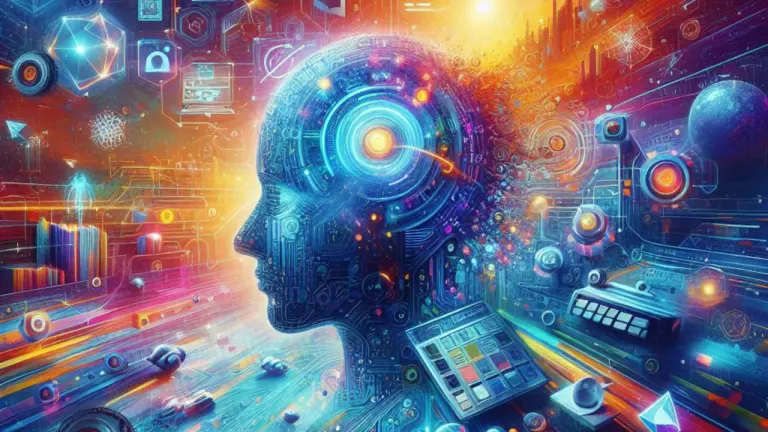
Ultimately, the **future of content** will be shaped by how effectively we can integrate AI into our workflows while upholding ethical standards and preserving the invaluable contributions of human creativity and critical thinking. [Source: https://www.penbrief.com/ai-content-creation-future]
Weighing the Scales: Benefits and Challenges of AI in Content Creation
The integration of AI into content creation presents a compelling array of advantages, alongside a set of challenges that require careful consideration and strategic management.
Summarized Benefits:
- Speed and Cost-Effectiveness: AI dramatically reduces the time and resources needed for content production, enabling faster turnaround times and more efficient budget allocation. [Source: https://www.siegemedia.com/strategy/ai-writing-statistics]
- Scalability: The ability to generate vast amounts of content quickly and efficiently allows businesses to meet diverse needs and maintain a strong online presence across multiple platforms. [Source: https://www.mend.io/blog/generative-ai-statistics-to-know-in-2025/]
- Personalization and Data-Driven Insights: AI leverages data to create highly targeted and effective content, leading to better audience engagement and stronger campaign performance. [Source: https://www.penbrief.com/game-changing-ai-powered-influencer-marketing]
- Enhanced Marketing Performance: Real-world applications show AI contributing to significant improvements in key marketing metrics, such as click-through rates and conversion rates. [Source: https://www.siegemedia.com/strategy/ai-writing-statistics / https://www.typeface.ai/blog/content-marketing-statistics]
Acknowledged Challenges:
- Potential Lack of Originality: Without careful guidance, AI may sometimes produce content that is generic, repetitive, or lacks a unique creative spark. [Source: https://www.penbrief.com/ai-content-creation-guide]
- Factual Inaccuracies: AI models can sometimes generate incorrect or outdated information, necessitating vigilant human fact-checking and verification. [Source: https://www.penbrief.com/ai-content-creation-guide]
- Ethical Concerns and Misuse: Issues surrounding algorithmic bias, potential for plagiarism, and the deliberate creation of misleading content are significant ethical hurdles. [Source: https://www.penbrief.com/ethical-ai-deployment-strategies-2025]
- Necessity of Human Oversight: The indispensable role of human editors and content strategists remains crucial for ensuring quality control, factual accuracy, brand consistency, and adding that essential human creative touch. [Source: https://www.penbrief.com/how-ai-is-changing-the-world]

Frequently Asked Questions
Q1: Will AI replace human content creators?
A1: It is highly unlikely that AI will fully replace human content creators. Instead, AI is emerging as a powerful tool that augments human capabilities, handling repetitive tasks and providing creative assistance, allowing humans to focus on strategy, creativity, and critical thinking. [Source: https://www.penbrief.com/ai-content-creation-guide-2]
Q2: How can I ensure AI-generated content is original?
A2: To ensure originality, use AI as a starting point or an assistant. Always review, edit, and fact-check AI-generated content. Incorporate your unique insights, voice, and data. Plagiarism checkers can also be used as a final safeguard. [Source: https://www.penbrief.com/ai-content-creation-guide]
Q3: What are the biggest ethical concerns with AI in content creation?
A3: The main ethical concerns include the potential for AI to generate misinformation, perpetuate biases present in its training data, issues of copyright and ownership of AI-generated content, and the need for transparency regarding AI’s involvement in content production. [Source: https://www.penbrief.com/ethical-ai-deployment-strategies-2025]
Q4: How does AI help with content personalization?
A4: AI analyzes user data, behavior patterns, and preferences to tailor content to individual segments or even specific users. This allows for highly relevant messaging, recommendations, and experiences that enhance engagement. [Source: https://www.penbrief.com/game-changing-ai-powered-influencer-marketing]

Q5: What is the projected growth of the generative AI market?
A5: The generative AI market is projected to grow significantly, with estimates suggesting it will exceed $66 billion in 2025 and potentially reach $1.3 trillion by 2032, indicating its substantial economic impact. [Source: https://www.mend.io/blog/generative-ai-statistics-to-know-in-2025/]
“`