
The AI Escalation: A Critical Security Guide for WordPress Against Automated Hacking
Estimated reading time: 10 minutes
Key Takeaways
- The speed and scale of cyberattacks are rapidly increasing, driven by AI tools that automate vulnerability discovery and exploitation. Traditional, passive security is no longer enough.
- Almost 8,000 new WordPress vulnerabilities were disclosed in 2024, highlighting the vast attack surface, particularly within third-party plugins and themes.
- Implementing an **Advanced Web Application Firewall (WAF)** is the single most critical, immediate defense against AI-optimized attacks like zero-day exploitation and credential stuffing.
- **Architectural shifts**, such as moving to a Headless WordPress setup, offer the most robust long-term defense by radically reducing the public attack surface.
- Proactive measures—rigorous patching, premium monitoring, and strict authentication—are essential components of any critical security guide for wordpress 2024.
Table of Contents
- The AI Escalation: A Critical Security Guide for WordPress Against Automated Hacking
- Key Takeaways
- The New Era of Automated Threats
- Defining the AI Weaponry
- Specific AI Threat Mechanisms Against WordPress
- AI-Optimized Credential Attacks
- AI-Enhanced Social Engineering
- Immediate Solutions: How to Protect WordPress from AI Hacking
- Advanced Web Application Firewalls (WAFs)
- Core Hardening and Premium Monitoring
- Fighting Supply Chain Compromise in the WordPress Ecosystem
- Essential Strategies for Preventing Supply Chain Attacks WordPress
- Architectural Defense: The Shift to Headless WordPress
- The Best Headless CMS for WordPress Security
- Commercial Implementation Routes
- Actionable Checklist: Critical Security Guide for WordPress 2024
- Frequently Asked Questions (FAQ)
The New Era of Automated Threats
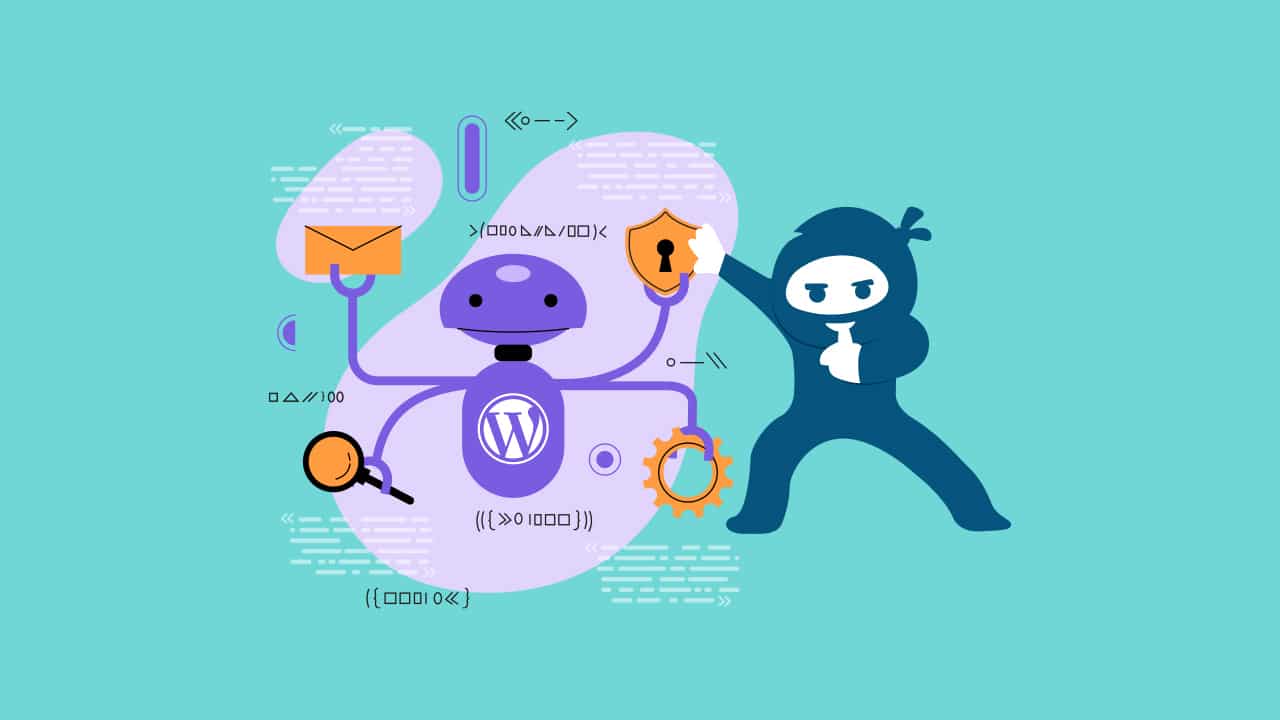
The digital threat landscape is no longer characterized by isolated attacks; it is defined by *escalating scale* and *unprecedented speed*. Artificial intelligence has become the primary driver, empowering threat actors to automate reconnaissance, exploit discovery, and mass exploitation campaigns at machine speed.
If your security strategy still relies primarily on passive, reactive patching, you are already behind. Traditional security measures—waiting for a known vulnerability to be patched and then deploying the update—are failing against threats that leverage automation to find, weaponize, and execute against thousands of targets simultaneously.
The scope of the vulnerability problem in WordPress is immense. Recent reports indicate that nearly 8,000 new WordPress vulnerabilities were disclosed in 2024, with the vast majority residing not in the WordPress core, but in the sprawling ecosystem of third-party themes and plugins. This massive surface area is prime territory for AI-driven exploitation.

Defining the AI Weaponry
Our primary topic is the rise of wordpress security flaws exploiting ai. This term defines a clear shift: attackers are utilizing advanced AI tools—such as LLM-assisted fuzzing, reinforcement-learning bots, and optimized brute-force engines—to bypass static defenses and discover bugs faster than defenders can patch them. This allows for the rapid weaponization of mass attacks like SQL injection and Cross-Site Scripting (XSS).

Cybercrime is hitting record levels in 2024, with AI making attacks more targeted and effective, according to industry analysis. To survive this new environment, site owners need a proactive defense strategy. This guide serves as a critical security guide for wordpress 2024, outlining the immediate commercial solutions and necessary architectural shifts required to safeguard high-value WordPress installations.
Specific AI Threat Mechanisms Against WordPress
Automation is no longer an advanced tactic; it is the current baseline of attacks. Security vendors consistently report that malicious actors routinely use automated scripts and kits to sweep the internet for newly disclosed vulnerabilities in popular WordPress plugins. This speed means the “patching window”—the time you have between a patch release and widespread exploitation—has shrunk to mere hours. This urgency is driven by the rapid development of AI-driven exploitation tools.
Automated Zero-Day Scanning and Fuzzing
The most concerning advancement is how AI accelerates the discovery of new bugs. AI tools can analyze source code much faster than human researchers, looking for exploitable weaknesses in widely used plugins or themes (those with 100k+ installs).

- Speed of Discovery: LLM-assisted fuzzing allows attackers to generate millions of unique, complex test inputs to crash or expose flaws in software. This process greatly accelerates the discovery of vulnerabilities, turning potential zero-days into exploitable weaknesses almost instantly, as detailed in explosive cybersecurity threats trends for 2025.
- Prevalence: Nearly half of all vulnerabilities reported in the WordPress ecosystem are related to Cross-Site Scripting (XSS). This common weakness is easily targeted by automated scanners. The Automated Zero-Day Scanning and Fuzzing capability means that when 8,000 new vulnerabilities are reported, attackers have an AI advantage in testing which ones are easiest to exploit at scale. This threat is further substantiated by the State of WordPress Security in 2024 report.
AI-Optimized Credential Attacks
While weak credentials remain a top compromise vector, AI elevates this risk significantly. Following massive password leaks, AI can now analyze those dumps to prioritize likely username/password combinations far beyond simple dictionary attacks.
The threat is not just volume; it’s *intelligence*. AI-Optimized Credential Attacks can tune attack timing and request pacing to specifically evade basic rate-limiting solutions implemented on WordPress login forms. This adaptation makes standard brute-force detection tools obsolete.
Cybercrime is hitting record levels in 2024 because AI makes attacks more targeted and highly efficient, rapidly utilizing compromised data to achieve administrative access. Data from 2024 confirms credential attacks remain a top security trend for WordPress sites.
AI-Enhanced Social Engineering
The human element is the easiest security loophole to exploit. AI is now leveraged to create hyper-realistic and targeted deception campaigns:

- Phishing Precision: Attacks leverage deep-fake emails, perfectly tailored to mimic legitimate support tickets, vendor notices, or even internal communications. The goal is to trick administrators into installing malicious “updates” or compromising access credentials.
- Volume and Quality: Because AI can generate sophisticated, personalized attacks at scale, the volume of high-quality phishing attempts overwhelms human diligence. This capitalization on human error is a key reason why cybercrime hits record levels in 2024.
- This trend is a significant part of the biggest cyber attacks and trends for 2024, emphasizing AI’s role in breaking through human defenses.
In summary, the core wordpress security flaws exploiting ai revolve around automated attacks against predictable common weaknesses: SQL injection, Cross-Site Scripting (XSS), and Broken Access Control (BAC) found primarily in third-party components.
Immediate Solutions: How to Protect WordPress from AI Hacking
Facing this surge in automated threats, site owners must invest in commercial solutions that provide real-time protection and proactive defense.
Advanced Web Application Firewalls (WAFs)
A robust, externally managed WAF is the single most critical investment against automated, large-scale attacks. It acts as a protective shield at the network edge, filtering malicious traffic *before* it ever reaches your WordPress installation.

An Advanced Web Application Firewalls (WAFs) capability should include:
- Virtual Patching: This is arguably the most vital feature. It protects against plugin zero-days by applying temporary security rules *even before official vendor patches are released*. This bridges the critical vulnerability window that AI attackers target. This capability is crucial, as highlighted in the State of WordPress Security in 2024.
- Behavioral Detection: Next-generation WAFs don’t just rely on static signatures. They identify AI-generated obfuscated payloads, unusual access patterns, and suspicious request sequences that signature-based firewalls miss.
- Bot Management: Advanced filtering, CAPTCHA challenges, and intelligent rate limiting are specifically designed to stop AI-driven volumetric attacks and adaptive credential stuffing campaigns.
Recommended Commercial Options:
- Cloudflare WAF (Pro/Business Tiers)
- Sucuri Website Firewall
- Wordfence Premium (offering a real-time threat feed)
- Jetpack Security/Jetpack firewall, which leverages WPScan data to automatically block millions of known attack attempts daily.
Core Hardening and Premium Monitoring
Even with a WAF, core site hygiene remains paramount.

- Strong Authentication: You must enforce Two-Factor Authentication (2FA) for *all* administrative and editorial accounts. Use dedicated premium solutions (like those based on Duo or Authy) and implement aggressive, smart rate-limiting on login forms to counter AI attempts.
- Plugin Discipline: This cannot be overstated. Since over 90% of new vulnerabilities are in plugins/themes, maintaining a minimal, high-quality, curated plugin set is crucial. Every inactive plugin is a potential door left unlocked. This statistic is consistently reinforced by security research across the ecosystem.
- Continuous Scanning: Reactive scanning is too slow. Use commercial vulnerability scanning services (such as Jetpack Scan or Patchstack) to continuously check installed software against known Common Vulnerabilities and Exposures (CVEs) and alert you instantly to abandoned or compromised components.
Fighting Supply Chain Compromise in the WordPress Ecosystem
Supply chain attacks are a particularly insidious threat to WordPress. These attacks occur when legitimate third-party code—a plugin or theme used by millions—is compromised. This can happen either via an attacker pushing a malicious, hidden update, or by users installing nulled/pirated software, which is one of the most common infection sources on WordPress.
The risk is amplified by AI. With thousands of new plugin vulnerabilities discovered annually, the sheer volume provides AI attackers with ample, low-hanging fruit to compromise third-party integrations, turning a trusted vendor’s code into a global attack vector. The sheer volume of vulnerabilities detected annually means AI can rapidly identify the best components to compromise for maximum victim reach.
Essential Strategies for Preventing Supply Chain Attacks WordPress
To effectively counter preventing supply chain attacks wordpress, adopt these strict protocols:
- Rigorous Vendor Vetting: Only use plugins and themes from reputable vendors. Check their security disclosure history, active support forums, and consistency in releasing updates. A vendor that delays patching or lacks a public changelog is a serious liability.
- Commercial Integrity Scanning: Utilize paid services that specifically check your core WordPress files, themes, and plugins against official, clean releases. This process, often called file integrity monitoring, detects backdoors, malicious code signatures, or subtle modifications inserted through a compromised supply chain.
-
Principle of Least Privilege (PoLP): Restrict write permissions across your file system, particularly in the
wp-contentdirectory. Crucially, ensure that non-essential user accounts, third-party APIs, or components running on the server have administrative capabilities. Limiting privilege severely restricts the damage potential of a successful supply chain compromise.
Architectural Defense: The Shift to Headless WordPress
For high-value, high-traffic WordPress sites, the most robust long-term defense against AI-driven exploitation involves structural change. We must redefine the architecture to isolate the core vulnerability points. This shift is central to modern web development trends.
Headless WordPress is the process of decoupling the frontend (what the public sees) from the backend (the WordPress core, database, and admin panel). The public site is served via a separate, highly hardened frontend platform (e.g., Next.js, Gatsby, or a pure static site).

The Best Headless CMS for WordPress Security
Headless architecture is rapidly becoming the consensus for the best headless cms for wordpress security due to three fundamental advantages:
- Radical Reduction in Attack Surface: Since the public frontend is static HTML, served by a CDN, or rendered via JavaScript, nearly all traditional PHP-based vulnerabilities are eliminated from the public-facing site. Attacks targeting RCE (Remote Code Execution), SQLi, and XSS vulnerabilities in plugins and themes simply cannot execute against a static frontend.
- Isolation and Invisibility: The actual WordPress admin interface and its associated database/API can be placed behind strong IP allowlists, VPNs, or Zero Trust gateways. Public traffic never directly interacts with the sensitive core components. The backend is effectively invisible to the general public internet scanner.
- Edge Protection: Headless frontends often sit on top of serverless platforms (Vercel, Netlify, Cloudflare Pages), leveraging high-grade, built-in WAF and DDoS protection that operates at the network edge, offering superior performance and security resilience.
Commercial Implementation Routes
Transitioning to Headless is easier than ever with integrated commercial solutions:
- Managed Headless Platforms: Solutions like WP Engine Atlas offer integrated hosting and deployment, simplifying the complexity of managing a decoupled architecture.
- Static Site Generators: Vendors such as Strattic specialize in converting a live WordPress site into a static snapshot, achieving superior security isolation without requiring custom development framework knowledge.
- Framework Approach: For those with development resources, implementing frontends using modern frameworks (Next.js, Nuxt) and deploying them on platforms like Vercel or Netlify provides maximum customization and performance.
Actionable Checklist: Critical Security Guide for WordPress 2024

Use this checklist as your long-term roadmap to ensure your site is resilient against AI-driven threats:
-
Perimeter & WAF: Implement and actively tune a **paid WAF** (Cloudflare, Sucuri, Wordfence Premium). Enforce strict access rules for common attack entry points like
wp-login.phpandxmlrpc.php. - Account Security: Enforce 2FA universally for all administrative roles. Use dedicated rate-limiters against AI-optimized brute-forcing attempts that bypass basic thresholds.
- Hygiene & Patching: Remove all unused or nulled/pirated plugins immediately. Maintain a rigorous update schedule that ensures critical security updates are applied within 24–48 hours of release.
- Monitoring: Implement managed security monitoring or a premium scanner to detect file integrity changes and known CVEs. Maintain off-site, immutable backups in case of total compromise.
- Architecture Review: Annually evaluate the feasibility of moving to managed hosting with strong security Service Level Agreements (SLAs) or transitioning to a **headless or static architecture** for maximum future-proofing against PHP vulnerabilities.
The key takeaway is clear: Relying solely on reactive patching is insufficient against the sheer speed and volume of automated attacks launched by AI tools.
AI is making the thousands of existing wordpress security flaws exploiting ai faster and easier to exploit at scale. Coupled with the continuing rise of cybercrime hitting record levels, and the volume of vulnerabilities reported in 2024, the security pressure on site owners has never been higher.
**Final Call to Action:** Modernize your security posture immediately. Start by purchasing and configuring an advanced WAF solution, and develop a clear roadmap toward a more resilient, isolated architecture. *Your defense must run at machine speed, too.*
Frequently Asked Questions (FAQ)
Q: How quickly should I patch a critical WordPress vulnerability once a notice is released?
A: Against AI-driven threats, the window for safety is dramatically reduced. You should aim to apply critical security updates **within 24 hours** of the patch becoming available. Automated bots frequently begin scanning for the vulnerability within hours of disclosure.
Q: Is a free security plugin like Wordfence or Sucuri sufficient to stop AI attacks?
A: While free plugins offer essential monitoring and basic firewall rules, they often lack the crucial components needed to stop sophisticated AI attacks, such as real-time threat intelligence feeds, advanced behavioral detection, and virtual patching capabilities. A **paid, edge-based WAF** is highly recommended for serious protection.
Q: What is the single biggest vulnerability point for WordPress right now?
A: Statistically, the biggest vulnerability point is **third-party plugins and themes**. Over 90% of new vulnerabilities are found here. Minimizing your reliance on non-essential components and ensuring all remaining components are actively maintained is critical.
Q: Does a Headless WordPress architecture completely eliminate the risk of being hacked?
A: No system is 100% secure, but Headless architecture *radically minimizes* the attack surface. It eliminates most PHP-based public vulnerabilities, making it impossible for bots to exploit common SQL injection or XSS flaws on the public site. The risk shifts to the backend API, which should then be protected via strong access controls (IP whitelisting, VPNs).
Q: What is LLM-assisted fuzzing?
A: LLM-assisted fuzzing is a technique where Large Language Models (AI) are used to generate novel, complex, and highly targeted input payloads designed to expose flaws (bugs, crashes) in software components (like plugins). This method finds vulnerabilities faster and more effectively than traditional brute-force fuzzing techniques.