

AI Agents Automation: Transforming Enterprise Tasks
Estimated reading time: 9 minutes
Key Takeaways
- AI agents automation is moving beyond basic RPA to handle complex, end-to-end workflows with dynamic decision-making and learning capabilities[1].
- These autonomous software agents can perceive, plan, decide, act, and adapt, powered by technologies like LLMs and NLP[2][3].
- Enterprises are adopting AI agents for strategic gains: up to 50% faster processing, 25-30% labor cost reduction, and a 40% productivity boost[1].
- Enterprise task AI is revolutionizing functions from sales and customer support to IT, finance, and manufacturing[4].
- Successful enterprise AI adoption requires a phased approach focused on planning, data readiness, integration, and change management[1].
Table of contents
- AI Agents Automation: Transforming Enterprise Tasks
- Key Takeaways
- What Are AI Agents? Understanding Autonomous Software Agents
- Why Enterprises Are Adopting AI Agents: Strategic Drivers
- How AI Agents Automate Enterprise Tasks: Real-World Applications
- Workflow AI Tools: The Technology Behind Automation
- Practical Implementation: Steps for Successful Enterprise AI Adoption
- The Future of AI Agents: Evolving Enterprise Workflows
- Frequently Asked Questions
The landscape of enterprise operations is undergoing a seismic shift. Gone are the days when automation meant simple, rule-based scripts that could trip over the slightest irregularity. Today, a new wave of intelligence is sweeping through business processes, fundamentally reshaping how complex, repetitive tasks are handled. This transformation is driven by AI agents automation—the deployment of intelligent, autonomous systems that execute intricate workflows with minimal human intervention, incorporating learning, reasoning, and adaptability[1].
At its core, AI agents automation represents a quantum leap from traditional robotic process automation (RPA). While RPA relies on rigid, pre-programmed rules to mimic human actions, AI agents are built to handle end-to-end workflows. They bring dynamic decision-making, exception handling, and the ability to learn from their environment to the table[1]. This isn’t just about doing a task faster; it’s about doing it smarter, navigating the nuances and unpredictability of real-world business data. As enterprises grapple with the pressures of efficiency, accuracy, and scalability, turning to enterprise task AI is no longer a futuristic concept—it’s a strategic imperative for maintaining a competitive edge[5].
What Are AI Agents? Understanding Autonomous Software Agents
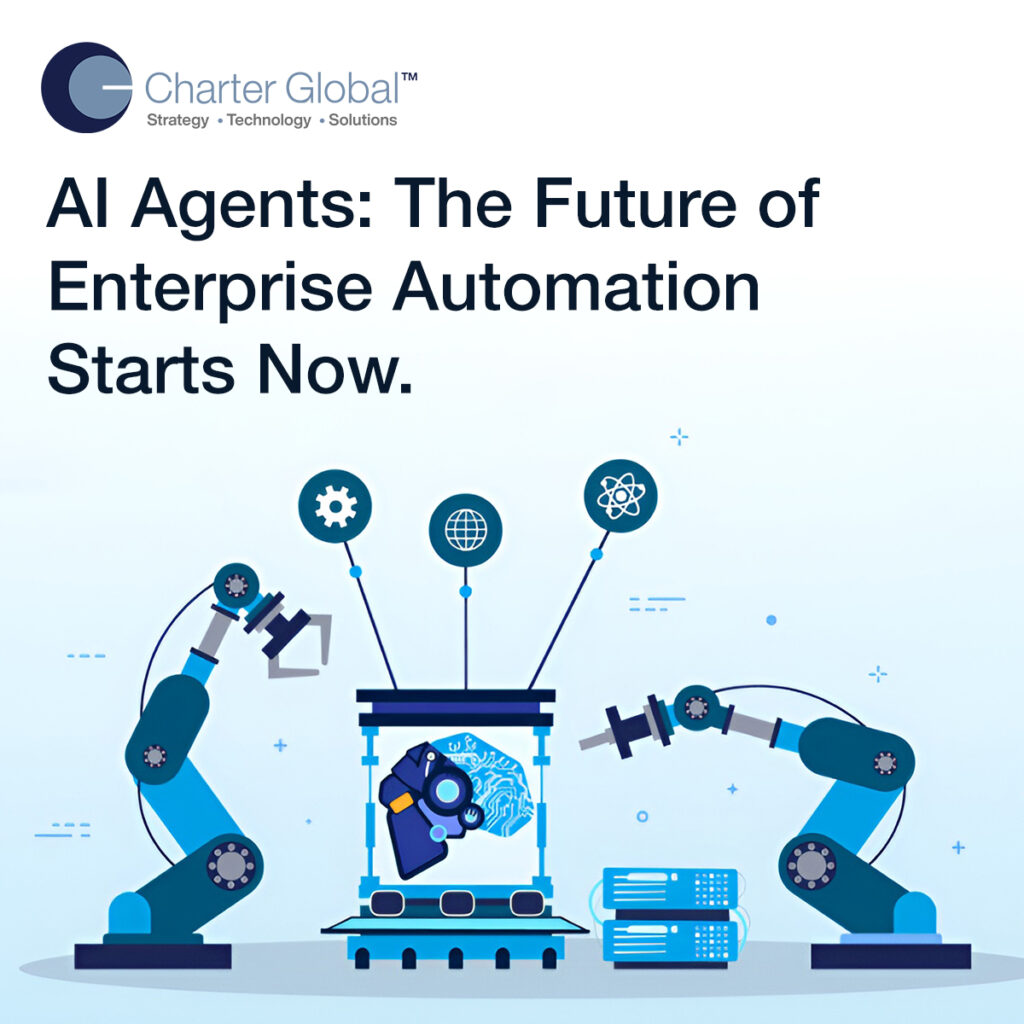
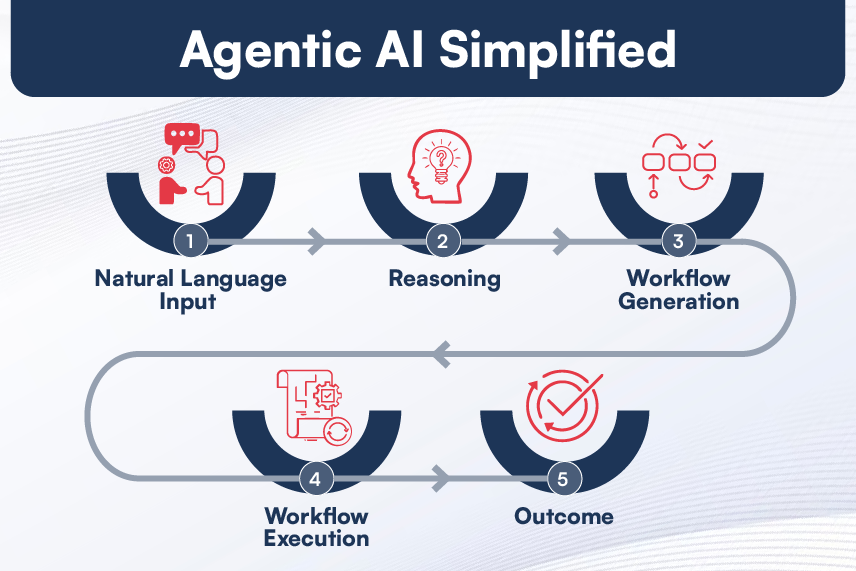
So, what exactly is an autonomous software agent? Think of it not as a simple tool, but as a digital employee. It’s an intelligent system designed to perceive its digital environment, make informed decisions, and take actions to achieve predefined goals. To do this, it leverages a suite of advanced technologies including machine learning, natural language processing (NLP), and data analytics[3]. The magic lies in its core capabilities, which distinguish it from any automation tool that came before.
- Perception: An AI agent can observe and process new information in real-time. It continuously evaluates its operating environment—be it new data in a CRM, a change in a supply chain dashboard, or a customer’s emotional tone in a support ticket—and adapts its actions accordingly[2].
- Planning: Before acting, an agent creates a sequence of actions. It develops a viable plan to reach its goal. The integration of large language models (LLMs) like GPT-4 has supercharged this capability, allowing agents to break down complex, natural language instructions into logical, executable steps[2].
- Decision-Making: This is the heart of autonomy. Unlike a rigid script, an AI agent learns from data and adapts to changes. It can manage exceptions—like collaborating with another department’s system when a standard process fails or responding to a real-time anomaly in financial data. This enables fully autonomous operations that go far beyond simple task-level scripting[2].
- Action Execution: Once a decision is made, the agent acts. This could mean generating a personalized text response, updating a database record, triggering a downstream workflow, or sending a command to a manufacturing system[3].
- Learning & Adaptation: Advanced AI agents improve over time. Through feedback loops and learning mechanisms, they analyze the outcomes of their actions and refine their future decision-making based on success metrics and user feedback[3].
Typically built on foundational LLMs, these agents interact via sophisticated prompts and maintain a form of long-running memory. This allows them to understand context across interactions and learn dynamically, making them powerful partners for enterprise task AI[2].
Why Enterprises Are Adopting AI Agents: Strategic Drivers
The move toward enterprise AI adoption isn’t driven by hype alone. It’s a calculated response to critical business pressures: the relentless pursuit of efficiency, the non-negotiable demand for accuracy, the need to scale operations without linear cost increases, and the imperative to secure a competitive advantage[1]. The business case is compelling and quantifiable.
Consider the tangible benefits that are convincing CFOs and CIOs to invest:
- Efficiency Gains: AI agents can automate complex, repetitive tasks, cutting processing times by up to 50% and automating over 60% of enterprise processes[1].
- Cost Reduction: By taking over labor-intensive work, AI agents can help decrease labor costs by 25-30% while simultaneously reducing costly errors and speeding up cycle times[1].
- Productivity Boost: When employees are freed from mundane tasks, their productivity can increase by 40%, allowing them to focus on strategic, creative, and customer-facing work that drives real value[1].
- Improved Accuracy: AI agents analyze vast datasets to identify patterns and make data-driven decisions, resulting in significantly more accurate outcomes for tasks like financial forecasting, fraud detection, and compliance reporting[3].
These agents solve pervasive enterprise pain points. They tackle the manual drudgery of data reconciliation and report generation[1]. They streamline cumbersome customer onboarding processes and accelerate claims processing[1][3]. They handle the flood of customer inquiries with personalized, intelligent responses[3].
The strategic advantages extend beyond mere cost-cutting. AI agents provide real-time insights and predictive analytics, empowering leaders with the information needed for informed decision-making[1]. They minimize operational risks through intelligent processing and error reduction. Perhaps most importantly, they enhance the customer experience by delivering personalization, near-instant responses, and relevant recommendations, all while freeing human teams to innovate and drive the business forward[1].
How AI Agents Automate Enterprise Tasks: Real-World Applications
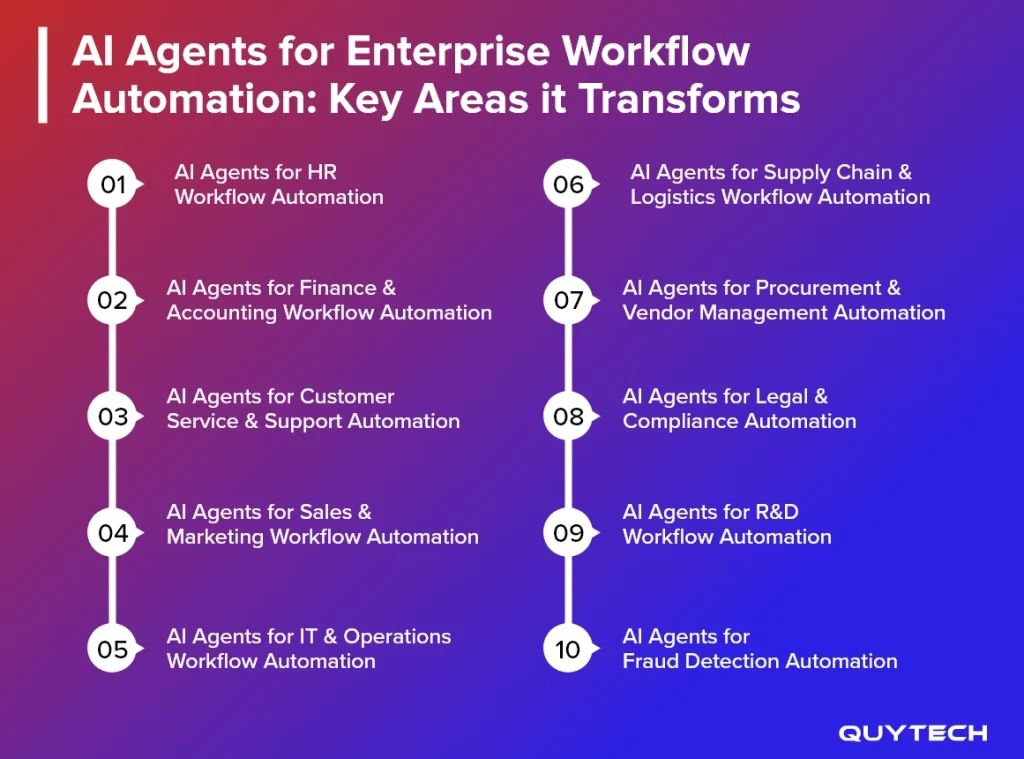
The true power of enterprise task AI is revealed in its diverse applications across every business function. It’s not confined to the back office; it’s a transformative force in sales, marketing, HR, and beyond. Workflow AI tools provide the platforms to orchestrate these multi-step, cross-departmental workflows, turning strategic vision into operational reality.
Let’s explore specific, real-world examples of AI agent automation:
- Sales: Agents qualify leads by researching prospects and accounts, schedule meetings, send and evaluate follow-up emails, and manage CRM data and pipeline health[4].
- Customer Support: They retrieve relevant customer data, prioritize incoming tickets, suggest or even execute resolutions, perform sentiment analysis on interactions, handle translation, manage escalations, and train new support staff[4].
- IT Operations: This is a rich field for automation. Agents triage project intake requests, analyze security events, generate and update documentation, manage change requests, build other automations, and handle provisioning. They excel at intelligent IT ticket triage and resolution[2][4].
- Finance: From processing invoices and detecting fraudulent transactions to managing intelligent procurement with real-time anomaly detection, AI agents bring speed and accuracy to the finance department[2].
- Marketing: Agents power customer segmentation, predictive analytics, and content optimization. They can plan and execute email, ad, and social media campaigns, conduct competitor analysis, and optimize SEO strategies[4].
- Human Resources: They match resumes to job descriptions, automate the entire employee onboarding journey, analyze engagement survey data, aid in succession planning, identify internal mobility opportunities, and manage benefits inquiries[4].
- Security: Agents are vigilant partners, detecting and hunting threats, analyzing user behavior for anomalies, orchestrating incident response, promoting security awareness, scanning for vulnerabilities, and ensuring compliance[4].
- Manufacturing: They optimize operations through dynamic production scheduling and intelligent inventory management, responding in real-time to supply chain fluctuations[2].
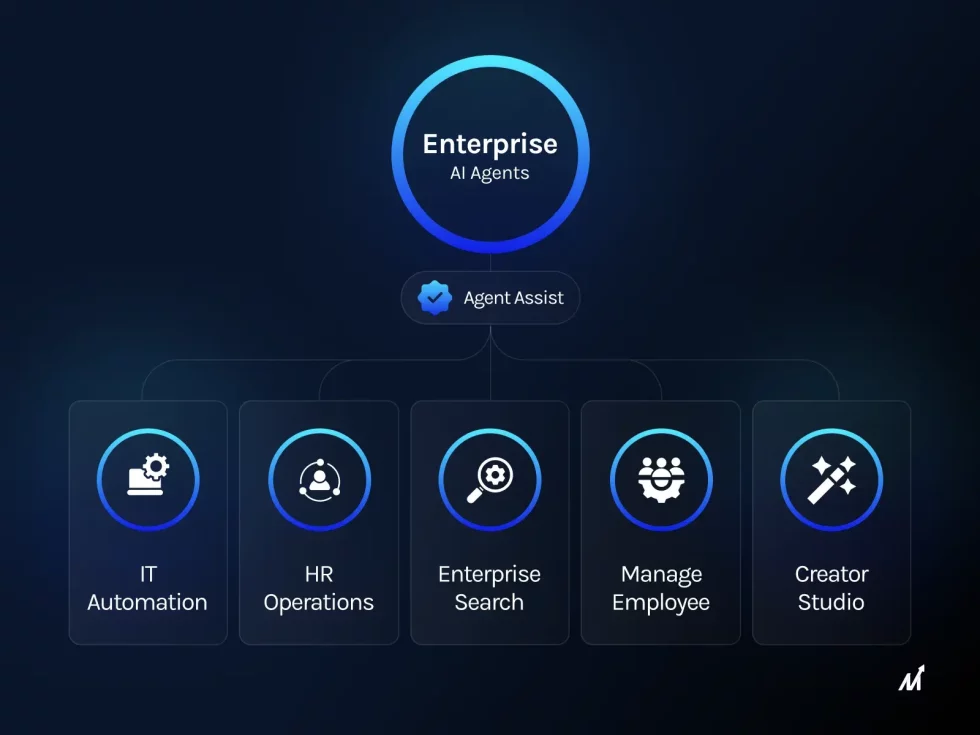
The technical magic often happens through multi-agent orchestration. In complex scenarios, multiple specialized agents can work together, sharing data and learning from each other’s actions. This collective intelligence strengthens decision-making