
The Dawn of an AI-Infused Entertainment Era
The entertainment landscape is undergoing a seismic shift. From the silver screen to your earbuds, from sprawling virtual worlds to the content you binge-watch, *everything* is changing at an unprecedented pace. This transformation isn’t a gradual evolution; it’s a revolution, and its driving force is undeniably Artificial Intelligence. The **AI impact on entertainment industry** is no longer a theoretical concept; it’s a tangible force reshaping how stories are told, music is created, games are played, and how we, the audience, consume it all.
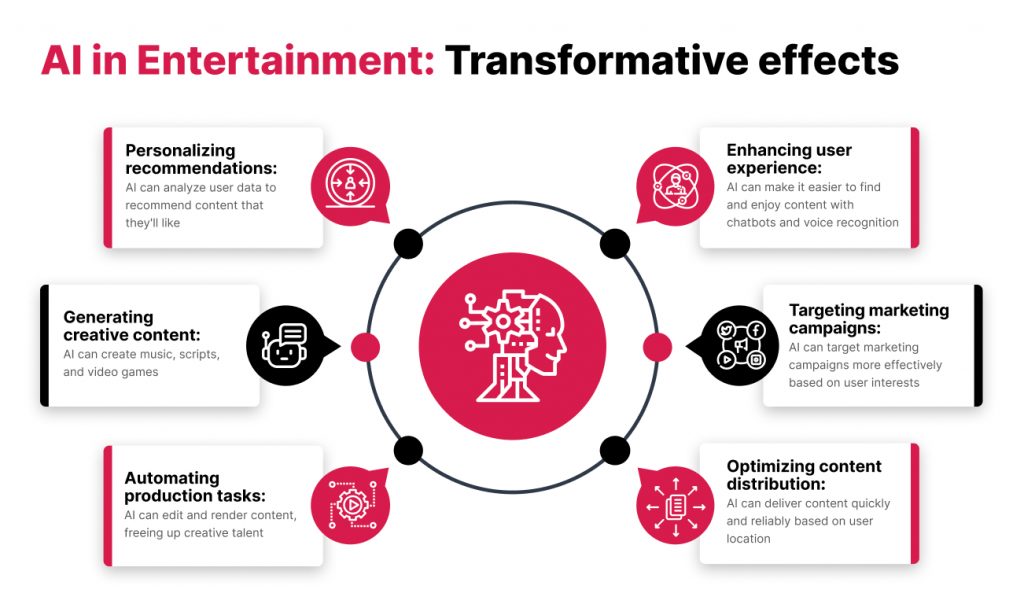
This article will delve deep into this exciting new era, exploring how AI is not just optimizing processes but is actively becoming a creative partner. We’ll uncover its role in revolutionizing content creation, personalizing every aspect of your viewing and listening experience, pushing the boundaries of virtual reality, and critically, examining the **future of creative jobs with AI**.
Prepare to witness AI move beyond being a mere tool in the background to becoming an integral, and often invisible, collaborator in the art of entertainment.
Unpacking the Broad AI Impact on the Entertainment Industry
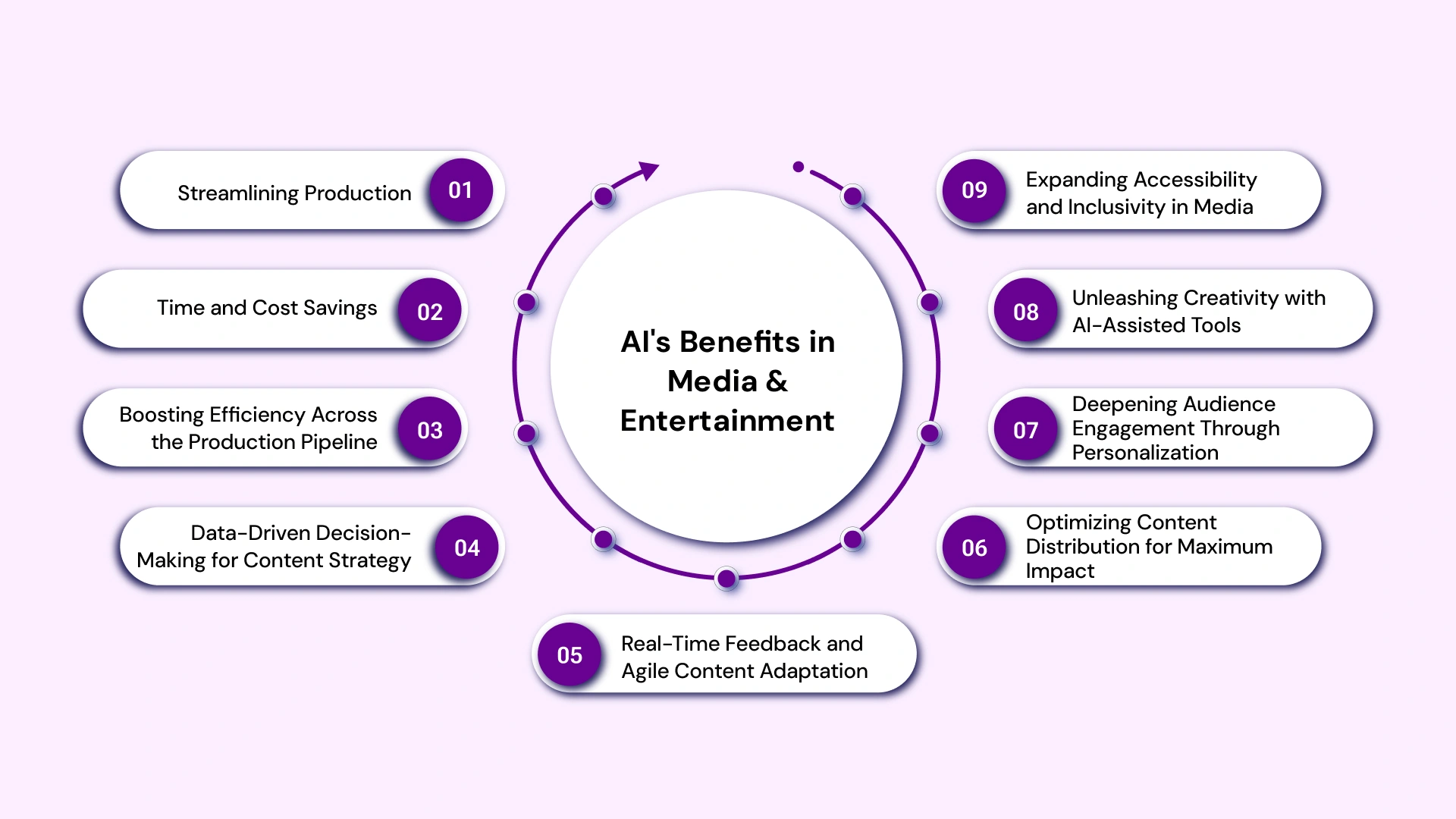
The **AI impact on entertainment industry** is profound and far-reaching, touching virtually every facet of how content is conceived, produced, distributed, and experienced. It’s a pervasive transformation that enhances efficiency, unlocks new creative avenues, and deepens audience engagement.
Production & Operations:
AI is streamlining the often complex and resource-intensive production processes.
- AI tools can analyze scripts for sentiment, character development, and narrative coherence, providing valuable insights early in the development cycle.
- Production schedules can be optimized with AI predicting potential bottlenecks and resource allocation challenges.
- Risk management is enhanced as AI identifies potential production issues before they escalate.
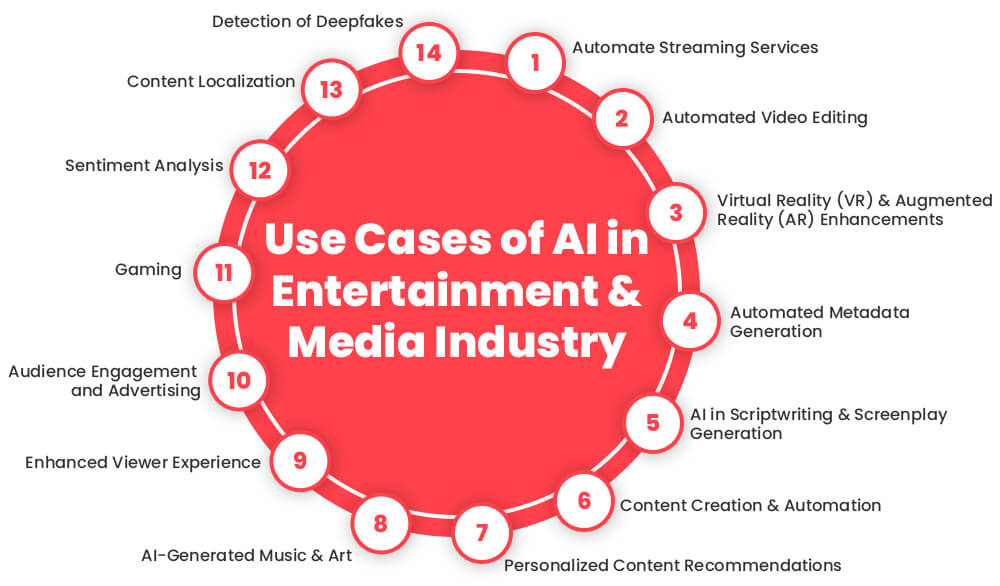
- In post-production, AI is automating and refining tasks like video editing, color grading, and even the creation of visual effects (VFX) and animation.
- Content localization, including subtitling and dubbing, is being accelerated and made more accessible through AI-powered translation and voice synthesis. This dramatically reduces both the cost and time associated with bringing content to global audiences. [Source], [Source]
Business & Analytics:
Beyond the creative and production side, AI is a powerful engine for business intelligence and strategic decision-making.
- Predictive analytics powered by AI can forecast box office performance, viewership numbers, and subscription trends with remarkable accuracy.
- Marketing campaigns are becoming smarter and more effective, with AI identifying target demographics and optimizing ad spend.
- Dynamic pricing strategies for tickets and subscription services can be implemented, responding in real-time to demand and user behavior. [Source], [Source], [Source]
Audience Engagement:
Understanding and interacting with the audience is paramount in entertainment, and AI is revolutionizing this relationship.
- AI algorithms meticulously analyze real-time viewer behavior, tracking what content resonates, how long users engage, and what they abandon.
- This data provides invaluable insights for content creators and platforms, informing decisions about what to produce next and how to best present it to different audience segments.
- AI is also instrumental in shaping new content formats tailored to evolving audience preferences and viewing habits. [Source], [Source]
Generative AI: The Engine of New Content Creation
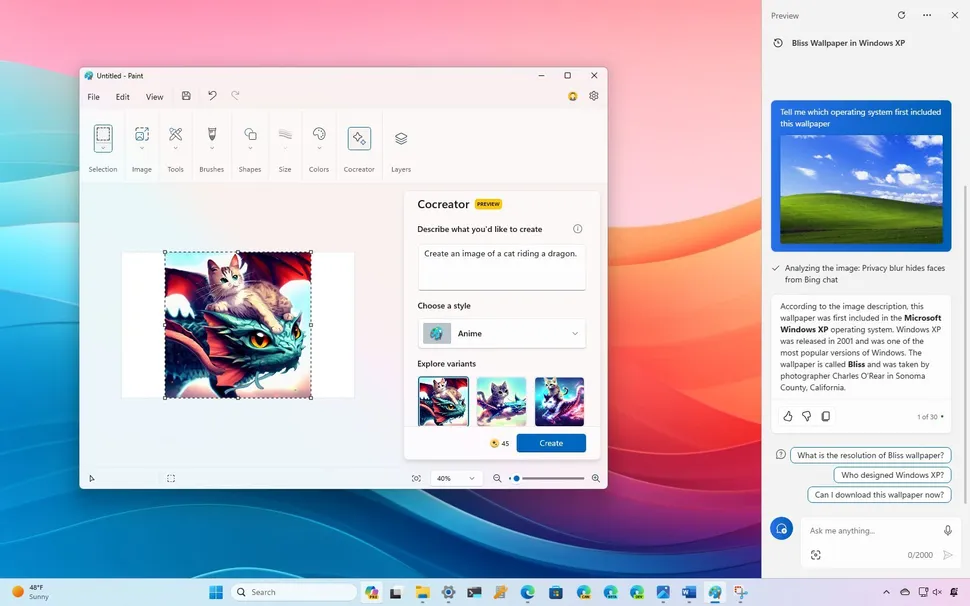
Perhaps the most exciting frontier of AI in entertainment is **generative AI for content creation**. This is not about analyzing or optimizing existing content; it’s about AI *creating* entirely new content – text, images, music, and even video – based on the vast datasets it has learned from.

Key Applications and Examples:
- Film & TV: Generative AI is proving to be a powerful co-creator. It can brainstorm novel story concepts, draft initial scripts, generate storyboards, and produce sophisticated previsualizations that bring early ideas to life. The burgeoning fields of text-to-video generation and AI-assisted visual effects are transforming what’s possible in filmmaking, enabling faster iteration and more complex imagery. [Source], [Source], [Source]
- Music: AI composers can generate original musical pieces, from background scores for films and shows to dynamic soundtracks for video games and advertisements. It can also craft intricate beats and adaptive music that changes based on user interaction or mood. [Source]
- Gaming: The creation of expansive and dynamic game worlds is a prime application for generative AI. It powers procedurally generated environments, ensuring no two playthroughs are exactly alike. AI also crafts intricate, branching quests and dialogues that respond realistically to player choices, leading to truly unique and engaging player experiences. [Source]
- Design & Marketing: The generation of marketing assets is being revolutionized. AI can create eye-catching posters, compelling trailers, dynamic social media clips, and initial character concepts, significantly speeding up the pre-release promotional cycle. [Source]

Benefits of Generative AI:
- Efficiency: Generative AI dramatically accelerates the drafting, editing, and asset creation processes. This can lead to substantial reductions in production costs and faster time-to-market for content. [Source]
- Novelty: AI can explore creative styles and combinations that human creators might not have conceived, leading to entirely new forms of artistic expression and unexpected creative breakthroughs.
- Creativity Boost: Far from replacing human creativity, generative AI often acts as a powerful brainstorming partner. It can offer endless variations, suggest alternative approaches, and help creators overcome persistent creative blocks.
It’s crucial to understand that generative AI functions as a sophisticated “co-pilot.” While it can generate vast amounts of content, human creators remain in control. Their taste, emotional direction, and final artistic decisions are paramount in shaping the output into meaningful and impactful entertainment. [Source], [Source]
Hyper-Personalization: The Power of Personalized Recommendations AI Streaming
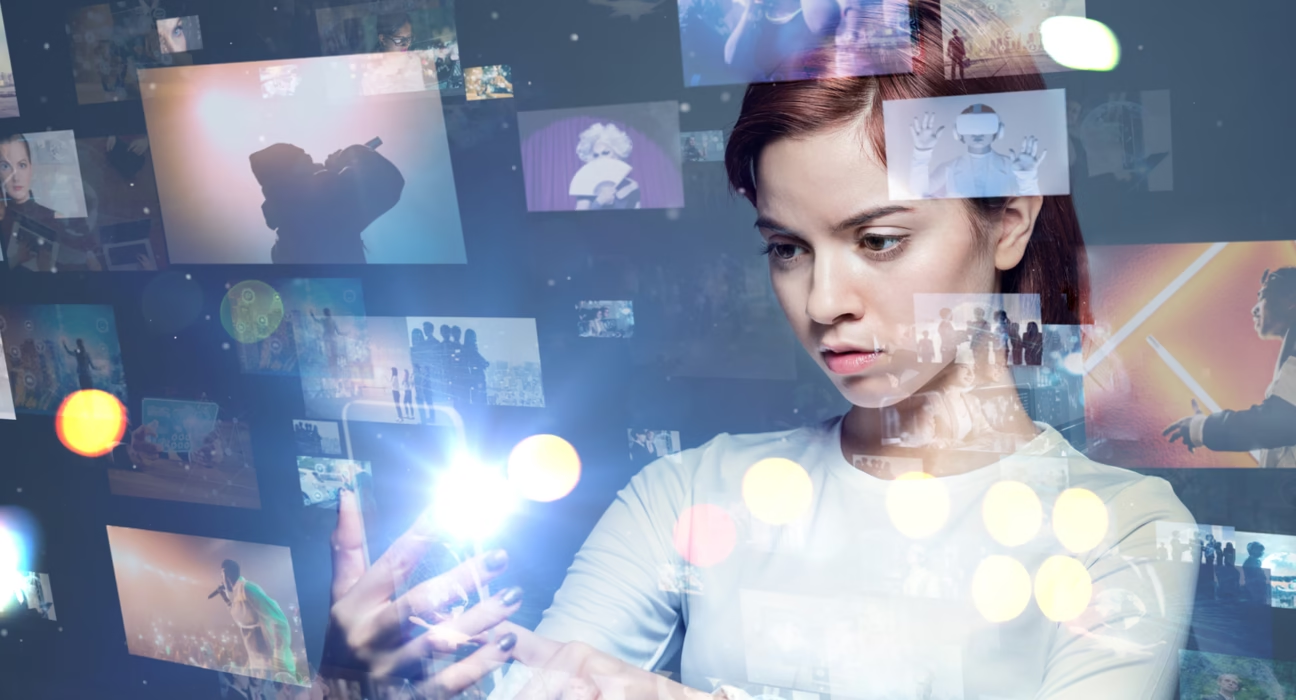
Among the most widely experienced and impactful applications of AI in entertainment is **personalized recommendations AI streaming**. This technology has fundamentally changed how we discover and consume content on platforms like Netflix, Spotify, and YouTube.
Mechanism of Personalization:
The magic behind these tailored suggestions lies in sophisticated AI algorithms that meticulously analyze a vast array of user data:
- Viewing/Listening History: What you’ve watched or listened to, and for how long.
- Content Completion Rates: Whether you finish a show or skip a song.
- Explicit Feedback: Your likes, dislikes, and ratings.
- Device and Time Usage: When and on what device you consume content.
- Demographic Information: Age, location, and other inferred characteristics. [Source], [Source]
Impact on User Experience:
This deep analysis translates into a hyper-personalized experience for the user:
- Tailored Content Suggestions: Recommendations that genuinely feel relevant and insightful.
- Personalized Home Screens: Interfaces that dynamically adapt to your tastes.
- Dynamic Playlists: AI-curated music mixes that evolve with your preferences.
- Individualized Watchlists: A constantly updated selection of content likely to appeal to you. [Source], [Source], [Source]
Benefits for Users and Platforms:
- For Users: The primary benefits are improved content discovery, significantly reduced decision fatigue, and the ability to quickly find entertainment that matches their mood and available time.
- For Platforms: Increased user engagement, longer viewing or listening sessions, enhanced customer retention, and ultimately, a higher lifetime customer value are the key advantages. [Source], [Source], [Source]
These personalization principles extend beyond content recommendations. They also power targeted advertising, customized marketing campaigns, and flexible bundling and pricing strategies, further tailoring the entertainment ecosystem to individual consumers. [Source]
Immersive Worlds: AI in Virtual Reality Entertainment
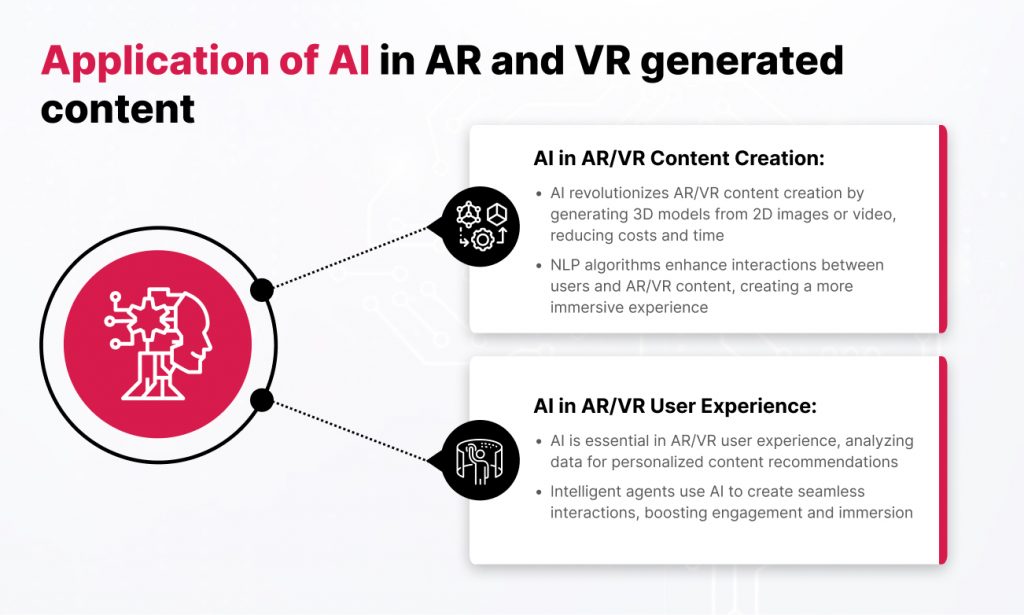
AI in virtual reality entertainment is emerging as a critical enabler, transforming VR from a novel experience into something deeply believable, interactive, and endlessly engaging.
Enhancements to VR Experiences:
- Dynamic Non-Player Characters (NPCs): AI is breathing life into virtual worlds by creating NPCs that exhibit intelligent, adaptive behaviors. These characters react organically to player actions and dialogue, moving far beyond predictable, pre-scripted routines and making interactions feel genuinely spontaneous. [Source]
- Adaptive Environments: AI can dynamically adjust the VR experience in real-time. This includes modifying game difficulty based on player skill, altering narrative pacing to maintain engagement, and even branching story paths based on in-game decisions, ensuring each player’s journey is unique. [Source]
- Realistic Interactions: AI plays a significant role in improving the fidelity of virtual interactions. It enhances physics simulations for more believable object manipulation, refines gesture recognition for more natural control, and powers advanced natural language processing for more authentic character voice responses. [Source]
AI-Driven Personalization in VR:
The personalization techniques seen in streaming are also being applied to VR:
- AI-powered narrative engines can tailor VR storylines and mission objectives to individual player preferences and play styles, creating a deeply personal adventure. [Source]
- AI contributes to crucial accessibility features, such as generating real-time captions for dialogue, providing audio descriptions for visual elements, or dynamically adjusting comfort settings to mitigate motion sickness.
The integration of AI results in VR experiences that are not just visually immersive but are also significantly more **immersive, responsive, and emotionally resonant**, bridging the gap between the virtual and the real. [Source]
The Evolving Landscape of the Future of Creative Jobs with AI
The conversation around AI inevitably leads to a critical question: what is the **future of creative jobs with AI**? It’s a topic fraught with both anxiety and immense opportunity.
Acknowledging Concerns:
There are legitimate concerns regarding the automation of routine tasks within creative fields. Aspects of basic editing, rotoscoping, localization, and initial content drafting are indeed being handled by AI. This naturally fuels anxiety among writers, designers, animators, and production professionals about potential job displacement.
Expert Perspectives on Role Evolution:
The prevailing expert view is that AI is more likely to **redefine existing roles and transform workflows rather than simply eliminate creative positions**. Instead of outright replacement, AI is expected to augment human capabilities, allowing creatives to focus on higher-level tasks. [Source], [Source], [Source]
Emerging and Evolving Roles:
This shift is already giving rise to new job titles and specialized functions:
- AI Prompt Engineers: Professionals who specialize in crafting effective prompts to guide AI generation.
- Creative Technologists: Individuals who bridge the gap between creative vision and AI implementation.
- AI Content Curators and Editors: Roles focused on refining, selecting, and ensuring the quality of AI-generated content.
- AI Ethicists in Creative Applications: Experts who ensure AI is used responsibly and ethically in content creation.
- New job titles and specialized functions are emerging rapidly. [Source]
- There’s a growing demand for cross-functional creators – directors, showrunners, and producers – who can effectively collaborate with AI tools, leveraging them to achieve their creative goals. [Source], [Source]

The Importance of Upskilling:
To thrive in this evolving landscape, creatives must embrace lifelong learning:
- Developing new skills is essential, including data literacy and a foundational understanding of how AI tools function.
- Proficiency in prompt design – learning how to effectively communicate with AI – will become a core competency.
- Crucially, uniquely human skills such as conceptualization, masterful storytelling, sophisticated aesthetic judgment, and leadership will become even more valuable as AI handles more of the repetitive, process-driven tasks. [Source]
AI is best viewed as a powerful **creative amplifier**. Individuals and teams who adeptly collaborate with AI will likely gain a significant competitive advantage, producing more innovative and efficient work. [Source], [Source]
Navigating Challenges and Ethical Considerations
As AI becomes more integrated into entertainment, several complex challenges and ethical considerations require careful navigation:
Copyright and Intellectual Property:
Determining ownership of AI-generated content is a significant legal hurdle. Furthermore, the ethical implications of training AI models on vast datasets of existing works without explicit consent are still being debated and litigated. [Source]
Labor and Compensation:
Questions arise about fair attribution and compensation for human creators when AI significantly contributes to output. The role of unions and guilds in protecting artists’ rights in this new paradigm is a critical ongoing discussion.
Data Privacy and Security:
The extensive collection and use of user behavioral data for personalization and targeted advertising raise significant privacy concerns. Transparency and robust security measures are paramount to maintaining user trust. [Source], [Source], [Source]
Bias, Misinformation, and Deepfakes:
AI models can inadvertently perpetuate societal biases present in their training data. The potential for synthetic media, including deepfakes, to spread disinformation poses a serious threat to public trust and the integrity of information. [Source], [Source]
Efforts are underway to address these issues through solutions like digital watermarking for AI-generated content, the development of robust regulatory frameworks, the establishment of industry-wide ethical standards, and the rigorous implementation of responsible AI development practices. [Source]
Conclusion: Embracing the Future of AI in Entertainment
The **AI impact on entertainment industry** is undeniable, ushering in an era of profound transformation. We’ve seen how AI is revolutionizing production efficiency, expanding creative horizons through **generative AI for content creation**, delivering hyper-personalized streaming experiences, and enabling incredibly immersive realities within **AI in virtual reality entertainment**. [Source]
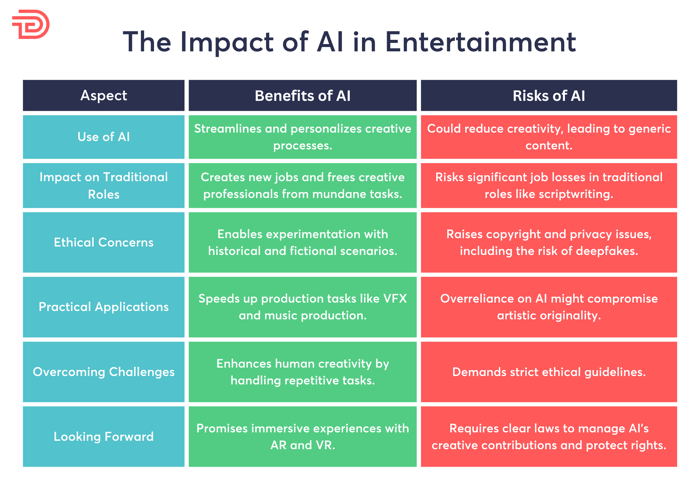
Looking ahead, the **future of creative jobs with AI** is not one of obsolescence but of collaboration. The paradigm is shifting towards humans and AI working in tandem, fostering the emergence of new roles and amplifying human ingenuity. The core values of human creativity, critical thinking, and artistic vision remain indispensable, perhaps even more so, as AI handles the more mechanical aspects of content creation. [Source]

As AI becomes an increasingly invisible partner in the entertainment we consume daily, how will you engage with and advocate for the human artistry that continues to shape our stories and experiences?