

Your Phone Is Becoming a Co‑Pilot: What Are AI Smartphone Agents?
Estimated reading time: 7 minutes
Key Takeaways
- AI smartphone agents are evolving from passive tools to proactive partners that reason and execute multi-step tasks.
- An agentic smartphone AI acts without direct supervision, using contextual reasoning and autonomous execution.
- A phone task assistant anticipates needs by noticing patterns, not just following commands.
- Mobile automation AI leverages LLMs and on-device processing to balance intelligence with privacy.
- A personal AI helper builds a long-term model of you, evolving from tool to teammate.
Table of contents
- Your Phone Is Becoming a Co‑Pilot: What Are AI Smartphone Agents?
- Key Takeaways
- Introduction: Setting the Scene for AI Smartphone Agents
- What Makes an AI Smartphone Agent “Agentic”?
- The Everyday Role of a Phone Task Assistant
- The Infrastructure: Mobile Automation AI
- Beyond Utility: The Personal AI Helper
- The Road Ahead (Conclusion)
- Frequently Asked Questions
Introduction: Setting the Scene for AI Smartphone Agents
Remember when you had to *tell* your phone exactly what to do? “Set a timer for 10 minutes.” “Play my workout playlist.” “Call Mom.” These were transactional commands, simple one-and-done instructions for Siri or Google Assistant. You spoke, the phone obeyed, and that was that. The relationship was purely functional—like ordering from a drive-through menu. But a fundamental shift is underway.

Smartphones are no longer content being passive tools waiting for your next instruction. They are evolving into proactive partners that can think ahead, connect the dots, and take action on your behalf. Welcome to the era of ai smartphone agents. These are not just smarter voice assistants; they represent a new category of software that can reason, plan, and execute multi-step tasks without you having to lift a finger. Where a standard assistant answers a single question, an AI agent understands a complex goal and breaks it down into a sequence of actions, often across multiple apps and services.
This is the difference between a phone that simply *listens* and a phone that actually *helps*. The old phone waited for you to ask; the new one anticipates what you need before you even realize it. Let’s explore what makes this transformation possible.
What Makes an AI Smartphone Agent “Agentic”?
At its core, an “agent” is something that acts without direct supervision. When it comes to smartphones, we’re talking about an agentic smartphone AI that can operate independently, using a deep understanding of your context to make decisions on your behalf. This is a far cry from the simple trigger-action automation we have today.

Three key traits define a true agentic smartphone AI:
- Proactivity: It doesn’t wait for your command. It sees an opportunity to help and acts. For example, if it detects you are running late for a meeting based on your calendar and current location, it might automatically send a delay notification to attendees.
- Contextual reasoning: It understands the *whys* behind your actions. It knows that a meeting at a coffee shop is casual, while one in a conference room is formal. It understands that a late-night email from your boss might be urgent, while a promotional newsletter can wait until morning.
- Autonomous task execution: This is the superpower. It can chain together multiple actions across different apps. Imagine this: Your phone buzzes with a calendar invite for a client dinner. The agentic smartphone AI automatically cross-references your dietary preferences saved in your health app, checks real-time traffic to estimate travel time, opens your favorite restaurant booking app, and reserves a table at a vegan-friendly spot that matches your past preferences—all without you ever opening a single app. It didn’t just obey a command; it orchestrated a solution based on a rich picture of your life.
This is the core differentiator. An agent doesn’t just answer questions; it solves problems by weaving together information from your calendar, messages, location, health data, and more. It understands the context and makes intelligent decisions.
The Everyday Role of a Phone Task Assistant
So, what does this look like in your daily life? Think of a phone task assistant as a hyper-organized personal secretary living in your pocket, one that never sleeps and is always thinking two steps ahead. This isn’t about telling it to do something; it’s about it knowing what needs to be done and doing it.
Consider these three detailed scenarios:
Smart scheduling: You have a 2 PM client meeting across town. Your phone task assistant detects that traffic on your usual route is unusually heavy due to an accident. It proactively reschedules a non-critical afternoon meeting for 4 PM and drafts a polite Slack message to your colleague explaining the change, which it sends only after you give a quick thumbs-up. It didn’t just remind you of the meeting; it optimized your entire afternoon.
Travel logistics: You mention to a friend, “I’m flying to Chicago next week.” Your phone task assistant picks up on this cue. It checks your email for flight confirmations, adds the flight details to your calendar, checks the Chicago weather forecast for your travel dates, suggests a hotel within your preferred loyalty program, and books an Uber to the airport at the optimal time—all based on your past behavior. It understands that you prefer window seats, check a bag, and like to arrive two hours early.
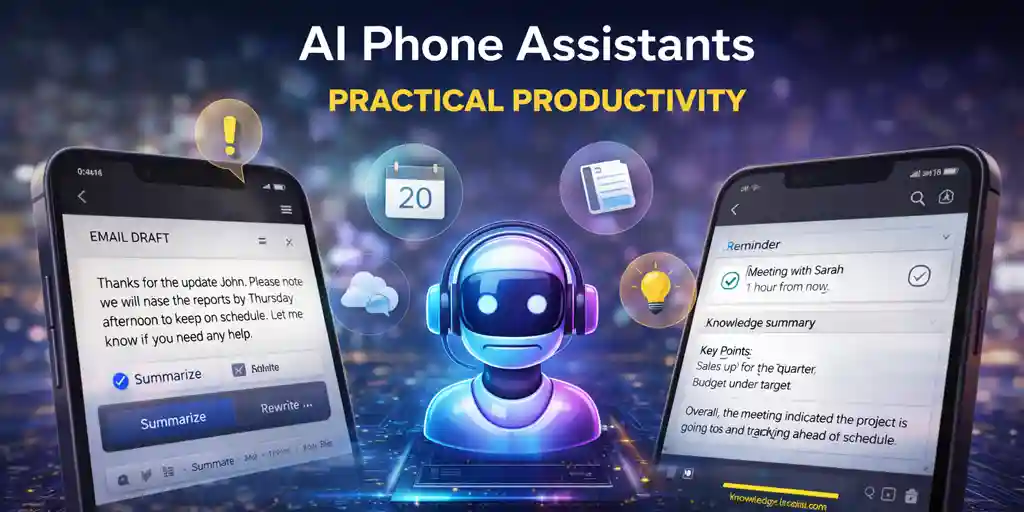
Email triage: Before you even open your eyes in the morning, your phone task assistant has already scanned your inbox. It surfaces only urgent messages from your boss or key clients, drafts replies using your natural writing style, and flags action items like “approve invoice” or “review Q3 report.” It does all this before you’ve had your coffee.
The key difference from a basic assistant is anticipation. It notices patterns. “You always order lunch from the same deli on Tuesdays, and it’s almost noon. Do you want the usual?” “You always call your mom on Sunday mornings. It’s 9 AM on Sunday. Shall I dial?” A phone task assistant doesn’t wait for you to ask; it steps in when it knows you need help.
The Infrastructure: Mobile Automation AI
Under the hood, this entire system is powered by what we call mobile automation AI. This is the technology stack that turns a simple smartphone into a proactive agent. It combines three critical elements: large language models (LLMs) for understanding natural language and context, on-device machine learning for fast and private processing, and deep API integrations with the apps you already use.
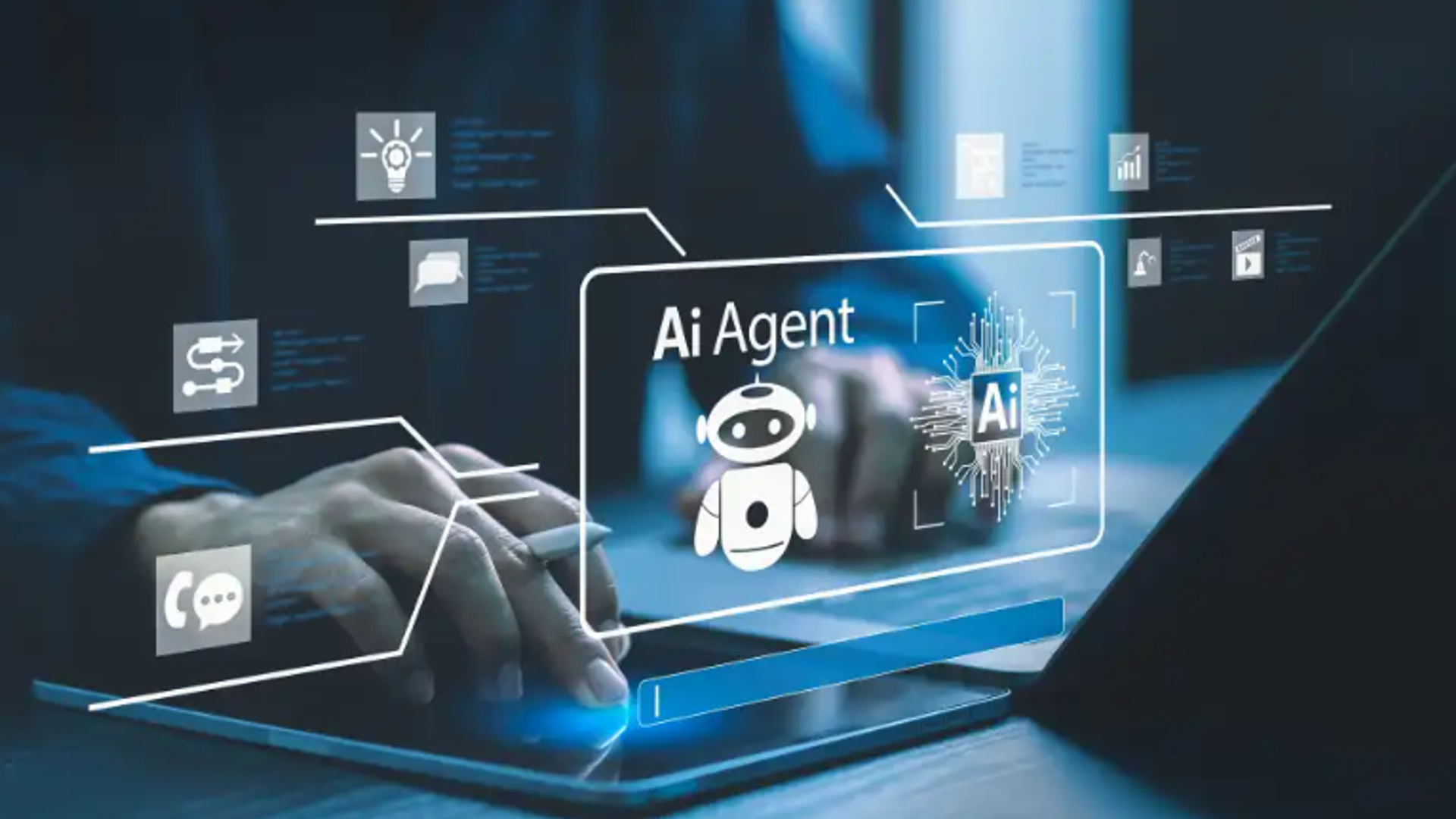
This is a major leap from the old-school automation you might be familiar with, like those trigger-action rules where you set conditions manually: “When I arrive at the gym, turn on Do Not Disturb.” That system is rigid, brittle, and requires you to think like a programmer. Mobile automation AI is fluid and intelligent. You can speak in natural language: “Plan a weekend getaway under $500 that includes hiking and a pet-friendly hotel.” The AI then breaks that command into discrete steps—searching for flights, comparing hotel rates, checking pet policies—and presents you with a clear summary of the best options.
However, all this power raises a critical question: privacy. For an agent to be truly helpful, it needs access to deeply personal data—your calendar, messages, location history, health data, and app usage. This is a massive trust factor. The winning implementations run as much processing on-device as possible, ensuring that sensitive data never leaves your phone. Mobile automation AI that relies solely on cloud processing faces significant user resistance. The balance between intelligence and discretion is the key to widespread adoption. For more on the importance of on-device processing for privacy, see this guide on how AI technologies are shaping the future of smartphones. https://www.penbrief.com/10-cutting-edge-ai-technologies-shaping-the-future/
.webp "Discover the Power of AI Smartphone Agents Today 7")
Beyond Utility: The Personal AI Helper
Utility is only half the story. The truly transformative aspect is personalization. As AI agents learn your habits, preferences, quirks, and even emotional patterns, they evolve from a generic assistant into a personal AI helper that is uniquely attuned to you. A generic assistant follows commands; a personal AI helper builds a long-term model of *you* and uses it to enrich your life.
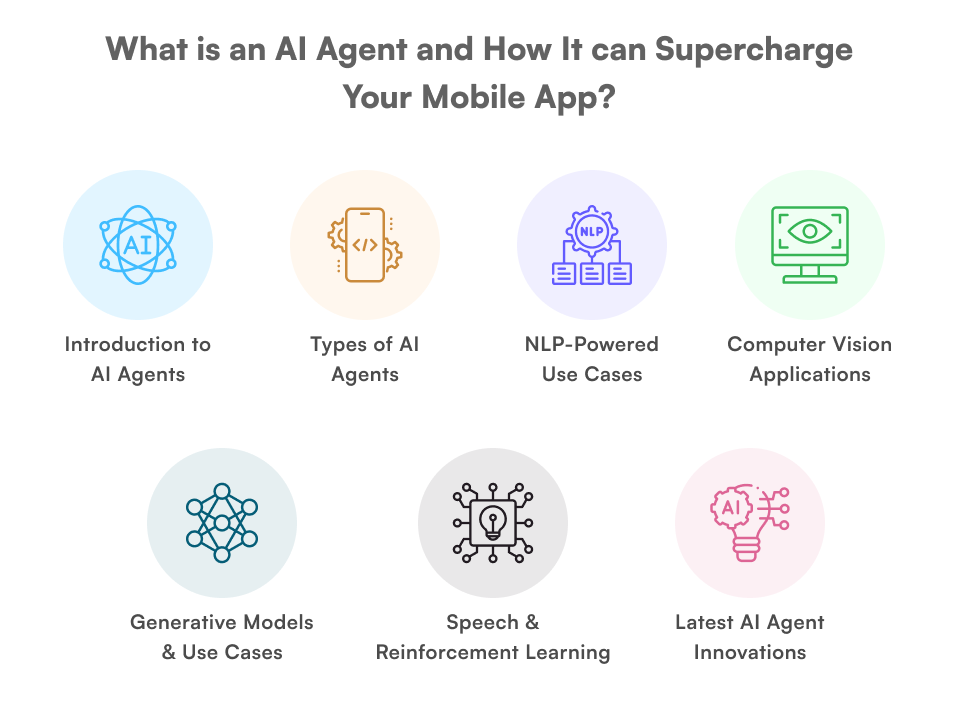
Consider these examples of deep personalization:
- It notices you sleep poorly after drinking coffee late in the afternoon. Over time, it learns this pattern and begins suggesting you cut off caffeine at 2 PM, or offers to brew a decaf alternative in the evening.
- It sees you have been working three weekends in a row. Based on your past behavior and stress indicators from your health app, it proactively blocks out a Saturday for rest, suggests a relaxing playlist, and reminds you to take a break.
- It knows your writing style so well that it can summarize a long, convoluted email thread in your voice. It also remembers that your mom’s birthday is next week, reminds you to call her, and even drafts a heartfelt text for your approval.
Your phone stops being a tool you operate and starts being a teammate. The relationship shifts from *”what can I tell it to do?”* to *”what does it think I need?”* It becomes a digital butler that knows your allergies, your productivity rhythms, your commuting preferences, and your sense of humor. This deep personalization is a natural extension of the AI-powered smartphone trends reshaping mobile technology today. https://www.penbrief.com/unstoppable-ai-powered-smartphones/
The Road Ahead (Conclusion)
The trajectory is clear: we are moving from basic automation to true agency. The rise of ai smartphone agents means your next phone will not be a Swiss Army knife waiting for you to pick a tool. It will be a co-pilot that proposes the best route, anticipates turbulence, and helps you navigate the chaos of daily life into an intuitive, seamless flow.

This technology is still young. The early agents we see today are impressive but occasionally clumsy. They can misread intent, over-automate a simple task, or struggle with ambiguous requests. But these are growing pains. The core concept—a phone that *helps* instead of just *listens*—is too powerful to ignore.
In a few years, asking whether your phone has an “agent” will feel as quaint as asking whether it has a camera. It will just be a standard feature, deeply embedded in the operating system. To learn more about the innovative hardware that powers these agents, check out our review of the latest smartphone releases. https://www.penbrief.com/latest-smartphone-releases-2024-pros-and-cons/
So, ready to hand over the boring stuff to your new digital partner? Your phone is waiting—and it already has a plan.
Frequently Asked Questions
- What exactly is an AI smartphone agent? An AI smartphone agent is a software system that can reason, plan, and execute multi-step tasks autonomously, unlike standard voice assistants that only answer single questions or follow simple commands.
- How is an agentic smartphone AI different from Siri or Google Assistant? Traditional assistants are reactive—you ask, they respond. An agentic smartphone AI is proactive; it learns your habits, anticipates your needs, and takes action before you ask. It can chain together multiple actions across apps without your direct input.
- Is my privacy safe with these agents? Privacy is a top concern. The best implementations run most processing on-device, ensuring your calendar, messages, and location data never leave your phone. This on-device approach balances intelligence with strong data protection.
- Can a phone task assistant work offline? Some basic functions like smart scheduling or local automation can work offline, but full capabilities—like web searches, real-time traffic analysis, or cloud-based app integrations—require an internet connection.
- What does the future hold for personal AI helpers? These helpers will become deeply personalized, learning your unique patterns and preferences. They will evolve from simple assistants into digital companions that understand your context, emotions, and long-term goals, making daily life smoother and more intuitive.