

AI Tech Predictions 2026: Expert Insights on Enterprise Innovation, Security, and Open Source Shifts
Estimated reading time: 12 minutes
Key Takeaways
- Operational Era Dawns: 2026 marks a critical shift from experimental AI hype to tangible, transformative capability, where the immense power and real-world impact of AI models become undeniable.
- Efficiency Over Scale: The frontier of innovation splits between massive frontier models and a new class of smaller, hardware-aware, domain-specific models that prioritize efficiency and cost-effectiveness.
- Agentic Automation Arrives: Multimodal AI agents evolve from simple assistants to autonomous “digital workers” capable of executing complex, multi-step tasks and week-long projects with minimal oversight.
- Security by Design: As AI grows more powerful and autonomous, the underlying compute infrastructure must be redesigned with security and privacy as foundational, non-negotiable principles.
- Open Source Democratizes: The open source AI future accelerates, driven by model diversification, interoperability standards, and hardened governance, reducing vendor lock-in and fueling specialized innovation.
Table of contents
- Core AI Tech Predictions for 2026
- Enterprise Innovation Trends Reshaped by AI in 2026
- Security Compute Evolution: Safeguarding the AI Boom
- Open Source AI Future: Democratizing 2026 Innovation
- The Interconnected Tech Ecosystem of 2026
- Actionable Steps to Prepare for AI Tech Predictions 2026
- Frequently Asked Questions
The year 2026 looms as a critical inflection point, a moment where the artificial intelligence transition from experimental hype to tangible, transformative capability accelerates dramatically. As noted by the Council on Foreign Relations, this period may mark the beginning of a true “AI takeoff” with profound economic and national security implications, where the immense power and real-world impact of AI models become undeniable. This post delivers curated, expert-informed ai tech predictions 2026 on the key AI-driven shifts ahead, including the maturation of enterprise innovation trends, the imperative of security compute evolution, and the democratizing force of the open source ai future.

We will explore the defining characteristics of the 2026 AI landscape, detailing how it reshapes business operations, why compute security can no longer be an afterthought, and how open collaboration is fueling the next wave of tools. Understanding the interconnection of these forces is key to preparing your organization. Let’s dive into the forecasts that will define the tech direction for the coming pivotal years.
Core AI Tech Predictions for 2026
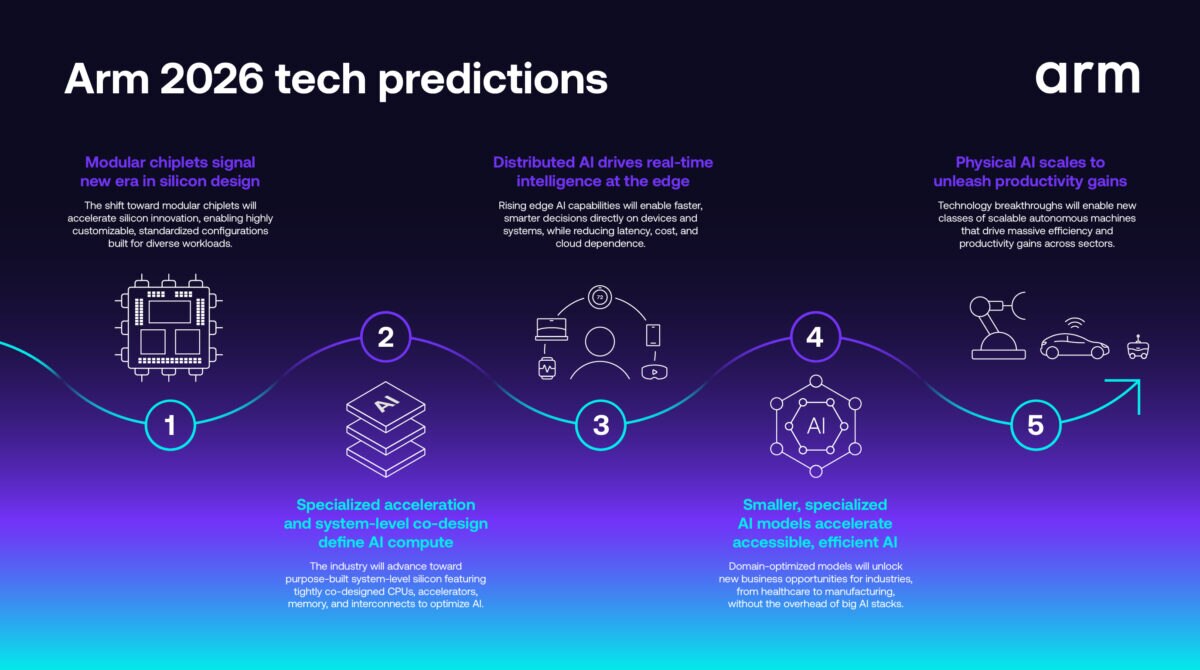
The dominant theme for ai tech predictions 2026 is a fundamental industry shift. The era of simply scaling model size and compute is giving way to an era of scaling efficiency and specialization. According to analysis from IBM, we will see a clear split between frontier models—enormous, general-purpose systems—and efficient model classes. These are smaller, hardware-aware models that run on modest accelerators yet deliver comparable or superior performance for specific use cases. This pivot is driven by necessity: the industry can’t keep scaling compute at current rates and must instead scale intelligence through architectural and algorithmic innovation, a trend also highlighted among the cutting-edge technologies shaping the future.

This efficiency drive is powered by parallel hardware evolution. While GPUs remain central, we will see the maturation of ASIC-based accelerators, chiplet designs, and even analog inference and quantum-assisted optimizers for specific tasks. Crucially, a new class of chips optimized for “agentic” workloads—AI that can plan and act autonomously—will emerge to optimally serve these diverse AI needs.
A major beneficiary of this efficiency trend is Edge AI. The promise of Edge AI will move from hype to production reality in 2026. Advances in model distillation, quantization, and memory-efficient runtimes will push sophisticated inference to edge clusters and embedded devices. As Matt White, Executive Director of the PyTorch Foundation, notes, smaller, domain-optimized models will become central, validated by industry adoption driven by demands for cost reduction, latency improvement, and data sovereignty.
The most visible change, however, will be in AI capability. We will witness the rise of multimodal “digital workers.” These are AI agents that autonomously complete complex tasks by bridging language, vision, and action to interpret scenarios and operate across software environments—browsers, code editors, design tools, and inboxes—without constant manual tool management. By 2026, as forecasted by experts, AI could be capable of autonomously executing what would be week-long human projects, representing a leap in automation that begins to transform white-collar work, a concept explored in developments around AI agents. This convergence of efficient models, specialized hardware, and autonomous agents forms the bedrock of our most critical ai tech predictions 2026.
Enterprise Innovation Trends Reshaped by AI in 2026
In 2026, enterprise innovation trends will be defined by AI’s maturation from isolated pilots to embedded strategic infrastructure. The focus shifts to orchestration and outcomes. Enterprises will deploy agent control planes and multi-agent dashboards, enabling managers to assign complex tasks from a centralized location while AI agents autonomously operate across digital environments. This creates true machine automation—where AI can interpret intent, search networks, choose appropriate tools, and persist until a defined outcome is achieved, a significant evolution beyond today’s chatbots.
We will see businesses deploying AI agents for sophisticated research, end-to-end project management, and complex code writing with minimal oversight. This represents a quantum leap beyond current assistants, enabling multi-step workflows that previously required constant human input and context switching. This agentic shift is a key part of how AI transitions from a tool to a colleague.
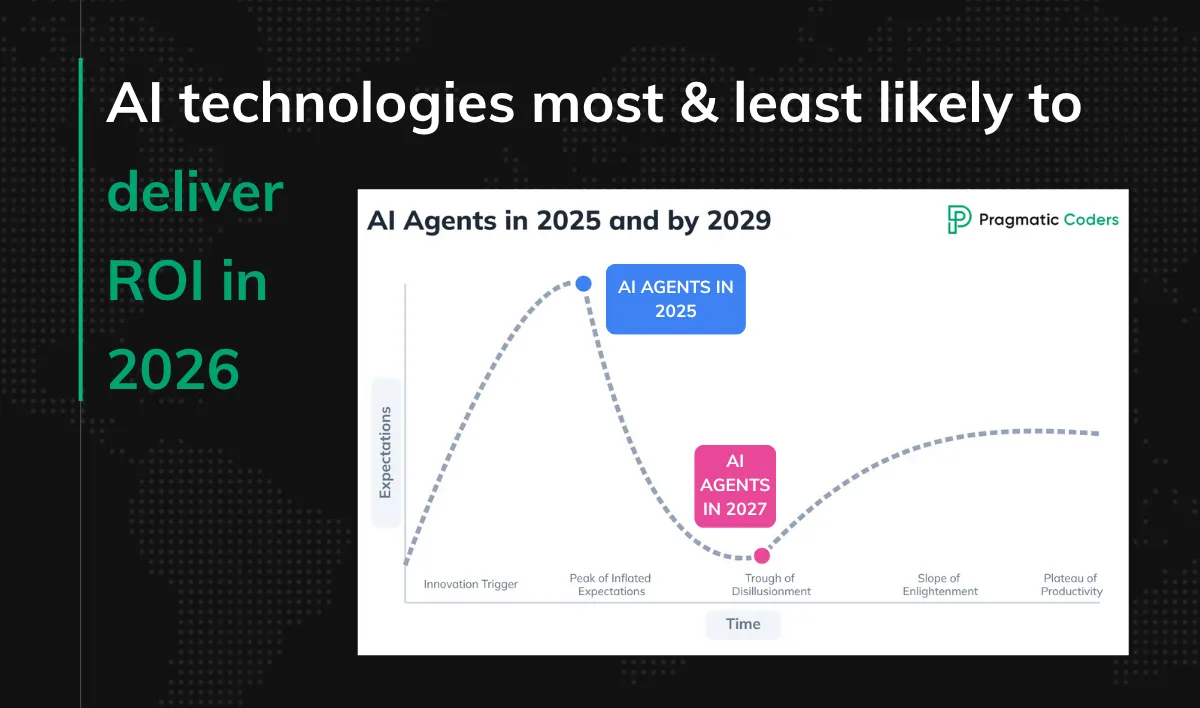
A pivotal enterprise innovation trend is the shift in model utility. The “one-size-fits-all” giant model approach will be supplemented—and in many cases, supplanted—by smaller, domain-specific, efficiency-optimized models. Enterprises will fine-tune these models for precise use cases, where they can outperform generalist giants while running on less expensive infrastructure. This adaptation of open-source AI, leveraging techniques like reinforcement learning from human feedback (RLHF), allows companies to build proprietary intelligence without the massive cost of training foundational models from scratch.
However, this journey will be tempered by realism. Experts, such as those at MIT Sloan Review, predict a potential deflation of the AI investment bubble around 2026 as the economic realities of implementation set in. The message is clear: while the promise of agentic AI is vast, its full value will take years to materialize. Winning enterprises will maintain a sharp focus on near-term, high-ROI use cases that solve concrete business problems, even as they architect for a more autonomous future. This balanced, pragmatic adoption is the hallmark of sustainable enterprise innovation trends.
Security Compute Evolution: Safeguarding the AI Boom
As AI systems grow more powerful and autonomous, the imperative for a fundamental security compute evolution becomes urgent. The compute stack of the future must be powerful enough for AI workloads and inherently secure by design. The security implications intensify with AI’s use in sensitive domains, creating new threat vectors that demand privacy-preserving technologies baked into the hardware and software stack, as emphasized in IBM’s predictions.
This is not merely a commercial concern but a national security one. Military and intelligence agencies are increasingly reliant on AI for cyber operations, intelligence analysis, logistics, and even weapons design. This creates defense-critical systems where vulnerabilities could be catastrophic. As highlighted in analysis on the future of AI, securing these systems requires a security-first architecture from the ground up, an imperative that is driving breakthroughs in AI-powered cyber defense.

The key technologies enabling this shift will mature by 2026:
- Confidential Computing: Hardware-enforced trusted execution environments that keep data encrypted even during processing.
- Homomorphic Encryption: Allows computation on encrypted data without needing to decrypt it first.
- Security-Audited Releases: Open-source models and platforms will increasingly come with rigorous security audits and transparent data pipelines.
For agentic AI systems, the stakes are even higher. The ability to audit, verify, and secure autonomous decision-making chains becomes non-negotiable. The security compute evolution is therefore a foundational enabler, not a bolt-on feature. It is the critical redesign of infrastructure that allows the AI boom to proceed with necessary trust and resilience.
Open Source AI Future: Democratizing 2026 Innovation
The open source ai future will be a central engine of innovation in 2026, driven by three forces: global model diversification, robust interoperability standards, and hardened governance frameworks. We are already seeing a proliferation of high-quality models from around the world—such as Chinese-developed models excelling in multilingual and reasoning tasks—which break the monoculture and fuel specialization. This diversification, alongside projects like advanced multimodal models, ensures no single entity controls the trajectory of AI development.
The acceleration is undeniable. Trends from 2024-2025, where smaller open models like IBM’s Granite, AI2’s Olmo 3, and DeepSeek achieved impressive results, will continue. The barrier to entry plummets as fine-tuning and customization become more accessible, allowing organizations of all sizes to adapt powerful models without massive infrastructure.
New paradigms for distribution and integration will emerge. Chatbots and AI assistants will evolve into “app stores” for AI capabilities. Initiatives like OpenAI’s Model Context Protocol, which allows ChatGPT to surface third-party apps, signal a future where open-source models must seamlessly integrate into broader AI ecosystems to remain relevant, a shift also noted in forecasts on AI in news.
Open-source will particularly thrive in areas where proprietary vendors are slow to innovate: multimodal reasoning, long-term memory architectures, and rigorous safety evaluation. The PyTorch Foundation emphasizes that flexible, modular tooling is essential for this next phase. The open source ai future is not just about free software; it’s about creating a resilient, innovative, and adaptable technological commons that prevents lock-in and accelerates the entire field.
The Interconnected Tech Ecosystem of 2026
The true power of these ai tech predictions 2026 lies in their interconnection. The enterprise innovation trends of agentic automation will leverage tools from the open source ai future, all running on the evolved foundations of security compute evolution. Efficient and specialized models reduce cost and latency, secure platforms enable trust in autonomous systems, and open-source tooling provides the flexibility to avoid vendor lock-in and build differentiated capabilities, a holistic view supported by practical predictions for 2026.

A critical distribution shift will occur: success for many applications will be measured by conversations in chatbots and AI assistants, not by clicks on a webpage. This requires a fundamental rethinking of how value is delivered and how AI is integrated into the user’s flow of work and information.
Strategic alignment for leaders, therefore, means adopting a portfolio approach: prioritizing efficient models over maximum scale, embedding security into the design phase, actively participating in open-source ecosystems, and automating processes with appropriate human oversight. The synthesis of these ai tech predictions 2026 points to a more mature, specialized, and integrated technological landscape where AI becomes a seamless and powerful component of the digital fabric.
This sets the stage for 2026 as the year AI decisively moves from pilot projects to production-scale impact. As noted by industry analysts, data-ready firms will seize the lead through rapid model preparation, integration, and tuning. The transition is now from planning to execution.
Actionable Steps to Prepare for AI Tech Predictions 2026
- Audit Infrastructure and Data Readiness: Critically evaluate whether your current compute and data pipelines can support the efficient, specialized models of the future while meeting heightened security requirements simultaneously. Can your systems handle agentic workflows?
- Invest in Domain-Specific AI Expertise: The era of one-size-fits-all is ending. Build or acquire expertise in fine-tuning and adapting smaller models for your specific business use cases. The value will be in customization, not just consumption.
- Establish Security-First and Governance Practices Now: Do not treat security as a phase two project. Embed governance, audit trails, and ethical guidelines into your AI design principles today, especially as you experiment with more autonomous systems.
- Actively Engage with Open-Source Ecosystems: Build competency in using and contributing to open-source AI tools and models. This is your best hedge against vendor lock-in and your fastest path to accessing cutting-edge innovations, such as those seen in the transformation of business.

The convergence of efficient architectures, agentic systems, hardened compute, and open-source tooling positions 2026 as the dawn of AI’s operational era. The organizations that start aligning their strategy, infrastructure, and talent today will be the ones capturing the monumental opportunities of tomorrow. Audit your AI readiness now and share your own 2026 predictions in the comments.
Frequently Asked Questions
What is the most significant change predicted for AI in 2026?
The most significant change is the shift from a focus on scaling model size to scaling efficiency and specialization. The industry will split between massive frontier models and a new dominant class of smaller, domain-optimized models that deliver superior performance for specific tasks at a fraction of the cost and latency, making powerful AI more accessible and practical.
How will “AI agents” in 2026 differ from today’s AI chatbots like ChatGPT?
Today’s chatbots primarily respond to prompts with text or images. AI agents in 2026 are predicted to be multimodal “digital workers” that can autonomously execute complex, multi-step tasks. They will operate across software applications (browsers, design tools, CRMs) by interpreting goals, planning actions, using tools, and persisting until a job is complete, requiring minimal human oversight.
Why is “security compute evolution” considered a critical 2026 trend?
As AI systems become more autonomous and integrated into critical business and national security functions, the traditional bolt-on security model fails. The security compute evolution trend emphasizes building security and privacy (e.g., via confidential computing, homomorphic encryption) directly into the hardware and software stack, making it a foundational requirement, not an afterthought.
What role will open-source AI play in 2026 compared to proprietary models?
The open source ai future will be a major democratizing and innovating force. It will provide the essential tools, models, and standards that prevent vendor lock-in, reduce costs, and accelerate specialization. Open-source will lead in areas like multimodal reasoning, safety testing, and memory architectures, creating a resilient ecosystem that complements and competes with proprietary offerings.
What is the first step a business should take to prepare for these 2026 AI predictions?
Conduct an honest audit of your AI infrastructure and data readiness. Assess if your compute can handle efficient, specialized models and agentic workflows, and if your data is organized, clean, and governed to support rapid fine-tuning and integration. This foundational step informs all subsequent strategy, investment, and hiring decisions.