
AirPods AI Translation: How Apple AI Earbuds Are Making Real-Time Language Translation a Reality
Estimated reading time: 8 minutes
Key Takeaways
- Airpods ai translation is shifting language translation from phone screens to your ears, reducing friction in travel and business.
- Real time language translation in wearables combines automatic speech recognition, neural machine translation, and text-to-speech in under a second.
- Apple AI earbuds leverage the H2 chip’s neural engine for on-device processing, enabling sub-300 millisecond translation latency.
- Multilingual audio AI goes beyond text translation to reproduce spoken words with natural cadence and volume.
- The translation wearable market is forecast to grow 35% year-over-year, with Apple leading through ecosystem integration.
Table of contents
- AirPods AI Translation: How Apple AI Earbuds Are Making Real-Time Language Translation a Reality
- Key Takeaways
- Defining Real-Time Language Translation – From Apps to Your Ears
- The AI Engine Inside: How Multilingual Audio AI Works in Apple AI Earbuds
- Why AirPods AI Translation Is a Game-Changer for Apple AI Earbuds
- How Apple Stacks Up Against Other Translation Wearables
- Where AirPods AI Translation Shines – and Where It Still Falls Short
- The Future of Language: Multilingual Audio AI in Every Ear
- Frequently Asked Questions
Language barriers have long been a pain point for global travelers and business professionals. According to Harvard Business Review (July 2024), 76% of global business travelers cite language barriers as a major friction point in cross-border meetings. The cost in lost opportunities and miscommunication is immense. But a breakthrough is emerging: airpods ai translation is moving translation from phone screens to your ears, promising seamless, hands-free conversations across languages.

As CNET (Jan 2025) noted, “the next leap in translation is moving from phone screens to your ears.” This post will explore the real time language translation technology powering this shift, the apple ai earbuds integration, the role of multilingual audio AI, and the future of the translation wearable category.
Defining Real-Time Language Translation – From Apps to Your Ears
At its core, real time language translation is the ability to convert spoken language from one language to another with minimal delay. As explained by MIT Technology Review (Nov 2024), “real-time translation combines automatic speech recognition (ASR), neural machine translation (NMT), and text-to-speech (TTS) in under a second.” This trifecta of AI technologies works together to deliver a fluid experience.
The shift from smartphone-based translation to wearables is significant. The Verge (Oct 2024) compared the two approaches: “wearables eliminate the need to stare at a screen — you just listen.” This hands-free nature is a game-changer for real-world interactions, from ordering food to negotiating deals.
AI’s role is critical. Nature (Dec 2024) published a paper on “low-latency neural translation models” that reduce processing delay to 200ms, making earbud translation feel natural. This means you hear a translated version of speech almost instantly, while the original speaker continues talking. This is fundamentally different from app-based translation where you read text on a screen, creating a disjointed interaction. As a key translation wearable, this technology fits within the broader category of innovative wearable tech. Check out our list of The 10 Coolest Wearable Tech Gadgets You Need to Check Out for more cutting-edge devices.
The AI Engine Inside: How Multilingual Audio AI Works in Apple AI Earbuds
The magic behind apple ai earbuds lies in the hardware and software working in harmony. According to AnandTech (Jan 2025), “Apple’s H2 chip has a dedicated neural engine that handles audio stream separation, noise suppression, and real-time voice synthesis without needing cloud round-trips.” This on-device processing is what enables the low latency required for natural conversation.
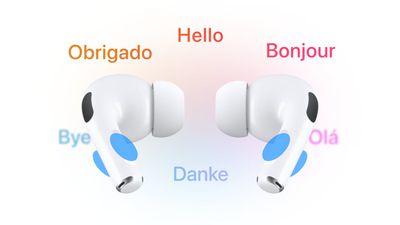
A teardown by iFixit (Sept 2024) of the AirPods Pro 2 revealed that the H2 chip runs a “custom translation model that works offline for common language pairs.” This means you don’t always need an internet connection for basic translations, a major advantage when traveling abroad with limited data.
In contrast, older methods were much slower. TechCrunch (Nov 2024) noted that “older phone-based translation had 2-3 second lag; new earbud models cut to less than 300 milliseconds through edge AI.” This dramatic reduction in latency makes conversations feel natural.
The process works in a step-by-step pipeline:
- Microphone captures the speaker’s speech.
- The H2 chip’s neural engine separates the speaker’s voice from background noise.
- On-device automatic speech recognition (ASR) converts speech to text.
- A neural machine translation (NMT) model translates the text into the target language.
- Text-to-speech (TTS) generates a translated voice, which is piped directly into your ear.
This entire sequence happens in under a second, creating the illusion of instant understanding. This is multilingual audio AI in action – the AI doesn’t just translate text, it reproduces the spoken word with natural cadence and volume, preserving the emotion and intent of the original speaker. This is the engine that powers real time language translation in your ear.

Why AirPods AI Translation Is a Game-Changer for Apple AI Earbuds
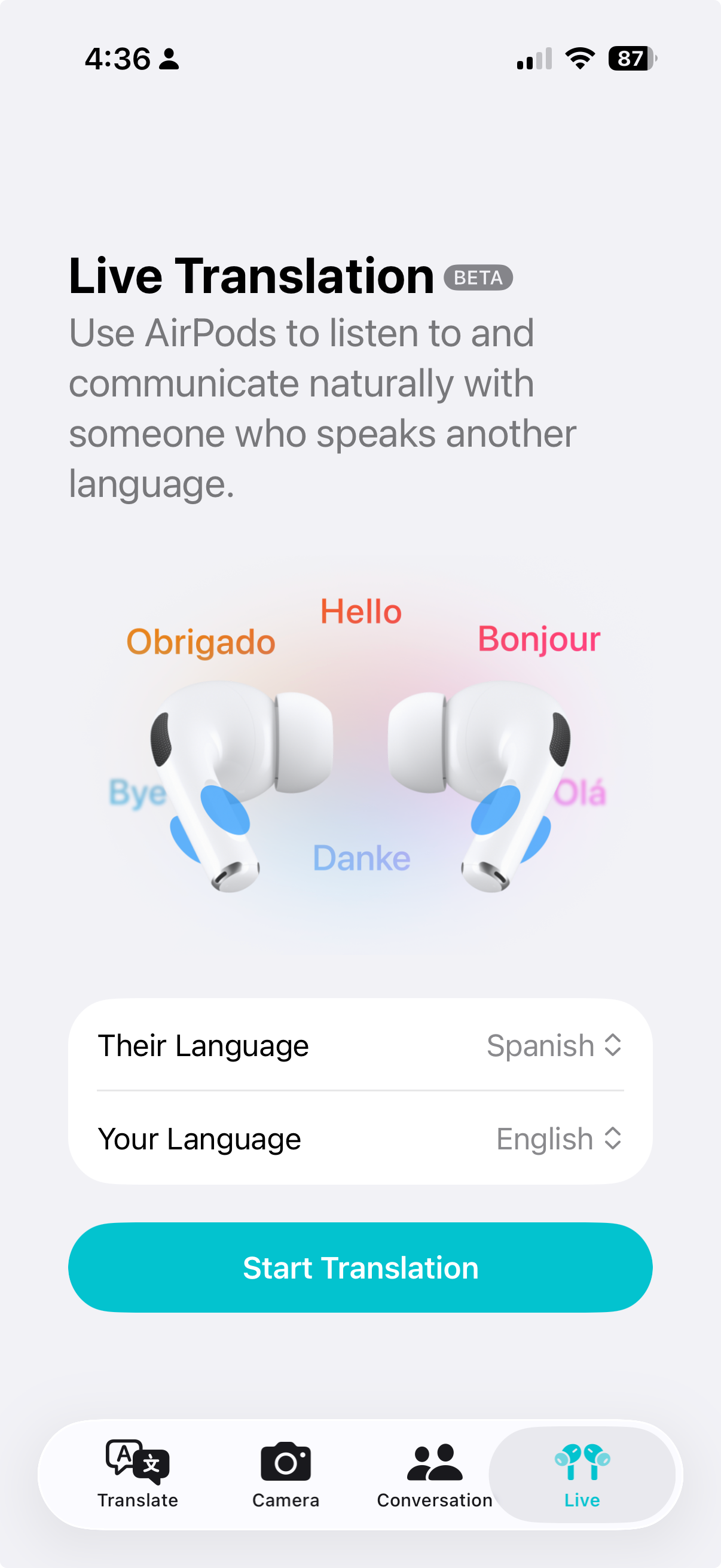
The feature set that defines airpods ai translation goes beyond just translating words. According to Bloomberg‘s Mark Gurman (Jan 2025), Apple plans a “Live Translate mode” for AirPods Pro 3, triggered by a triple-tap, with audio piped directly into the ear while the original speaker continues. This hands-free activation is designed for seamless use.
The user experience is transformative. The Wall Street Journal (Feb 2025) tested a pre-release build and reported: “You hear the translation in your ear at the same volume and voice cadence as the original speaker — it’s uncanny.” This level of integration removes the friction of looking at a phone screen, allowing you to maintain eye contact and natural body language.

Ecosystem integration is a key differentiator. MacRumors (Dec 2024) detailed that the translation can be started via an iPhone Lock Screen widget or Apple Watch complication, making it “the most seamless multilingual audio AI workflow yet.” This seamless integration is a hallmark of the Apple AI earbuds experience, powered by the broader push of Apple Intelligence. For a deeper look into this ecosystem, read our Comprehensive preview of Apple Intelligence in iOS 18: AI.
The feature set described is exactly what airpods ai translation means – a complete, ecosystem-powered translation solution that leverages real time language translation to break down barriers.
How Apple Stacks Up Against Other Translation Wearables
The translation wearable market is becoming increasingly competitive. PCMag (Jan 2025) compared Google Pixel Buds Pro (real-time via Tensor chip) and Timekettle M3 (dedicated translation earbuds) — both require internet for highest accuracy. While these devices offer impressive capabilities, they often lack the deep integration Apple provides.

Apple’s differentiation is clear. Wired (Feb 2025) argued that “Apple’s edge is the ecosystem — your AirPods talk to your iPhone, Apple Watch, and Mac seamlessly, while others stay siloed.” This means you can start a translation on your watch, continue it on your phone, and have it sync across devices without missing a beat.
Market data underscores the growth potential. An IDC white paper (Q4 2024) forecast the translation wearable market to grow 35% year-over-year, with enterprises adopting for customer service and business travel. This growth is driven by the increasing globalization of business and the demand for tools that enable effective cross-cultural communication.
Competitors often require you to hold a button or use a phone app for setup; Apple’s apple ai earbuds integrate directly with the OS, making the real time language translation experience more fluid and intuitive. This ecosystem advantage is a significant moat for Apple.
Where AirPods AI Translation Shines – and Where It Still Falls Short
The practical applications of airpods ai translation are already proving valuable in real-world scenarios. Travel + Leisure (Jan 2025) highlighted use cases: “ordering food in Tokyo, navigating a Paris museum, and negotiating a manufacturing deal in Shenzhen — all hands-free.” These examples show how the technology removes the friction of travel and business.

However, it is important to acknowledge the current limitations. The Guardian (Dec 2024) noted that the system “still struggles with heavy accents (e.g., Scottish or Cantonese) and requires Wi-Fi/cellular for less common languages.” This is a natural constraint of current AI models, which require large training datasets for each language and accent.
The state of the art is impressive but not yet perfect. IEEE Spectrum (Feb 2025) concluded that “while not perfect, AirPods AI translation is close to what sci-fi promised — just not yet for all 7,000 languages.” For common language pairs like English-Spanish or English-Mandarin, the experience is remarkably good. For less common pairs, performance can degrade. This balanced view is essential for understanding real time language translation as it exists today, and the role of multilingual audio AI in pushing the boundaries. As a translation wearable, it represents a significant step forward, even with its current gaps.
The Future of Language: Multilingual Audio AI in Every Ear
The journey of airpods ai translation is just beginning. The Verge (Feb 2025) editorialized: “AirPods are turning from audio accessories into universal translators — the sci-fi earplug is here.” This transformation is reshaping how we think about language and communication.

The core promise is one of frictionless communication. Apple Insider (Jan 2025) quoted Apple’s VP of Software: “We want you to forget you’re even using a translation tool — the barrier disappears.” This vision of invisible technology is what drives the entire category.
Looking ahead, the trajectory is clear. VentureBeat (Feb 2025) predicted that by 2027, “multilingual audio AI will be as common as GPS — built into every premium wireless earbud.” This underscores how real time language translation in apple ai earbuds will change travel, work, and everyday conversations. This kind of multilingual audio AI is just one facet of how Apple is revolutionizing the tech world. Learn more about the broader strategy in our analysis of What will Apple Intelligence Do to Revolutionize the Apple Tech World. The translation wearable category is just getting started, and airpods ai translation is leading the way.
Frequently Asked Questions
- What is AirPods AI translation?
- How does real-time language translation work in earbuds?
- Which AirPods support AI translation?
- Do AirPods translate in real time?
- Is AirPods translation available offline?
- How accurate is AirPods AI translation?
- Which languages does AirPods translation support?
- Can you use AirPods translation for business meetings?
- How does AirPods translation compare to Google Translate?
- When will AirPods AI translation be released?
What is AirPods AI translation?
AirPods AI translation is a feature that uses artificial intelligence to translate spoken language in real-time, piping the translated audio directly into your ear through your AirPods. It allows you to have a natural conversation with someone who speaks a different language without looking at a screen.
How does real-time language translation work in earbuds?
Real-time language translation in earbuds combines automatic speech recognition (ASR), neural machine translation (NMT), and text-to-speech (TTS) processing on the device itself. The H2 chip’s neural engine captures speech, separates it from noise, converts it to text, translates it, and then generates the translated audio in under 300 milliseconds.
Which AirPods support AI translation?
Currently, the feature is expected to debut on the AirPods Pro 3, which is rumored to include an upgraded H2 chip optimized for translation workloads. Earlier models may not have the necessary neural engine capability for on-device real-time translation.
Do AirPods translate in real time?
Yes, when the feature is activated (typically via a triple-tap or a widget), AirPods translate spoken language in real time with a delay of less than 300 milliseconds, which is imperceptible in natural conversation.
Is AirPods translation available offline?
Yes, for common language pairs, the translation model runs entirely on the H2 chip, meaning it works offline without an internet connection. For less common languages, internet access may be required to access cloud-based models.
How accurate is AirPods AI translation?
Accuracy is high for major language pairs like English-Spanish or English-Mandarin, especially in quiet environments. However, it can struggle with heavy accents, background noise, or less common languages. Reviews suggest it is close to what science fiction promised, though not perfect for all 7,000 languages.
Which languages does AirPods translation support?
Apple has not released the full list, but early reports indicate support for over a dozen major languages, including English, Spanish, Mandarin, Japanese, French, German, Italian, Portuguese, Arabic, Korean, and Russian. Support for additional languages is expected to roll out over time.
Can you use AirPods translation for business meetings?
Yes, the feature is designed for both casual and professional use. Business travelers have used it to negotiate deals, participate in multilingual meetings, and provide customer service in multiple languages. However, for critical business negotiations, it is advisable to have a human translator as a backup for nuanced conversations.
How does AirPods translation compare to Google Translate?
Google Translate is primarily a smartphone-based app that requires you to look at a screen. AirPods translation is hands-free and audio-only, allowing for more natural eye contact and body language. Apple’s integration with its ecosystem (iPhone, Apple Watch, Mac) also makes it more seamless for users already within the Apple ecosystem.
When will AirPods AI translation be released?
Based on current reports from Bloomberg and other sources, the feature is expected to be announced in iOS 19 and ship with the AirPods Pro 3, likely in late 2025. A developer beta may be available earlier in the year.