

Apple M5 Chip Benchmark: Decoding the Future of Mac Performance
Estimated reading time: 12 minutes
Key Takeaways
- The Apple M5 chip benchmark reveals a 20% CPU gain and up to 45% faster graphics, setting a new standard for performance.
- Its energy efficient chip design, built on advanced 3nm technology, delivers unprecedented performance-per-watt for sustained workflows.
- With over 4x peak GPU AI compute, the M5 ushers in the era of powerful ai neural processing macs capable of running complex models locally.
- The chip’s graphical and power efficiency is the key enabler for the anticipated high-contrast, responsive macbook oled 2026 displays.
- Unified memory bandwidth sees a 30% jump to 153GB/s, eliminating bottlenecks for professional multitasking and scientific computing.
Table of contents
- Apple M5 Chip Benchmark: Decoding the Future of Mac Performance
- Key Takeaways
- Introduction to Next-Generation Mac Performance
- Apple M5 Chip Benchmark: CPU Performance Gains Explained
- GPU Advancements: 45% Graphics Performance Uplift in Apple M5 Chip Benchmark
- Unified Memory Bandwidth: 153GB/s and Its Impact on Apple M5 Chip Benchmark Results
- Energy Efficient Chip Design: The Architecture Behind Apple M5 Chip Benchmark Performance
- AI Neural Processing Macs: 4x GPU AI Compute and Beyond
- MacBook OLED 2026: How Apple M5 Chip Benchmark Advances Enable Display Revolution
- Real-World Workflows
- The Full Picture: How Apple M5 Chip Benchmark Drives Next-Generation Mac Capabilities
- Frequently Asked Questions
Introduction to Next-Generation Mac Performance
For creative professionals and power users awaiting the next performance leap, early details surrounding the apple m5 chip benchmark provide the most concrete lens yet for understanding future Mac capabilities. Announced on October 15, 2025, the M5 isn’t just an iterative update; it represents a significant architectural leap designed to power the next generation of ai neural processing macs and enable innovations like the rumored macbook oled 2026. This post will decode the early benchmark numbers, translate them into tangible real-world scenarios, and reveal how the underlying energy efficient chip design is setting the stage for a transformative era in personal computing. For context on its predecessor, see our deep dive into the Apple M4 chip’s performance improvements.

Apple M5 Chip Benchmark: CPU Performance Gains Explained
At the heart of the M5’s prowess is its 10-core CPU configuration, featuring up to four high-performance cores and six high-efficiency cores, all fabricated on an advanced third-generation 3-nanometer process. This architecture delivers a substantive 15% faster multithreaded performance over the M4 through core microarchitecture enhancements.
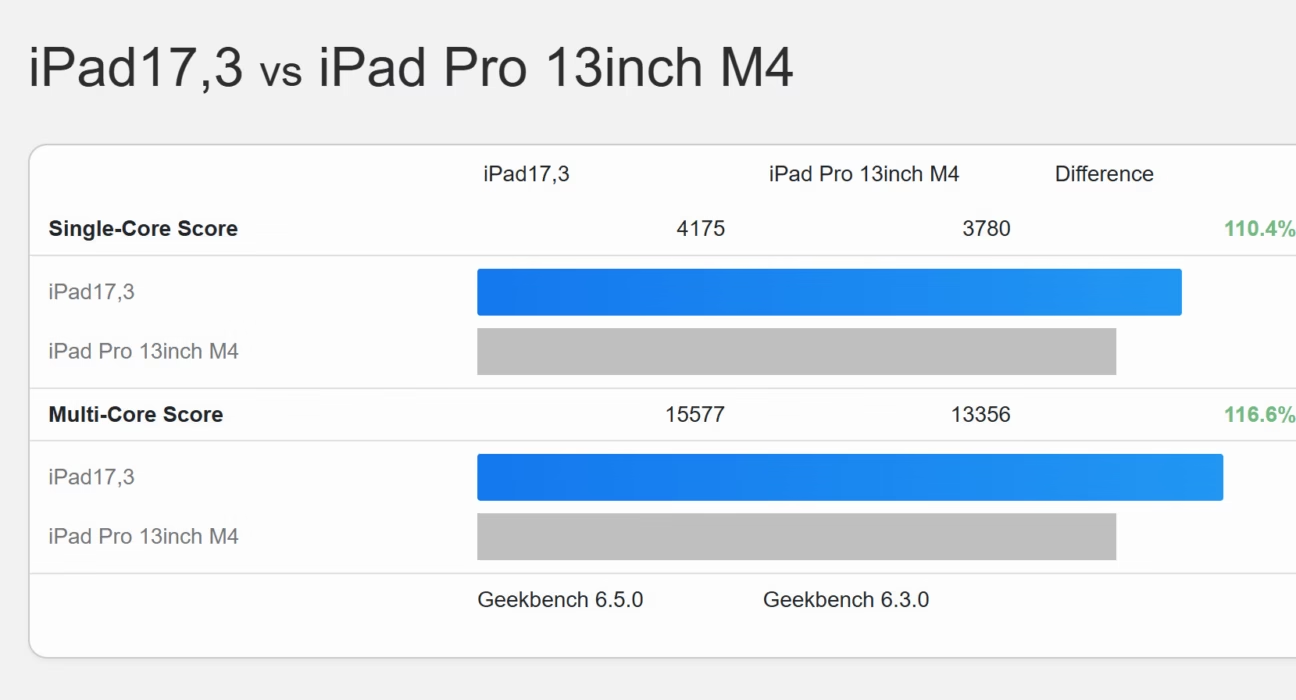
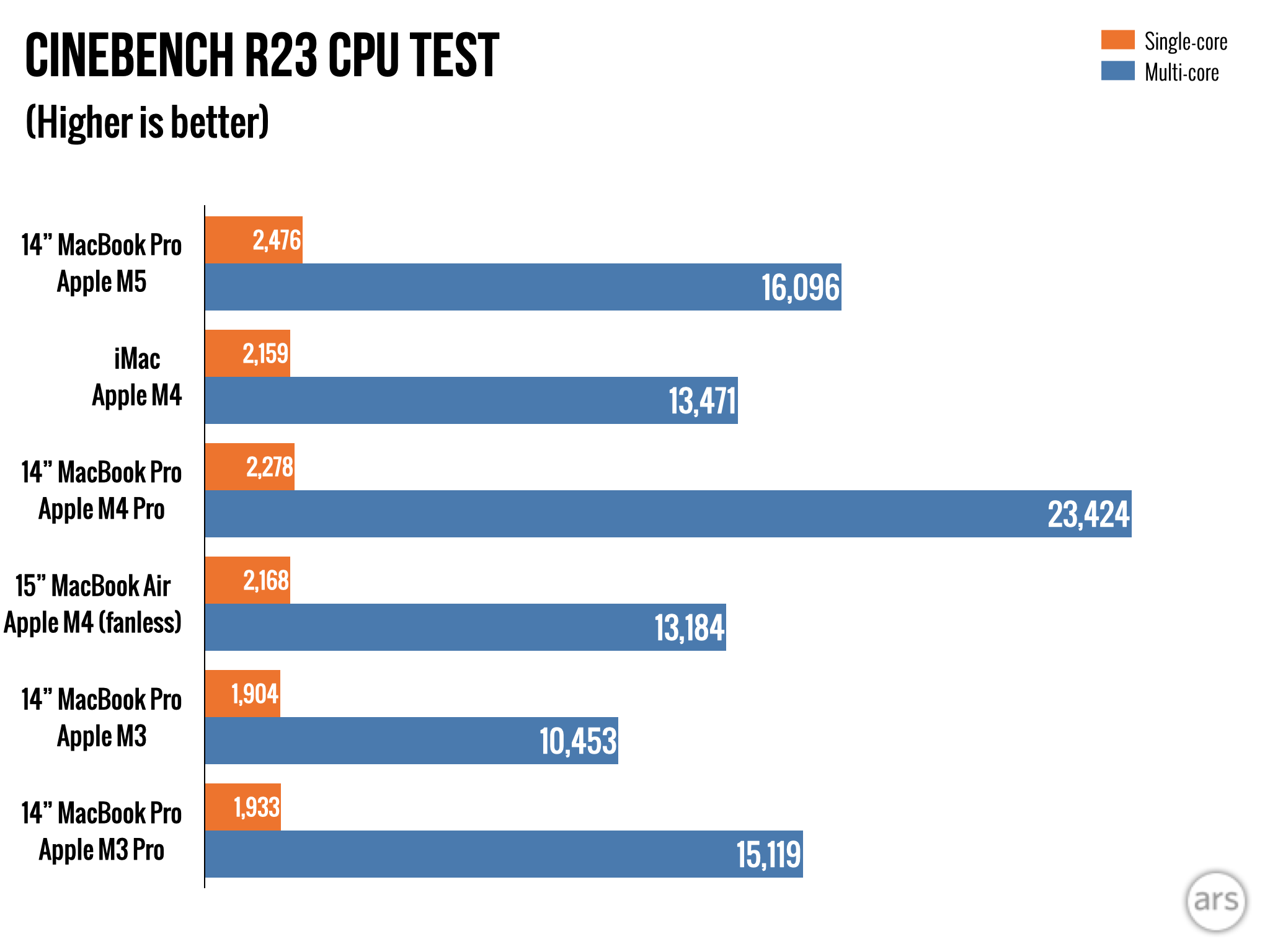
The numbers speak volumes. In Geekbench 6 testing, the M5 inside the 14-inch MacBook Pro achieves a multi-core score of 17,862—a striking 20% increase over the M4’s 14,726. Its single-core score of 4,263 stands as the highest ever recorded for a base M-series chip. Even the 9-core variant powering the new iPad Pro impresses with a multi-core score of 15,577.

- Real-World Translation: These gains translate directly to faster video rendering times, quicker code compilation in Xcode, and more responsive performance in scientific computing applications. The balance of performance and efficiency cores ensures this speed is delivered without wasteful power consumption.
GPU Advancements: 45% Graphics Performance Uplift in Apple M5 Chip Benchmark
The graphical leap with the M5 is arguably more dramatic. It features a 10-core GPU with Neural Accelerators integrated into each core and third-generation hardware-accelerated ray tracing. According to Apple, this delivers up to a 45% higher graphics performance compared to the M4, with an overall 30% faster performance and a 36% GPU uplift in specific benchmarks.
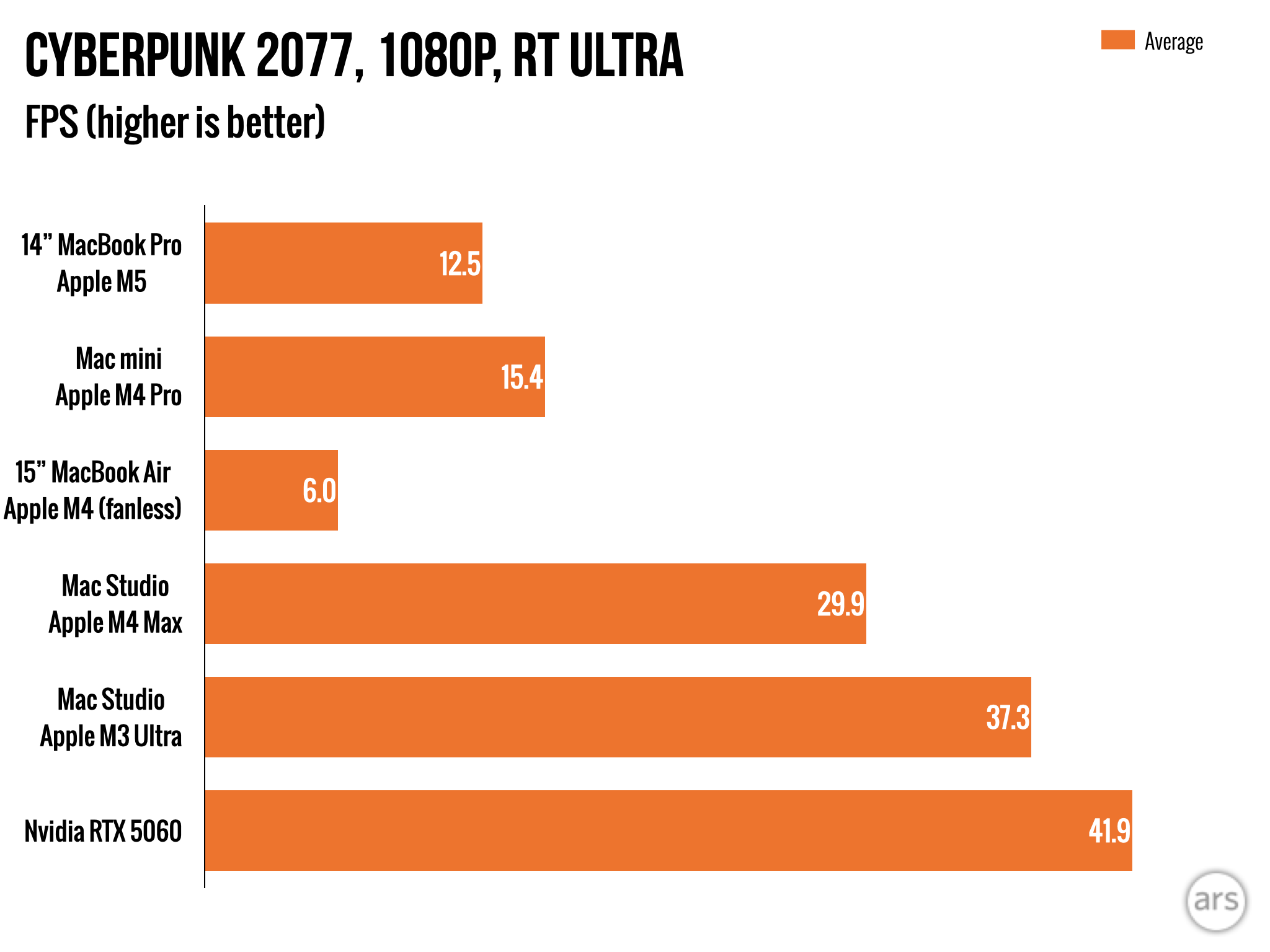
Independent testing validates this claim and adds crucial detail. In video benchmarks, the M5 demonstrates its muscle by doubling the frame rate in Rosetta-translated applications versus the M4 and achieving 57% faster frame rates in games, performance that nearly matches the previous-generation M4 Pro. CPU rendering in Blender Classroom is also 20% faster.

“For creative professionals, this means smoother scrubbing in 3D applications like Cinema 4D, more complex real-time effects in Final Cut Pro, and a genuinely viable platform for high-fidelity gaming,” notes one review. This graphical efficiency is also a foundational pillar for the anticipated visual fidelity of macbook oled 2026 models, enabling high-contrast, color-accurate visuals without thermal compromise.
Unified Memory Bandwidth: 153GB/s and Its Impact on Apple M5 Chip Benchmark Results
Raw compute power is only part of the story. The M5’s unified memory architecture sees a 30% bandwidth increase to a blistering 153GB/s—double that of the original M1. This isn’t just a spec sheet number; it’s the silent enabler for seamless multitasking and complex workloads.
This massive bandwidth allows the CPU, GPU, and Neural Engine to access a shared pool of data simultaneously and instantaneously. In practice, this means a video editor can run Adobe Photoshop, render a 4K timeline in Final Cut Pro, and upload assets to the cloud simultaneously without the stuttering or slowdowns caused by memory bottlenecks.

Furthermore, this bandwidth is critical for the emerging paradigm of ai neural processing macs. It allows larger machine learning models to reside and operate entirely in fast, on-device memory, accelerating AI features while preserving user privacy. The energy efficient chip design philosophy is evident here too, as unified memory eliminates the power waste of copying data between separate memory pools.
Energy Efficient Chip Design: The Architecture Behind Apple M5 Chip Benchmark Performance
The remarkable apple m5 chip benchmark results are a direct product of its foundational energy efficient chip design. This isn’t a single feature but a holistic architectural philosophy built on several pillars:
- Advanced 3-Nanometer Technology: The third-generation process packs more transistors into a smaller space, fundamentally reducing power draw for any given task.
- Heterogeneous Core Design: The mix of high-performance and high-efficiency cores ensures the right core is used for the right job, minimizing energy use for background tasks.
- Power-Optimized Neural Accelerators: Dedicated silicon for AI tasks performs them far more efficiently than the CPU or GPU could.
- Unified Memory Architecture: As discussed, this reduces costly data movement, a major source of power consumption in traditional architectures.
This focus on efficiency yields what Apple terms “industry-leading performance-per-watt.” In real-world terms, it means the 14-inch MacBook Pro can sustain its peak performance during long renders without thermal throttling and still deliver all-day battery life. The 16-core Neural Engine acts as a dedicated efficiency booster for AI, accelerating features like Image Playground and spatial photo generation while sipping power. As noted in a comprehensive review, this efficiency is what allows Apple to create impossibly thin, silent designs that don’t sacrifice performance.

AI Neural Processing Macs: 4x GPU AI Compute and Beyond
The M5 firmly establishes the Mac as a premier platform for ai neural processing macs. It delivers a monumental over 4x peak GPU AI compute performance compared to the M4. This, combined with a faster Neural Engine and GPU Neural Accelerators, enables local execution of complex diffusion models and large language models that previously required cloud servers.
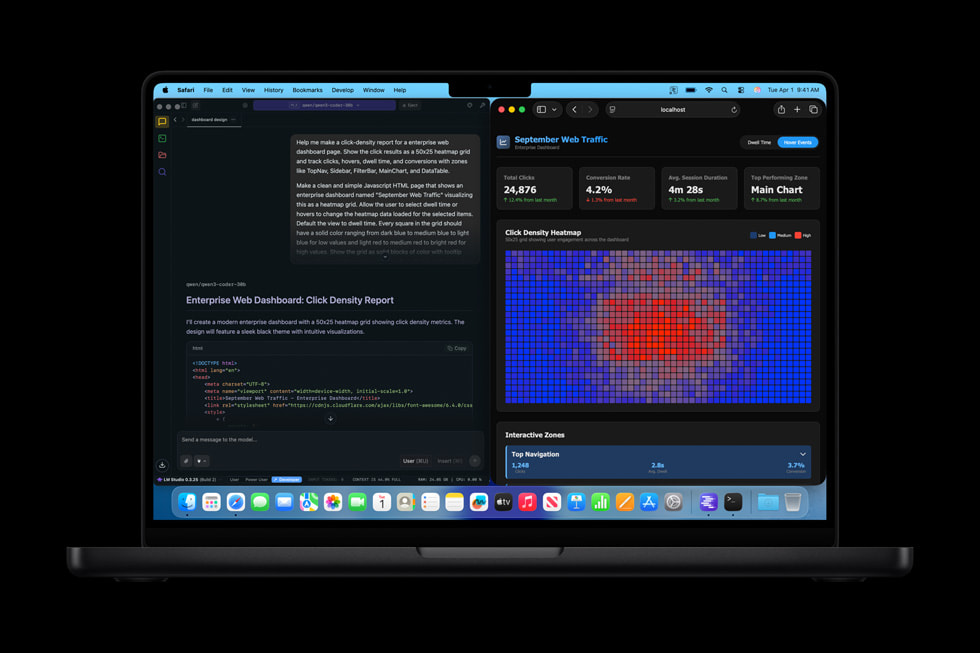
The performance leap over older Intel-based Macs is staggering—up to an 86x AI performance boost. This power translates into instantaneous, on-device AI applications:
- Live audio and video filters with real-time processing.
- Advanced, lightning-fast photo search through vast libraries.
- Real-time translation and transcription.
- Generative features like Image Playground and spatial photo creation.
This intelligence is part of a broader ecosystem, including features expected in iOS, detailed in our Apple Intelligence iPhone 16 features guide. The synergy between AI-specific benchmarks and general CPU/GPU performance means AI is no longer a separate workload but an integrated, accelerating layer across the entire system, all while keeping sensitive data securely on your device.
MacBook OLED 2026: How Apple M5 Chip Benchmark Advances Enable Display Revolution
The rumored shift to macbook oled 2026 displays is not just a panel change—it’s a system-level transformation enabled by the M5’s performance profile. OLED technology offers perfect blacks, exceptionally high contrast ratios, and fast pixel response times, but it demands a chip that can drive these pixels efficiently without overheating or draining the battery.
The M5’s graphical efficiency and power-optimized design are the prerequisite for this leap. A key proof point is its role in the Apple Vision Pro’s micro-OLED displays, where the M5 is tasked with rendering 10% more pixels at a 120Hz refresh rate while simultaneously reducing motion blur. This expertise directly informs future MacBook displays.
The chip’s 30-45% GPU gains ensure that a future OLED MacBook can handle color-accurate HDR video editing and graphics-intensive gaming without compromise. Furthermore, the energy efficient chip design ensures the power-hungry OLED panel doesn’t come at the cost of all-day battery life, allowing for thinner, cooler-running laptops. For more on how Apple integrates advanced chips into spatial computing, read about the Apple Vision Pro AI integration.
Real-World Workflows
Video Editing and Rendering: Tangible Speedups in Apple M5 Chip Benchmark Workflows
For video professionals, benchmarks materialize as saved minutes and hours. Tests show video exports on the M5 finishing over 2 minutes faster than on the M4, with Rosetta apps seeing a 2x frame rate improvement. This is where the M5’s tri-fecta of CPU encoding power, GPU rendering muscle, and immense 153GB/s memory bandwidth converge. A filmmaker can apply complex color grades and effects to an 8K timeline while background-rendering another project, all in real-time, without a dropped frame.
Scientific Computing: 153GB/s Unified Memory Bandwidth Unleashes Complex Models
Beyond creative fields, the M5’s architecture accelerates discovery. Workloads like local machine learning training, computational fluid dynamics simulations, and large 3D rendering farms are inherently bottlenecked by memory speed. The 153GB/s unified memory bandwidth allows researchers and engineers to work with larger datasets and more complex models entirely on their laptop, iterating faster. The unified memory advantage means data isn’t copied between the GPU and CPU, reducing latency and power waste—a key tenet of its energy efficient chip design.
The Full Picture: How Apple M5 Chip Benchmark Drives Next-Generation Mac Capabilities
The narrative of the M5 is one of interconnected innovation. The impressive apple m5 chip benchmark results—the 20% CPU gains, up to 45% GPU uplifts, and 4x AI compute—are fundamentally enabled by its radical energy efficient chip design. This efficiency, in turn, unlocks two major future frontiers: it powers the intelligent, responsive experiences of true ai neural processing macs and provides the necessary thermal and power headroom to realize the stunning visuals of macbook oled 2026 displays.

Available now in the 14-inch MacBook Pro, iPad Pro, and Vision Pro, the M5 sets a clear trajectory for the entire Mac lineup. It promises a holistic upgrade for professionals where performance, intelligence, and display technology advance in lockstep. For the latest rumors on when more M5 devices might arrive, check our guide to Apple M5 chip release date rumors. The early data demonstrates that Apple’s commitment to performance-per-watt innovation remains unwavering, ensuring Macs are ready for the increasingly demanding, AI-augmented workloads of the future. For a comprehensive look at how this chip could power future devices, explore our analysis of the Apple M5 chip’s AI performance boost.
Frequently Asked Questions
How much faster is the Apple M5 chip compared to the M4?
Benchmarks show the M5 delivers a 20% increase in multi-core CPU performance and up to a 45% boost in graphics performance over the M4. Real-world tests, like video exports, show it completing tasks over two minutes faster.
What makes the Apple M5 chip so energy efficient?
Its efficiency stems from a third-generation 3nm manufacturing process, a balanced design of high-performance and high-efficiency CPU cores, dedicated Neural Engine silicon for AI, and a unified memory architecture that minimizes power-wasting data movement.
Can the M5 chip run AI models locally on the Mac?
Absolutely. With over 4x the peak GPU AI compute of the M4 and a faster Neural Engine, the M5 is designed to be the engine for ai neural processing macs. It can run complex diffusion models and large language models locally, enabling features like real-time translation and advanced photo generation without needing an internet connection.
Why is the M5 chip important for future OLED MacBooks?
OLED displays offer superior contrast and response times but are more power-intensive. The M5’s energy efficient chip design and powerful GPU can drive these high-performance panels without causing excessive heat or battery drain, making the visual benefits of a macbook oled 2026 feasible without sacrificing the thin, cool, all-day laptop experience.
What does the 153GB/s memory bandwidth actually do for me?
This 30% bandwidth increase over the M4 allows the CPU, GPU, and AI engines to access data almost instantly. In practice, it means you can run multiple high-performance applications simultaneously—like 3D rendering, 4K video editing, and scientific simulations—without experiencing slowdowns or stutters due to a memory bottleneck.