
Driving Into Tomorrow: How AR Head-Up Displays Are Transforming Your Windshield
Estimated reading time: 9 minutes
Key Takeaways
- Automotive HUD AR displays project augmented driving info like navigation and hazard warnings directly onto the road ahead, keeping your eyes on the path.
- This technology integrates AI safety overlays for proactive danger alerts and acts as a central connected car interface, blending data from your vehicle, cloud, and city infrastructure.
- Benefits are profound, reducing distraction time by up to 80% and enhancing the effectiveness of existing driver-assistance systems for safer travel.
- While currently a premium feature, rapid innovation is driving down costs and expanding capabilities, with the market poised for massive growth from $2.38B to $15.73B by 2032.
Table of contents
- Driving Into Tomorrow: How AR Head-Up Displays Are Transforming Your Windshield
- Key Takeaways
- Beyond the Dashboard: A New Vision for Driving
- How AR HUDs Work: A Technical Masterpiece
- The Intelligent Guardian: AI Safety Overlays
- The Connected Road Ahead: Integrated Car Interfaces
- Why It Matters: Tangible Benefits for Every Driver
- Navigating the Speed Bumps: Challenges and Future Roadmap
- Frequently Asked Questions
Beyond the Dashboard: A New Vision for Driving
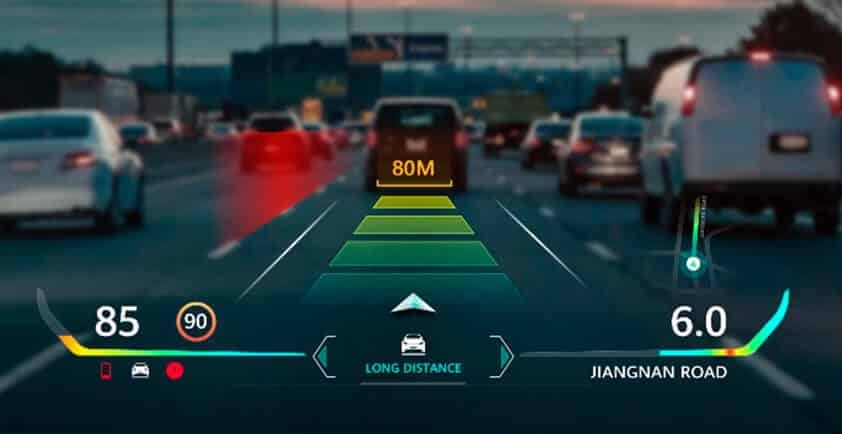
Imagine navigating a complex urban intersection. Instead of glancing down at a screen or up at street signs, critical information appears as if painted on the world itself: a glowing arrow curves onto your exit lane, the car ahead is outlined in amber to indicate a safe following distance, and a highlighted crosswalk alerts you to a pedestrian obscured by glare. This is the promise of automotive HUD AR displays, a game-changing technology that delivers augmented driving info directly into your line of sight, making travel profoundly safer and more intuitive.

So, what exactly are they? Unlike traditional head-up displays that project basic, static data like speed onto a small section of the windshield, automotive HUD AR displays project dynamic, three-dimensional graphics that appear to be part of the real road ahead. This augmented driving info—such as navigation arrows, lane boundaries, and hazard highlights—is rendered at virtual distances of 10 to 20 meters, allowing your eyes to stay naturally focused on the road without constant, fatiguing shifts between near and far objects. This fundamental shift from a simple data projector to an immersive spatial interface is the core of its revolutionary potential (source) (source).
The contrast with older systems is stark. Traditional instrument clusters or basic HUDs show information at a short, fixed range (typically less than 3 meters), forcing a cognitive disconnect. AR HUDs eliminate this by contextualizing information within the driving environment, minimizing distraction and weaving situational awareness directly into your field of view (source). The core thesis is clear: automotive HUD AR displays are transforming the act of driving by projecting critical augmented driving info directly into the driver’s line of sight. This experience is supercharged by intelligent AI safety overlays and deeply integrated into broader connected car interfaces, creating a cohesive, safer, and more intuitive journey.
Let’s shift gears and look under the hood. How does this technological marvel actually work, and what makes its safety and connectivity features so compelling?
How AR HUDs Work: A Technical Masterpiece
The magic of an AR HUD is the result of a sophisticated dance between hardware and software. It relies on several core components:
- High-Resolution Projectors: Often utilizing laser or advanced LED sources, these create bright, crisp images that remain visible in various lighting conditions.
- Combiners & Windshield Integration: A special transparent film or a treated section of the windshield acts as a “combiner,” reflecting the projected image toward the driver without distorting the outward view.
- Sensor Fusion & Software: This is the brain. Advanced software fuses real-time data from a suite of sensors—cameras, LiDAR, radar, and GPS—to understand the vehicle’s precise position and surroundings. It then renders 3D graphics that are accurately anchored to the real world (source) (source) (source).
This integration of smart sensors and contextual software mirrors the rise of intelligent environments, much like the evolution within the broader connected home ecosystem.
What Do You Actually See? The Layers of Augmented Driving Info
The displayed augmented driving info can be broken into two key layers:
1. Core Navigation & Data: This includes your speed (displayed as a floating gauge aligned with the horizon), navigation arrows that are overlaid precisely on the road surface, and turn-by-turn directions that visually curve with the actual turn ahead (source) (source).
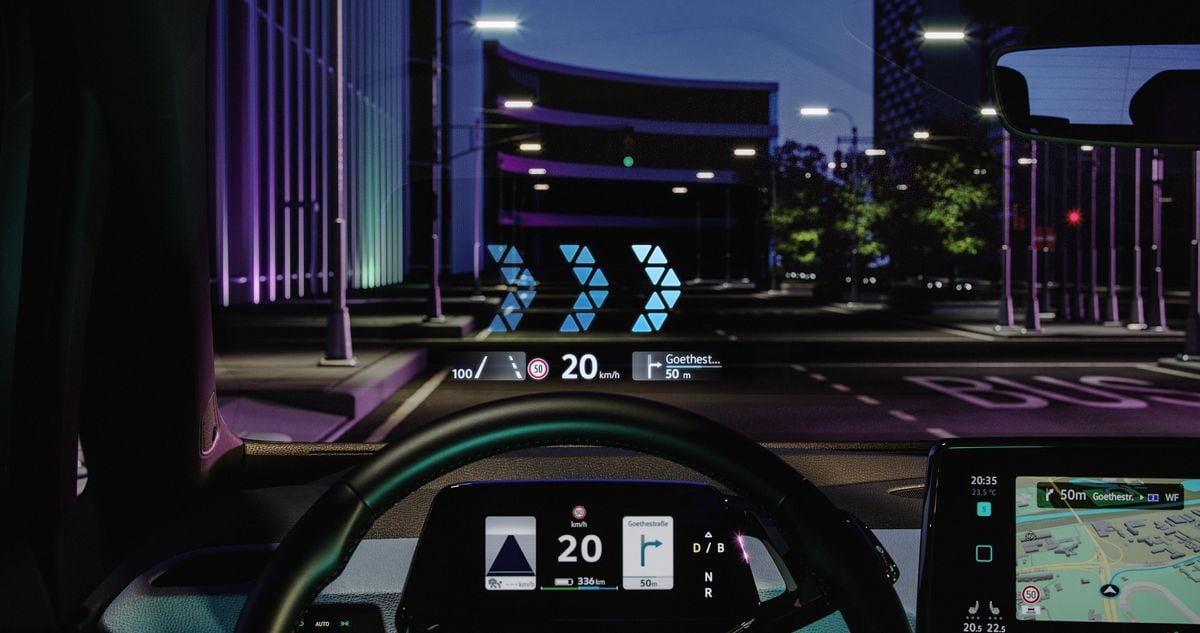
2. Advanced Safety Overlays: This is where the technology becomes a true co-pilot. It can highlight your lane markings with glowing lines, place bounding boxes around detected pedestrians or cyclists, show a visual gap indicator to the car ahead for following distance, and flash collision warning icons that are perfectly synced to the location of the real hazard (source).
Seamless ADAS Integration: Your Immersive Safety Net
The AR HUD doesn’t work in isolation; it’s the perfect visual output for your car’s Advanced Driver-Assistance Systems (ADAS). It creates immersive aids by blending virtual elements with your real-world view:
- Lane Departure Warnings: Instead of a beep or steering wheel vibration alone, the lane lines on the HUD might pulse or vibrate.
- Adaptive Cruise Control: Visual cues can show when the system is adjusting speed to match traffic ahead.
- Blind-Spot Alerts: A highlighted glow or icon can appear in your peripheral view on the HUD, corresponding to the side mirror where a vehicle is detected.
This deep integration is a cornerstone of the ongoing autonomous vehicle revolution, building driver trust and understanding of what the vehicle’s systems “see” and intend to do (source).

Think of it as the most advanced video game HUD you’ve ever seen, but in real life—where the virtual information enhances rather than obstructs the world, making you a better, safer player in the complex game of driving.
The Intelligent Guardian: AI Safety Overlays
This is where the system evolves from informative to proactive. AI safety overlays represent the intelligent software layer that uses machine learning algorithms to process vast streams of camera and sensor data in real-time. It doesn’t just display data; it interprets the scene to highlight dangers with contextual visuals (source) (source).
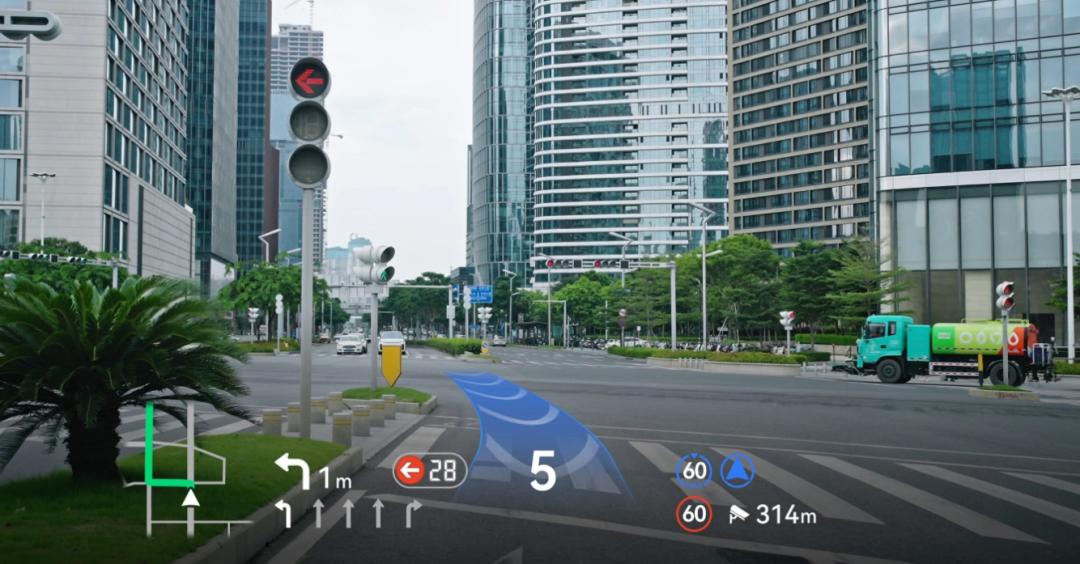
Imagine a pedestrian stepping out from between parked cars on a rainy night. A basic sensor might detect an object, but the AI can classify it as a person and instantly render a glowing outline around them on your HUD, cutting through the visual noise. Similarly, it can predict sudden braking events ahead and project a red alert arrow pointing at the hazard, or flash your lane boundaries if you start to drift unintentionally (source). This is a critical application of AI in modern transportation systems, and its underlying proactive logic is akin to the intelligent automation integrated into everyday devices.
The shift from passive display to proactive guidance is monumental. AI safety overlays improve object recognition (distinguishing a cyclist from a mailbox), drastically reduce cognitive load (you see the threat directly, rather than interpreting an abstract warning light), and enable quicker responses by providing ADAS-linked warnings that can predict potential issues 2-5 seconds before they become critical (source).
Real-world implementations are already proving the point. For instance, Panasonic’s AR HUD system uses 3D, AI-driven augmented driving info and has been shown to reduce driver distraction by up to 40% while significantly boosting safety through precise threat visualization (source). This intelligent layer is what makes modern automotive HUD AR displays a genuine step toward a guardian-like driving assistant.
The Connected Road Ahead: Integrated Car Interfaces
The AR HUD is poised to become the central dashboard of the modern connected car interface. It’s the focal point where data converges from multiple streams to create a unified, contextual driving experience:
- Vehicle Sensors: Cameras, radar, and ultrasonic sensors provide a 360-degree awareness of the immediate environment.
- Cloud Services & 5G: This enables low-latency updates for live traffic predictions, weather overlays (like highlighting slippery road sections), and real-time point-of-interest (POI) information.
- IoT & Smart City V2X: The HUD can integrate with other devices (imagine your calendar appointment address auto-populating your navigation) and communicate with smart city infrastructure (Vehicle-to-Everything). This could mean seeing a traffic light’s countdown timer projected at the intersection or getting alerts about an ambulance approaching from behind a blind corner (source).

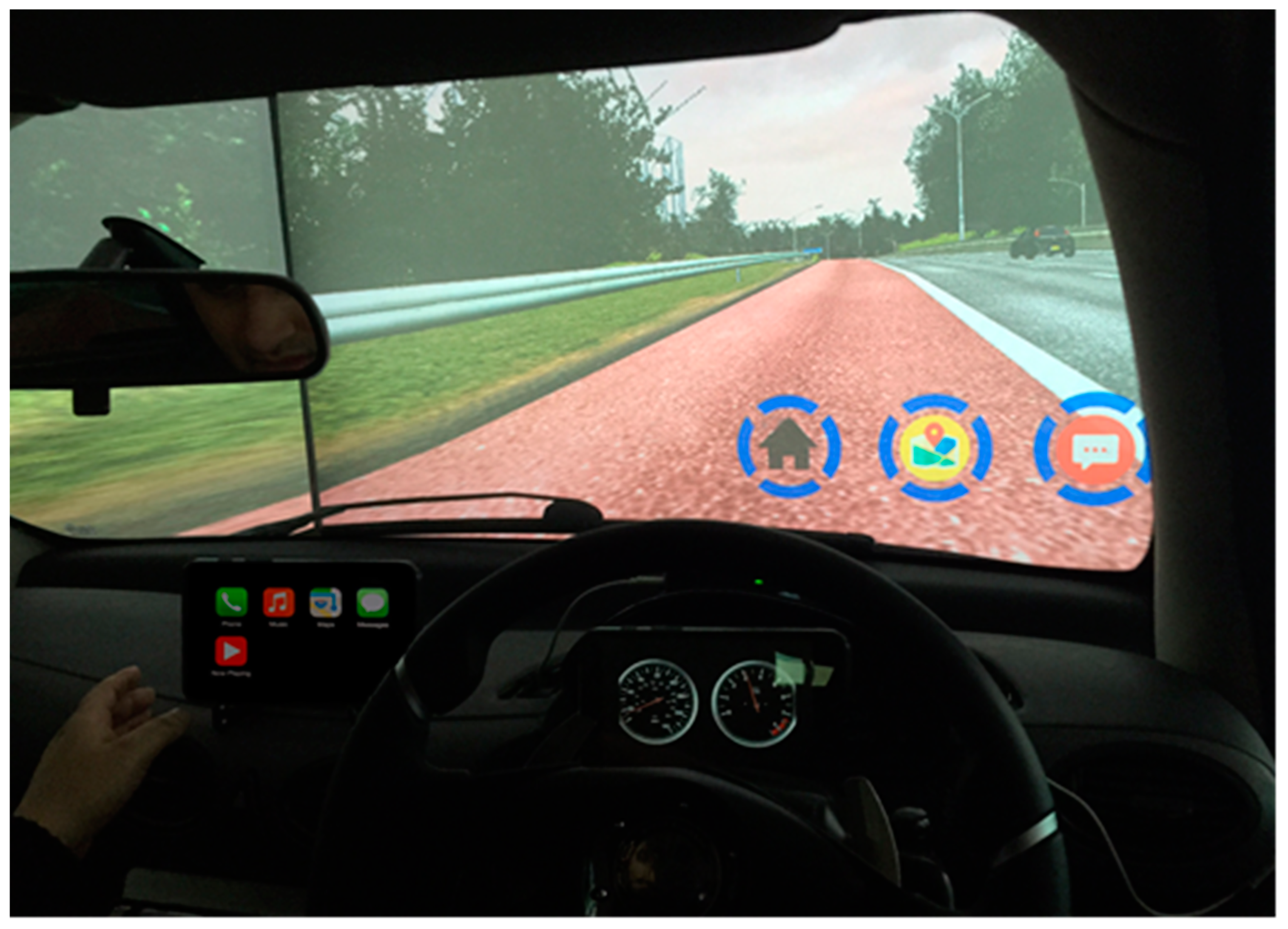
This fusion allows for remarkably advanced features. Cloud-based AR can learn driver preferences—your favorite coffee shop chain could always appear as a specific icon on the road ahead. Real-time traffic overlays can suggest and visually guide you through dynamic detours. Incoming calls or messages can appear as subtle, non-obstructive notifications that don’t require you to look away.
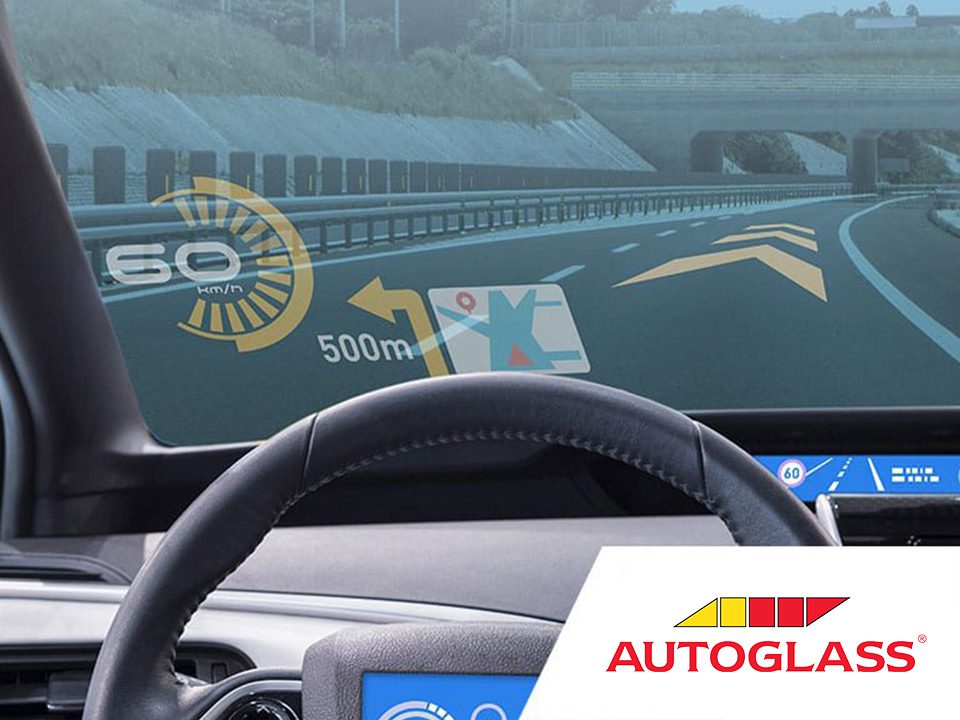
Picture your morning commute: Your HUD not only guides you along your usual route but, by pulling live data, proactively highlights an alternative path because it knows an accident has blocked the highway two miles ahead. It seamlessly integrates your world, making the HUD the intuitive hub of your connected car ecosystem.
Why It Matters: Tangible Benefits for Every Driver
The theoretical advantages of AR HUDs translate into concrete, life-changing benefits on the road.
1. Enhanced Safety is Paramount: By keeping eyes on the road through intuitive AI safety overlays, these systems can reduce distraction time by up to 80% compared to glancing at instrument clusters or center screens (source). This direct visual coupling of warning and hazard massively boosts the effectiveness of ADAS, particularly for complex urban hazards like pedestrians, cyclists, and navigation errors in unfamiliar areas.
2. Unmatched Convenience: Navigation becomes effortless with arrows painted on your lane. No more map-glancing or missing turns. Infotainment controls for music or climate can be integrated into the display via steering wheel controls or voice commands, keeping your focus forward. It reduces cognitive workload, making long drives less fatiguing.
3. Paving the Way for Autonomy: As vehicles become more autonomous, the HUD serves as a vital communication channel between car and driver. It can display system status (“Autopilot Engaged”), intent (“Changing Lanes in 3 seconds”), and request driver takeover with clear, contextual visuals. This builds essential trust in automated systems.
Real-World Application: On a highway, the HUD can highlight the correct lane for merging well in advance. In a city, it can draw attention to a pedestrian about to step off a curb behind a delivery van. These are not futuristic dreams but operational capabilities in today’s most advanced vehicles.
Navigating the Speed Bumps: Challenges and Future Roadmap
Despite its potential, the technology faces current limitations that are being actively addressed.
- Cost & Complexity: High-quality laser projectors, specialized windshields, and powerful processing units make AR HUDs a premium feature, mostly found in luxury vehicles.
- Field of View (FOV): Early systems have a limited FOV (typically 10×5 degrees), meaning the augmented graphics only appear in a relatively small “window” on the windshield. The goal is full-windshield projection.
- Environmental Challenges: Maintaining perfect image brightness and clarity in all conditions—from blinding direct sunlight to dark tunnels—requires sophisticated adaptive systems.
- Sensor Calibration: Precise, stable sensor alignment is critical for graphics to be accurately anchored to the real world; misalignment can break the illusion and become a distraction itself.

The future, however, is incredibly bright. Key development trends include:
- AI & Machine Learning: Continued advances will deliver even superior object recognition and predictive capabilities.
- Wider Projections & Full Windshield AR: Expect projections to expand, with some aiming for full-windshield experiences by 2030, turning the entire glass into a dynamic canvas.
- 5G & Standardization: Ubiquitous 5G will enable richer, real-time data streams, while industry-wide standards will help integrate HUDs seamlessly across the connected car ecosystem.
- Market Growth & Democratization: The AR HUD segment is the fastest-growing within the HUD market. Analysts project the automotive AR market to explode from $2.38 billion in 2026 to $15.73 billion, driven by safety and connectivity demands. This growth will inevitably drive down costs and push the technology into mainstream, non-luxury vehicles (source) (source).
Frequently Asked Questions
1. How is an AR HUD different from a standard HUD in my current car?
A standard HUD projects 2D, static information like speed and rpm onto a small, fixed area of the windshield, typically at a short virtual distance. An AR HUD projects dynamic, 3D graphics that appear to be at a distance of 10-20 meters down the road and are contextually anchored to real objects (like arrows on your lane), creating a much more immersive and informative experience.
2. Can AR HUDs work at night or in bad weather?
Yes, they are designed for all conditions. They use high-brightness projectors (often laser-based) that can adapt their intensity. In fact, they can be particularly beneficial in poor weather by highlighting lane markings or hazards that are difficult for the driver to see directly.
3. Is the information displayed on the AR HUD distracting?
The core design philosophy is to reduce distraction. By placing critical information directly in the line of sight and contextualizing it within the driving scene, it eliminates the need to look away. Well-designed systems prioritize and filter information to avoid clutter, showing only what is immediately relevant for safety and navigation.
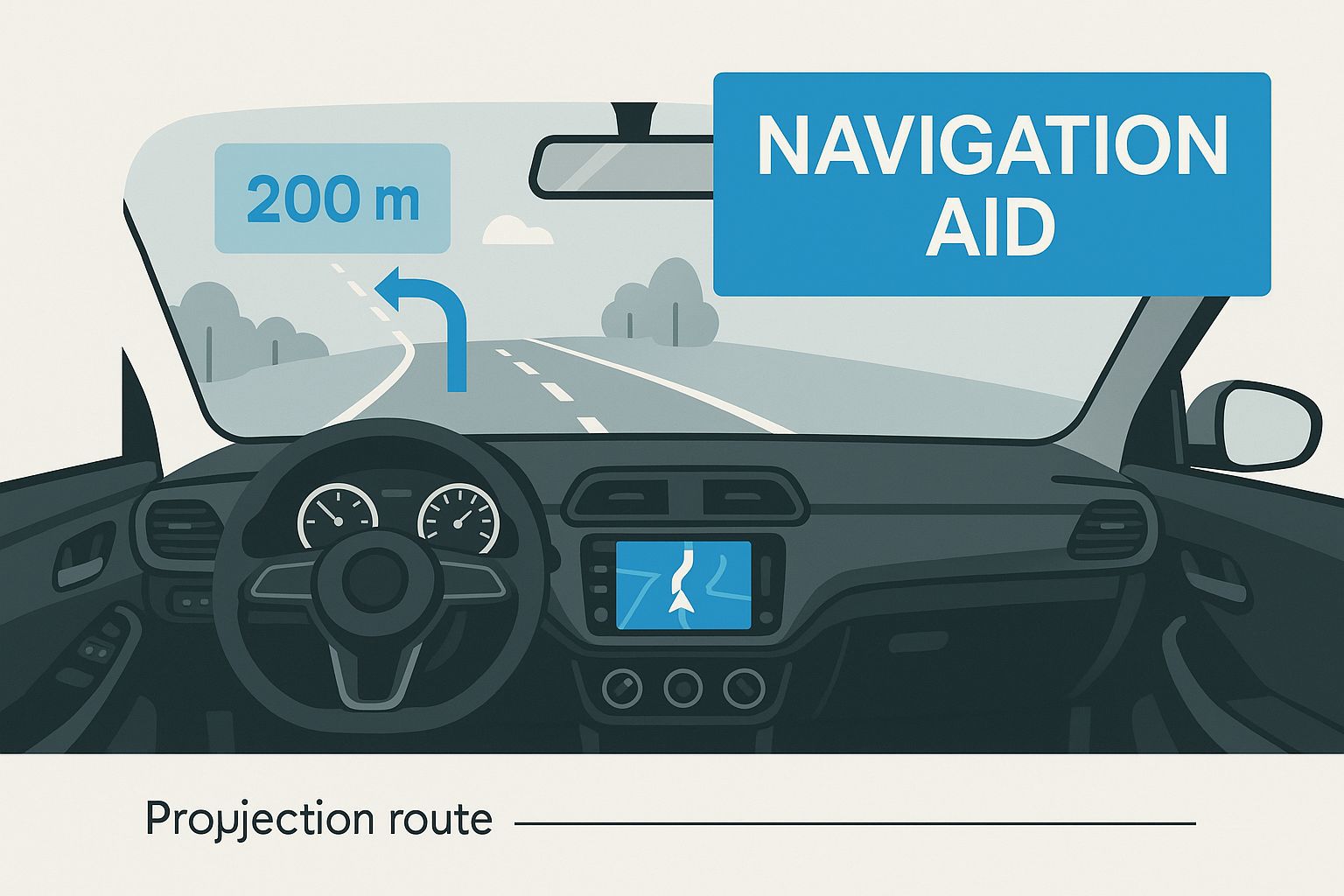
4. When will AR HUDs be available in more affordable cars?
The technology is rapidly maturing. While currently a premium feature, significant R&D investment and economies of scale are expected to bring costs down. Industry forecasts suggest we will see AR HUDs trickling into mid-range vehicles within the next 5-7 years as the market expands dramatically.
5. Do AR HUDs require a special windshield?
Most advanced AR HUD systems do require a specially shaped or coated windshield (often called a “wedge” windshield) to properly reflect the projected image to the driver’s eyes without double vision or distortion. This is one of the factors contributing to their current cost.