

The Autonomous Robotaxi Rollout: Scaling Self-Driving Services in Urban Environments
Estimated reading time: 12 minutes
Key Takeaways
- The era of experimental pilots is over. Companies like Waymo and Tesla are now operating paid, commercial autonomous robotaxi services in major U.S. cities.
- Scaling these services is the critical next phase, requiring synchronized advances in AI technology, supportive infrastructure, and regulatory frameworks.
- The core technological foundation is built on sophisticated urban transport AI for perception and decision-making, and interconnected AI vehicle networks for communication.
- True success depends on seamless robotaxi integration into the existing urban fabric, including public transit systems, curb management, and public trust.
- Significant scaling challenges remain, from fragmented regulations and safety certifications to the high costs of fleet deployment and infrastructure adaptation.
Table of contents
- The Autonomous Robotaxi Rollout: Scaling Self-Driving Services in Urban Environments
- Key Takeaways
- From Pilot to Passenger: The Current Robotaxi Landscape
- The Technological Foundation: AI and Vehicle Networks
- Robotaxi Integration into the Urban Fabric
- Scaling Challenges: Regulatory, Technological & Economic Hurdles
- Frequently Asked Questions
The age of speculation is giving way to the age of deployment. What was once a futuristic concept confined to test tracks and controlled pilots is now a tangible reality on city streets. The autonomous robotaxi rollout is in full swing, with companies like Waymo and Tesla now operating paid services in major U.S. cities such as Phoenix, San Francisco, Los Angeles, and Austin. This shift from experiment to commercial service marks a pivotal moment, but the true transformation lies ahead in the scaling phase.
Mass adoption is not merely about having more cars on the road. It represents a complex, interconnected challenge that requires simultaneous leaps in artificial intelligence, supportive urban infrastructure, and forward-thinking regulatory frameworks. As noted by analysts, this evolution is poised to fundamentally reshape urban transport and the cities themselves. This blog explores how the autonomous robotaxi rollout is fundamentally transforming urban transport through the intricate dance of technology, infrastructure, and policy evolution.
From Pilot to Passenger: The Current Robotaxi Landscape
Today’s autonomous robotaxi rollout landscape across North America is a patchwork of commercial deployments, expanding services, and strategic pilot programs. Understanding where the major players stand provides a clear map of the trajectory for cities self driving initiatives.
Waymo: The Established Frontrunner
Waymo has solidified its position as a leader, operating fully driverless, paid robotaxi fleets. Their service is live and expanding:
- Phoenix, San Francisco, and Los Angeles: These cities host Waymo’s core commercial operations, where anyone in the service area can hail a ride.
- Freeway Expansion: In a significant step towards greater utility, Waymo began offering freeway-capable services starting in November 2025, allowing for longer, faster trips that better mimic human driving patterns.

Tesla: The Aggressive Contender
Tesla has transitioned from its “Full Self-Driving” beta to launching its own fully driverless robotaxi network, beginning in Austin by late 2025 and quickly expanding to the San Francisco Bay Area. Their strategy is notably ambitious, with a five-city expansion plan targeting Las Vegas, Phoenix, Dallas, Houston, and Miami through 2026. This phased approach, navigating local regulations, is designed to validate and scale their technology systematically.

Pilots vs. Commercial Fleets: The Data-Gathering Phase
Not all operations are full-scale commercial launches. Geofenced deployments, like the Vegas Loop, serve as critical living laboratories. These controlled environments allow companies to gather invaluable data on robotaxi integration with city infrastructure and public behavior in a manageable setting. As industry reports clarify, these pilots are essential for validating technology and operational models before committing to a mass rollout.
The Technological Foundation: AI and Vehicle Networks
Scaling robotaxis beyond geofenced zones requires an intelligent backbone far more sophisticated than individual vehicle automation. This foundation is built on two pillars: advanced urban transport AI and seamless AI vehicle networks.
Urban Transport AI: The Brain of the Operation
Urban transport AI isn’t a single algorithm; it’s a symphony of three critical functions working in real-time:
- Perception: Using a fusion of LiDAR, radar, and cameras, the vehicle builds a 360-degree, high-fidelity model of its environment. This sensor fusion is crucial for distinguishing between a plastic bag and a small animal in challenging weather.
- Prediction: Deep-learning models analyze the perceived environment to anticipate the actions of pedestrians, cyclists, and other drivers. This is the AI’s “social awareness,” predicting if a person might step off the curb or a car might change lanes abruptly.
- Decision-Making: This is where the AI synthesizes perception and prediction to make safe, efficient, and lawful navigation choices in complex, unpredictable urban scenarios.

AI Vehicle Networks: The Central Nervous System
If the AI is the brain, then AI vehicle networks are the central nervous system. These interconnected systems use 5G-enabled Vehicle-to-Everything (V2X) communication to create a cohesive mobility mesh.
- Vehicle-to-Vehicle (V2V): Robotaxis share real-time data about traffic conditions, detected hazards, and optimal routing, creating a collective intelligence that far surpasses any single vehicle’s perception.
- Vehicle-to-Infrastructure (V2I): Vehicles communicate directly with smart traffic lights, road sensors, and city management systems. This allows for dynamic traffic flow optimization, such as a traffic light staying green for a platoon of robotaxis to reduce congestion.
The Power of Fleet Learning
Perhaps the most powerful scaling mechanism is fleet learning. Every encounter—a tricky intersection, an unusual pedestrian gesture, a complex construction zone—experienced by one vehicle is anonymized, analyzed, and used to improve the driving software for the entire fleet. Tesla’s approach with its Full Self-Driving stack exemplifies this, where data from millions of miles driven by customers continuously refines the AI. Waymo’s operations benefit similarly. This creates a network effect: the more vehicles deployed, the smarter each one becomes, leading to exponential improvements in safety and reliability.

Robotaxi Integration into the Urban Fabric
Technology alone cannot guarantee success. The true test of the autonomous robotaxi rollout is robotaxi integration—how seamlessly these vehicles embed into the physical and social systems of a city.
Multimodal Journey Integration
The goal is not to replace public transit but to complement it. Robotaxis are ideally suited for the “first and last mile,” providing convenient connections from a home to a subway station or from a bus stop to an office. This integrated approach can reduce private car ownership and overall congestion, making urban transport more efficient and accessible for all.
Urban Infrastructure Adaptations
Cities must evolve to accommodate this new mode of transport. This requires proactive planning:
- Curb Management 2.0: The curb is prime urban real estate. Cities will need to redesign curb spaces with dedicated, clearly marked zones for robotaxi pick-up and drop-off, distinct from parking, loading, and bike lanes.
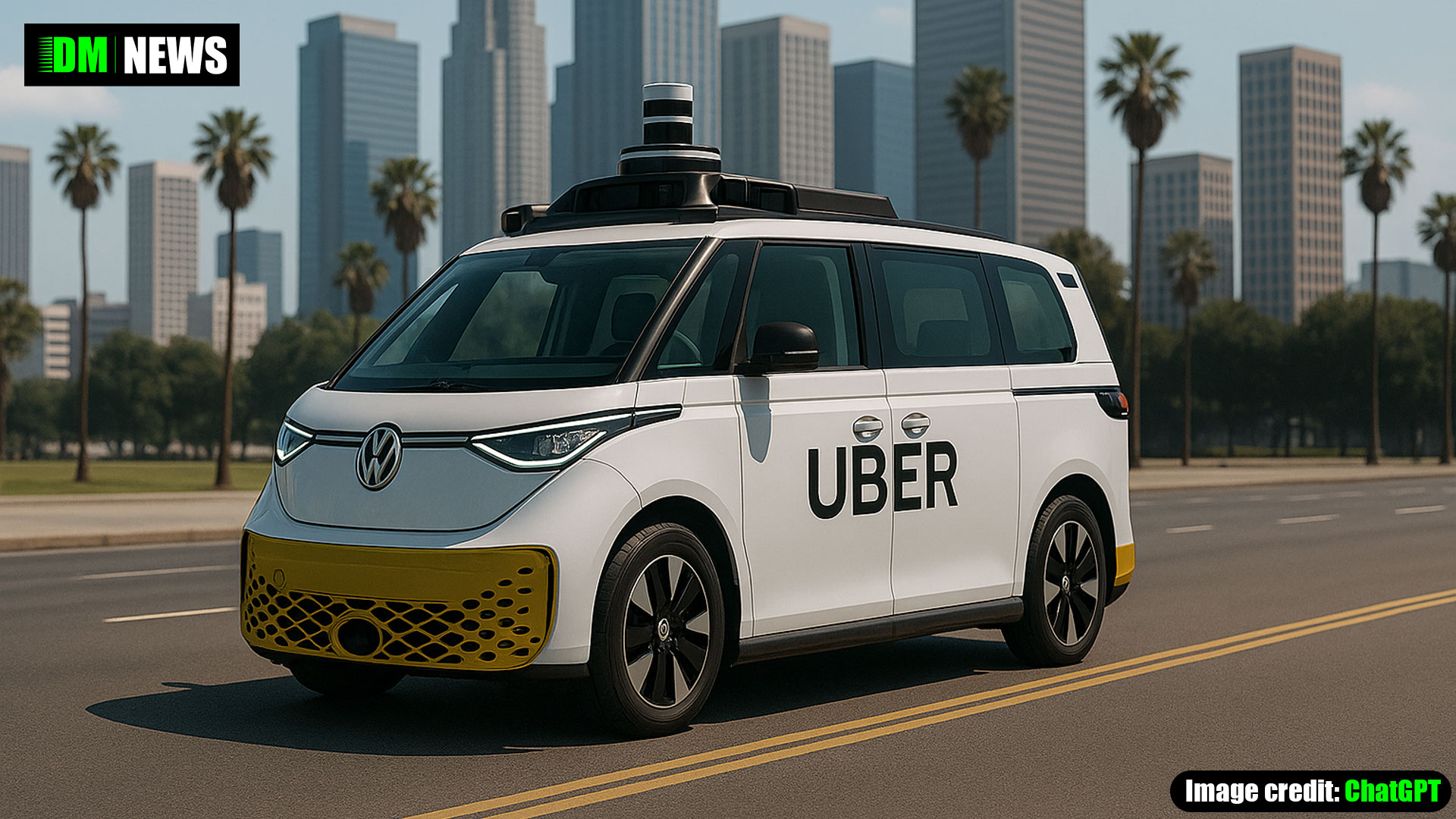
- Strategic Charging Hubs: As most robotaxis are electric, scaling fleets demands a parallel scaling of charging infrastructure. High-capacity, strategically located depots are essential for fleet operations. The scale of this need is highlighted by partnerships like Lucid’s deal to supply 20,000 Gravity SUVs to Uber by 2032.
- Dedicated Lanes & Traffic Flow: Some cities are considering dedicated lanes for autonomous vehicles to improve safety and traffic flow, especially during the transition period of mixed human/AI traffic.

Public Acceptance & Behavioral Shifts
Integration is also a social challenge. Public trust is built through demonstrable safety, transparent communication about operations and limitations, and consistent positive interactions. Furthermore, the behavior of everyone else on the road will adapt. Pedestrians may become accustomed to robotaxis’ predictable behavior, while human drivers will need to learn to interact with them. This human-factor element is a critical component of scaling, as public acceptance directly influences the pace and nature of urban design changes.
Scaling Challenges: Regulatory, Technological & Economic Hurdles
While the path forward is illuminated by current deployments, scaling robotaxi services to a national or global level presents a formidable array of interconnected hurdles.
Regulatory & Certification Labyrinth
There is no national regulatory framework for autonomous vehicles in the U.S. Instead, companies must navigate a complex patchwork of state and municipal regulations. Each jurisdiction has its own safety certification requirements, insurance mandates, and data reporting rules. A vehicle certified for the wide lanes and dry weather of Phoenix may face a different set of requirements for the dense, rainy streets of Seattle. This fragmentation slows expansion and increases operational complexity.
Technological Hurdles: Edge Cases and Generalization
Despite advances, AI still struggles with “edge cases”—rare, unpredictable events like a ball rolling into the street followed by a child, or navigating through temporary construction zones with erratic signage. Scaling means encountering a near-infinite number of these edge cases across diverse geographies and weather conditions. Generalizing AI performance from one city’s data patterns to another’s remains a significant technical challenge.

The Economic Equation: Cost and Viability
The economics of scaling are daunting:
- Vehicle & Sensor Cost: While decreasing, the sensor suites (especially LiDAR) and computing hardware for a Level 4/5 autonomous vehicle are still expensive, impacting fleet acquisition costs.
- Infrastructure Investment: The needed upgrades to city infrastructure—smart curbs, V2I communication