
Here is the enhanced blog post with carefully selected images inserted at the most relevant points. The images are evenly distributed to improve readability, visual appeal, and thematic alignment.
Google Search AI Mode: The Complete Guide to the New Interactive Search Experience

Estimated reading time: 8 minutes
Key Takeaways
- Google Search AI Mode replaces static links with a dynamic, conversational search interface.
- The feature is powered by a custom-tuned Gemini 2.0 model for multi-step reasoning.
- AI Mode performs a “Query Fan-Out,” breaking complex questions into sub-queries for comprehensive answers.
- A unique citation system uses a “hamburger menu” icon next to each sentence to show source websites.
- This represents a fundamental shift from information retrieval to information synthesis.
Table of Contents
- Google Search AI Mode: The Complete Guide to the New Interactive Search Experience
- Key Takeaways
- Introduction
- What Is Google Search AI Mode?
- The Tech Behind It – Gemini Search Integration
- How AI Search Results Differ from Traditional Results
- Interactive Search AI – The Conversational Layer
- Practical Examples – Real-World Use Cases
- Important Limitations – No Blind Trust
- Availability, Timeline, and the Future
- Frequently Asked Questions
Introduction
Google is changing how you find answers with its new google search ai mode, a feature that turns search into an actual conversation. This is not just a visual refresh but a fundamental search experience update that shifts the paradigm from static links to a dynamic, conversational interface. The days of typing a query and scrolling through a list of blue links are giving way to an era where the search engine understands context, remembers your follow-up questions, and synthesizes information from multiple sources into a single, coherent answer. This transformation is powered by advanced AI models that can reason over complex queries, making the search process more intuitive and efficient for users.
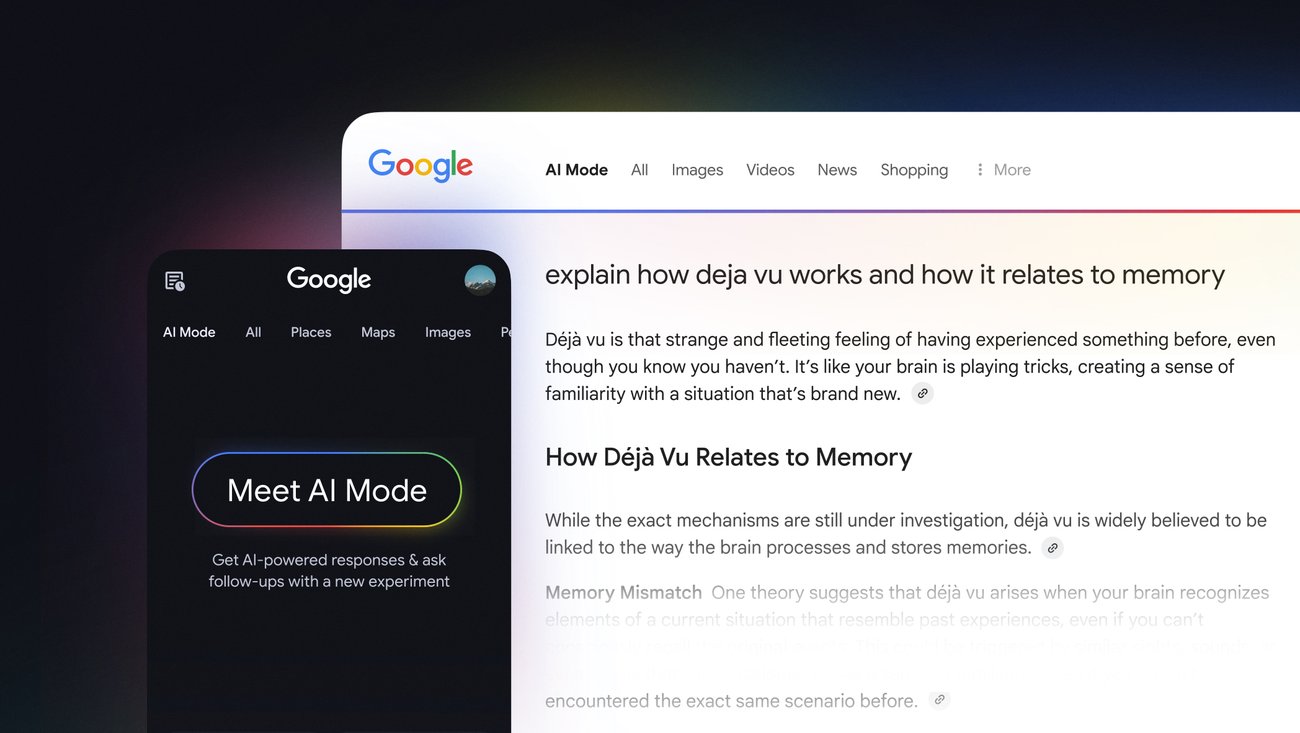
As Google continues to integrate AI deeper into its core products, the google search ai mode stands out as a significant leap forward. It is designed to handle the kind of multi-part questions that users frequently ask but that traditional search engines struggle to answer cohesively. Instead of forcing users to break down their queries into multiple separate searches, this new mode allows for a seamless flow of information, where each subsequent query builds on the previous one. This interactive search ai capability is set to redefine how we interact with the web.
What Is Google Search AI Mode?
Google Search AI Mode is an opt-in, conversational interface within Google Search, currently available via Search Labs on the Google App and Chrome desktop. Unlike traditional results, it does not return a list of blue links. Instead, it generates dynamic, synthesized answers based on your exact question. This marks a departure from the conventional ai search results format, offering a more tailored and responsive experience.
The key differentiator of this mode is its ability to handle multi-step reasoning. For example, instead of searching “best running shoes” and then separately searching “best running routes in Paris,” you can ask one complex query: “Get me a list of running sneakers for flat feet and recommend a 5K route near the Eiffel Tower.” The AI understands the relationship between these requests and delivers a unified response. This capability was highlighted during the Google I/O 2024 Keynote by Sundar Pichai and Liz Reid, where they demonstrated how the google search ai mode can reason over multiple intents within a single query. This represents a true interactive search ai experience, moving beyond simple keyword matching to actual comprehension.
The Tech Behind It – Gemini Search Integration
The new AI Mode is powered by a custom-tuned version of Gemini 2.0 (Pro/Ultra). This is the gemini search integration that makes the feature work. When you enter a complex query, the AI does not search the web once. It performs a “Query Fan-Out” – it breaks your question into multiple sub-queries and searches for each one simultaneously. For instance, a product comparison query might be broken down into: “Price of Product A,” “Price of Product B,” “Warranty of Product A,” and “Warranty of Product B.”

Following the Query Fan-Out, the synthesis step occurs. Gemini takes all the raw search results for each sub-query, reasons over them, and synthesizes a single, coherent answer with citations. This process ensures that the google search ai mode provides comprehensive and accurate ai search results. According to the Google Blog (May 2024), this is how Gemini is powering the new Google Search experience. The gemini search integration allows for a level of depth and precision that was previously unattainable, making the search experience more like having a conversation with a knowledgeable expert.
How AI Search Results Differ from Traditional Results
Traditional search provides a static snippet, such as “The moon is 384,400 km from Earth,” cited from a single page with no follow-up capability. In contrast, ai search results from AI Mode are dynamic and contextual, built specifically for your multi-part request. It can compare, contrast, and plan across various data points.
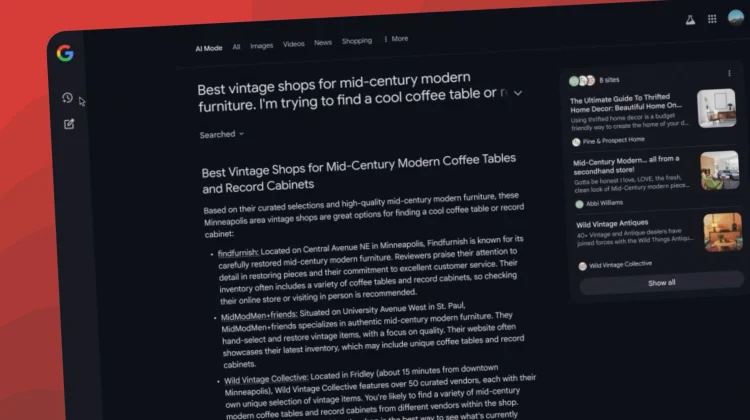
A major improvement is the citation system. AI Mode places a “hamburger menu” icon (three lines) next to every sentence. Clicking it reveals a card showing which websites provided that specific data point, enhancing transparency and trust. However, there is a speed trade-off. AI Mode takes 3-5 seconds for complex queries, which is slower than standard search – a UX tradeoff that users must consider. This search experience update prioritizes depth and accuracy over speed, a shift that is critical for complex research tasks. Hands-on reviews from The Verge and CNET (May 2024) confirm these new capabilities, noting that the quality of ai search results often justifies the additional wait time for users seeking detailed information.
Interactive Search AI – The Conversational Layer
This is the core of the interactive search ai feature. The AI remembers the context of your entire conversation, allowing for natural follow-up queries. For example, after asking about a product category, a user can ask, “What about options under $1000?” and the AI understands you are still talking about the same product category from the previous query. Similarly, a refinement like “Show me only the ones that are available in blue” will cause the AI to refine the existing answer without needing to restate the original query.
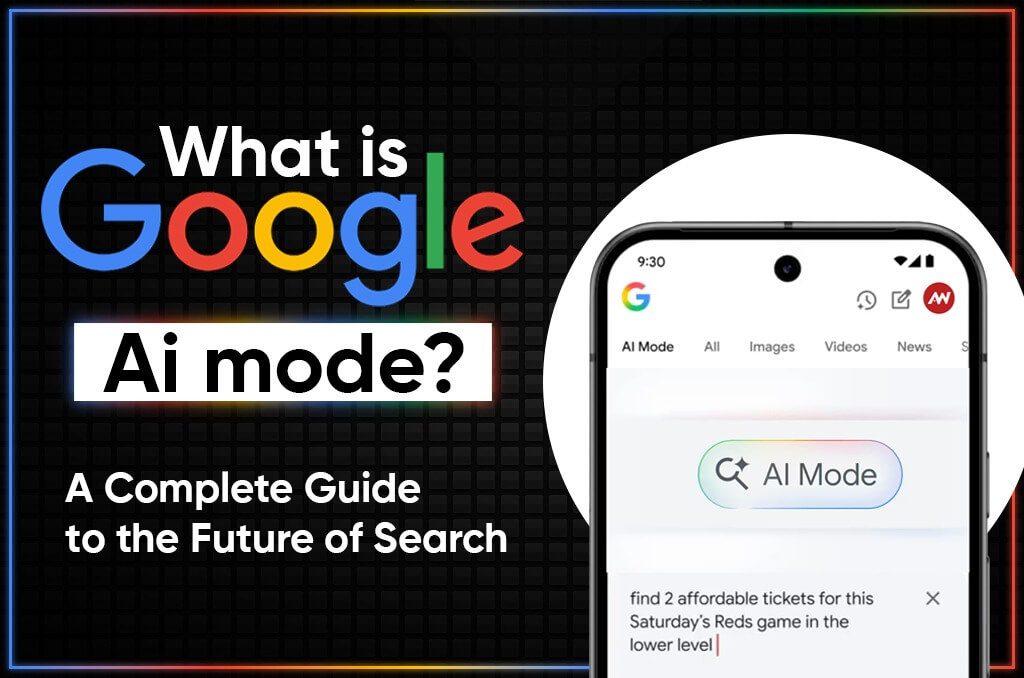
A key UI element is the “Ask a follow-up” button that appears at the bottom of every AI Mode response. This button invites users to continue the conversation, making the google search ai mode a truly interactive tool. This capability is highlighted in the hands-on reviews from TechCrunch (May 2024), which describes how this interactive search ai feature transforms search from a one-off transaction into an ongoing dialogue. The ability to build on previous searches without starting over is a significant advancement in ai search results, as it mirrors the way humans naturally explore topics in depth.
Practical Examples – Real-World Use Cases
The true value of this search experience update becomes clear with real-world applications. Consider trip planning: a user could query, “Plan a 3-day itinerary for Tokyo for a foodie couple, focusing on street food and budget-friendly sushi.” The AI Mode outputs a multi-day plan with neighborhood recommendations, map links, and walking routes, synthesizing information from various travel blogs and guides.
For complex product research, a query like “Compare the MacBook Pro M3 and Dell XPS 15 for video editing. Show me a table of RAM configurations and screen specs” results in the AI generating a table and then a paragraph analyzing trade-offs. This interactive search ai capability saves significant time compared to visiting multiple review sites. Another powerful use case is deep research: a query such as “Explain differences between Keynesian and Monetarist economics with a modern example of each” yields a structured breakdown with historical context and cited sources. These examples, drawn from the The Verge hands-on review, demonstrate how ai search results can handle complex, multi-faceted questions that would traditionally require extensive manual research. This is what the search experience update looks like in practice: a more intelligent, more responsive, and significantly more helpful search tool.
Important Limitations – No Blind Trust
Despite the impressive capabilities, it is crucial to approach this technology with a critical eye. Even with advanced gemini search integration, AI models can still hallucinate or confuse facts. Users must critically evaluate AI-generated answers and not rely on them blindly. The Search Engine Land (SEO/Analyst perspective) discusses the “zero-click” debate and accuracy concerns, noting that even with the sophisticated google search ai mode, flaws exist. The quality of the output depends on the quality and diversity of the underlying data sources, and the model may occasionally misinterpret ambiguous queries or produce biased results. This is a crucial consideration for anyone relying on this tool for important decisions.

Furthermore, because the AI synthesizes information from multiple sources, it can sometimes present a blended view that may not perfectly represent any single expert opinion. While the citation system helps users verify claims, the responsibility for fact-checking ultimately lies with the user. This limitation is inherent to all AI-generated content and underscores the importance of using google search ai mode as a starting point for research rather than as the final authority. Understanding these limitations is essential for making the most of this powerful new tool.
Availability, Timeline, and the Future
As of May and June 2024, AI Overviews are rolling out to all US users on an opt-out basis, while the conversational AI Mode remains in Search Labs, requiring users to opt-in via the Google App (Android/iOS) or Chrome desktop. This search experience update is being carefully phased to gather user feedback and refine the system. Looking ahead, a broader global rollout is expected in Q3 and Q4 of 2024, as Google optimizes compute costs, since running Gemini 2.0 is expensive per query. This timeline was announced during the Google I/O 2024 Keynote by Sundar Pichai.

The future of google search ai mode and ai search results is promising. As the technology matures and becomes more cost-effective, we can expect wider adoption and even more sophisticated features. The interactive search ai model is likely to become a standard way of interacting with search engines, fundamentally changing how we access and process information online. This shift represents a new era in digital information retrieval, where the search engine acts as an intelligent assistant rather than a simple directory. For a deeper understanding of this transformation, see our guide on how AI is changing the world.
Frequently Asked Questions
- What is Google Search AI Mode and how is it different from regular Google Search?
Google Search AI Mode is an opt-in, conversational interface within Google Search that returns dynamic, synthesized answers instead of a list of blue links. Unlike regular search, it handles multi-step reasoning, remembers context across queries, and uses a Query Fan-Out system to break complex questions into sub-queries for comprehensive results.
- How do I access Google Search AI Mode?
Currently, Google Search AI Mode is available via Search Labs on the Google App (Android/iOS) and Chrome desktop. Users must opt-in to the Search Labs program to enable this feature. It is expected to roll out to a broader global audience in Q3 and Q4 of 2024.
- What technology powers Google Search AI Mode?
It is powered by a custom-tuned version of Gemini 2.0 (Pro/Ultra). This gemini search integration enables the “Query Fan-Out” technique, where a single complex query is broken into multiple sub-queries that are searched simultaneously, and the results are then synthesized into a single coherent answer with citations.
- How does the citation system work in Google Search AI Mode?
A “hamburger menu” icon (three lines) appears next to every sentence in the AI-generated answer. Clicking this icon reveals a card that shows which specific websites provided the data for that sentence, allowing users to verify the information and explore the original sources.
- Is Google Search AI Mode always accurate?
No, it is not always accurate. Despite the advanced gemini search integration, AI models can still hallucinate or confuse facts. Users should critically evaluate AI-generated answers and not rely on them blindly. Cross-referencing information with original sources is recommended for important decisions.
- What kind of queries work best with Google Search AI Mode?
It excels with complex, multi-part queries that require synthesis from multiple sources. Examples include trip planning (“Plan a 3-day itinerary for Tokyo for a foodie couple”), product comparisons (“Compare the MacBook Pro M3 and Dell XPS 15 for video editing”), and deep research questions (“Explain differences between Keynesian and Monetarist economics with modern examples”).
- Is Google Search AI Mode slower than regular Google Search?
Yes, AI Mode is slower than standard search. It typically takes 3-5 seconds for complex queries because of the Query Fan-Out process and the synthesis step. This is a deliberate UX tradeoff for more comprehensive and contextual answers.
- Can I use Google Search AI Mode for follow-up questions?
Yes, this is one of its core features. The AI remembers the context of your entire conversation, allowing you to ask follow-up questions like “What about options under $1000?” or “Show me only the ones available in blue” without restating your original query. An “Ask a follow-up” button appears at the bottom of every response.
- When will Google Search AI Mode be available globally?
A broader global rollout is expected in Q3 and Q4 of 2024, pending optimization of compute costs. As of May and June 2024, it is available in the US via Search Labs and is gradually expanding to other regions.
- How does this search experience update affect publishers and website traffic?
The search experience update has sparked debate about the “zero-click” phenomenon, where users get answers directly in search results without visiting external websites. While the citation system provides links to sources, there are concerns about reduced traffic to publisher sites. Google is expected to continue refining the balance between user convenience and publisher visibility.