
Google AI Privacy: How Android and Apple Handle Your Data in the Age of Mobile AI
Estimated reading time: 10 minutes
Key Takeaways
- Google AI privacy is a central concern as AI becomes core to mobile OS, with trade-offs between data collection and features.
- Google uses a dual approach: on-device AI via Gemini Nano and cloud AI through Private AI Compute for enhanced privacy.
- Apple’s Apple Intelligence explained emphasizes on-device processing and Private Cloud Compute, aligning with its privacy-first model.
- Key ai productivity tools iphone include system-wide writing aids, notification prioritization, and Siri enhancements.
- The android ai update 2026 will bring deeper OS integration, stronger on-device models, and evolving privacy features.
- A practical mobile ai assistant comparison reveals choices based on privacy vs. personalization, ecosystem lock-in, and future roadmaps.
Table of contents
- Google AI Privacy: How Android and Apple Handle Your Data in the Age of Mobile AI
- Key Takeaways
- The AI Shift: From App Features to Core OS Layer
- Google’s AI Ambitions and the Privacy Conversation
- 1.1 Scope of Google’s AI Integration Across Android and Google Services
- 1.2 Google’s Dual Approach: On-Device AI vs. Private AI Compute
- 1.3 Trade-offs: What Users Gain vs. What They Give Up with Google’s AI
- Apple’s Approach: Apple Intelligence Explained and Its Privacy Model
- 2.1 Apple Intelligence: What It Is and How It Fits into iOS
- 2.2 Privacy Model: On-Device AI and Private Cloud Compute
- 2.3 Key AI Productivity Tools for iPhone Users
- Looking Forward: Android’s Roadmap and the Android AI Update 2026
- 3.1 Deeper OS Integration by 2026
- 3.2 More Powerful On-Device Models and Hardware
- 3.3 AI-Based Security and Evolving Privacy Features
- Head-to-Head: Mobile AI Assistant Comparison
- 4.1 Structured Comparison of Google and Apple AI
- 4.2 Matching Ecosystems to User Priorities
- Making Sense of Mobile AI Privacy and Productivity
- Frequently Asked Questions
In the last year or two, AI has shifted from being a feature inside individual apps to becoming a core layer of modern mobile operating systems on both Android and iOS. Think system-wide smart replies, writing suggestions, automatic summaries, and assistants that can understand what’s on your screen—like summarizing an article, drafting a reply, or generating an image. Android already offers AI features such as smart replies, generative wallpapers, call screening, and summarization built into the OS and system apps, as highlighted in the best AI features on Android phones. But here’s the core tension: for all this to work, your phone and its cloud services need access to a lot of personal data—messages, photos, emails, browsing history, location, and app usage.
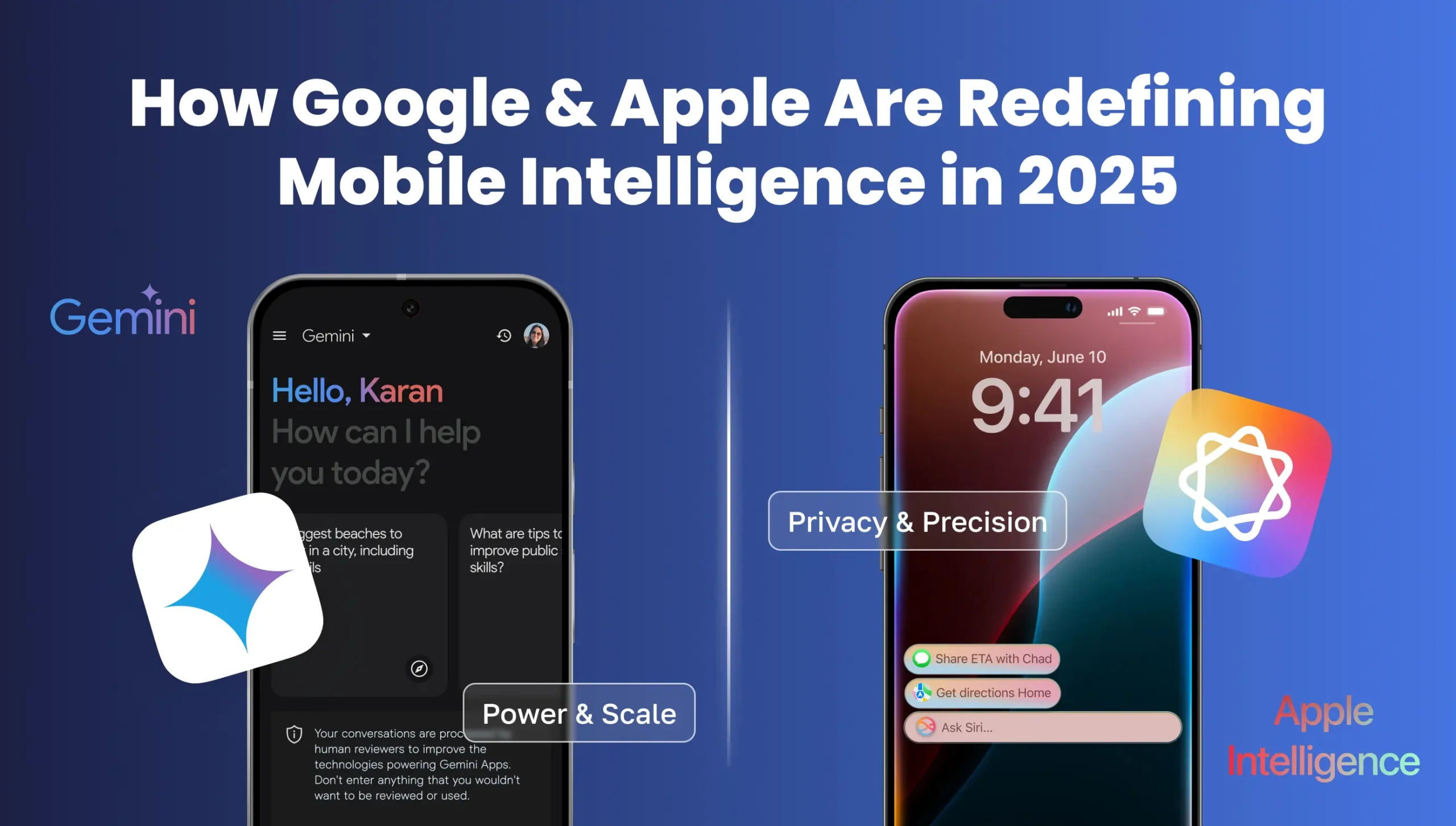
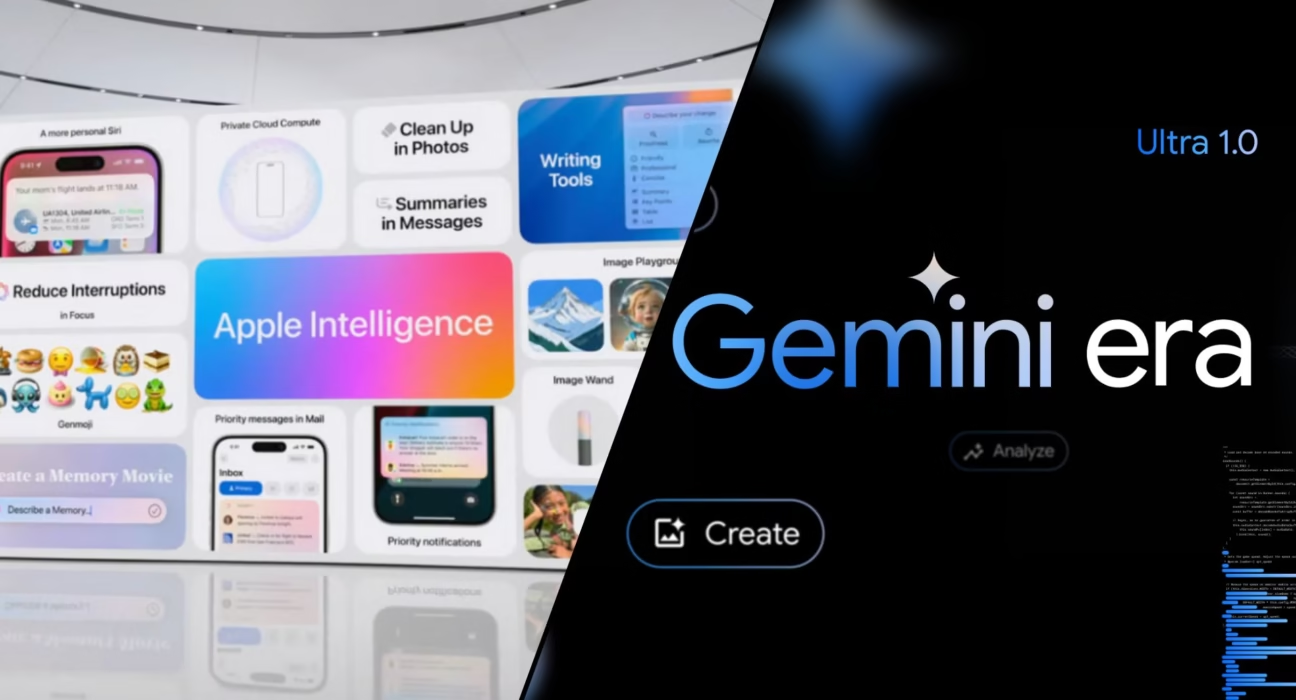
This brings google ai privacy to the forefront. How much data does Google’s AI see, where is it processed, and how much control do you really have? It’s becoming a deciding factor for people choosing between Android and iPhone. Meanwhile, many users search for apple intelligence explained because Apple pitches its new “Apple Intelligence” system as powerful but privacy-first. For a deeper dive, check out our comprehensive preview of Apple Intelligence in iOS 18. Later, we’ll unpack ai productivity tools iphone and how Apple claims to process much data on-device or via its own privacy-preserving cloud.
This article will explain how Google integrates AI into Android with a focus on google ai privacy, break down Apple’s approach in plain language, look ahead to the android ai update 2026 timeframe, and offer a practical mobile ai assistant comparison to help you decide which ecosystem fits your priorities. If you care about what your phone knows about you, read on.
Google’s AI Ambitions and the Privacy Conversation
Google’s AI strategy centers on its Gemini models—a family of large AI models that power chat-like assistants, summarization, image tools, and more across its ecosystem. Understanding google ai privacy is key as this integration deepens.
1.1 Scope of Google’s AI Integration Across Android and Google Services
Gemini is now embedded into Android in several ways:
- Android system features: Smart replies in messaging apps, notification summaries, automatic call screening, live translation, generative wallpapers, and context-aware recommendations on the home screen. AI also adapts battery usage and prioritizes background apps. These are among the best AI features on Android phones.
- Assistant to Gemini transition: Google is evolving Google Assistant into a Gemini-based assistant that handles multi-step tasks, keeps context across apps, and interacts with more services conversationally. Sources: Nokia Power User and SiliconANGLE.
- Core Google apps: Gemini-like capabilities appear in Gmail (smart drafting), Docs (rewriting), Photos (AI editing), Maps (predictive routing), and Chrome (page summarization).
- On-device models: Gemini Nano is Google’s small, on-device AI model for capable Android phones, powering offline tasks like text summarization, smart replies, and real-time call screening. This ties directly to google ai privacy by keeping data on the phone. Sources: Nokia Power User and SiliconANGLE.
1.2 Google’s Dual Approach: On-Device AI vs. Private AI Compute
At the heart of google ai privacy is Google’s dual processing model. On-device AI, like Gemini Nano, means content doesn’t leave your device, offering lower latency and stronger privacy. For cloud AI, Google uses Private AI Compute—a privacy-preserving method where data is sent to secure, hardware-isolated cloud environments on custom TPU chips and “Titanium Intelligence Enclaves.” As detailed in Google’s blog, these enclaves encrypt data in transit and at rest, isolating it from Google’s infrastructure so engineers can’t inspect raw user content.
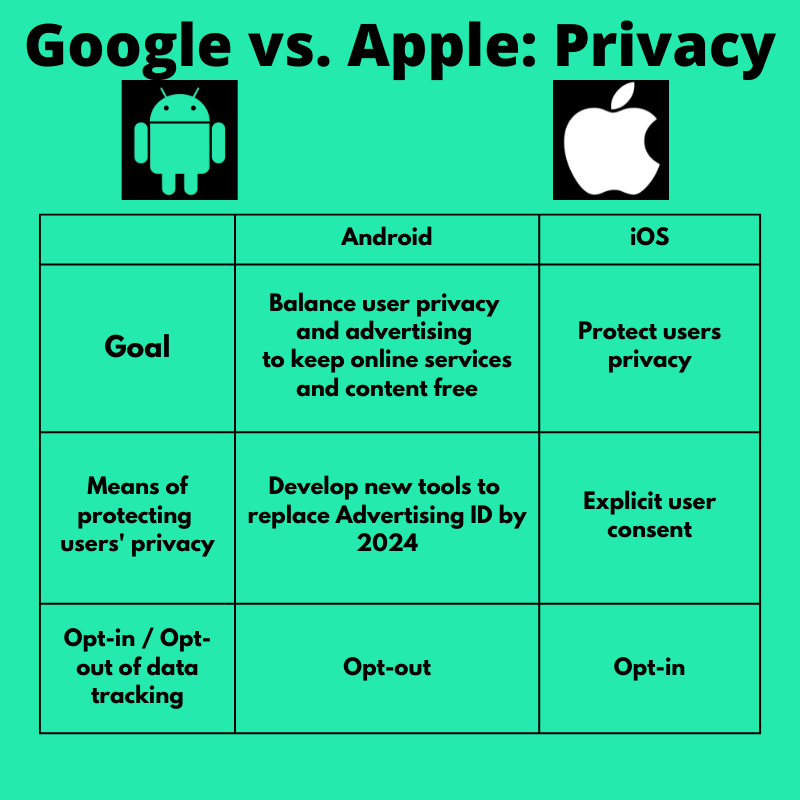
However, google ai privacy still depends on broader account-level data like search history, Web & App Activity, and location history. Even with Private AI Compute, Google’s ecosystem leverages this for personalization. Users can manage settings via a Google Account privacy checkup, pausing or deleting activity toggles.
1.3 Trade-offs: What Users Gain vs. What They Give Up with Google’s AI
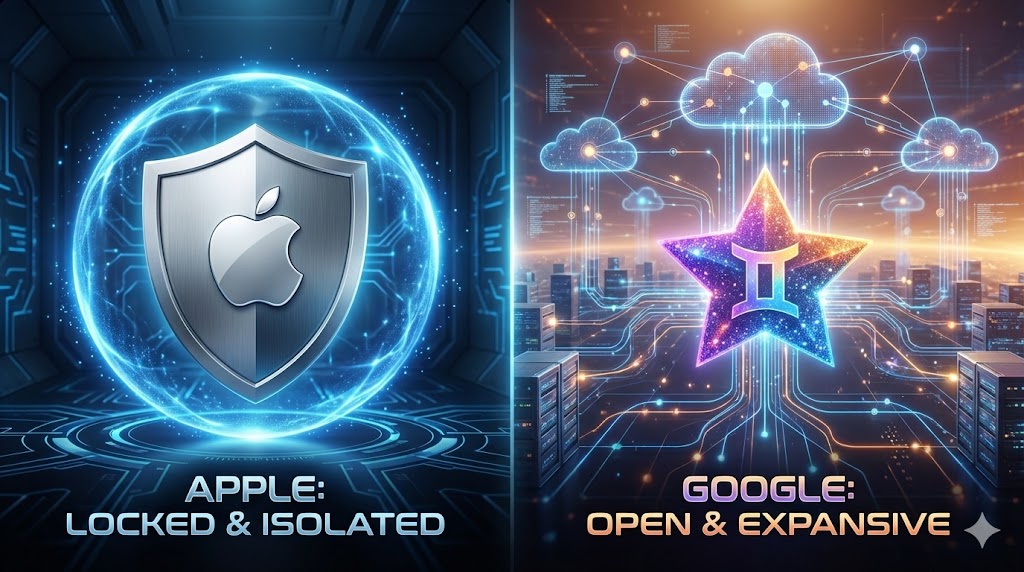
The trade-off in google ai privacy is clear. Users gain deep personalization—proactive suggestions from cross-service knowledge, rich automation between apps, and faster rollout of new AI features, as seen in Android AI features. But they risk broad data collection unless settings are adjusted, and must trust Google’s opaque Private AI Compute claims, per their blog.
Practical tips: Prefer on-device features, review activity controls regularly, and use per-app permissions to limit data sharing. This sets the stage for comparing with Apple’s approach in our mobile ai assistant comparison.
Apple’s Approach: Apple Intelligence Explained and Its Privacy Model
Here’s apple intelligence explained in plain language: it’s Apple’s integrated AI system across iOS, iPadOS, and macOS, powering writing tools, image generation, prioritization, and a more capable Siri.

2.1 Apple Intelligence: What It Is and How It Fits into iOS
Apple Intelligence includes writing tools for rewriting text and summarizing content system-wide, image tools for generative edits, prioritization for notifications, and Siri evolution with context-aware commands. For compatibility details, see iOS 18 supported devices.
2.2 Privacy Model: On-Device AI and Private Cloud Compute
Apple emphasizes data minimization, using the Neural Engine for on-device AI. For heavier tasks, Private Cloud Compute (PCC) routes data to Apple-controlled servers with hardware attestation and no long-term storage. Apple claims it doesn’t train models on user content, contrasting with google ai privacy models tied to ad-supported personalization.
2.3 Key AI Productivity Tools for iPhone Users
Focusing on ai productivity tools iphone, Apple Intelligence aids in drafting emails, summarizing articles, prioritizing notifications, creating events from messages, and offering image edits—many running on-device or via PCC for privacy. This feeds into the future android ai update 2026 discussion.
Looking Forward: Android’s Roadmap and the Android AI Update 2026
By the android ai update 2026 timeframe, AI will be more deeply woven into Android.

3.1 Deeper OS Integration by 2026
Expect smarter home screens, context-aware actions, and voice-first Gemini interactions, as reported by Nokia Power User and SiliconANGLE. Google extends Gemini rollout to 2026, per Android Gadget Hacks.
3.2 More Powerful On-Device Models and Hardware
Gemini Nano expansion and new chips will boost on-device AI, enhancing google ai privacy by keeping tasks local. Sources: SiliconANGLE and Nokia Power User.
3.3 AI-Based Security and Evolving Privacy Features
AI will improve security with phishing detection and app behavior analysis, per Nokia Power User. Privacy developments may include stronger on-device labeling and expanded Private AI Compute, as noted in Google’s blog, pushing google ai privacy as a strength.
Head-to-Head: Mobile AI Assistant Comparison
This mobile ai assistant comparison helps you choose based on privacy, features, and roadmap.
4.1 Structured Comparison of Google and Apple AI
Core assistant: Google’s Gemini/Assistant integrates with Gmail, Maps, etc.; Apple’s Siri uses Apple Intelligence for cross-device context.
Privacy philosophy: Google relies on data-driven personalization with Private AI Compute for google ai privacy (sources: Google blog, Android Police). Apple uses data minimization and Private Cloud Compute.
On-device AI: Google has Gemini Nano; Apple uses the Neural Engine.
Cloud AI: Google uses Private AI Compute; Apple uses Private Cloud Compute.
Current productivity: Google offers cross-service automation and call screening; Apple provides system-wide writing tools—key ai productivity tools iphone. For more, see best productivity apps for iOS and Android.
Ecosystem integration: Google has broad OEM compatibility; Apple offers tight vertical integration.
Roadmap to android ai update 2026: Google aims for pervasive Gemini integration; Apple focuses on incremental Apple Intelligence rollout. Sources: Nokia Power User, SiliconANGLE, Android Gadget Hacks, Android Central.
4.2 Matching Ecosystems to User Priorities
For privacy-first users, Apple’s approach may be better due to conservative defaults. Feature-maximizers might prefer Google/Android for personalization and experimental features. Tinkerers can customize Android for a balance, as noted in Android AI features. Consider trade-offs: privacy vs. personalization, ecosystem lock-in vs. flexibility.
Making Sense of Mobile AI Privacy and Productivity
Google ai privacy remains central, with Google balancing data collection via Private AI Compute. For insights on hardware, explore Google Pixel 9’s AI features. Sources: Google blog, Android Police.
In contrast, apple intelligence explained highlights on-device processing and Private Cloud Compute. This mobile ai assistant comparison shows no single winner—choose based on values. For privacy and integrated tools, iPhone with ai productivity tools iphone may suit; for automation and customization, Android with managed settings works.
As we approach android ai update 2026 and Apple expands features, privacy transparency will grow in importance. Review your device’s settings, decide consciously, and understand what your mobile AI must see to function.
Frequently Asked Questions
What is Google’s Private AI Compute and how does it affect privacy?
Private AI Compute is Google’s method for processing cloud AI tasks in secure, isolated environments to limit data access, as described in their blog. It aims to enhance google ai privacy but still operates within Google’s broader data ecosystem.
How does Apple Intelligence protect user privacy compared to Google?
Apple Intelligence prioritizes on-device processing and uses Private Cloud Compute with claims of no long-term data storage or training on user content, contrasting with Google’s ad-supported model. This is key to apple intelligence explained.
Which mobile AI assistant is better for privacy: Android or iPhone?
Based on our mobile ai assistant comparison, iPhone with Apple Intelligence may be better for strict privacy due to data minimization defaults, while Android offers more customization but requires active setting management for google ai privacy.
What are the key AI productivity tools on iPhone?
Key ai productivity tools iphone include system-wide writing aids for emails and summaries, notification prioritization, event creation from messages, and image editing tools, many running on-device.
What can we expect from Android AI in the 2026 update?
The android ai update 2026 will likely bring deeper OS integration, stronger on-device models via Gemini Nano expansion, and enhanced privacy features like AI-based security and more Private AI Compute use, per sources such as Nokia Power User.