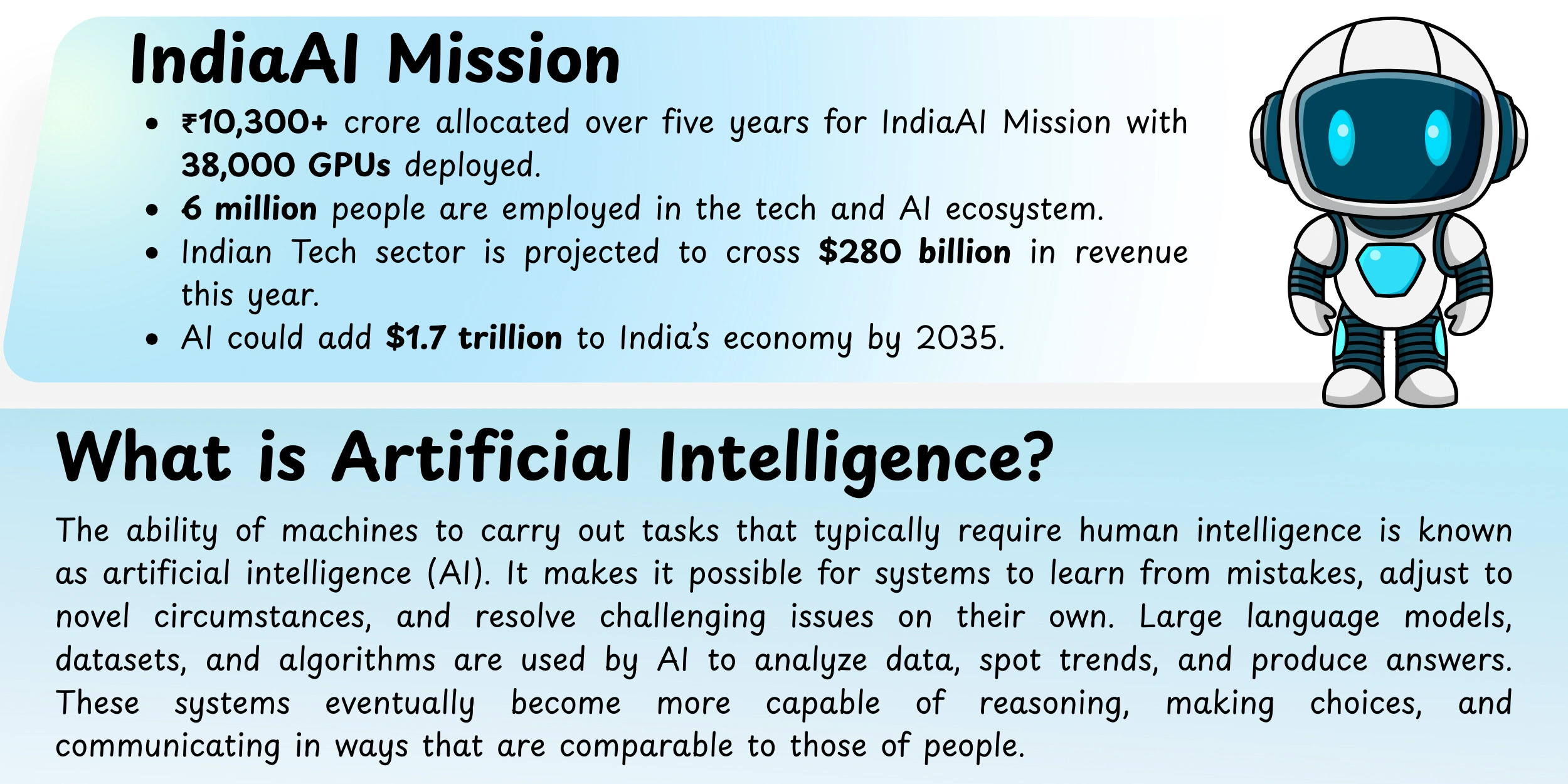

India-Europe AI Ecosystem: Forging a Third Pole in Global Technology
Estimated reading time: 8 minutes
Key Takeaways
- The global AI landscape is currently a bipolar race dominated by the US and China, creating strategic vulnerabilities and a pressing need for alternative, responsible approaches to technology development.
- The India-Europe AI ecosystem emerges as a strategic collaborative alliance focused on building independent, sovereign AI capabilities to counter this duopoly.
- This partnership is built on three core pillars: a sovereign AI stack, strategic chip collaboration, and deep software cooperation.
- The year 2026 marks a critical milestone, highlighted by events like the India AI Impact Summit, where concrete plans for joint tech sovereignty are being accelerated.
- India and Europe bring complementary strengths: India offers massive data scale, digital public infrastructure, and talent, while Europe contributes regulatory frameworks, deep-tech research, and governance models.
- The ultimate goal is tech independence—ensuring both regions control the full spectrum of AI infrastructure, from hardware and data to software and talent.
Table of contents
- India-Europe AI Ecosystem: Forging a Third Pole in Global Technology
- Key Takeaways
- Opening Hook: The AI Duopoly and a Strategic Response
- Why a Third Pole in AI Technology Matters
- Pillar 1 – Building a Sovereign AI Stack
- Pillar 2 – Chip Collaboration as the Hardware Bedrock
- Pillar 3 – Software Cooperation and Standards Alignment
- Frequently Asked Questions
The race for artificial intelligence supremacy has long been framed as a two-horse race between the United States and China. This global AI landscape, dominated by these superpowers, has created a significant gap—a vulnerability for nations seeking technological autonomy and ethical guardrails. Enter the India-Europe AI ecosystem: a bold, strategic response aimed at forging a third pole in global technology.
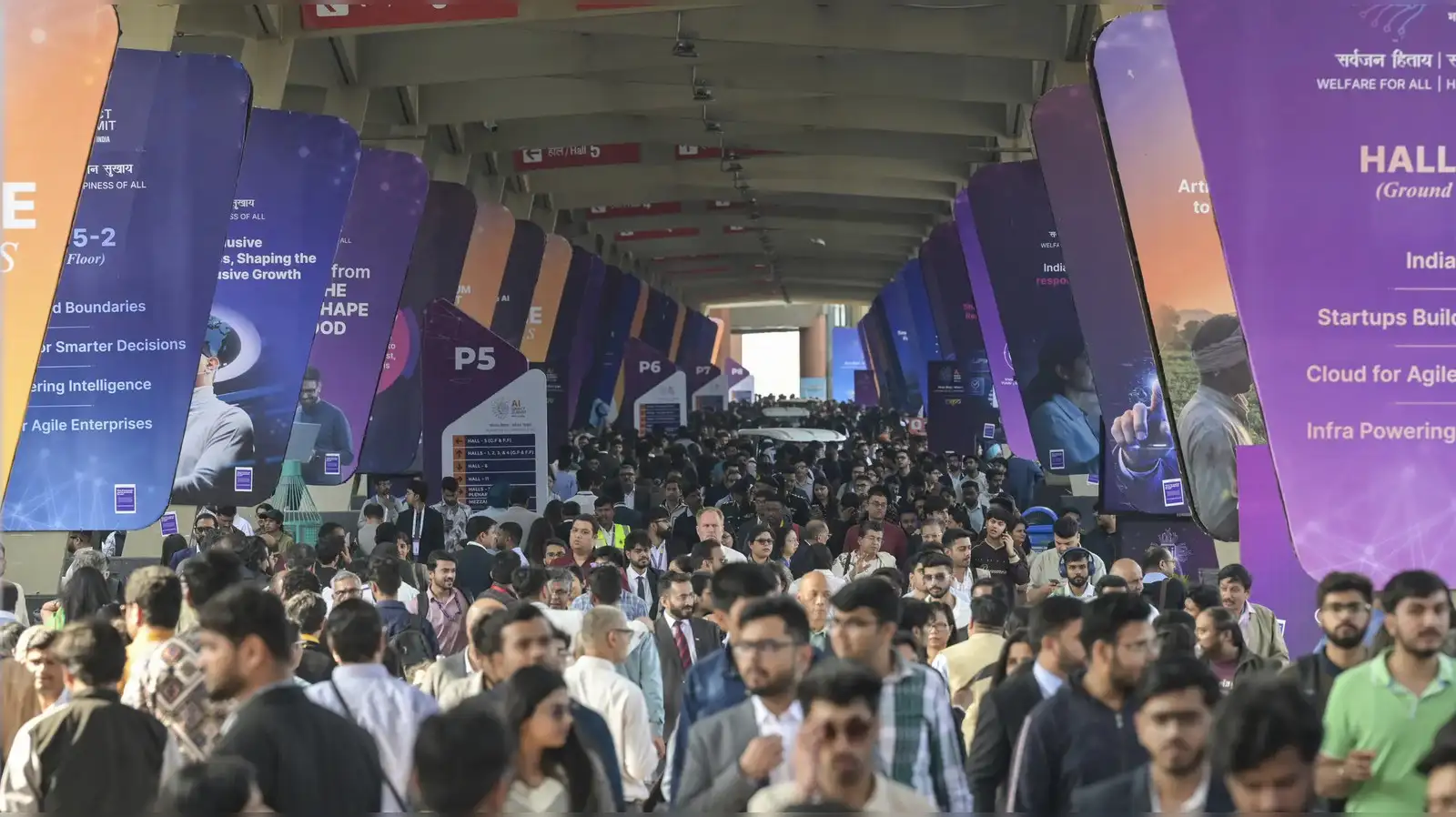
This alliance represents more than just cooperation; it is a dedicated mission to build independent, responsible AI capabilities through joint tech sovereignty. With 2026 emerging as a critical milestone year—marked by events like the India AI Impact Summit held in New Delhi—this partnership is rapidly moving from vision to action. This exploration delves into the three core pillars making this possible: a sovereign AI stack, groundbreaking chip collaboration, and deep software cooperation.

Opening Hook: The AI Duopoly and a Strategic Response
Imagine a world where your nation’s critical infrastructure, from healthcare diagnostics to financial systems, depends on AI models and hardware controlled by foreign entities. This is not science fiction but a present-day reality for many, underscoring the urgent need for tech independence. The current bipolar tech landscape is stark:
- The US dominates in venture capital, foundational innovation, and the scale of tech giants.
- China leads in aggressive data utilization, manufacturing efficiency, and state-led AI initiatives.
This duopoly creates systemic vulnerabilities, making other nations mere consumers in a tech ecosystem they cannot control or fully trust. The India-Europe AI ecosystem is the strategic answer—a collaborative framework designed to ensure both regions can develop, deploy, and govern their own AI systems. It’s about building a future where technology serves democratic values and local needs first.
Why a Third Pole in AI Technology Matters
Why do India and Europe, with their distinct economic and cultural profiles, see a shared destiny in AI? The answer lies in complementary strengths that together create a formidable alternative.
Tech independence is not about isolation; it’s about the ability to innovate freely without existential dependencies on external powers.
On one hand, India brings to the table an unparalleled asset: scale. Serving 1.3 billion people through the revolutionary India Stack (encompassing Aadhaar and UPI), India has demonstrated how digital public infrastructure can onboard a massive population with minimal friction. This generates AI training datasets of unprecedented diversity and volume. Coupled with a vast, cost-effective engineering talent pool, India offers the raw horsepower for AI development.
On the other hand, Europe contributes sophistication in governance and research. The EU AI Act provides a blueprint for trustworthy, human-centric AI, building public confidence through regulation. Europe’s academic and deep-tech research institutions, from the Max Planck Institute to CERN, are powerhouses of foundational innovation, as seen in areas like autonomous systems.
Together, they embody joint tech sovereignty—a shared commitment to maintain control over the critical layers of AI infrastructure: data, hardware, software, and talent. This isn’t about outsourcing but about co-creating a resilient, independent tech stack from the ground up.

Pillar 1 – Building a Sovereign AI Stack
The cornerstone of this alliance is the sovereign AI stack—a complete, vertically integrated suite of AI capabilities controlled domestically or within the partnership. Think of it as a four-layer cake where control over every layer is non-negotiable for economic and national security:
- Data Layer: Sovereignty here ensures citizen information is processed under local privacy laws and doesn’t leak to competitors.
- Hardware Layer: Control over chips and compute infrastructure mitigates supply chain vulnerabilities, as seen in recent global shortages.
- Software Layer: Ownership of algorithms and frameworks prevents backdoors and allows customization for local languages, cultures, and needs.
- Talent Layer: Cultivating indigenous expertise ensures a self-sustaining innovation ecosystem.
How does the India-Europe collaboration build this stack? India’s data advantage is monumental. The India Stack is a living lab for AI, providing real-world data at a scale that can train robust, unbiased models. Meanwhile, India’s talent pool offers millions of engineers ready to tackle complex AI challenges.
Europe complements this with its regulatory framework. The EU AI Act categorizes AI systems by risk, setting a global standard for safety and ethics. Furthermore, Europe’s research excellence provides the cutting-edge theories and models that feed into practical applications.
EU Executive Vice-President Henna Virkkunen’s vision of an “AI Continent” is coming to life through initiatives like talent mobility programs and the establishment of AI Factories—distributed compute centers that provide shared infrastructure. A shared sovereign stack means both regions can iterate on AI solutions for their unique contexts while ensuring seamless interoperability between them.

Pillar 2 – Chip Collaboration as the Hardware Bedrock
An AI stack is only as strong as the silicon it runs on. Thus, chip collaboration forms the second, critical pillar of this partnership. The current semiconductor landscape is a bottleneck: advanced design and manufacturing are concentrated in the US (via firms like Intel and Nvidia) and in Taiwan (TSMC), with China racing to catch up, creating strategic choke points as analyzed in reports on the AI hardware landscape.
The India-Europe response is multifaceted and ambitious:
- Joint R&D Programs: Co-designing chips optimized for specific AI workloads, such as inference chips for edge devices or training accelerators for large language models.
- Supply Chain Resilience: Developing alternative fabrication plants and a holistic design ecosystem across both regions to reduce dependency on single-source suppliers.
- Investment Mobilization: India has unveiled sweeping $400 billion AI plans that encompass everything from securing rare-earth minerals to building domestic chip fabs and compute infrastructure.
- Bilateral Momentum: Concrete partnerships are already underway, such as India-France collaboration on AI healthcare diagnostic centers and India-Finland joint ventures in quantum computing and 6G technology.
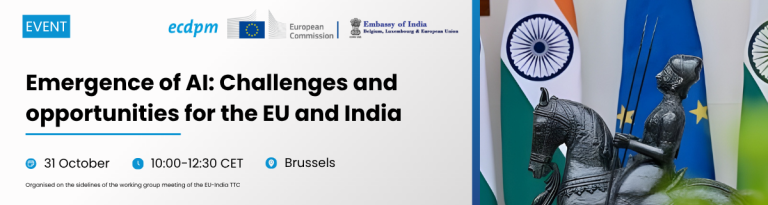
This pillar leverages European deep-tech intellectual property in semiconductor design with India’s manufacturing ambition and scale. Europe can use India as a “sandbox” to test and validate new hardware innovations in a massive, real-world environment before global scaling. Ultimately, controlling the physical infrastructure through chip collaboration is what makes the sovereign AI stack truly independent and resilient.

Pillar 3 – Software Cooperation and Standards Alignment
If hardware is the skeleton, software is the brain and nervous system of AI. The third pillar, software cooperation, is where AI’s value is realized and governed. This cooperation spans three key dimensions:
- Open-Source AI Frameworks: Joint development of foundational AI models and frameworks—sovereign alternatives to models like GPT or Llama—that both regions can adapt, audit, and control.
- Digital Public Infrastructure (DPI): Leveraging India’s proven models like UPI (Unified Payments Interface) and Aadhaar to build digital public goods for AI. These are shared platforms upon which startups and governments in both regions can build inclusive applications.
- Standards and Interoperability: Aligning technical standards for data formats, API specifications, and model architectures so that an AI solution built in Berlin works seamlessly in Bangalore, and vice versa.
Europe’s contribution here is heavily governance-oriented. The EU AI Act’s General-Purpose AI Code of Practice offers ethical guidelines, while the newly established EU AI Office promotes responsible innovation without stifling competitiveness.
India’s approach is innovation-centric. Concepts like AI Factories—public-sector hubs providing compute and data access—and the Frontier AI Grand Challenge aim to develop sovereign large language models tailored to Indian and European languages, contexts, and values.
A crucial enabler is the nearing implementation of the EU-India Free Trade Agreement (FTA). This agreement specifically includes clauses for AI collaboration, creating legal pathways for startups to scale across markets and reducing tariffs and regulatory friction for AI-related products and services. It turns software cooperation from a theoretical goal into a practical, market-driven reality.


Frequently Asked Questions
What exactly is the India-Europe AI ecosystem?
The India-Europe AI ecosystem is a strategic partnership focused on co-developing independent AI capabilities. It aims to create a “third pole” in global technology by combining India’s scale and digital infrastructure with Europe’s regulatory expertise and research prowess, ensuring both regions achieve tech sovereignty.
Why is 2026 considered a milestone year for this partnership?
2026 is pivotal due to events like the India AI Impact Summit held in New Delhi, where high-level commitments were solidified. It represents a shift from planning to execution, with concrete initiatives on sovereign AI stacks, chip collaboration, and software standards gaining tangible momentum, as highlighted in strategic partnership analyses.
What is a “sovereign AI stack” and why is it important?
A sovereign AI stack is a vertically integrated set of AI capabilities—encompassing data, hardware, software, and talent—that a nation or alliance controls independently. It’s crucial for economic security, privacy, and innovation, preventing over-reliance on foreign technology and allowing solutions to be tailored to local needs and regulations.
How realistic is chip collaboration given the current global semiconductor crisis?
While challenging, it is a strategic necessity. The partnership pools resources: Europe’s advanced chip design IP with India’s manufacturing ambitions and scale, as seen in its $400 billion AI plan. Joint R&D and building alternative supply chains aim to create long-term resilience, reducing vulnerability to the kind of disruptions analyzed in the AI hardware landscape.
What role does the EU AI Act play in this ecosystem?
The EU AI Act provides the regulatory backbone for the partnership. It establishes trustworthiness and ethical guidelines for AI development, which helps align joint projects with human-centric values. This regulatory sophistication gives the India-Europe ecosystem a competitive edge in building responsible and globally acceptable AI.
Can startups benefit from this India-Europe AI collaboration?
Absolutely. Initiatives like shared AI Factories, the Frontier AI Grand Challenge, and the impending EU-India FTA create a fertile ground for startups. They gain access to larger markets, shared compute resources, aligned standards for easier scaling, and a framework that reduces regulatory hurdles, fostering innovation across both regions.