
From Chores to Companions: The Quirky World of Next-Gen Home Robotics
Estimated reading time: 8 minutes
Key Takeaways
- Laundry folding home robots like LG’s CLOiD represent a leap in dexterous automation, using AI vision and humanoid arms to tackle specific, complex chores.
- Bionic pet robots offer realistic companionship through lifelike appearance and behavior, targeting seniors, allergy sufferers, and tech enthusiasts.
- Novelty AI pets prioritize customizable personalities and gamified interactions over photorealism, serving as unique entertainment and emotional companions.
- The unifying trend is interactive smart home robotics, where specialized robots integrate via IoT and AI to create a seamlessly automated home ecosystem.
- These innovations, while often in prototype stages, are crucial testing grounds for the AI, sensor technology, and human-robot interaction that will define future households.
Table of contents
- From Chores to Companions: The Quirky World of Next-Gen Home Robotics
- Key Takeaways
- Introduction: Beyond the Roomba
- Laundry Folding Home Robots: The Practical Marvel
- Bionic Pet Robots: The Lifelike Companion
- Novelty AI Pets: The Personalized Playmate
- Interactive Smart Home Robotics: The Unifying Ecosystem
- Frequently Asked Questions
Introduction: Beyond the Roomba
Remember when a robot vacuum was the height of home automation? Today, the landscape of domestic robotics is evolving with delightful specificity, moving from general floor cleaning to tackling oddly satisfying niche tasks. Headlines are now captivated by innovations like laundry folding home robots—machines designed to master the precise, dexterous chore of folding your clothes. This shift signals a broader expansion of interactive smart home robotics, where AI is being woven into the very fabric of our daily lives.
This blog post dives into the fun, cutting-edge frontier of home robotics. We’ll explore the quirky innovations pushing boundaries in AI and human-robot interaction, from practical chore-busters to emotional companions. Drawing from recent CES reveals and expert analysis, we’ll unpack the reality behind laundry folding home robots, meet the lifelike bionic pet robots, discover the personality-driven novelty AI pets, and see how they all converge into the broader vision of interactive smart home robotics. First, let’s unfold the story of a robot that might finally solve the eternal laundry basket mystery.

Laundry Folding Home Robots: The Practical Marvel
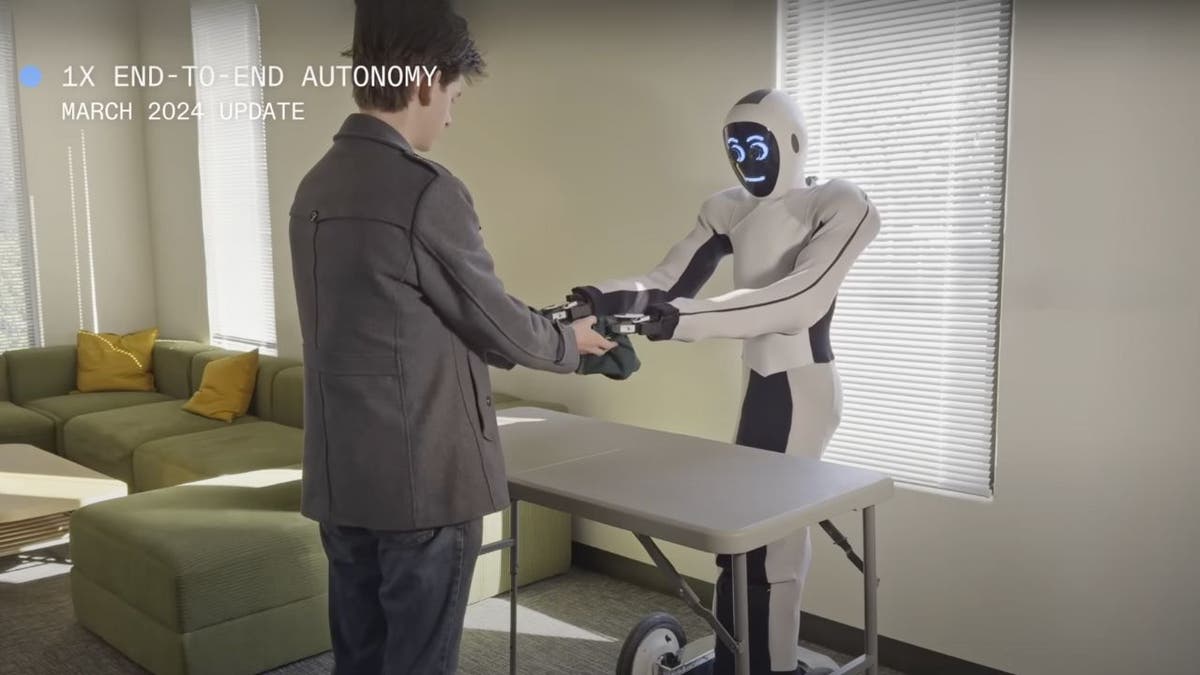
So, what exactly is a laundry folding home robot? Imagine an advanced humanoid robot, equipped with AI vision-based technology to identify different fabrics and garments. It uses articulated arms that mimic human shoulder-to-wrist mobility, culminating in hands with five independently actuated fingers for delicate, precise gripping. This isn’t science fiction—it’s the engineering behind prototypes like LG’s CLOiD, showcased at CES 2026 (source) (source) (source).

These robots are designed to handle a surprisingly fluid sequence of laundry tasks. Let’s break down their key features and current capabilities:
- Core Functionality: The primary demo for CLOiD involves folding towels, transferring laundry between a washer and dryer, and neatly stacking clothes. It navigates the home on a wheeled base.
- Smart Home Integration: This is where it becomes part of interactive smart home robotics. CLOiD is designed to integrate with LG’s ThinQ smart home platform and AI-enabled appliances (source), potentially receiving notifications when a wash cycle ends or coordinating with other devices.
- Broader Ambitions: LG’s vision extends beyond laundry. CLOiD has demonstrated abilities in cooking or retrieving items, all part of a “Zero Labor Home” concept where robots manage physical household duties (source) (source).

Current State and Considerations:
It’s crucial to view these laundry folding home robots as groundbreaking prototypes, not yet as shelf-ready products. Here’s a realistic snapshot:
- Stage & Availability: They are firmly in the prototype stage. There is no confirmed release date or pricing for markets like the U.S., but similar advanced humanoid tech suggests a potential price tag well over $20,000.
- Speed & Dexterity: The process is slow and sometimes requires human assistance (like pre-spreading a towel). A single fold can take 30 seconds or more, and the robots are not yet adept at handling the full variety of fabrics, sizes, and complex items like fitted sheets in a typical laundry load (source) (source).
- Benefits: The promise is immense: consistent, time-saving assistance with a complex, dexterous task, offering particular value to individuals with limited mobility. It represents a significant step in robots taking over tasks previously exclusive to human hands.
- Limitations: Beyond high cost and speed, early prototypes can be glitchy and are limited in their task scope. Their true value is realized when integrated into a broader interactive smart home robotics ecosystem.
While these robots grapple with towels and t-shirts, another branch of home robotics is focused not on chores, but on connection. Let’s shift from practical arms to comforting paws.
Bionic Pet Robots: The Lifelike Companion
In contrast to chore-oriented machines, bionic pet robots are designed to fill an emotional niche. These are advanced robotic animals that closely mimic real pets in both physical form—think realistic fur, authentic movements—and behavior. They use sensors to respond to touch, sound, and visual cues, simulating lifelike interactions such as wagging a tail, purring, or seeking attention, all without the biological needs of a living creature.

This category answers a specific set of human desires and practical constraints. The target audience is distinct:
- Seniors Seeking Companionship: Providing emotional support and interactive engagement without the care demands or potential hazards of a live animal.
- Individuals with Allergies: Offering the joy of a “pet” without triggering allergic reactions.
- Tech Enthusiasts & Urban Dwellers: Those intrigued by robotics or living in spaces unsuitable for pets, who want interaction without long-term commitment or mess (source).
The value proposition of a bionic pet robot lies in its advanced, AI-driven responses that foster a sense of real companionship. While events like CES 2026 highlighted humanoid helpers, the enduring appeal of realistic robotic pets—exemplified by pioneers like Sony’s Aibo—proves this category holds a firm place in the future of home robotics. They are more focused on photorealism and authentic pet-like behavior than on gamified fun, which is where our next category diverges.
What happens when you prioritize personality over perfect realism? You get a robot that’s less about mimicking a cat and more about becoming your quirky digital friend.
Novelty AI Pets: The Personalized Playmate
Novelty AI pets occupy a fascinating space adjacent to bionic robots. They are less concerned with perfect physical realism and instead emphasize unique, customizable AI personalities and entertainment value. These robotic companions learn behaviors from user interactions and may offer voice responses, gamified play, or deep app-based personalization.
Their primary role is that of an interactive toy, a tech showcase, or an emotional companion for the fun-loving user. They appeal to enthusiasts who seek novelty, humor, and adaptability over strict mimicry of a biological pet. Think of a robot that can tell jokes, develop “moods” based on how you interact with it, or even learn your favorite music and incorporate it into a dance routine (source).

Key differentiators from bionic pet robots include:
- Focus on Personality: Prioritizes quirky, humorous, or deeply adaptable AI character over lifelike form and instinctive behaviors.
- Entertainment & Gamification: Often includes games, voice chats, storytelling, or other playful activities as a core feature.
- Customization: Allows users to influence the pet’s evolving traits, name, responses, and even “skills” through machine learning and app controls.
Whether it’s a small desktop robot that reacts to your voice with clever quips or a stylized animal that learns new tricks, novelty AI pets test the boundaries of how we form bonds with artificial entities. But the true magic happens when these specialized robots—the practical, the lifelike, and the playful—start talking to each other and to your home.
Interactive Smart Home Robotics: The Unifying Ecosystem
The most significant trend underpinning all these innovations is the move toward interactive smart home robotics. This is the vision where specialized robots like laundry folding home robots, bionic pet robots, and novelty AI pets cease to be isolated novelties. Instead, they integrate into a cohesive domestic network via IoT, voice assistants, and shared AI platforms, enabling seamless, coordinated home operation.
Specific integration is already in prototype stages. For example, LG’s CLOiD is designed for compatibility with the brand’s smart appliances, creating a coordinated chore flow (source) (source). The future envisions “Physical AI” with advanced vision-language understanding, allowing robots to collaborate—a bionic pet robot could alert a security system or a novelty AI pet could sync with smart lights for an ambient mood (source).

Here’s a comparative look at how these different robots might integrate into a smarter home:
| Robot Type | Integration Example | Benefit |
|---|---|---|
| Laundry Folding Home Robots | Links to smart washers/dryers via platforms like LG ThinQ | Automated, end-to-end chore flow from wash to fold |
| Bionic Pet Robots | Syncs with home security systems for unusual activity alerts | Enhanced safety alongside companionship |
| Novelty AI Pets | Voice integration with assistants like Alexa or Google Home | Personalized home entertainment and voice-controlled interactions |

This interconnectedness is the true endgame. It transforms individual gadgets into a harmonious robotic household, each member playing a specialized role within the symphony of interactive smart home robotics.
Frequently Asked Questions
Q: Can I buy a laundry folding robot like LG’s CLOiD for my home today?
A: No, not yet. Robots like LG’s CLOiD are advanced prototypes showcased at events like CES 2026. They are in development and not commercially available for consumers, with no official release date or pricing announced. When they do launch, they are expected to be very expensive, likely costing tens of thousands of dollars initially (source).
Q: What’s the main difference between a bionic pet robot and a novelty AI pet?
A: The key difference lies in their primary design goal. A bionic pet robot aims for photorealism and authentic behavior that closely mimics a real animal (like a dog that walks and barks realistically). A novelty AI pet prioritizes a unique, customizable personality and entertainment features (like a robot that tells jokes or learns your schedule) over realistic appearance and instincts.
Q: Are these home robots safe to have around children and other pets?
A: Safety is a paramount concern for manufacturers. Prototypes like humanoid laundry robots have sophisticated sensors to avoid collisions. Robotic pets are generally designed to be harmless companions. However, as with any electronic device, supervision is recommended, especially with early-generation models and powerful machines with moving parts. Always follow the manufacturer’s safety guidelines.
Q: How do “interactive smart home robotics” differ from regular smart home devices?
A: Regular smart home devices (like smart lights or thermostats) are typically stationary and perform a specific function via automation or app control. interactive smart home robotics involve mobile, embodied agents (robots) that can physically interact with the environment and its occupants. They integrate with the existing smart home but add a layer of physical action and more complex, adaptive AI-driven interaction.
Q: What is the biggest challenge holding back widespread adoption of these advanced home robots?
A: The three major challenges are cost (advanced robotics are extremely expensive to produce), reliability (performing complex physical tasks in unpredictable home environments is a huge technical hurdle), and consumer value perception (justifying a high price tag for a single-purpose or niche companion robot). Advances in AI and manufacturing are steadily working to overcome these barriers.