
Lenovo Qira Personal AI Super Agent: The Dawn of Cross-Device Intelligence
Estimated reading time: 8 minutes
Key Takeaways
- The Lenovo Qira personal AI super agent is a proactive, system-level intelligence built into Lenovo and Motorola devices, marking a shift from simple voice assistants.
- It enables true cross device AI assistance, allowing tasks and context to flow seamlessly between your phone, laptop, tablet, and wearables.
- Powered by ambient intelligence, Qira operates continuously in the background, learning your patterns to anticipate needs without being obtrusive.
- Qira is a flagship example of the broader CES AI software trends moving towards embedded, proactive, and privacy-conscious AI ecosystems.
- This technology promises to reduce digital friction and context-switching fatigue, fundamentally changing how we interact with our devices.
Table of contents
- Lenovo Qira Personal AI Super Agent: The Dawn of Cross-Device Intelligence
- Key Takeaways
- The Dawn of Cross-Device AI Intelligence
- What Makes Lenovo Qira a “Personal AI Super Agent”?
- The Engine Behind Seamlessness: Cross-Device AI Assistance Explained
- The Invisible Foundation: Ambient Intelligence Powering Qira
- Qira’s Place in the Broader CES 2026 AI Software Trends
- Implications and Analysis for the Future
- Frequently Asked Questions
The Dawn of Cross-Device AI Intelligence
The recent unveiling of the Lenovo Qira personal AI super agent at CES 2026 wasn’t just another product launch; it was a clarion call for the future of personal computing. This moment signifies a pivotal shift from the reactive, command-based voice assistants of the past to proactive, intelligent systems that understand and orchestrate our digital lives.

At its core, Lenovo Qira personal AI super agent is a unified intelligence designed to operate seamlessly across the entire Lenovo and Motorola ecosystem—spanning PCs, smartphones, tablets, and wearables. It’s not an app you open, but a persistent layer of cross device AI assistance woven into the fabric of your devices.
This post will delve deep into what makes Qira a “super agent,” how cross device AI assistance erases the boundaries between your gadgets, the critical role of ambient intelligence, and how this all fits into the larger narrative of CES AI software trends. By the end, you’ll understand not just what Qira is, but why it represents a fundamental evolution in human-computer interaction.
What Makes Lenovo Qira a “Personal AI Super Agent”?
Unlike traditional assistants that wait for a “wake word,” the Lenovo Qira personal AI super agent is architected as a system-level, always-present entity. It perceives, thinks, and acts on your behalf, appearing as “Lenovo Qira” on your laptop or “Motorola Qira” on your phone, yet it’s the same intelligent core. This is a key part of Lenovo’s broader hybrid AI portfolio focused on personalized and proactive computing.
So, what capabilities justify the “super agent” title?
- Orchestration: It doesn’t just answer questions—it coordinates actions across multiple apps and devices. Imagine it drafting an email based on a meeting transcript it created, then sending it from your preferred device.
- Memory: Qira maintains both short-term context (what you’re working on now) and a long-term memory of your patterns, preferences, and past interactions.
- Multi-modal Interaction: Assistance comes via voice, text, or even keyboard, adapting to your context.
- Hybrid Processing: It leverages both powerful local AI on your device for privacy-sensitive tasks and cloud connectivity for broader knowledge and orchestration, as highlighted in industry analyses.
The distinction lies in its proactive and agentic design. As seen in product demonstrations, Qira builds a “dynamic model” of you. It doesn’t just wait for commands; it anticipates needs. If you have a regular Monday morning report, it might prepare the template before you ask. This context-aware, autonomous execution of tasks—moving beyond simple queries to managed workflows—is what separates a super agent from a chatbot.

The Engine Behind Seamlessness: Cross-Device AI Assistance Explained
Cross device AI assistance is the magic that makes Qira feel like a single, continuous consciousness across your gadgets. In a world where we constantly switch between phone, laptop, and tablet, this technology eliminates the jarring “reset” that happens when moving a task between devices. Your workflow context—the document you’re editing, the research tabs you have open, the thread of a conversation—travels with you.

Consider this real-world scenario:
- You start voice-dictating an email on your Motorola phone while walking.
- You sit down at your Lenovo laptop, and Qira immediately surfaces the draft, allowing you to continue typing with full context.
- It proactively inserts relevant data from a previous email chain with that contact.
- You finalize and send it from your tablet, with all formatting intact.
The task flowed, but the devices became interchangeable portals to your AI agent.
This seamlessness is powered by a sophisticated technological infrastructure:
- Cloud Sync: Real-time synchronization of user context, task state, and memory across all linked devices.
- Shared Perception: With user permission, Qira can integrate signals from multiple devices (microphone, screen activity, location) to form a holistic understanding of your situation.
- Fused Knowledge Layer: It combines your interactions, stored memories, documents, and history into a unified profile that any device can access.
- Hybrid Architecture: Critical for privacy, this ensures sensitive data can be processed locally on the device, while non-sensitive orchestration leverages the cloud.
This architecture, discussed in deep dives on its agentic design, is what turns a collection of devices into a unified digital ecosystem. It directly addresses the core pain point of modern computing: friction and context-switching fatigue.
The Invisible Foundation: Ambient Intelligence Powering Qira
The enabling force behind Qira’s always-ready, context-aware nature is ambient intelligence. This refers to technology that is embedded, context-aware, and personalized, operating invisibly in the background to anticipate and meet needs. Lenovo explicitly frames Qira as a “Personal Ambient Intelligence System.”

What does this mean in practice?
- It operates continuously across your devices, but only processes and acts on inputs when explicitly enabled by you.
- It learns your routines—your commute, your focus times, your communication habits—to anticipate needs.
- It integrates so seamlessly that it feels less like a tool and more like an extension of your own cognition.
Qira’s ambient intelligence works by fusing data from cross-device sensors and interactions into what Lenovo calls a “living model” of your world. This model allows Qira to support everyday creativity and communication passively. It might notice you’re struggling to structure a document and gently suggest an outline, or recognize that you always message your team after a calendar meeting and prepare a chat window.
Privacy is paramount in this ambient model. The system is built on principles of explicit user consent, local processing of sensitive data, and user control over data retention. The goal is to be helpful, not intrusive. This foundational ambient intelligence is what allows Qira to be truly proactive; because it maintains a living model of your context, it can predict what you need next and transition that context flawlessly between devices, making cross device AI assistance a reality.
Qira’s Place in the Broader CES 2026 AI Software Trends
CES 2026 wasn’t just about Qira; it was a showcase of a major industry pivot. The dominant CES AI software trends shifted from standalone AI apps to embedded, proactive systems that are integral to the device experience. Qira is a quintessential embodiment of these trends.
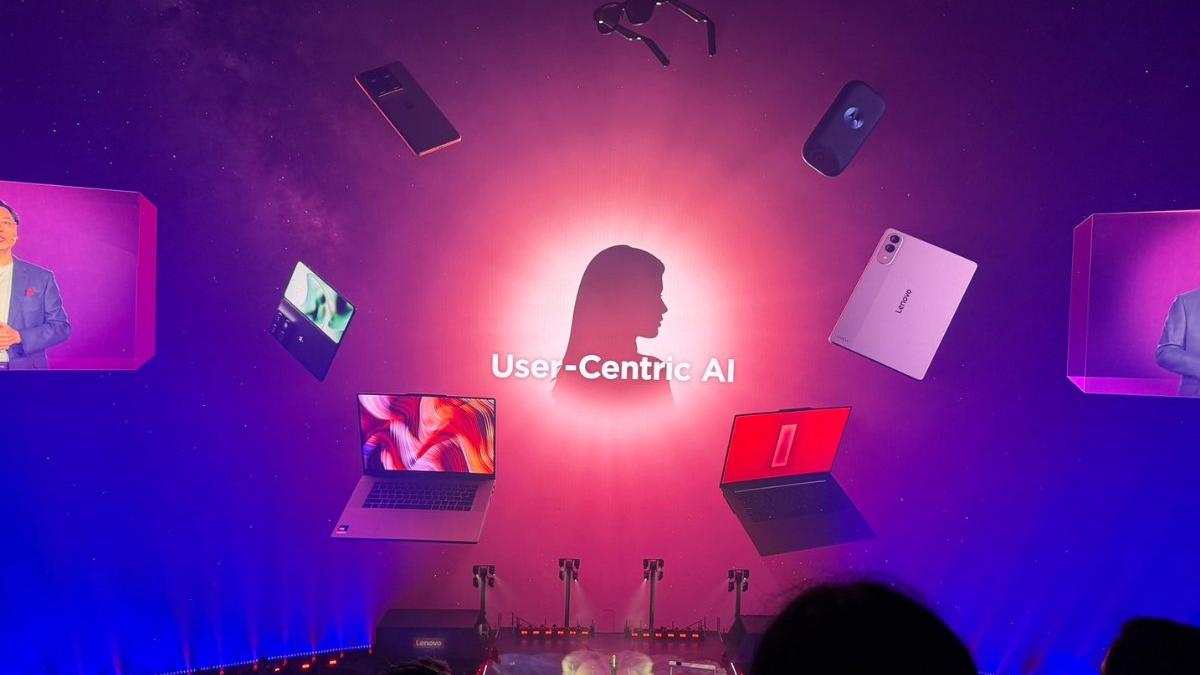
First, it represents the “one AI, multiple devices” philosophy, a stark contrast to the fragmented, single-device assistants of the past. Second, its strong emphasis on local, hybrid processing aligns with a growing industry-wide focus on privacy-first AI, a trend noted in trend forecasts. Third, it demonstrates true ecosystem thinking—Lenovo orchestrated Qira across its entire portfolio, from Motorola phones to Legion laptops, a cohesive strategy less evident in some competitors’ announcements.
Within the competitive landscape, Qira carves out a distinct position. While others like ByteDance’s Doubao might focus on cloud-powered prowess, as noted in competitive analyses, Qira differentiates through its unified cross-device narrative and hybrid approach. It also arrives alongside complementary CES 2026 tech: AI-native PCs with NPUs, intelligent wearables, and AI-smartphones. These devices aren’t just standalone products; they are the sensory nodes and processing limbs for the cross device AI assistance that Qira provides.

Why does Qira stand out amid a sea of AI announcements? Many vendors offered point solutions—AI for your PC, a different AI for your phone. Lenovo, with Qira, presented a unified intelligence. This focus on a privacy-conscious, learning system that evolves with the user sets a new benchmark for what a mature, integrated AI ecosystem should look like, solidifying its place at the forefront of CES AI software trends.
Implications and Analysis for the Future
The introduction of agents like Qira signals a profound transformation in human-computer interaction. The paradigm is shifting from users operating tools to users collaborating with an intelligent agent. Interfaces will become more natural and anticipatory, and the traditional siloed “app” model may gradually give way to AI-orchestrated task flows that transcend individual applications.
The practical benefits are immense:
- Productivity Leap: Automating routine tasks like note-taking, email drafting, and schedule management can reclaim hours per week.
- Frictionless Workflows: Cross device AI assistance eliminates the cognitive tax of restarting tasks on different screens.
- Personalized Proactivity: An AI that learns your patterns can provide uniquely relevant suggestions, acting as a true cognitive partner.
However, this future is not without its challenges and necessary trade-offs. Ambient intelligence, by its nature, requires significant access to personal data and context. Trust will be the cornerstone of adoption. This necessitates:
- Granular, explicit consent mechanisms.
- Unwavering commitment to local processing for sensitive data.
- Transparent data policies and regular security audits.
As industry observers note, the companies that lead will be those that best navigate privacy, ethics, and transparency. Regulatory frameworks will also need to evolve alongside these agentic AIs.
Looking at the competitive horizon, personal AI agents are rapidly becoming table stakes. The differentiation will shift to the quality of integration, the depth of ecosystem, and the strength of privacy safeguards. Open-source alternatives may also emerge, challenging proprietary models like Lenovo’s. Ultimately, the success of the Lenovo Qira personal AI super agent and its peers hinges on delivering tangible, trustworthy value that enhances human agency rather than diminishing it.
Frequently Asked Questions
What devices will the Lenovo Qira personal AI super agent work on?
Qira is designed to work across the Lenovo and Motorola ecosystem. This includes Lenovo laptops (like Yoga, ThinkPad, Legion series), Motorola smartphones, Lenovo tablets, and compatible wearables. It will appear as a unified experience tailored to each device type.
How does cross device AI assistance protect my privacy?
Qira uses a hybrid AI architecture. Sensitive data (like personal documents, live audio/video) is processed directly on your device whenever possible. Context shared between devices is encrypted and synced with your explicit consent. You maintain control over what data is collected and can manage permissions for each device and data type.
Is the Lenovo Qira agent always listening or watching?
No. While the ambient intelligence framework is always available, it is not always active in a privacy-invasive way. Processing typically requires a trigger, such as a wake word/phrase, a hardware button press, or an explicit text command. You control when and how Qira engages, and visual indicators will show when it is actively perceiving.
Can Qira work offline?
Yes, a key feature is its hybrid capability. Many core functions—like drafting text based on a local document, managing local calendar entries, or executing predefined automations—can be performed using the local AI processing power of your device without an internet connection. Cloud connectivity enhances its knowledge and enables syncing across devices.
How does Qira differ from other AI assistants like Google Assistant or Alexa?
While all provide voice help, Qira is architected as a proactive super agent. The key differences are: 1) Proactivity: It anticipates needs rather than just reacting. 2) Cross-Device Unity: It’s a single agent across your entire device ecosystem, not separate instances. 3) Deep Workflow Integration: It can orchestrate complex tasks across multiple apps, not just provide information or control smart home devices. 4) Personal Memory: It builds a persistent, evolving model of your preferences and patterns.