
Mobileye Mentee Robotics Acquisition: The $900M Physical AI Pivot at CES 2026
Estimated reading time: 8 minutes
Key Takeaways
- The Mobileye Mentee Robotics acquisition is a transformative $900 million deal announced at CES 2026, signaling Mobileye’s strategic shift from digital AI to embodied intelligence under CEO Amnon Shashua’s “Mobileye 3.0” vision.
- This move epitomizes the accelerating trend of physical AI expansion, where AI systems perceive, reason, and act in real-world human environments, a key driver behind how AI is changing the world.
- Mentee Robotics brings cutting-edge humanoid robot integration capabilities, including proprietary actuators and advanced robotic hands, targeting proof-of-concept deployments in 2026 and full commercialization by 2028.
- The deal unlocks powerful automotive robotics synergy, transferring Mobileye’s autonomous vehicle expertise in perception, planning, and safety to humanoid platforms, leveraging a proven technology stack.
- The acquisition reshapes the competitive landscape, setting a valuation benchmark and accelerating timelines for viable commercial humanoids, likely spurring further industry consolidation.
Table of Contents
- Mobileye Mentee Robotics Acquisition: The $900M Physical AI Pivot at CES 2026
- Key Takeaways
- Introduction: A Watershed Moment for Embodied AI
- Deconstructing the $900M Deal: Terms, Structure, and Rationale
- Mentee Robotics: Unpacking the Vertical Integration Advantage
- The Rise of Physical AI: From Digital Brains to Embodied Agents
- Humanoid Robot Integration: Navigating the Path to Adoption
- Automotive Robotics Synergy: The Secret Sauce for Scale
- Competitive Ripples and Future Implications
- Frequently Asked Questions
Introduction: A Watershed Moment for Embodied AI
At CES 2026, the Mobileye Mentee Robotics acquisition erupted onto the scene—a definitive $900 million statement that the future of AI is physical. Mobileye, the Intel subsidiary synonymous with autonomous driving technology, is acquiring humanoid robotics startup Mentee Robotics, catapulting CEO Amnon Shashua’s vision for “Mobileye 3.0” into a new era of embodied intelligence. This isn’t just another corporate merger; it’s a harbinger of the profound shift where AI is fundamentally reshaping industries by moving from algorithms on servers to agents in our factories, warehouses, and homes.

Why does this matter for industry watchers? For those tracking humanoid AI deals and informational search intent, this acquisition is a masterclass in strategic pivoting. It encapsulates the broader industry imperative: embedding AI into physical systems that can perceive, reason, and act autonomously in human environments. The themes of physical AI expansion, humanoid robot integration, and automotive robotics synergy aren’t just buzzwords; they are the core outcomes of a deal that accelerates Mobileye’s journey from digital AI dominance to physical AI leadership, a trend prominently featured among the cutting-edge AI technologies shaping the future.
This post will dissect the acquisition from every angle—the financial terms, the technological jewels within Mentee, the overarching trends it rides, the formidable challenges it tackles, and the powerful synergies it unleashes. Our goal is to equip you with comprehensive insights into a deal that may well be remembered as the inflection point where humanoid robotics moved from prototype to product.
Deconstructing the $900M Deal: Terms, Structure, and Rationale
The nuts and bolts of the Mobileye Mentee Robotics acquisition reveal a carefully crafted transaction. Valued at approximately $900 million, the deal is structured as $612 million in cash plus up to 26.2 million shares of Mobileye common stock. Approved by Mobileye’s board, Intel, and independent directors, it’s expected to close in the first quarter of 2026. Critically, Mobileye anticipates only a low-single-digit percentage increase to operating expenses, indicating a financially prudent integration, as detailed in both TechCrunch’s report and the official Mobileye announcement.
Mobileye’s Motivations: Beyond the Chip
Why would a company renowned for its EyeQ chips and advanced driver-assistance systems (ADAS) venture into humanoid robotics? The answer lies in a strategic expansion of domain expertise. Mobileye isn’t just buying a robotics startup; it’s acquiring a new physical canvas for its two decades of productization mastery. The company plans to leverage its:
- Advanced vision and sensing AI – the core of its autonomous vehicle success.
- Massive AI training infrastructure – capable of simulating countless real-world scenarios.
- Global manufacturing relationships – forged with the world’s top automakers.
- System integration and safety certification experience – the holy grail for deploying robots near humans.
To preserve the innovative spark that defines startups, Mentee Robotics will operate as an independent unit within Mobileye. This structure aims to combine the agility of a focused team with the immense resources and scale of a global leader, creating a best-of-both-worlds scenario for accelerating physical AI expansion.
Mentee Robotics: Unpacking the Vertical Integration Advantage
Founded in 2022 as a deliberate incubation by Amnon Shashua, Mentee Robotics is no ordinary startup. It was built from the ground up with a third-generation, vertically integrated approach to humanoid robotics. This means Mentee controls the entire stack—from proprietary hardware components to the AI software that animates them—a critical advantage for performance, cost, and rapid iteration.

The Technological Crown Jewels:
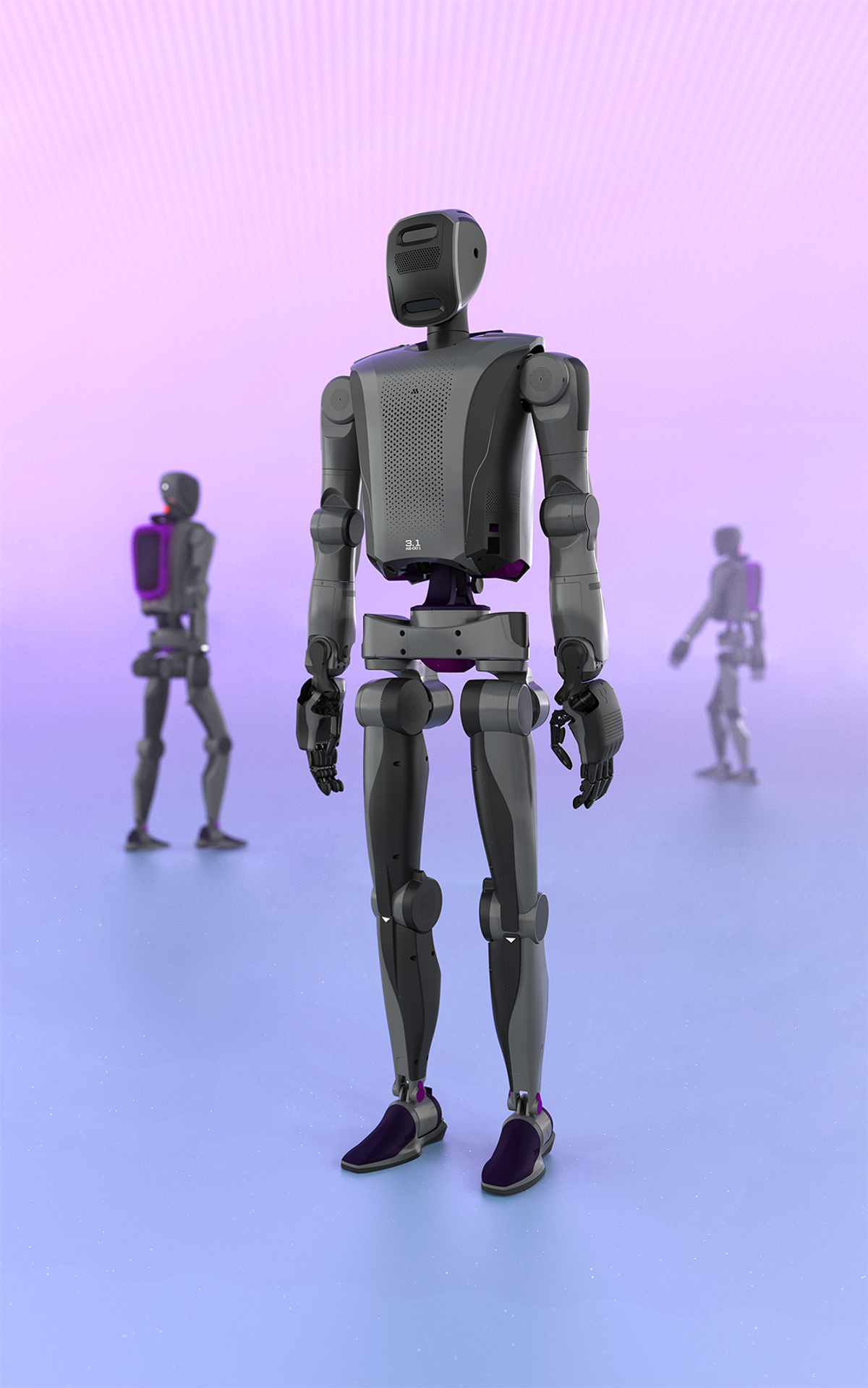
- Proprietary Actuators: Designed for superior torque density and compact form factors, these are the “muscles” of the robot, enabling powerful yet graceful movements in human-scale spaces.
- Precision Motor Drivers: These components deliver fine-grained control, allowing for behavioral transparency and subtle adjustments essential for safe human-robot interaction.
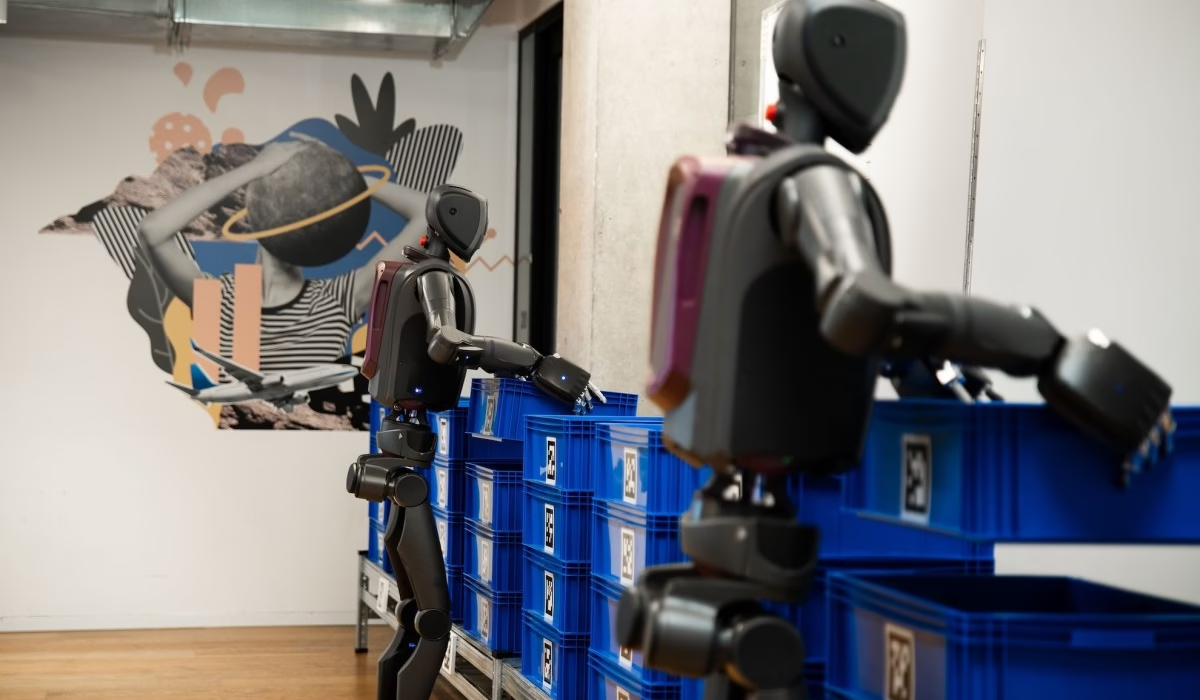
- Advanced Robotic Hands: Featuring motor-based tactile sensing, these hands are engineered for dexterous manipulation of a wide array of objects designed for human hands, from tools to packages.
- Hot-Swappable Battery Systems: A pragmatic innovation for continuous uptime, allowing robots to work 24/7 by quickly swapping depleted batteries for fresh ones, a must for commercial viability.
As outlined in Mobileye’s acquisition announcement, Mentee’s roadmap is aggressive: first on-site proof-of-concept deployments are slated for 2026, with series production and full commercialization targeted for 2028. This deep expertise in humanoid robot integration provides Mobileye with a ready-made platform to leapfrog years of hardware development.
The Rise of Physical AI: From Digital Brains to Embodied Agents
The mobileye mentee robotics acquisition is a direct response to the megatrend of physical AI expansion. But what exactly is Physical AI? It’s the evolution of artificial intelligence from digital-only systems—like chatbots or recommendation engines—into embodied intelligence. These are systems that integrate three core capabilities:
- Perception – Understanding complex, dynamic environments using sensors.
- Reasoning – Interpreting context, intent, and making decisions in real-time.
- Actuation – Executing precise physical movements to interact with and change the world.
Mobileye defines this as creating systems that interact “naturally and safely” in human environments. The industry race is now focused on deploying this intelligence into human-built spaces—factories, warehouses, logistics hubs, and eventually homes—without requiring costly infrastructure modifications.

Why the Humanoid Form Factor?
Humanoid robots are emerging as the preferred platform for this expansion because our world is built for humans. Their bipedal design allows them to navigate stairs, ramps, and uneven terrain. Their arms and hands can operate existing human equipment, from forklifts to keyboards. Perhaps most importantly, a human-like form can facilitate more natural social interaction with human coworkers, aiding in workplace acceptance. This acquisition is Mobileye’s bet that the path to ubiquitous physical AI expansion runs through the humanoid form.
Humanoid Robot Integration: Navigating the Path to Adoption
Humanoid robot integration—the process of embedding these machines into daily workflows—is fraught with both immense promise and significant hurdles. The strategic importance is clear: since our infrastructure is optimized for the human form, a humanoid robot is the most versatile general-purpose agent for unstructured environments.

However, the path is strewn with obstacles:
- Technical Hurdles:
- Sophisticated perception that works in cluttered, changing spaces.
- Real-time decision-making under uncertainty and partial information.
- Ironclad safety guarantees to prevent harm when working alongside people.
- Commercial Hurdles:
- Scaling manufacturing to achieve cost-effective production.
- Demonstrating clear return on investment (ROI) for adopters.
- Navigating regulatory and insurance landscapes for robotic workers.
This is where the mobileye mentee robotics acquisition becomes a masterstroke. Mobileye’s core competencies from the automotive world directly address the toughest technical challenges. Its perception systems are battle-tested in millions of vehicles navigating chaotic streets. Its planning algorithms constantly predict human (pedestrian and driver) behavior. Its entire culture is built around functional safety (ISO 26262 and beyond). By marrying Mentee’s mature hardware platform with this software and AI bedrock, the combined entity is uniquely positioned to overcome the barriers to humanoid robot integration, aiming to transition from proof-of-concept in 2026 to mass production in 2028.
Automotive Robotics Synergy: The Secret Sauce for Scale
The most compelling advantage stemming from this deal is the profound automotive robotics synergy. This isn’t a vague cross-pollination of ideas; it’s a direct transfer of a proven Physical AI stack from autonomous vehicles to humanoid robots. As Mobileye outlines, this shared stack includes:
- Multimodal Perception: Fusing data from cameras, radar, and lidar to create a robust understanding of the environment—a domain where Mobileye is a world leader.
- World Modeling: Constructing real-time, dynamic representations of the surroundings, essential for both a car on a highway and a robot in a warehouse aisle.
- Intent-Aware Planning: Predicting the future actions of humans and other dynamic agents to plan safe, efficient paths and actions.
- Precision Control: Executing complex maneuvers safely amid uncertainty, whether it’s lane-keeping or picking up a fragile object.
This synergy is a textbook example of the technological convergence driving the rise of AI-powered smart vehicles and the broader evolution of AI-powered transportation systems. Mobileye’s foundation is rock-solid: its EyeQ chip architecture, autonomy software deployed at scale, and a staggering $24.5 billion automotive revenue pipeline over eight years (a figure that has grown 40% since January 2023) provide not just technology, but also the financial runway for this ambitious venture, as reported by TechCrunch.
Envisioning the Applications:
Picture Mentee humanoids working seamlessly in vehicle manufacturing plants, performing final assembly checks or transporting components. Imagine them in automotive supply chain logistics, loading and unloading trucks, or managing inventory. In the future, they could be part of mobility-as-a-service fleets, performing maintenance or customer interface tasks. These robots will be built to meet automotive-grade safety and reliability standards, integrating directly into production systems honed over decades. This vision of automotive robotics synergy is being propelled forward by the same spirit of innovation behind breakthrough autonomous vehicle innovations worldwide.
Competitive Ripples and Future Implications
The acquisition sends shockwaves through a competitive field that includes established players like Boston Dynamics (Hyundai), aspirants like Tesla with its Optimus bot, and well-funded startups like Figure AI. Mobileye’s distinct advantages are formidable:
- Deep automaker relationships for potential early adoption and co-development.
- Silicon manufacturing scale through Intel, crucial for producing cost-effective AI chips for robots.
- Unmatched experience in safety-critical AI certification for mass-market products.

The $900 million valuation isn’t just a number; it establishes a new pricing floor for advanced humanoid robotics platforms, influencing future funding rounds and M&A activity across the sector.
Broader Implications for the Industry:
- Catalyst for Consolidation: This deal pressures other startups to accelerate commercialization timelines or seek partnerships with larger corporations possessing manufacturing and distribution clout.
- Timeline Acceleration: By combining forces, Mobileye and Mentee could potentially bring viable commercial humanoids to market 3-5 years sooner than if they operated independently, compressing the industry’s roadmap.
- Validation of the Convergence Thesis: It underscores the growing belief that winning in the next phase of AI requires deeply integrated hardware and software, delivered at global scale. Mobileye is effectively evolving from an automotive AI company into a broad-based physical AI platform company.
Looking ahead, this acquisition is likely the first domino to fall. Expect more strategic acquisitions as tech and automotive giants seek to secure their positions in the embodied AI race. The commercialization of humanoid robotics will increasingly borrow lessons, supply chains, and safety paradigms from the autonomous vehicle industry, hastening the day when these machines become a common sight in our workplaces.
Final Thought
The mobileye mentee robotics acquisition is a bellwether event, a clear signal that the convergence of AI, automotive technology, and robotics has reached a pivotal inflection point. The winners in the next decade will be those who can productize embodied intelligence at scale. For industry watchers, investors, and technologists, the mandate is clear: monitor how this deal catalyzes physical AI expansion, accelerates practical humanoid robot integration, and exemplifies the powerful automotive robotics synergy that may well define the standard for the industry.

Frequently Asked Questions
What exactly is the Mobileye Mentee Robotics acquisition?
It is a $900 million deal announced at CES 2026 where Mobileye, an Intel company focused on autonomous driving technology, acquires Mentee Robotics, a startup developing advanced humanoid robots. The acquisition marks Mobileye’s strategic entry into the physical AI and robotics space.
Why did Mobileye pay $900 million for Mentee Robotics?
The valuation reflects Mentee’s advanced, vertically integrated technology (like proprietary actuators and hands), its aggressive commercialization roadmap, and the strategic value it brings in accelerating Mobileye’s “Mobileye 3.0” vision for leadership in physical AI, beyond just automotive applications.
How does this acquisition relate to the concept of Physical AI?
Physical AI refers to AI systems that have a physical embodiment and can interact with the real world. This acquisition is a direct investment in that trend. Mobileye is leveraging its AI expertise from the digital/automotive realm and applying it to Mentee’s physical humanoid platform to create embodied intelligent agents.
What is the “automotive robotics synergy” mentioned?
It’s the direct technological transfer between autonomous vehicles and humanoid robots. Both require robust perception, real-time planning, and safe control systems. Mobileye’s decades of experience and technology stack in making cars drive autonomously can be adapted to make humanoid robots operate autonomously and safely in human environments, creating a significant competitive advantage.
When can we expect to see Mentee robots working commercially?
According to the announced plans, the first on-site proof-of-concept deployments are targeted for 2026, with series production and full-scale commercialization aimed for 2028. The acquisition is intended to accelerate this timeline by providing Mobileye’s resources and scale.
How does this deal affect competitors like Tesla or Boston Dynamics?
It raises the competitive bar significantly. It sets a high valuation benchmark, validates the humanoid form factor for commercial Physical AI, and combines a mature robotics hardware platform with world-class automotive-grade AI software and scalability. This likely pressures other players to accelerate their own plans or seek similar partnerships.