

The Quantum Leap: How Quantum AI Integration is Unleashing Unprecedented Compute Power
Estimated reading time: 12 minutes
Key Takeaways
- Quantum AI integration merges quantum computing’s power with AI algorithms, leveraging superposition and entanglement for revolutionary speed.
- This convergence promises massive AI compute speedups, particularly in optimization, model training, and complex simulation tasks.
- Quantum neural processing through Quantum Neural Networks (QNNs) can process high-dimensional data in ways impossible for classical systems.
- Enterprises are already running pilots in drug discovery, finance, and logistics, achieving results like 80% faster scheduling and 34% better predictions.
- 2026 is projected as a pivotal tech trend year, moving from hybrid pilot programs toward verified quantum advantage in specific AI tasks.
Table of contents
- The Quantum Leap: How Quantum AI Integration is Unleashing Unprecedented Compute Power
- Key Takeaways
- The Next Tech Disruption is Here
- How Quantum Mechanics Supercharge AI
- Quantum Neural Processing: The Engine of Acceleration
- Enterprise AI Quantum: Strategies for Business Impact
- 2026: The Breakthrough Year for Quantum AI Convergence
- Frequently Asked Questions
The Next Tech Disruption is Here
What if the most complex problems holding back artificial intelligence—from designing life-saving drugs to modeling global financial markets—could be solved not in years, but in hours? This isn’t science fiction; it’s the imminent promise of quantum AI integration, the pivotal convergence set to redefine the limits of computation. By harnessing the bizarre laws of quantum physics, this fusion is poised to deliver monumental AI compute speedups, transforming industries and cementing itself as the defining 2026 tech trend for forward-thinking enterprises. The era of quantum AI integration is not a distant future—it’s a strategic imperative taking shape today.

At its core, this revolution is simple in promise yet profound in impact: quantum mechanics solves problems that are utterly intractable for today’s classical computers. This capability translates directly into the AI compute speedups needed to break through current bottlenecks. As industry experts note, quantum AI integration is the key 2026 tech trend that businesses are preparing for right now. But why does this matter for your organization today? The answer lies in understanding the mechanisms, tangible benefits, and immediate business implications of quantum computing’s role in AI acceleration.
How Quantum Mechanics Supercharge AI
The extraordinary power of quantum computing stems from two fundamental principles that defy classical intuition: superposition and entanglement. As detailed in explanations of the coming disruption, superposition allows a quantum bit (qubit) to exist in a state of 0, 1, or any probabilistic combination of both simultaneously. Unlike a classical bit, which is definitively either a 0 or a 1, a qubit can explore multiple pathways at once. Entanglement creates a mysterious, instantaneous connection between qubits, where the state of one directly influences the state of another, no matter the distance. This enables a form of correlated processing at speeds and scales that are simply unattainable for classical computers. These principles are the foundation for the mind-blowing quantum breakthroughs we’re witnessing.
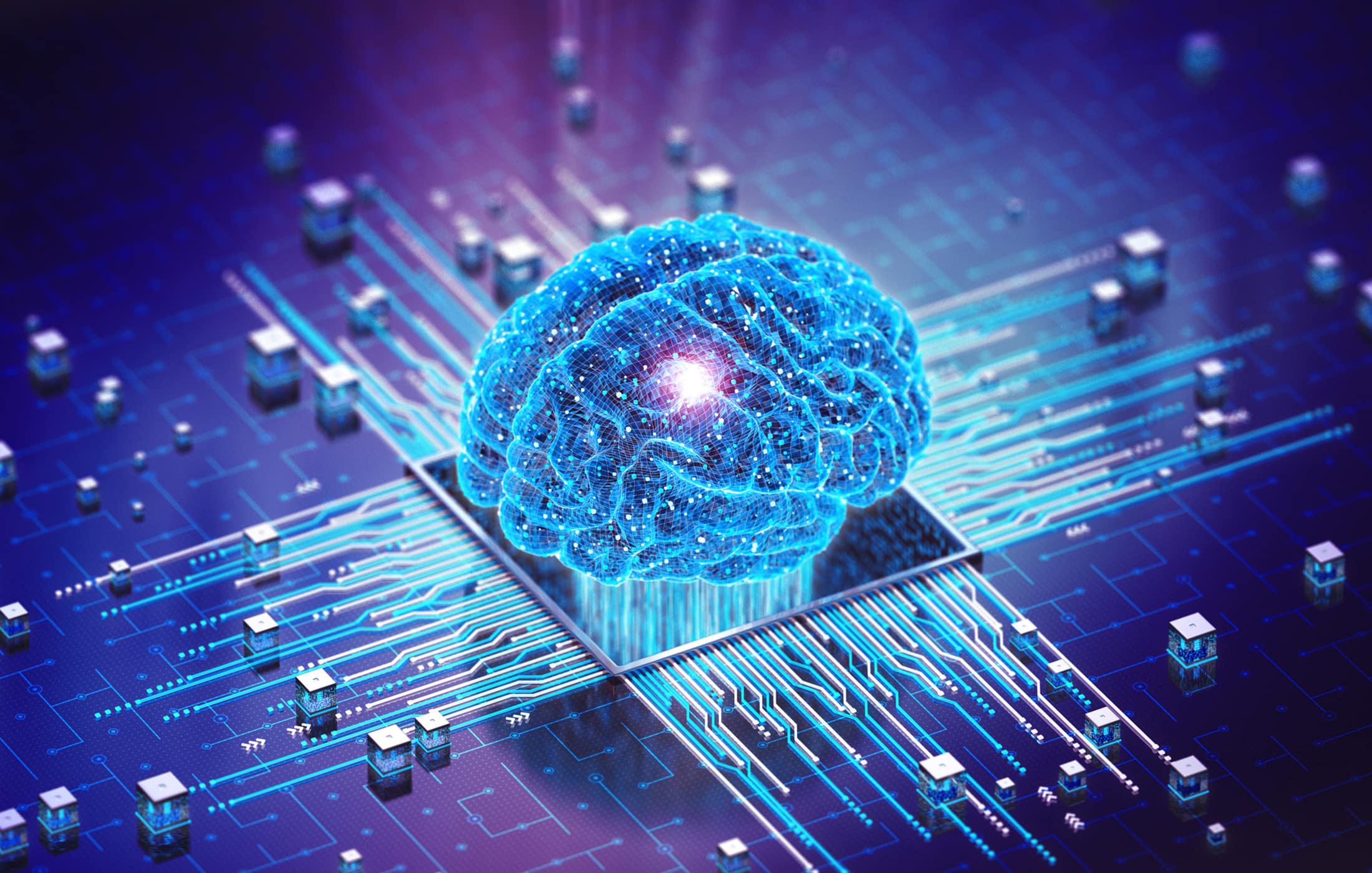
This quantum advantage is channeled into AI through quantum neural processing, primarily via Quantum Neural Networks (QNNs). QNNs use quantum gates to manipulate qubits, processing information in a way that surpasses classical neural networks. By leveraging superposition, QNNs can evaluate a vast number of potential states and solutions in parallel, making them exceptionally powerful for navigating high-dimensional datasets—like those in image recognition, genomic sequencing, or financial modeling. Entanglement further turbocharges this by allowing for deeply interconnected processing, where patterns and correlations can be identified with unprecedented efficiency.
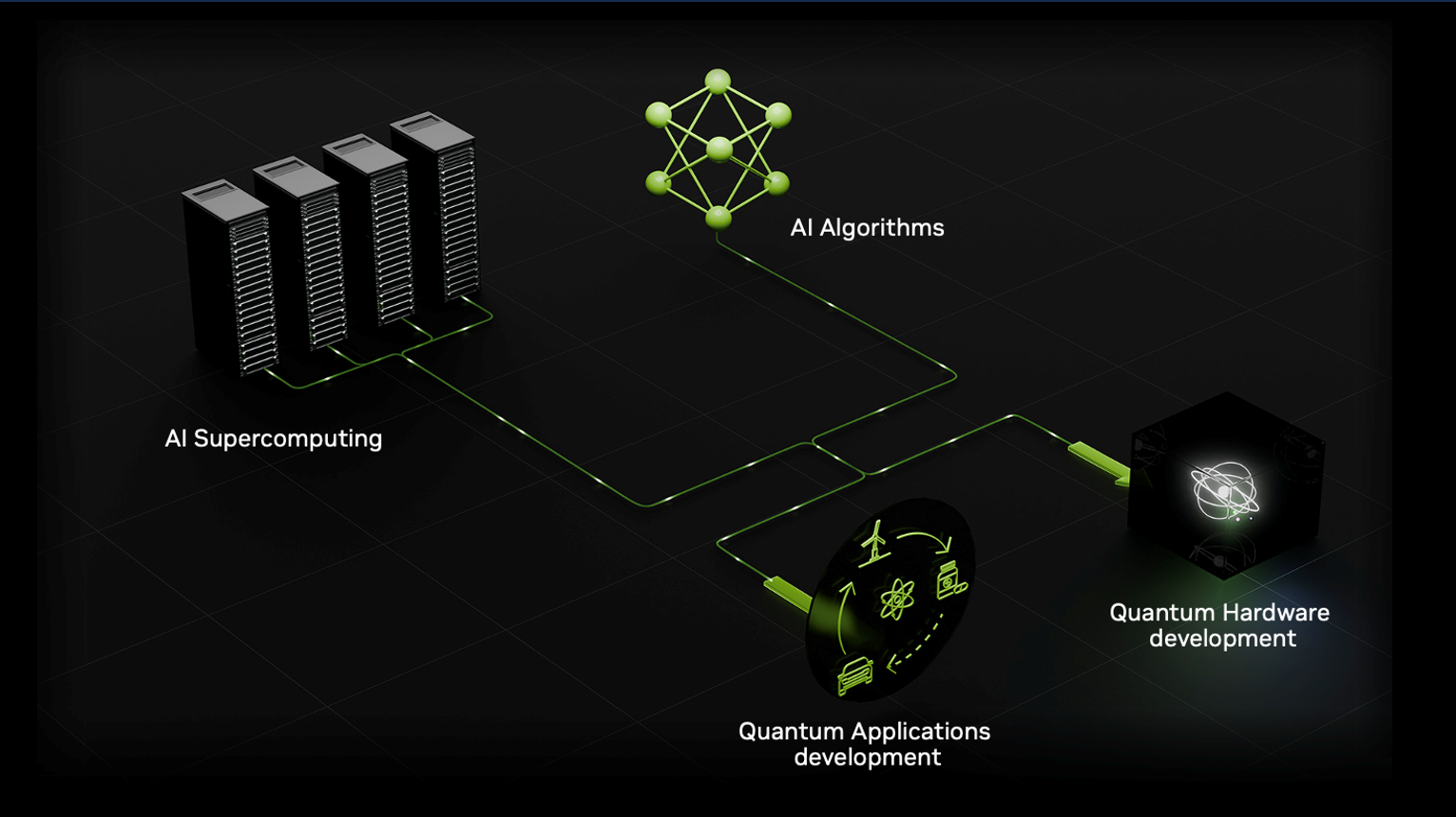
This quantum prowess is primed to disrupt several key AI domains:
- Optimization: Finding the absolute best solution in a sea of possibilities, such as the most efficient global supply chain route or the optimal molecular structure for a new material.
- Machine Learning Training: This is where the promise of AI compute speedups shines brightest. Quantum Machine Learning (QML) exploits quantum parallelism to potentially reduce the training time for massive models, like large language models, from weeks down to mere hours.
- Complex Simulations: From modeling intricate chemical interactions for drug discovery to forecasting multi-variable financial markets, quantum computers can simulate natural processes with a fidelity that classical machines cannot match.

“We are moving from simply processing information to simulating nature itself,” observes one expert, highlighting the paradigm shift. This capability positions quantum AI integration as a cornerstone among the cutting-edge AI technologies shaping the future.
Classical vs. Quantum: A Comparison
- Problem: Drug Compound Screening
Classical: Tests compounds sequentially or in limited batches; screening billions can take years.
Quantum: Leverages superposition to evaluate vast chemical spaces in parallel; can screen billions in days. - Problem: Financial Portfolio Optimization
Classical: Struggles with the exponential complexity of evaluating millions of asset combinations under constraints.
Quantum: Uses quantum algorithms to find optimal risk-return profiles in massively complex search spaces. - Problem: Training a Complex AI Model
Classical: Requires iterative adjustments over millions of calculations, consuming vast time and energy.
Quantum: Quantum neural processing can explore the model’s parameter space in a fraction of the iterations.
Quantum Neural Processing: The Engine of Acceleration
Diving deeper, quantum neural processing represents the specialized application of quantum algorithms to train and run neural architectures at exponential speeds. Here, quantum systems process information in ways that mimic—and potentially surpass—biological neural networks by handling vast parallel computations through the unique properties of qubits. This is a prime example of the incredible AI breakthroughs defining the near future. The practical implementation of this today often takes the form of hybrid quantum-classical systems. Platforms like NVIDIA’s CUDA-Q or Microsoft Azure Quantum are pioneering this approach, where a complex problem is broken down: the most challenging, combinatorially explosive sub-tasks (like a specific optimization step in a larger AI model) are offloaded to a quantum processor, while the classical system manages the rest of the workflow.
The results are concrete AI compute speedups that are moving from theory to boardroom value:
- Drug Discovery: Quantum simulations can screen billions of molecular compounds in days versus the years required classically. Companies like Amgen are already piloting QML for biologics development, aiming to slash R&D timelines.
- Financial Modeling: Institutions like HSBC have achieved 34% better predictions in bond pricing trials. Quantum computers excel at Monte Carlo simulations—a cornerstone of risk analysis—and can optimize portfolios across millions of variables simultaneously.
- Logistics & Scheduling: Pattison Food Group famously used D-Wave’s quantum annealing technology to cut complex delivery scheduling time by 80%, demonstrating immediate operational efficiency gains.
It’s crucial to understand the current landscape: we are in the Noisy Intermediate-Scale Quantum (NISQ) era. Today’s quantum devices typically have between 50 and 1000 qubits, and they are “noisy”—prone to errors from interference. This is why the hybrid approach is so critical; it extracts value now despite the imperfections. The path forward, as highlighted in analyses of the 2026 convergence and expert discussions, leads toward full-scale, fault-tolerant quantum advantage by the late 2020s. This will be achieved through advanced error correction techniques that group multiple physical qubits into a single, reliable “logical qubit,” paving the way for quantum neural processing at an entirely new scale of reliability and power.
Enterprise AI Quantum: Strategies for Business Impact
The shift from academic experiment to business tool is already underway. Forward-thinking organizations are developing enterprise AI quantum strategies through targeted pilot programs. Volkswagen is optimizing traffic flow patterns, Roche is simulating molecules for next-generation drug development, and cloud platforms like AWS Braket, Microsoft Azure Quantum, and IBM Quantum are enabling companies to experiment with real quantum hardware via the cloud—no capital investment required. This strategic adoption is a key thread among the essential artificial intelligence trends guiding business strategy.
Industry-specific use cases are crystallizing:
- Automotive & Materials Science: Quantum simulations are accelerating the precise modeling of chemical interactions within battery cells, a process that is prohibitively slow classically. This is key to designing longer-lasting, faster-charging batteries for EVs.
- Finance: Beyond portfolio optimization, quantum-enhanced Monte Carlo methods are driving real-time risk analysis and fraud detection, with some institutions reporting preliminary accuracy gains of 30% or more.
- Logistics & Supply Chain: Building on successes like Pattison’s, companies are applying quantum optimization to dynamically reroute entire supply chains under disruption, minimizing delays and cost.
For businesses formulating their enterprise AI quantum strategy, several critical considerations emerge:
- Strategic Partnerships: Collaborate with quantum hardware and software firms like Quantinuum or D-Wave to gain early access to technology and deep expertise.
- Talent Acquisition & Upskilling: The global shortage of dual-skilled professionals (quantum physicists who understand AI and ML engineers who grasp quantum principles) is acute. Building or buying this talent is a top priority.
- Problem Identification: Not every AI task is “quantum-ready.” Focus on identifying problems in your existing AI pipelines that involve adaptive optimization, high-dimensional data processing, or complex simulation—these are the low-hanging fruit for quantum AI integration.
This proactive approach to enterprise AI quantum readiness is what will separate industry leaders from laggards as this 2026 tech trend gains momentum.
2026: The Breakthrough Year for Quantum AI Convergence
All indicators point to 2026 as the inflection point. According to expert predictions and industry analysis, the timeline is taking a clear shape. Early 2026 is expected to see a proliferation of hybrid quantum-classical pilots across sectors, alongside demonstrations of more stable logical qubits. By mid-year, we may witness the first widely verified instances of AI compute speedups for specific, commercially relevant tasks—a milestone known as “quantum advantage.” The latter half of the year could then see the first production deployments in high-value areas like pharmaceutical research and quantitative finance. This progression is a key component of the revolutionary AI breakthroughs shaping the coming years.

Key milestones to watch include IBM’s aggressive roadmap toward 1,000 logical qubits and Google’s development of specialized quantum-AI chips designed to scale quantum neural processing. As discussed in forward-looking tech talks, these hardware advances will be the engine for the software and algorithmic breakthroughs.
For technology leaders, the call to action is now. Here is a pragmatic, four-step plan to prepare:
- Invest in Hybrid Architectures: Begin low-risk experimentation via cloud-based quantum services (QaaS). Focus on integrating a quantum processing unit (QPU) as a co-processor within your existing high-performance computing (HPC) and AI infrastructure.
- Prioritize Post-Quantum Security: The same power that breaks computational barriers can break current encryption. Start audits to identify data that needs long-term protection and develop a migration plan to quantum-resistant cryptographic standards.
- Build Trusted Data Foundations: Quantum algorithms are exceptionally powerful but also sensitive. The quality and structure of your input data are paramount. Ensure you have robust, clean, and well-governed data pipelines.
- Develop a Quantum Talent Roadmap: This isn’t just about hiring physicists. Create internal upskilling programs to create “quantum-aware” data scientists and software architects who can spot opportunities and collaborate effectively with quantum experts.
Frequently Asked Questions
1. Is quantum AI integration just a theoretical concept, or is it being used today?
It is actively being used today, but primarily in research, development, and pilot programs. Major corporations in pharmaceuticals, finance, and automotive are running real-world experiments on quantum hardware via the cloud to solve specific optimization and simulation problems, achieving measurable results like faster scheduling and improved material modeling.

2. What are the main challenges preventing widespread adoption of quantum AI?
The primary challenges are hardware limitations (current NISQ-era qubits are noisy and error-prone), a severe shortage of skilled talent bridging quantum physics and AI/software engineering, and the immaturity of software tools and algorithms compared to the classical AI ecosystem. Error correction and qubit stability are the key hardware hurdles being tackled.
3. Will quantum AI make classical AI and computing obsolete?
No. Quantum AI is not a replacement but a powerful accelerator for specific, complex tasks. The future is hybrid. Classical computers will continue to handle the vast majority of general-purpose computing, data management, and user interfaces, while quantum processors act as specialized co-processors for the most computationally intensive sub-problems within a larger AI workflow.
4. How can my business start exploring quantum AI without a huge upfront investment?
The most accessible entry point is through Quantum-as-a-Service (QaaS) offerings from major cloud providers like AWS, Microsoft Azure, Google Cloud, and IBM Cloud. These platforms allow you to run experiments and algorithms on real quantum hardware over the internet, paying only for the compute time you use. This eliminates the need for a multi-million dollar capital investment in fragile, cryogenic hardware.
5. What kind of problems is quantum AI best suited to solve first?
Quantum AI shows the most immediate promise for problems that are “combinatorially explosive.” This includes:
– Optimization: Logistics, scheduling, financial portfolio management.
– Quantum Simulation: Modeling molecules for drug discovery, chemical reactions for new materials.
– Quantum Machine Learning: Training on exceptionally high-dimensional data (e.g., complex sensor data, genomic sequences) where the parallelism of quantum neural processing provides a clear advantage.