
Quantum Computing for Consumers: A Guide to the Next Tech Wave
Estimated reading time: 10 minutes
Key Takeaways
- Quantum computing for consumers won’t mean a quantum computer in your home, but rather indirect access through better, faster, and more secure services.
- Four key technologies will converge to create seamless new experiences: quantum cloud computing, 6g network rollout, edge ai devices, and ai chip innovations 2026.
- Realistic future tech predictions suggest noticeable benefits in personalized healthcare, smarter recommendations, and robust security will arrive in the 2026-2030 timeframe.
- Everyday interaction will happen through intelligent devices like AR glasses and smart assistants, powered locally by efficient AI chips and connected to powerful cloud resources.
- Staying informed is key to navigating this shift and understanding how it will reshape daily life, work, and privacy.
Table of contents
- Quantum Computing for Consumers: A Guide to the Next Tech Wave
- Key Takeaways
- Section 1: Demystifying Quantum Computing for Everyday Users
- Section 2: 6G Network Rollout as the Invisible Fabric
- Section 3: Edge AI Devices: Where Consumers See and Touch the Future
- Section 4: AI Chip Innovations 2026: The Engine of Intelligence
- Section 5: Integrated Future Tech Predictions: One Day in a Hybrid Quantum–AI World
- Frequently Asked Questions
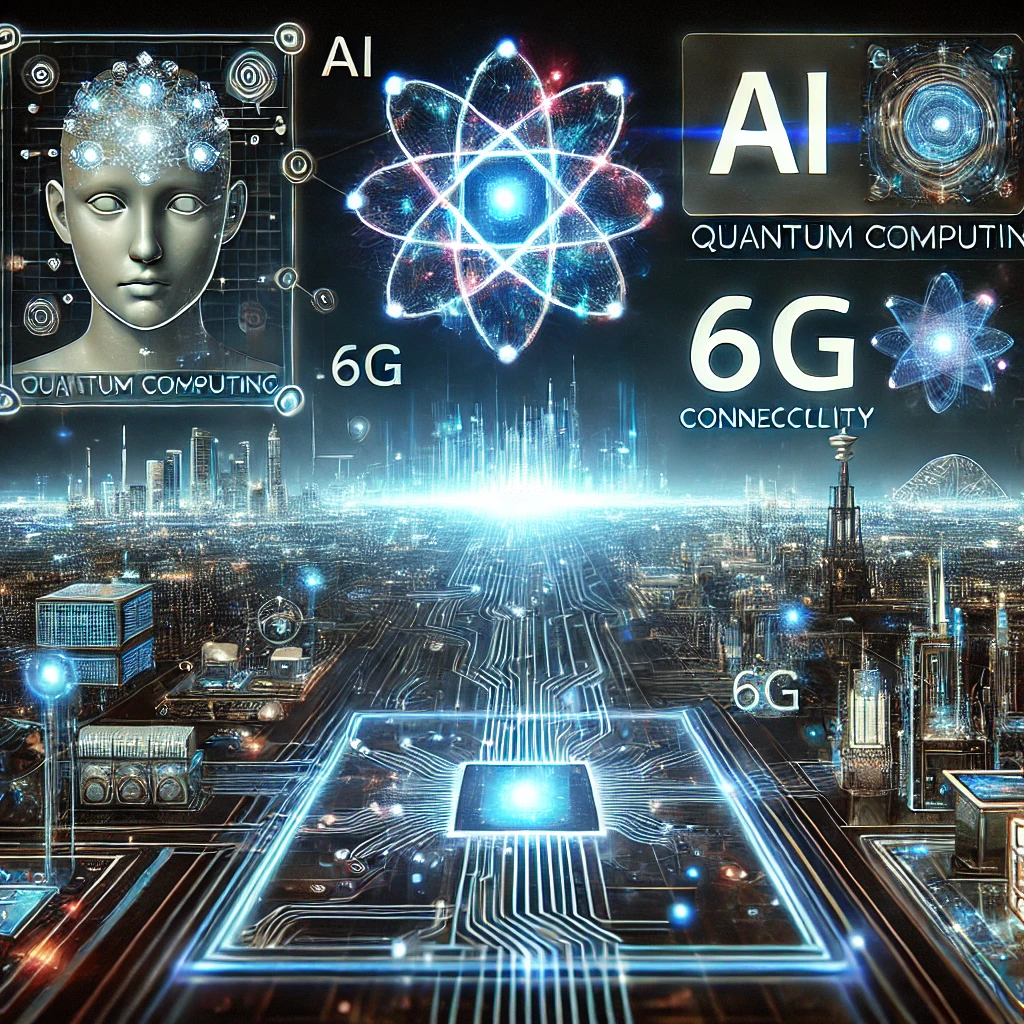
When people imagine quantum computing for consumers, they often think of sci‑fi gadgets and mysterious lab experiments. Today’s reality is more grounded: quantum computers exist mostly in research labs and specialized data centers. But within the next decade, you’ll likely feel the impact of quantum technology through the services you use, not by owning a quantum PC.
This article unpacks four key technologies converging to shape your digital life by 2030. We’ll explore how quantum computing for consumers will act as a powerful cloud back end, amplified by the ultra-fast connectivity of the 6g network rollout and brought to life by the edge ai devices you interact with daily—all powered by the quiet revolution of ai chip innovations 2026. Consider this a guide to demystifying the jargon and understanding what these future tech predictions will actually mean for you.
Section 1: Demystifying Quantum Computing for Everyday Users
The first step in understanding quantum computing for consumers is to grasp what it is and, just as importantly, what it isn’t.
- Classical computers use bits—tiny switches that are either 0 or 1.
- Quantum computers use qubits, which can exist in a superposition of 0 and 1 simultaneously. They can also be entangled, meaning the state of one qubit is intrinsically linked to another.
This allows quantum systems to explore many possible solutions to a problem in parallel, offering potential speedups for specific tasks like simulating molecules or optimizing complex routes. Research highlights these fundamental advances, while real-world use cases show the practical direction and ongoing breakthroughs continue to push boundaries.
You will access this power through Quantum-as-a-Service (QaaS) cloud platforms. For the rest of this decade, you won’t own quantum hardware; you’ll use services enhanced by it. As experts note, this indirect model is how the technology will mature.
So, what are the realistic future tech predictions for how you’ll benefit?
- Ultra‑personalized Medicine & Nutrition: Quantum computers can dramatically speed up molecular simulations. This helps researchers design drugs and materials faster. For you, this translates to more effective, tailored treatments and personalized health plans, powered by advances in quantum applications and detailed in various real-world cases.
- Smarter Recommendations and Planning: From optimizing delivery routes to financial portfolios, quantum computing excels at solving complex “optimization problems.” You’ll experience this as more accurate delivery times, better travel routing, and sharper personalized offers. Industry pilots are already underway.
- Hyper‑realistic Simulation & Gaming: By simulating complex physics more accurately, quantum-accelerated tools will help create more immersive game worlds, AR/VR environments, and better consumer electronics materials. This is a key trend shaping multiple industries.
- Personal Data Protection and Security: Two key technologies will protect your data: Quantum Key Distribution (QKD) for ultra-secure communication links and Post‑Quantum Cryptography (PQC)—new algorithms being standardized to resist future quantum attacks. Your apps and banks will update behind the scenes to be “quantum-safe.” These applications are critical for future security.

Where are we today? Quantum computers are still “noisy” and limited, used in early commercial pilots. By around 2026, experts predict the arrival of “useful quantum computing” for specific business problems. For you, the impact will be indirect—better services, not a quantum laptop. For this to feel seamless, however, it needs a network that can keep up.
Section 2: 6G Network Rollout as the Invisible Fabric
The 6g network rollout is the critical connective tissue that will make advanced quantum and AI services feel instantaneous and ubiquitous. While 5G focuses on faster broadband and lower latency, 6G (targeting the early 2030s) aims higher:
- Ultra‑high capacity to support vastly more devices.
- Sub‑millisecond latency for near-instant responses.
- Integrated sensing and communication.
- An AI‑native design that optimizes itself.

Why does this matter for quantum computing for consumers and edge ai devices?
- Real‑time Quantum Cloud Access: When your smart glasses offload a complex planning task to a quantum-enhanced cloud, 6G’s near-zero latency ensures the answer comes back before you notice, making the service truly useful.
- Always‑synced Edge AI Devices: As billions of edge ai devices (sensors, wearables, appliances) proliferate, 6G will handle the massive connectivity needed for updates and coordination without congestion.
Imagine these future tech predictions:
- Smart Cities: Traffic lights, sensors, and drones connected via 6G process data locally with AI and coordinate city-wide. You experience less congestion and faster emergency response. This mirrors the integration happening in smart homes.
- Autonomous Vehicle Networks: Cars share sensor data and intentions in real time over 6G, enabling cooperative driving and accessing cloud-optimized routing.
- Ambient Computing: Your home environment—lights, temperature, displays—adapts to you in real time. Routine AI runs on local edge ai devices, while rare heavy computations use the 6G link to the cloud. This is the evolution of current smart home trends.
While 6G builds the fabric, edge ai devices will be your primary interface to this intelligent world.
Section 3: Edge AI Devices: Where Consumers See and Touch the Future
Edge AI devices are the consumer products that run AI models locally—on the device itself—for speed, privacy, and reliability. They are the tangible face of the convergence.
By the late 2020s, expect a new generation of devices:
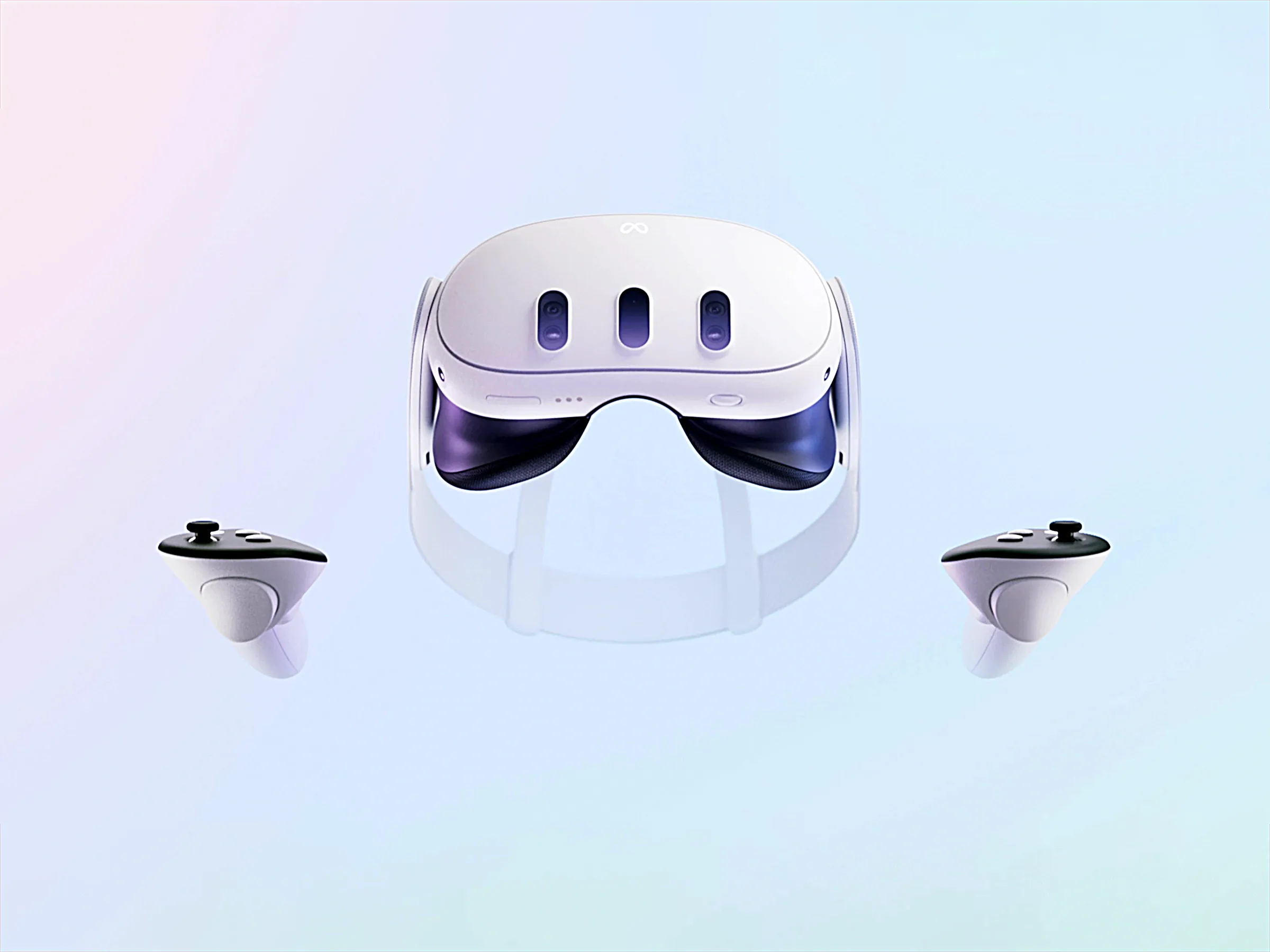
- Advanced AR Glasses: Overlaying real-time translation, object recognition, and visual instructions. Complex models run on-device for instant response, while 6G fetches updates and handles heavy cloud tasks.
- Autonomous Home Robots: Moving beyond vacuuming to tidying and assisting, with core perception and navigation happening locally for safety.
- Intelligent Vehicles: Acting as powerful rolling edge ai devices, making split-second driving decisions onboard while using 6G for coordination and cloud optimization.
- Personal Health Monitors: Smartwatches and wearables that detect health anomalies in real time and provide personalized feedback. The future of wearables is deeply tied to AI.

The 6g network rollout empowers these devices with seamless connectivity for updates and cloud offloading. Their intelligence, however, is enabled by the next piece of the puzzle: ai chip innovations 2026.
The consumer benefits are clear:
- Privacy: Sensitive data (like video from your home) can be processed on the device.
- Reliability: Devices work even with a poor network connection.
- Responsiveness: No lag for critical interactions like AR overlays or vehicle safety.
- New Experiences: Real-time coaching and assistive technology, made possible by distributed intelligence. This integration is already beginning.
Section 4: AI Chip Innovations 2026: The Engine of Intelligence
Ai chip innovations 2026 refer to the specialized processors that make advanced AI feasible in both data centers and your pocket. These innovations focus on three axes:
- Efficiency (Performance per Watt): Through advanced manufacturing and 3D packaging, chips will do more AI computation with less power. This means your edge ai devices have longer battery life while running complex models.
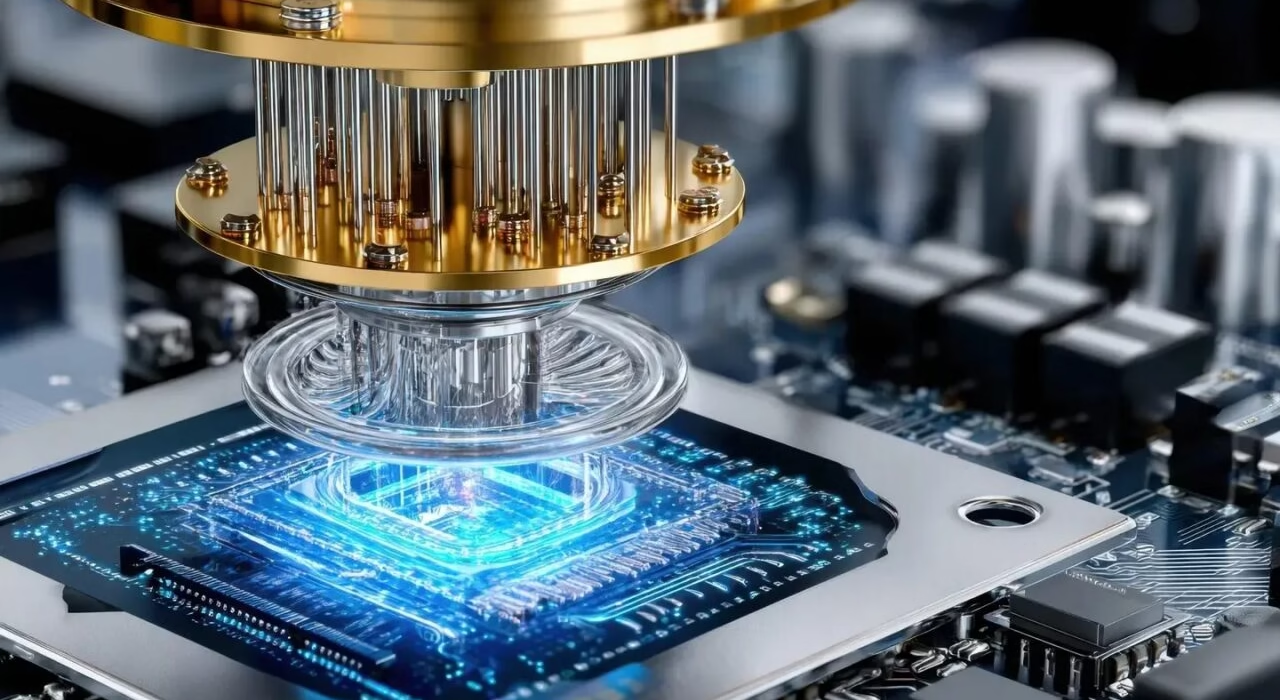
- Specialization: Chips will have dedicated blocks for vision, language, and sensor fusion. Crucially, specialized control hardware will also manage quantum processors in data centers, orchestrating hybrid quantum-classical workflows that power consumer services. Expert predictions highlight this hybrid future and ongoing developments are paving the way.
- Neuromorphic Designs: Brain-inspired chips that are ultra-efficient for tasks like sound or gesture recognition, enabling always-on features in devices with minimal battery drain.

These chips are the linchpin connecting everything. They empower edge ai devices with on-device intelligence. In data centers, they provide the classical computing power needed to control quantum processors and run the AI models that integrate with them. They will even be embedded in 6G network hardware to optimize traffic and security in real time.
For you, the consumer outcome of ai chip innovations 2026 is simple: devices that are smarter, more responsive, and have much better battery life, all while enabling the background magic of quantum computing for consumers.
Section 5: Integrated Future Tech Predictions: One Day in a Hybrid Quantum–AI World
Let’s tie these future tech predictions together with a scenario. Imagine it’s 2030, and you’re in a 6G‑enabled city. You put on your AR glasses (an edge ai device).
You ask them to plan a complex, multi-stop trip that balances cost, carbon footprint, and your personal interests. Here’s what happens unseen:
- Your glasses parse the request using their on-device AI chips.
- They send a secure, summarized query via the 6g network rollout to a hybrid cloud service.
- In the cloud, classical AI understands your preferences, while a quantum optimization engine explores millions of itinerary combinations in parallel—similar to today’s logistics and finance pilots and other top applications.
- Near-instantly, the best options stream back. Your glasses overlay the potential trip onto your real-world view, letting you “walk through” it before booking.
This experience is the convergence: quantum computing for consumers (via the cloud), the 6g network rollout (for instant data flow), edge ai devices (your interactive interface), and ai chip innovations 2026 (powering both the glasses and the data center).
This future brings profound considerations:
- Societal Impact: It could free us from complex planning but also create over-reliance on opaque algorithmic decisions.
- Ethics & Security: Data ownership and quantum-safe cryptography are paramount. Developing robust security is a core part of the roadmap.
- The Digital Divide: Regions that deploy 6G and advanced devices first may gain economic advantages, risking a wider gap if access and literacy aren’t addressed.
Frequently Asked Questions
When will I have a quantum computer at home?
Almost certainly not in the next decade. Quantum computing for consumers will arrive indirectly through cloud-based services that power your apps, healthcare, and security. The hardware will remain in specialized data centers.
How does 6G differ from 5G for everyday use?
While 5G improves speed and latency, 6G aims to make connectivity feel truly invisible and instantaneous. It will support orders of magnitude more devices (critical for the explosion of edge ai devices) and enable real-time applications—like tactile internet or seamless augmented reality—that 5G can’t fully deliver.
Will AI chips make my current phone obsolete?
Not immediately, but progressively. Ai chip innovations 2026 will enable new, power-intensive features like advanced on-device assistants and real-time video processing. Future phones and devices will leverage these chips to offer experiences your current device cannot, following the natural upgrade cycle.
Are quantum computers a threat to my online security?
Future, large-scale quantum computers could break some of today’s encryption. However, the security community is proactively developing and deploying Post‑Quantum Cryptography (PQC) standards. Your apps and services will be updated to be “quantum-resistant” long before quantum computers are powerful enough to be a threat, ensuring a smooth transition.
What’s the most realistic consumer benefit of all this convergence?
A significant reduction in daily friction. You’ll spend less time planning, waiting, and searching. Services will be more personalized, devices more intuitive, and interactions more seamless—all while your personal data can be better protected through a combination of local processing on edge ai devices and advanced, quantum-safe cloud security.