
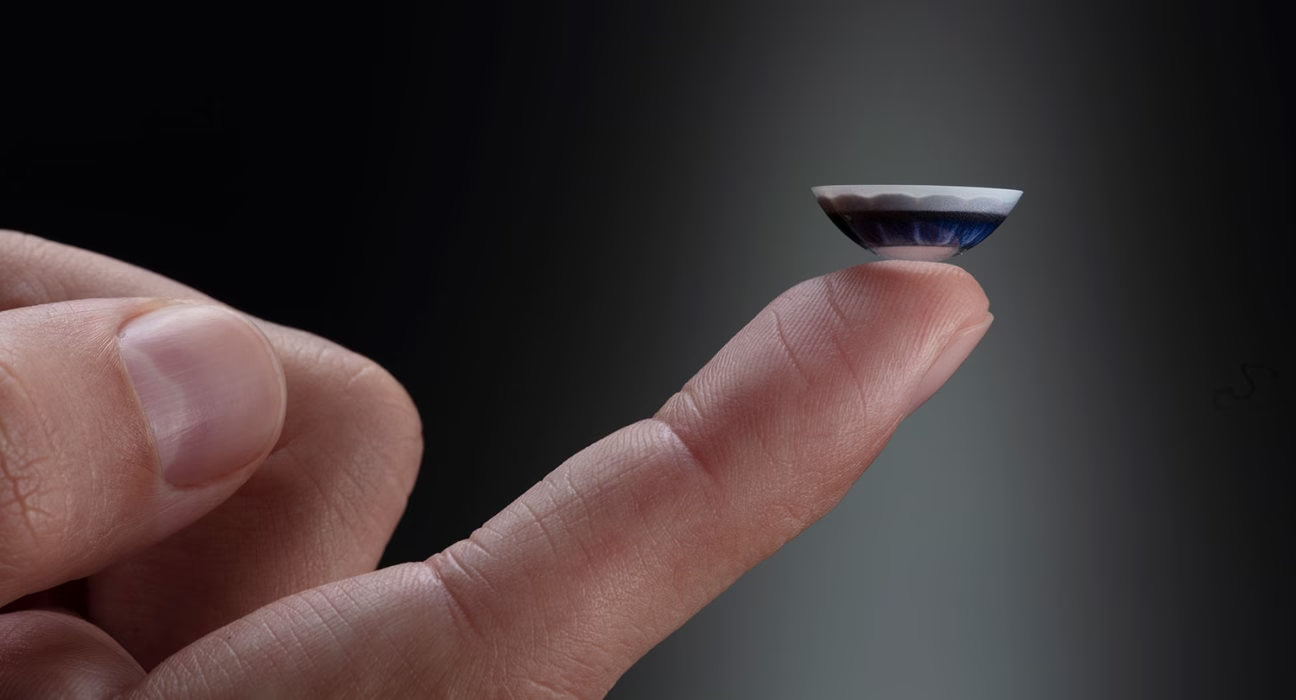
Smart Contact Lenses: The Invisible AR Display Revolution
Estimated reading time: 12 minutes
Key Takeaways
- Smart contact lenses AR display prototypes are merging digital information with physical reality directly on the eye, eliminating bulky glasses.
- Core technologies include micro-LED displays and holographic displays, packed into lenses smaller than a postage stamp.
- Health tracking micro sensors embedded in lenses enable non-invasive monitoring of metrics like glucose and intraocular pressure.
- Vision augmentation tech goes beyond data overlay to actively enhance sight with features like real-time zoom and dynamic correction.
- These lenses represent the ultimate wearable computing lens, offering hands-free, always-on interfaces for navigation, translation, and more.
- Significant challenges remain in power supply, biocompatibility, and regulation, but prototypes from companies like XPANCEO are advancing rapidly.
Table of contents
- Smart Contact Lenses: The Invisible AR Display Revolution
- Key Takeaways
- Introduction: A Seamless Digital Layer on the Eye
- The Technology Behind Smart Contact Lenses AR Display Prototypes
- Health Tracking Micro Sensors: The Eye as a Biometric Hub
- Vision Augmentation Tech: Beyond Overlay to Active Enhancement
- Wearable Computing Lens: The Ultimate Hands-Free Interface
- Challenges and the Road Ahead: Balancing Innovation with Reality
- Frequently Asked Questions
Introduction: A Seamless Digital Layer on the Eye
Imagine a world where a digital layer seamlessly overlays the physical world directly on your eye, without the need for bulky glasses or screens. This isn’t science fiction—it’s the promise of smart contact lenses AR display prototypes, cutting-edge innovations that merge digital information and physical reality at the cornea, the most intimate interface possible. Unlike traditional AR glasses, these lenses pioneer vision augmentation tech through wearable computing lens designs, sparking a revolution in how we see, track health, and enhance human capability.

In this blog, we’ll explore the current state of this technology, from key components like displays and sensors to prototypes from leading companies. We’ll delve into health monitoring capabilities, enhancement features, challenges, and future potential. Get ready to discover how these lenses could transform everyday life, teasing a shift where seeing is no longer passive but an active, augmented experience.
The Technology Behind Smart Contact Lenses AR Display Prototypes
Transitioning from futuristic vision to reality, the core technology behind smart contact lenses AR display prototypes hinges on a monumental miniaturization challenge: fitting complex optical and electronic systems onto a surface smaller than a postage stamp. Let’s break down how engineers are tackling this.
Display Technologies: Micro-LEDs and Holographics
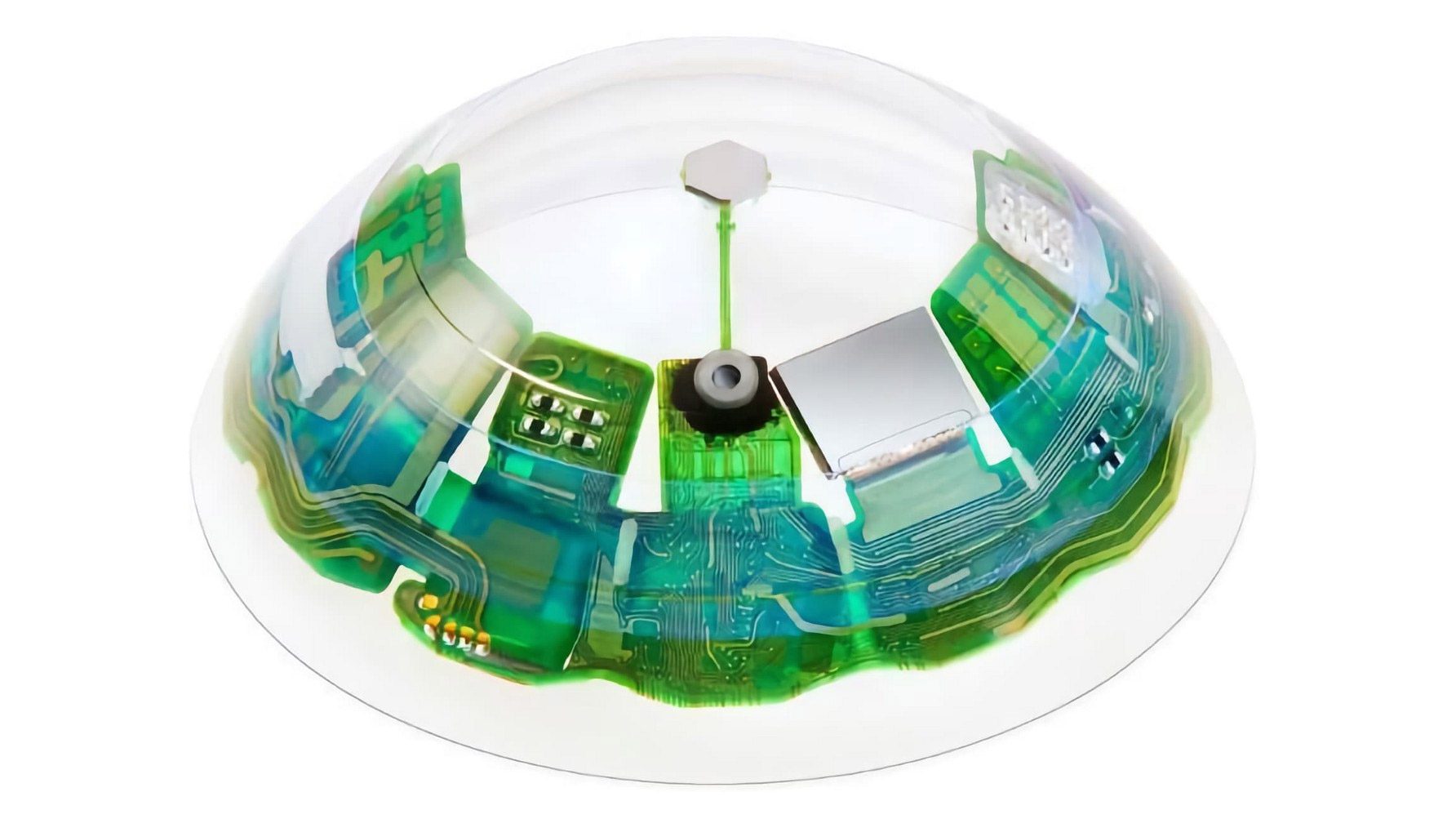
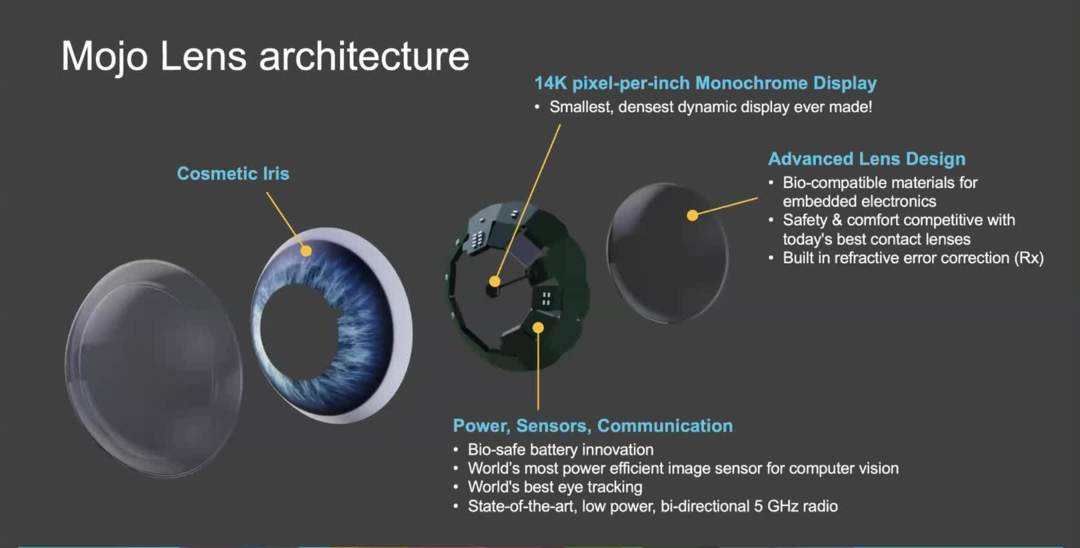
- Micro-LED displays act as tiny, high-density pixelated screens. For example, Mojo Vision developed the world’s densest 0.5mm microLED display built into the center of the contact lens, as detailed in this resource.
- Holographic displays are integrated directly into the lens, pairing with external image sources like smart glasses or helmets. Companies like XPANCEO are exploring this approach, as seen in their unveiling and hands-on reports.
Prototype Deep Dives: XPANCEO and Mojo Vision
- XPANCEO’s prototypes include a “Smart Contact Lens with Transparent Electronics” featuring a one-pixel display using patent-pending ultra-thin transparent and flexible gold conductors, detailed in this hands-on review. Another variant uses a holographic display approach.
- Mojo Vision’s advanced prototype (before closure) included a 5GHz radio, battery supply, and multiple miniature eye-tracking sensors around the lens periphery, as explained in this article.
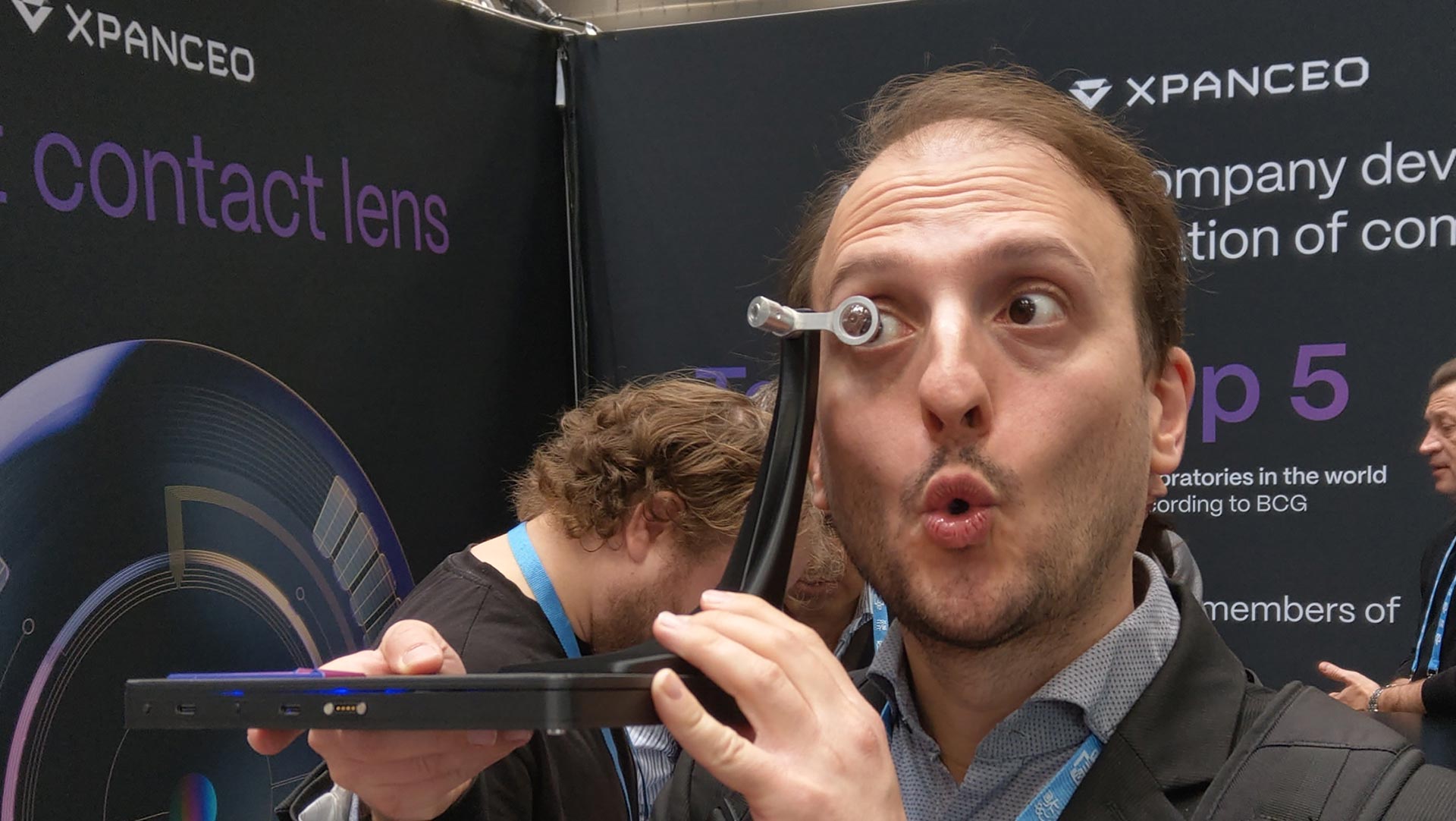
XPANCEO has been experimenting with various prototypes to solve miniaturization, involving projection optics, power systems, and transparent conductors in flexible, biocompatible materials. A key innovation is the use of soft hydrogel contact lenses that embed technology, unlike traditional hard plastic lenses. Their “Contact Lens with Intraocular Pressure (IOP) Sensor” proves integration into daily-wear soft hydrogels used by millions, as noted in the same review.
“The engineering feat here is like packing a supercomputer into a grain of sand—every micron matters.”
Health Tracking Micro Sensors: The Eye as a Biometric Hub
Beyond visuals, smart contact lenses AR display prototypes are evolving into health platforms with health tracking micro sensors, turning the eye into a passive monitoring hub. These biomedical sensors track metrics from tears and eye tissue, as highlighted in this breakthrough report.
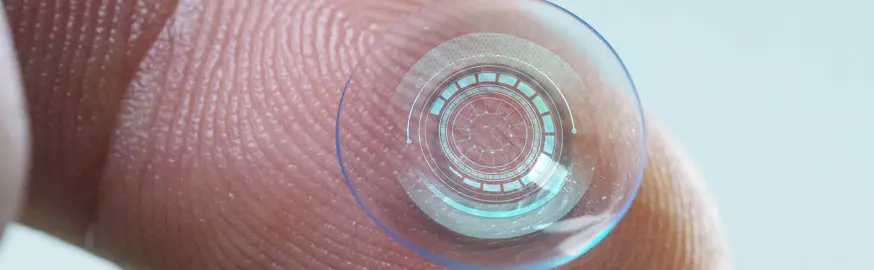
Capabilities Demonstrated by XPANCEO:
- Intraocular pressure (IOP) for early glaucoma detection with high accuracy, per hands-on details.
- Glucose levels in tear fluid for non-invasive diabetes monitoring.
- Vitamin levels for nutritional assessment.
- Lactate as a marker of muscle fatigue for athletes and astronauts, as covered in corporate news and this health tech guide.
Their “Smart Contact Lens for Data Reading” prototype enables wireless data transmission for real-time biometric data to companion devices, detailed in the review. This enables transformative applications:
- Continuous, passive monitoring for preventative healthcare, like early glaucoma or diabetes detection, unlike forgettable wearables.
- Persistent surveillance of tear-based biomarkers for chronic conditions, offering real-world benefits for patients and athletes alike.
Vision Augmentation Tech: Beyond Overlay to Active Enhancement
Building on health and display, vision augmentation tech represents technology that doesn’t just overlay data but actively improves or corrects sight beyond static prescriptions, as explored in this AR wearables guide. Enabled by AR displays, features include:
- Real-time zoom and magnification for detailed tasks or distant viewing—imagine zooming in on a street sign without moving.
- Information overlay with contextual data in your line of sight without blocking natural vision, as noted in space-ready lens reports.
- Edge enhancement and dynamic correction for real-time visual clarity adjustments based on lighting or needs.
- Assistive apps like navigation or text-to-speech for visual impairments.
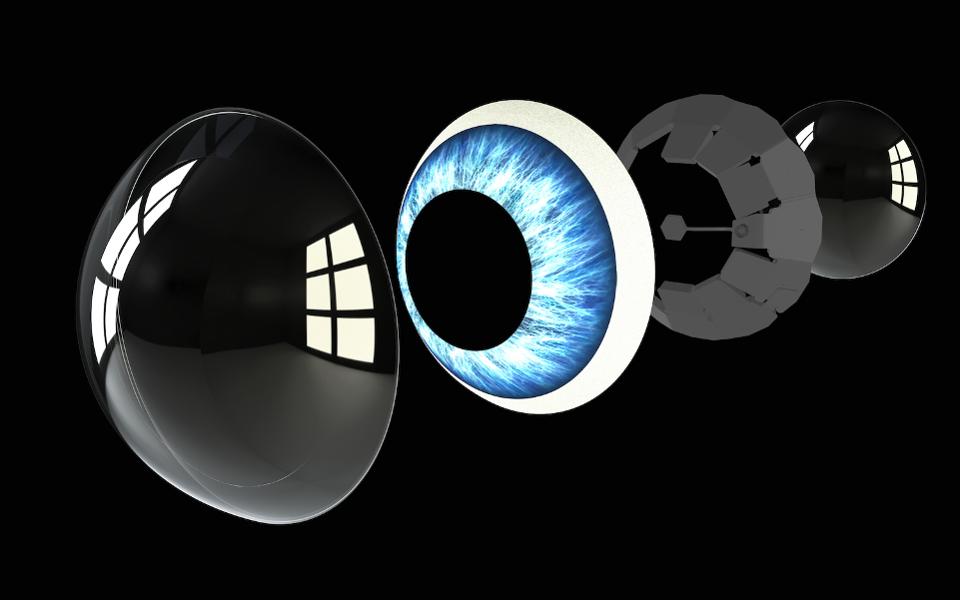
XPANCEO’s “Smart Contact Lens for AR Vision” integrates a microdisplay showing info directly in sight, advancing vision augmentation tech, as showcased in MWC Barcelona articles. Their roadmap aims to combine AR interfaces, health monitoring, and biomedical sensing into one lens, per the AR Alliance.
Wearable Computing Lens: The Ultimate Hands-Free Interface
Synthesizing prior sections, smart contact lenses AR display prototypes are the pinnacle of wearable computing lens tech—always-on, hands-free, and sensorially intimate, as discussed in this AI wearables future. A wearable computing lens is an invisible interface that eliminates off-face devices. XPANCEO demos show fully working prototypes with live wireless power transfer, as seen in this video.
The Ecosystem:
- A compact companion device for wireless data/power transfer and as the main computational hub.
- Integrated micro-battery for autonomy.
- Syncs with phones, smartwatches, and IoT, as outlined in AR Alliance and MWC coverage, and further detailed in wearable AI trends.
Use Cases to Captivate:
- Navigation/wayfinding with real-time directions during a run or commute.
- Language translation for signs or conversations in foreign countries.
- Instant info on surroundings or objects—think identifying plants or reading product reviews on the go.
- Immersive gaming or virtual meetings without headsets.
- Professional precision work guidance for surgeons or engineers.
Challenges and the Road Ahead: Balancing Innovation with Reality
After the excitement, it’s crucial to acknowledge hurdles realistically. Balancing innovation with practicality, key challenges include:
- Power supply/battery life: Current reliance on wireless transfer from companions, as mentioned in the AR Alliance.
- Biocompatibility/safety: Need for extensive tests to ensure irritation-free extended wear.
- Manufacturing at scale: Producing defect-free lenses with embedded tech is complex.
- Rigorous medical regulations: Requiring clinical trials and approvals, especially for health tracking micro sensors in wearable computing lens designs.
Timeline and Space Testing: XPANCEO is on track for a fully functional prototype by end of 2026, but consumer products need extra years for optimization and approval—initially targeting medical uses, per hands-on reports. They’re also conducting space testing with the Mohammed Bin Rashid Space Centre for lab, ground, and orbit validation under extremes, accelerating terrestrial tech, as detailed in Optica news.
Societal Impacts: Privacy/data concerns, attention effects, and human-digital relations must be addressed. As tech matures, ubiquitous visual computing could redefine education, healthcare, work, and human experience—what excites you most about smart contact lenses? Share your thoughts below.
Frequently Asked Questions
Are smart contact lenses safe for daily wear?
Current prototypes from companies like XPANCEO use soft hydrogel materials similar to regular contacts, but safety requires rigorous biocompatibility testing. Early versions aim for medical monitoring, ensuring minimal risk before consumer release.
How do smart contact lenses get power?
They rely on wireless power transfer from a companion device, such as a neckband or glasses frame, with integrated micro-batteries for short-term autonomy. This is a key challenge being optimized in prototypes.
Can smart contact lenses correct vision like regular contacts?
Yes, many prototypes are designed to combine vision correction with AR displays and sensors. They can offer dynamic correction beyond static prescriptions, adapting to lighting or user needs.
When will smart contact lenses be available to the public?
Fully functional prototypes are expected by 2026, but consumer products may take several more years due to regulatory hurdles. Initial launches will likely focus on medical applications like glaucoma monitoring.
What are the main companies developing this technology?
Leading players include XPANCEO, with multiple AR and health prototypes, and Mojo Vision (though now closed), which advanced micro-LED displays. Research is also ongoing in academia and other startups.