

How the Alexa LLM Update Is Redefining the Smart Home Assistant
Estimated reading time: 7 minutes
Key Takeaways
- The alexa llm update transforms Alexa from a command-taker into a conversational partner.
- Voice interactions are now more natural, with context retention and multi-step request handling.
- New features include personalization, proactive suggestions, and emotional intelligence.
- Smart home automation becomes accessible through simple, natural language commands.
- Amazon envisions Alexa as a true AI companion across home, mobile, and automotive.
Table of contents
- How the Alexa LLM Update Is Redefining the Smart Home Assistant
- Key Takeaways
- What the Alexa LLM Update Actually Is
- How Smarter Voice Interaction AI Changes Daily Life
- New Alexa Features That Make It Feel Alive
- How the Smart Home Assistant Gets Smarter
- Amazon’s Vision: Alexa as Your True AI Companion
- Frequently Asked Questions
Remember when voice assistants could only set timers and play songs? That era is over. The alexa llm update has transformed Alexa from a simple command-taker into a conversational partner that understands context, remembers preferences, and even shows personality. This post will cover what the update is, how it works, and the new alexa features it unlocks. This is a major leap for the amazon ai assistant ecosystem.

What the Alexa LLM Update Actually Is
An LLM, or large language model, is an AI system trained on vast amounts of text to generate human-like responses. Unlike Alexa’s older system, which matched user commands to pre-written scripts, the LLM allows Alexa to generate new responses on the fly.
Previous versions used Natural Language Understanding (NLU) with fixed intents and slots. Now, Alexa uses a custom-built LLM, likely based on Amazon’s Titan and Bedrock infrastructure, which can handle unexpected phrasing, follow-up questions, and compound requests. Amazon optimised this LLM specifically for voice interaction ai – low latency, natural interruption handling, and fluid dialogue flow. This is a challenge that text-based chatbots don’t face, but Amazon solved it by running some processing on-device (for privacy) and some in the cloud.

According to CNET (Oct 2023), “Alexa’s big AI upgrade” explains the LLM replacing the older NLU model. Additionally, TechCrunch (Sep 2023) reported that “Amazon unveils generative AI for Alexa” and mentioned the Titan/Bedrock infrastructure.
How Smarter Voice Interaction AI Changes Daily Life
Instead of saying ‘Alexa, set a timer for 10 minutes,’ you can now say ‘Alexa, start a 10-minute timer for the pasta, and remind me to stir at 5 minutes.’ The LLM parses both requests in one go.
Alexa remembers the context of your conversation. For example, ask ‘What’s the weather in Paris?’ then ‘How about Tokyo?’ – Alexa understands you’re still asking about weather. Users no longer need to repeat the subject.
Wired (Nov 2023) shared an example: “I tried the new Alexa and it’s actually smart” – user said “Alexa, find a recipe for chicken tikka masala that doesn’t use cream.” Then “Can I substitute yogurt?” – Alexa remembers and responds coherently. Tom’s Guide (Feb 2024) noted in “Alexa LLM review: A huge step forward” the example: “Book a flight to Seattle next Tuesday, and remind me to pack an umbrella.”
For non-technical users, this means no more memorising rigid commands. You can speak naturally, and the smart home assistant adapts. This shift toward conversational control aligns perfectly with the broader evolution of smart home technology, where intuitive, human-like interactions are becoming the new standard for everyday devices. To understand how we got here, check out our guide on The Evolution of Smart Home Technology: From Prototypes to Mainstream Adoption.
New Alexa Features That Make It Feel Alive
The LLM learns your preferences over time – your favourite music genre, your morning routine, your dietary restrictions – without you having to manually program anything. It then tailors responses and suggestions to you personally.
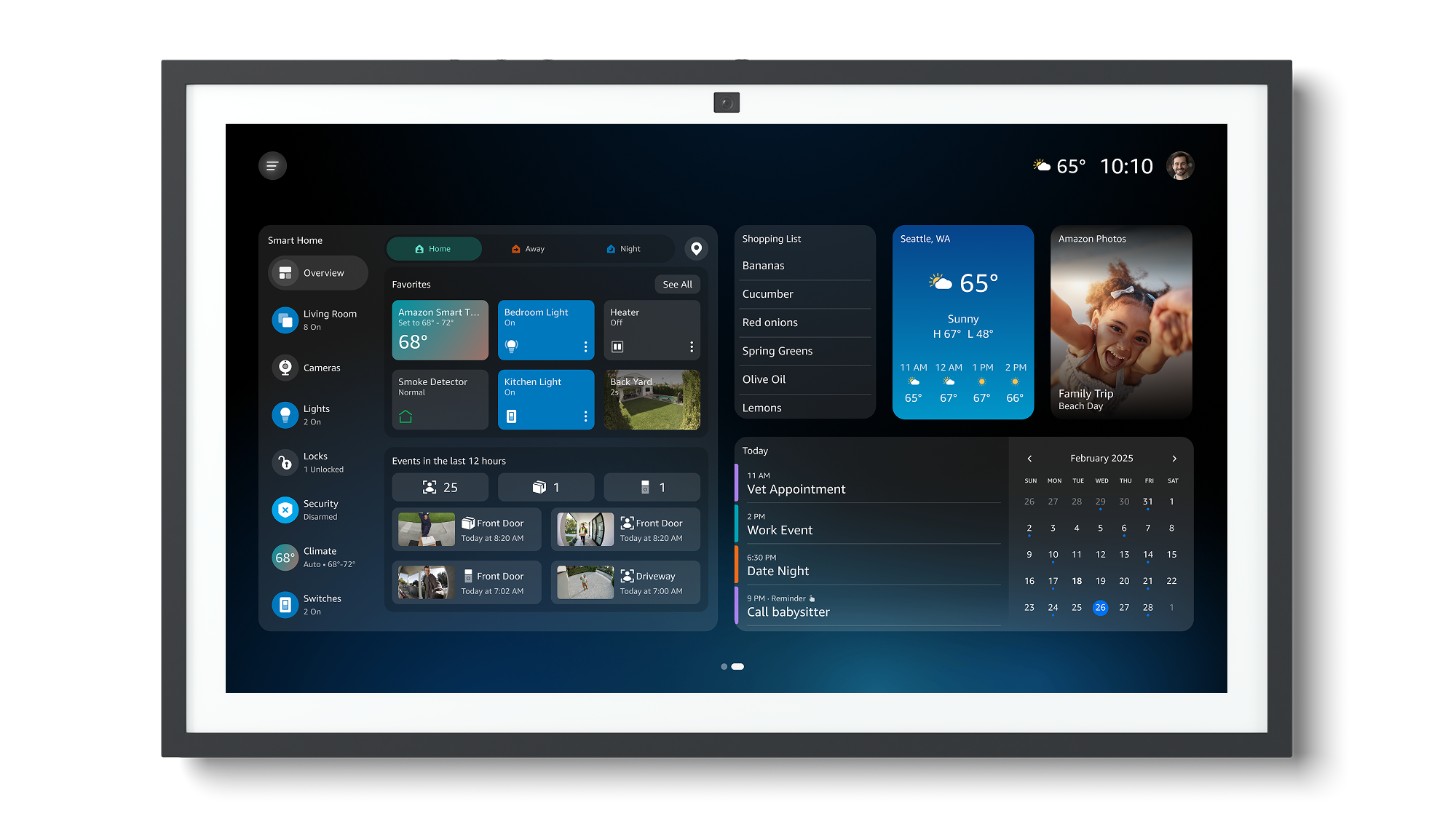
Alexa can now detect patterns and offer help unprompted. The Verge (Feb 2024) reported examples like: ‘You usually turn on the living room lamp around sunset. The sun is setting now. Would you like me to do that?’ Another common one: detecting an open garage door via a sensor and asking if you want it closed.
Instead of opening the Alexa app to create a routine, you can now say: ‘Alexa, if the front door unlocks after 10 PM, turn on the porch light, arm the security system, and send me a notification.’ The LLM turns this into a working automation instantly. This capability puts the power of complex automation into the hands of every user. For a deeper look at how AI is fundamentally transforming the way our home devices think and act on their own, explore our dedicated article on AI in Smart Home Devices – The Integration of AI in Everyday Devices.
Amazon introduced an ’emotion-aware’ mode where Alexa detects your mood – cheerfulness, frustration, even loneliness – and adjusts its tone. CNET reported this is still in beta but shows promising results.
How the Smart Home Assistant Gets Smarter
Previously, setting up a ‘cozy evening’ scene meant manually configuring triggers in the app. Now you can just say, ‘Alexa, make the house feel cozy.’ The LLM interprets this as dimming lights, turning on the fireplace (if smart), playing quiet jazz, and adjusting the thermostat – all from your smart home assistant.
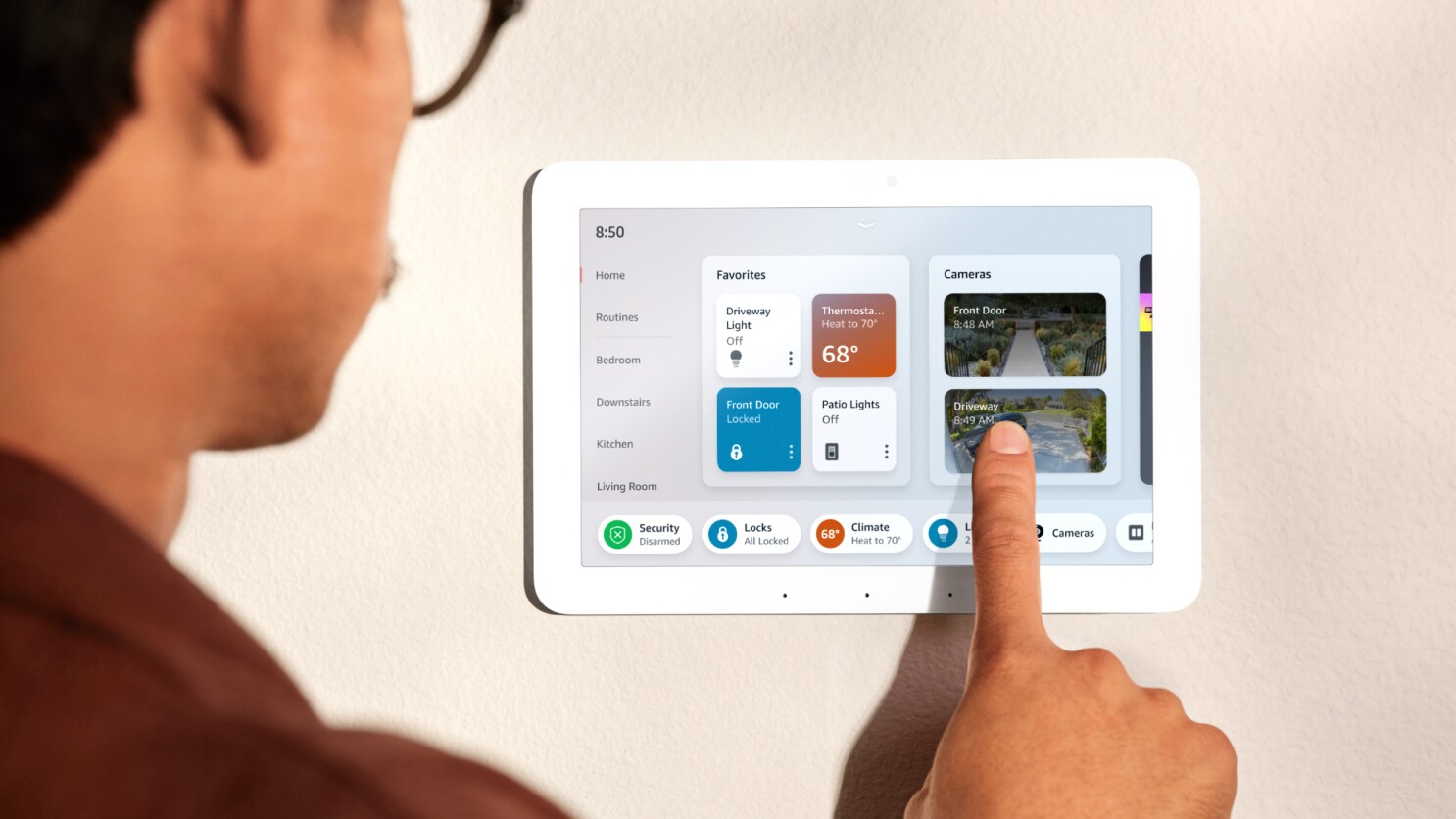
You can say, ‘If it’s raining and I’m away, close all the skylights.’ Alexa translates this into the correct automation rules without you needing to know the technical steps. If you are new to this ecosystem and want to build a solid foundation, getting the right hardware in place is key. Our Smart Home: Getting Started with Your Journey guide covers the essential first steps and devices to make your home ready for smarter interactions like these.
Android Central (Jan 2024) noted that this update gives Amazon a lead over Google Assistant and Apple HomeKit, which haven’t released comparable on-device LLM integrations.
Amazon’s Vision: Alexa as Your True AI Companion
Amazon’s Devices & Services Blog (Sep 2023) stated that Amazon sees the amazon ai assistant as a central hub not just for the home, but also for mobile and automotive use.
Future developments include:
- Emotional intelligence: More nuanced empathy – detecting loneliness or frustration and responding supportively.
- Third-party app integrations: The LLM can understand complex app commands via Skills, like “Order my usual from Domino’s and use a coupon if available.”
- Multimodal interactions: On Echo Show devices, the LLM can generate visual summaries, maps, or diagrams alongside spoken answers.

Wall Street Journal (Oct 2023) reported that Amazon is also investing in the ‘Alexa Privacy Hub’ to keep user data local while enabling personalisation.
Frequently Asked Questions
- What is the Alexa LLM update?
- How does the LLM update improve voice interactions?
- What new Alexa features are available?
- How does this update affect smart home automation?
- Is the Alexa LLM update available to all users?
- How does Amazon ensure privacy with the LLM?
The Alexa LLM update integrates a large language model into Alexa, replacing older NLU systems. This allows Alexa to generate responses on the fly, handle complex requests, and retain context.
It enables natural conversations, such as multi-step requests and follow-ups without repeating context. For example, you can ask about weather in one city, then another, and Alexa understands.
Features include personalization that learns your preferences, proactive suggestions like turning on lights at sunset, multi-step voice routines, and emotional intelligence that adjusts tone based on your mood.
It simplifies automation by allowing natural language commands. For instance, saying “make the house feel cozy” can automatically dim lights, adjust thermostats, and play music.
The update is rolling out gradually. Amazon has released it to Echo device owners in the US through an opt-in preview, with broader availability expected over time.
Amazon processes some data on-device for privacy and uses the cloud for complex tasks. The company is also investing in an ‘Alexa Privacy Hub’ to give users more control over their data.