

Built-in AI Software: The Invisible Productivity Engine
Estimated reading time: 7 minutes
Key Takeaways
- Builtin AI software integrates seamlessly into tools you already use, eliminating the need for separate platforms or training.
- Task-specific AI delivers higher accuracy and user confidence compared to broad, general-purpose systems.
- Background AI functions automate repetitive tasks without requiring user awareness or input.
- Workflow automation AI chains these functions into powerful productivity multipliers.
- Enterprise AI usability improves adoption because AI feels like a natural extension of existing workflows.
Table of Contents
Imagine a professional starting their day. They open their email client, check the calendar, and log into the CRM. Throughout these routine actions, AI is working silently in the background—suggesting replies, scheduling meetings, and flagging priority leads. This is the reality of builtin ai software: artificial intelligence that is seamlessly integrated directly into the applications and tools users already rely on daily, not a separate platform requiring additional access or training.

This contrasts sharply with the older model of standalone AI tools. Previously, a user had to load a separate chatbot, learn a new interface, and constantly switch between applications to leverage AI capabilities. The core value proposition is clear: Integration removes friction, accelerates adoption, and dramatically improves enterprise ai usability. So, how does AI embedded invisibly into your existing workflow accomplish more than standalone AI tools? According to research findings, “AI systems now understand user context and expectations” and provide “tailored content based on searcher stage” (source). This contextual awareness is the key to the power of built-in AI.
Built-in AI Software vs. Standalone Tools: Why Integration Matters
The core difference between built-in and standalone AI is clear. Task specific ai refers to AI designed for a narrow, focused function, such as smart compose in Gmail or intelligent search in a CRM. In contrast, standalone AI tools are general-purpose systems that require users to initiate every interaction. Task specific ai is more effective because its narrow focus means higher accuracy for its intended purpose, lower training friction, and immediate user confidence, since the AI is not attempting to do “everything.”
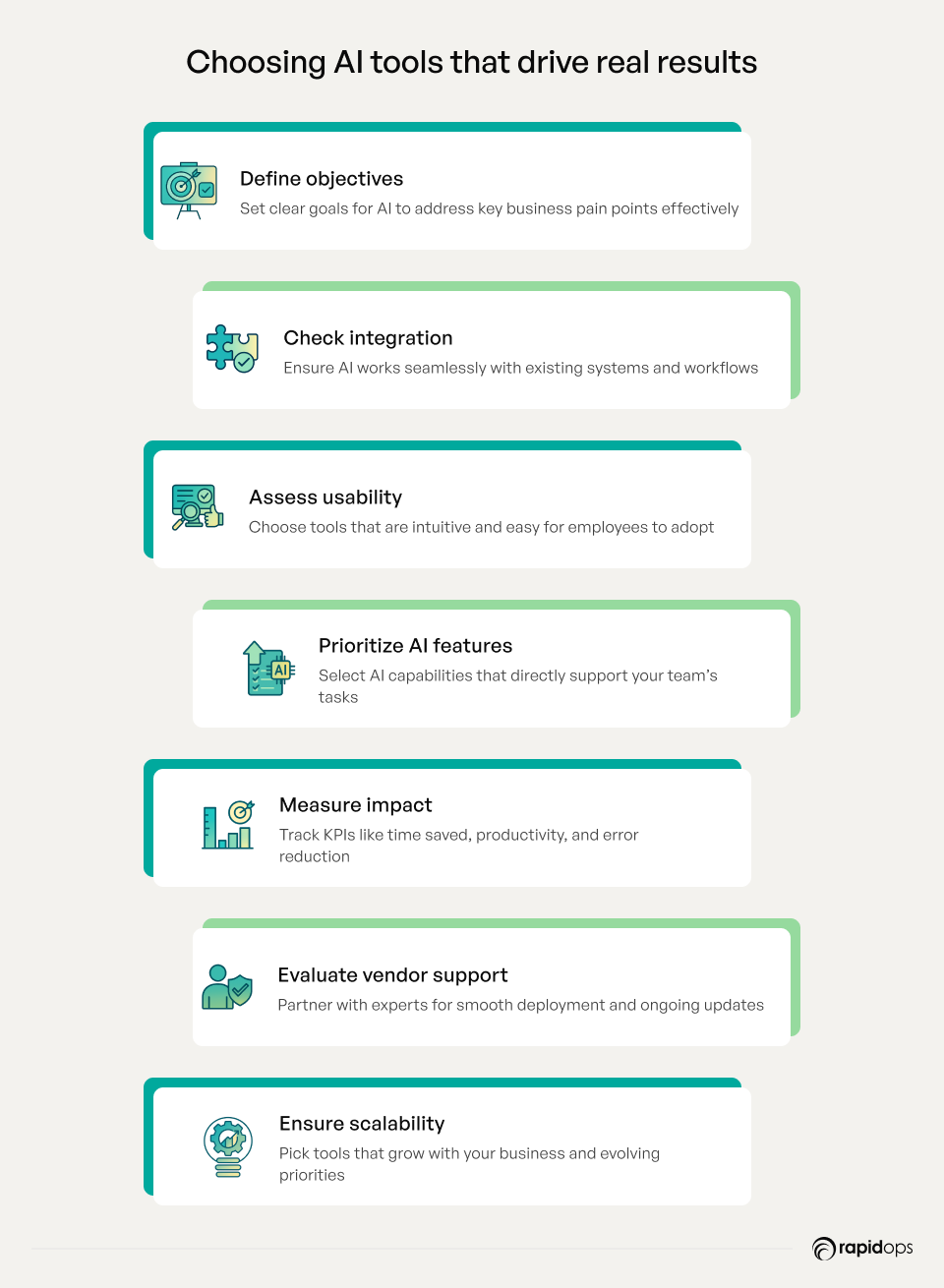
Supporting points for why integration matters include:
- Task specific ai examples in daily tools:
- Email clients with AI-generated reply suggestions based on conversation history.
- Calendar apps with intelligent meeting scheduling that learns your preferences.
- Document editors with AI-powered editing and formatting recommendations as you type.
These tools do not require constant user direction because they are designed to predict intent within a specific context. For example, when you are in an email, the AI suggests relevant responses based on your past interactions. This introduces the concept of workflow automation ai: these tools do not wait for user commands; they automatically trigger actions based on conditions or patterns, such as auto-routing emails or auto-formatting reports. The “linchpin” between user intent and desired outcome is the task-specific focus (source). In summary, narrow, built-in builtin ai software is more trustworthy and immediately productive than general-purpose tools. This workflow automation ai capability is what transforms simple assistance into automated productivity.
Invisible AI: How Background Functions Transform Productivity
Background ai functions are AI processes that operate without user awareness or intervention, continuously analyzing data and taking automated actions. The immediate benefit is that users can focus on their actual work instead of managing the tool. These functions are the invisible engine driving modern productivity.
Here is what background ai functions do in the invisible layer:
- Auto-tagging and categorizing incoming communications based on content analysis.
- Intelligent file organization, grouping related documents automatically.
- Predictive text and context-aware suggestions that appear before users even ask.
- Automated formatting and data standardization across documents and spreadsheets.
- Smart routing, such as automatically directing emails to the appropriate team member based on the content.
How do background ai functions enable workflow automation ai? The automation chain works as follows: background processes collect patterns, AI identifies repetitive steps, and then workflow automation ai eliminates manual execution. For a concrete example, in a spreadsheet tool, background ai functions monitor how users format data. Based on these patterns, workflow automation ai then applies consistent formatting automatically to new entries, requiring no user action. Another example is a meeting transcription service that automatically summarizes, tags participants, and routes action items to responsible team members—all happening in the background without user intervention. This solves the problem of repetitive manual work (source).
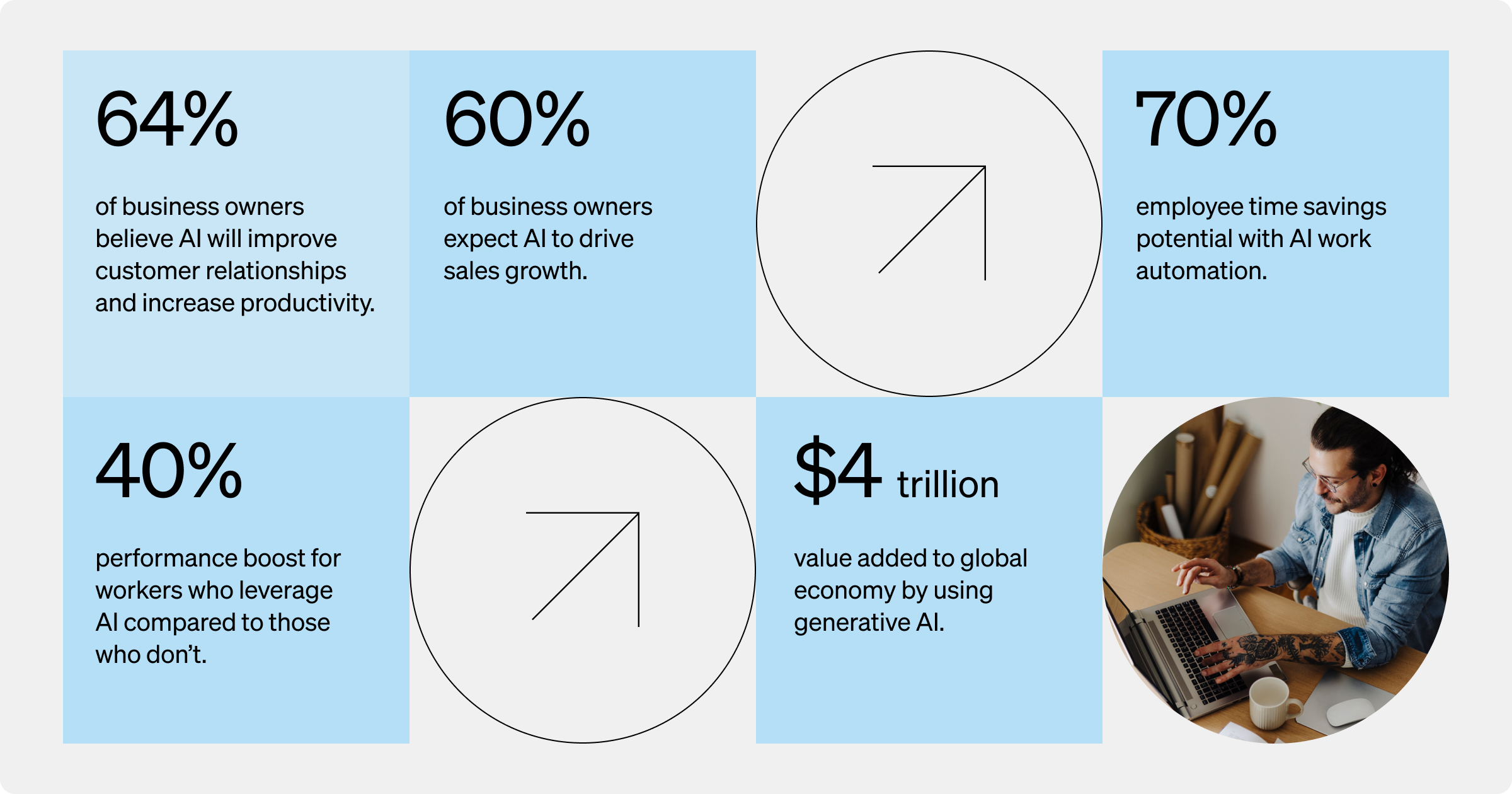
The cognitive shift for users is profound. They transition from “managing the tool,” which involves selecting features and inputting commands, to “doing the work,” focusing on strategic tasks while AI handles repetitive operations. This task specific ai function, when chained together as workflow automation ai, multiplies productivity by automating entire chains of tasks invisible to the user.
Enterprise AI Usability: Why Built-in AI Software Drives Organizational Adoption
Enterprise ai usability means that AI features embedded in enterprise tools require minimal training, integrate into existing workflows without disruption, and deliver immediate ROI without complex implementation. This matters enormously for enterprises because large teams do not have time for lengthy AI training programs. Success depends on tools that work intuitively from day one.
Enterprise-specific examples of task specific ai include:
- CRM platforms with intelligent search that understands context, such as finding “all customers in the tech industry who expressed interest in Q1.”
- Project management tools with AI-generated summaries of meeting recordings and automatic action item extraction.
- Invoice processing systems using AI to automatically populate forms and flag discrepancies.
- HR platforms with AI-powered candidate screening based on job requirements.
How workflow automation ai reduces enterprise friction includes several factors. Automated data entry reduces human error in critical processes such as finance, compliance, and HR. Workflow automation ai routes documents, approvals, and communications to appropriate teams without manual oversight. This creates a consistency improvement, allowing enterprise teams to execute the same tasks identically and reducing quality variance across departments (source). For example, manual invoice processing can take 30 minutes per document, while AI-assisted processing takes only 5 minutes with 99.2% accuracy.

The adoption advantage is clear: employees do not resist builtin ai software because it does not require learning new platforms or processes. Enterprise ai usability succeeds when AI feels like a natural extension of existing tools rather than an add-on system. This workflow automation ai integration, when implemented as task specific ai, reduces friction and learning curves (source). In summary, embedded AI in enterprise tools drives adoption because it meets users where they already work.
Building Trust: Why Task-Specific AI is More Transparent Than Broad AI Systems
Many decision-makers worry about AI “black boxes,” lack of control, and privacy implications. A strong counter-position is that task specific ai is inherently more transparent because its narrow scope makes its decision-making process understandable and auditable. The trust advantage is framed by the fact that focusing AI on one specific function, such as email suggestions, makes it far easier to understand, predict, and verify than general-purpose AI attempting to handle dozens of tasks.

Why narrow task specific ai builds confidence includes several key points. Limited scope leads to understandable behavior; users can verify the AI is doing what it claims to do. For example, email AI suggesting replies based on conversation history is transparent because users see the source data. In contrast, general-purpose AI making broad decisions about organizational priorities is opaque. Audibility and compliance are enhanced because enterprises can audit narrow AI functions for bias, accuracy, and regulatory compliance more easily than broad systems. Control and override are also simpler: when AI operates in a narrow domain, users and admins can easily identify when AI should defer to human judgment and disable specific suggestions if needed. This helps readers identify the problem of trust in AI systems (source).
For enterprise decision-making, a practical framework to evaluate builtin ai software trustworthiness involves comparison:
- Broad AI systems: Multiple decision points, complex reasoning, harder to verify decisions, require deep AI literacy to audit.
- Task-specific AI (embedded in built-in AI software): Single decision point per function, clear input-output relationships, easily verifiable, require domain knowledge (not AI expertise) to audit.

Tying back to enterprise ai usability, trust is the primary adoption factor. Task specific ai succeeds because it is easier to trust. This transparency builds adoption, and narrow, embedded AI is inherently more transparent than broad systems. For enterprise ai usability, this is a crucial advantage.
Frequently Asked Questions
- What is the difference between built-in AI and standalone AI?
Built-in AI is integrated directly into tools like email or CRM, working without separate training. Standalone AI requires launching a separate platform and learning a new interface. - How does task-specific AI improve productivity?
By focusing on a narrow function, task-specific AI delivers higher accuracy and requires less user direction, allowing users to work faster without friction. - What are examples of background AI functions?
Examples include auto-tagging emails, intelligent file organization, predictive text, automated formatting, and smart routing of communications. - How does workflow automation AI work?
It chains automated actions based on patterns identified by background AI, such as automatically applying consistent formatting to new data or routing action items from meetings. - Why is enterprise AI usability important?
It ensures that AI tools integrate seamlessly into existing workflows, requiring minimal training and delivering immediate ROI, which drives organizational adoption. - Is task-specific AI more trustworthy than broad AI?
Yes, because its narrow scope makes decision-making transparent and auditable. Users can verify inputs and outputs, and compliance teams can audit for bias more easily. - How can I start using built-in AI software in my organization?
Audit your current software stack to identify tools that already offer built-in AI features you haven’t activated. Then, activate them and identify gaps that standalone solutions may fill.