
Google I/O 2024 AI Announcements: Project Astra, Gemini 1.5 Pro, Veo, and AI Overviews
Estimated reading time: 7 minutes
Key Takeaways
- Project Astra is Google’s vision for a proactive, real-time, multimodal AI assistant that can see, hear, and remember.
- Gemini 1.5 Pro now features a native 1 million token context window, allowing it to process enormous datasets like an entire movie or a 400-page PDF in a single prompt.
- Google Veo is a high-fidelity AI video generation model competing with Sora, capable of producing 1080p video over 60 seconds long with cinematic understanding.
- AI Overviews replaces the Search Generative Experience (SGE) as a core, always-on Search feature, providing Gemini-generated summaries for eligible queries.
- These announcements collectively signal Google’s thesis that the future of AI is multimodal, proactive, and deeply embedded in existing products.
Table of Contents
- Google I/O 2024 AI Announcements: Project Astra, Gemini 1.5 Pro, Veo, and AI Overviews
- Key Takeaways
- Introduction: A New Era of AI from Google I/O 2024
- Project Astra – The Future of AI Assistants
- Gemini 1.5 Pro – Breaking the Context Window Barrier
- Google Veo – Competing in AI Video Generation
- AI Overviews – The Evolution of Search
- Conclusion: The Bigger Picture & Rollout
- Frequently Asked Questions
Introduction: A New Era of AI from Google I/O 2024
On May 14, 2024, Google I/O became a landmark event for artificial intelligence, with CEO Sundar Pichai declaring that Google is “reimagining all of its core products with AI at the center.” The google io 2024 ai announcements project astra narrative tied together a unified vision of multimodal, proactive, and generative AI. This year’s keynote was not about incremental updates; it was about a fundamental shift in how users interact with technology. Beyond chatbots and text generation, Google unveiled four transformative pillars: Project Astra, Gemini 1.5 Pro, Google Veo, and AI Overviews. These innovations collectively position AI as an embedded companion in daily life, capable of seeing the world through your camera, remembering your conversations, understanding entire movies, creating high-definition video, and reshaping the very fabric of Search. Each announcement builds upon the others, creating an ecosystem where AI is no longer a tool you use but a presence you collaborate with.
This keynote showcased a clear strategy: make AI as intuitive and intelligent as possible across every touchpoint. The impact is already being felt, from how developers build applications to how everyday users find information. Let’s break down each of these groundbreaking announcements and explore what they mean for the future of technology.
Project Astra – The Future of AI Assistants
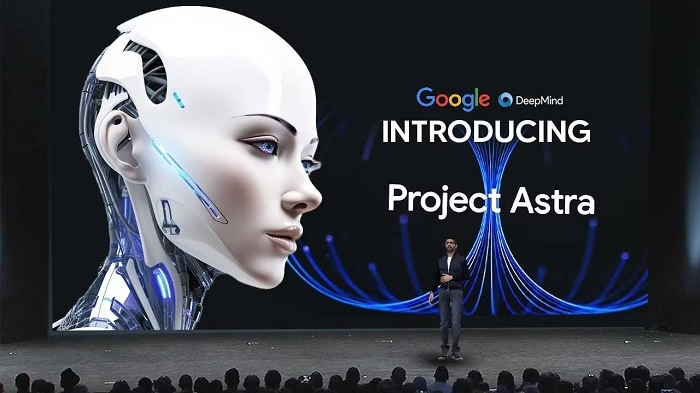
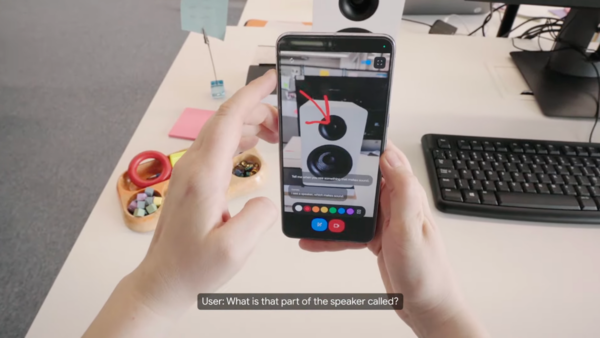
Project Astra, presented by Google DeepMind CEO Demis Hassabis, was the surprise centerpiece of Google I/O 2024. It represents Google’s long-term research vision for a universal, real-time AI assistant. The project astra google ai assistant features include continuous vision-based understanding via a device’s camera, persistent short-term memory that allows follow-up questions without repeating context, fluid spoken dialogue with human-like pacing, and a lightweight on-device model to reduce latency. In live demos, Project Astra identified objects, recalled where a user left their glasses, and read code from a laptop screen while maintaining a conversational thread. Unlike the current Gemini Advanced, which functions as a query-response system, Project Astra is proactive and contextually aware. It does not wait for a command; it observes, listens, and volunteers information when it detects something relevant. While it is not a shipping product yet, Hassabis confirmed that its technology will power future Gemini iterations. This assistant is designed to be your constant companion, learning from your environment and interactions.

The key differentiator here is memory and continuity. Most AI assistants today start from zero with every interaction, but Project Astra maintains a persistent thread across time and context. As noted by TechCrunch, this represents a paradigm shift from “ask and answer” to “observe and assist.” DeepMind’s vision is to make AI feel less like a tool and more like a helpful, knowledgeable friend who is always with you, capable of seeing what you see and understanding what you need before you even ask.

Gemini 1.5 Pro – Breaking the Context Window Barrier
Gemini 1.5 Pro was announced with general availability and a monumental upgrade: a native context window of 1 million tokens. This effectively means the model can “remember” vast amounts of information in a single conversation. The practical implications of this gemini 1.5 pro 1 million token context are staggering. It can process an entire feature-length movie like The Godfather, a 10-hour audiobook, 100,000 lines of code, or a 402-page PDF in a single prompt without needing to chunk information or rely on recall fallbacks. During the keynote, Google demonstrated this by feeding the Apollo 11 mission transcript PDF into Gemini and asking complex, cross-referenced questions about engine telemetry. The model answered with near-perfect accuracy, referencing specific timestamps and data points from the document. This is an 8x increase over the earlier Gemini 1.5 from February 2024, which offered 128K tokens. Additionally, developers can request access to up to 10 million tokens for experimental purposes via Google’s AI Studio, opening up entirely new categories of applications.
As Wired notes, this capability eliminates the need for complex retrieval-augmented generation pipelines for many use cases. For developers, this means simpler code and faster iterations. For users, it means asking questions that span entire libraries of documents without ever hitting a “memory limit.” The context window is no longer a bottleneck; it is a foundation for true understanding and deep analysis.
Google Veo – Competing in AI Video Generation
Google Veo is the company’s highest-fidelity AI video generation model, positioned to directly compete with OpenAI’s Sora. The capabilities of this google veo ai video generation model are impressive. It can produce 1080p video of up to 60 seconds in length, with coherent motion and consistent scene geometry. One of its standout features is its understanding of cinematic terminology—prompts like “dolly zoom,” “low-angle shot,” or “time-lapse” are accurately interpreted and rendered. Veo also accepts both text prompts and reference images, meaning you can generate a video that looks like a specific photograph or painting. Furthermore, it supports editing features like extending clips or filling in transitions between scenes. To address deepfake concerns, Google has integrated SynthID watermarking into every output, making it possible to identify AI-generated content. The rollout begins with VideoFX, a new experimental tool from Google Labs, followed by an API for developers. There are also hints of deep integration with YouTube Shorts, which could revolutionize how short-form video content is created. For a deeper insight into Google DeepMind’s work, check out their tool for generating soundtracks from video here.
As The Verge points out, Veo’s true advantage may be its integration with Google’s ecosystem, from YouTube to Google Cloud. For creators, this means generating high-quality video content with minimal effort. For businesses, it opens new avenues for marketing and training videos. The ability to understand cinematic language democratizes video production, putting Hollywood-level techniques into the hands of anyone with an idea.
AI Overviews – The Evolution of Search
Google formally graduated its Search Generative Experience (SGE) into a core Search feature, rebranded as AI Overviews. This is a fundamental change to how millions of people interact with the web every day. The google search ai overviews sge 2024 update changes the interaction model dramatically. For eligible queries, users now see a Gemini-generated summary paragraph before the traditional blue links, complete with clickable citations shown as icons. Early test results indicate higher user satisfaction and increased click-through to “diverse” sources. However, AI Overviews will not appear for “Your Money or Your Life” (YMYL) queries related to health, finance, and news until further validation, ensuring sensitive topics are handled with care. The key difference from the previous SGE experiment is that AI Overviews is always-on for eligible queries, whereas SGE was an opt-in Labs experiment. Users who prefer the traditional experience can toggle it off in their settings. For those interested in the regulatory landscape, read about the EU antitrust complaint and its impact.

As Search Engine Land notes, this rollout represents a careful balance between innovation and responsibility. For publishers, it means adapting to a world where their content is summarized by AI before users even see it. For users, it means getting faster, more comprehensive answers. Understanding how AI is changing the world is crucial for navigating this new landscape. Furthermore, businesses must stay informed about the AI regulations that are shaping these technologies.
Conclusion: The Bigger Picture & Rollout
The interconnected vision from the google io 2024 ai announcements project astra keynote is clear. Project Astra is the real-time, multimodal “face” of the future. Gemini 1.5 Pro is the massive context memory that gives that face true understanding. Veo extends these capabilities into the world of video creation. And AI Overviews rearchitects Search, the product that made Google a household name. Google’s core thesis is that the future of AI is multimodal, proactive, and deeply embedded in existing products. Specific rollout timelines were provided: Gemini 1.5 Pro’s 1 million context window and AI Overviews reached users within weeks of the keynote. Veo is available in experimental form through VideoFX. Project Astra is expected in prototype form later in 2024, possibly tied to Gemini 2.0. The most immediate impact is being felt in Search and through Gemini, followed by video generation tools, and eventually, a new generation of AI assistants. For a look at how to protect these systems, read about AI fraud detection in finance. As summarized by CNET, Google I/O 2024 was not just about new products; it was about a new philosophy for AI.

Frequently Asked Questions
1. What is Project Astra and when will it be available?
Project Astra is Google’s research project for a universal, real-time AI assistant that can see, hear, and remember conversations. It is not yet a shipping product, but its technology will power future Gemini versions. A prototype is expected later in 2024, possibly with Gemini 2.0.
2. How does Gemini 1.5 Pro’s 1 million token context change AI usage?
It allows the model to process enormous amounts of data in a single prompt—like an entire movie, a 400-page book, or 100,000 lines of code—without needing to chunk information or use retrieval systems. This makes deep analysis of large documents seamless and fast.
3. Is Google Veo available to the public?
Yes, Veo is rolling out through VideoFX, a new experimental tool in Google Labs. An API for developers is also planned, with deep integration into YouTube Shorts hinted at for the future.
4. Are AI Overviews replacing all Search results?
No. AI Overviews appear for eligible queries, providing a summary before traditional links. They do not appear for sensitive “Your Money or Your Life” topics like health and finance yet. Users can also disable the feature in their settings.
5. What is the main difference between SGE and AI Overviews?
Search Generative Experience (SGE) was an opt-in Labs experiment. AI Overviews is the graduated, always-on core feature for eligible queries, making AI summaries a default part of Google Search for most users.
6. Are these AI tools safe from generating misleading content?
Google has implemented safeguards. Veo uses SynthID watermarking to identify AI-generated video. AI Overviews avoids YMYL topics until further validation. Responsible AI development was a key theme of the keynote.