

India-Europe AI Ecosystem: The Path to Tech Independence in 2026
Estimated reading time: 8 minutes
Key Takeaways
- The India-Europe AI ecosystem is a strategic partnership aimed at reducing dependency on US and China AI giants.
- It focuses on building a sovereign AI stack through chip collaboration and software cooperation.
- Events like the India AI Impact Summit 2026 galvanize this push for tech independence 2026.
- The partnership leverages India’s vast ICT talent and digital infrastructure with Europe’s regulatory rigor and research excellence.
- Success means operational indigenous AI stacks by 2026, promoting a multipolar global AI governance model.
- Key initiatives include the European Legal Gateway Office and the Frontier AI Grand Challenge.
Table of contents
- India-Europe AI Ecosystem: The Path to Tech Independence in 2026
- Key Takeaways
- Introduction: The AI Dependency Crisis
- The Geopolitical Imperative
- Defining the Sovereign AI Stack
- Chip Collaboration: Building the Hardware Foundation
- Software Cooperation: Fueling Innovation and Ethics
- The Roadmap to Tech Independence 2026
- Geopolitical Implications: A Multipolar AI Future
- Frequently Asked Questions
Introduction: The AI Dependency Crisis
The global AI landscape is increasingly dominated by US and Chinese giants, creating tangible risks of dependency for other nations. This concentration of power threatens technological sovereignty, economic resilience, and strategic autonomy. In response, the strategic India-Europe AI ecosystem emerges as a critical partnership, galvanized by events like the India AI Impact Summit 2026, to build independent capabilities and reduce reliance on those powers. This India-Europe AI ecosystem represents a concerted push for joint tech independence 2026, framing this exploration of how collaboration addresses the imperative for tech sovereignty.

We will detail real developments and their implications, satisfying informational intent by examining how this partnership builds a self-reliant future. For a broader view of how AI is reshaping global business strategies, see our analysis on AI transformation. The stakes are high: without action, nations risk being locked into external AI stacks that dictate terms of access, innovation, and security.
The Geopolitical Imperative
The geopolitical context underscores this shift. The India AI Impact Summit 2026’s Global South focus and the EU’s “AI Continent” goal act as a counterbalance, highlighted by a 26-nation EU delegation and the New Delhi Declaration emphasizing shared AI benefits for humanity. This convergence strengthens the India-Europe AI ecosystem as a pillar of multipolar technology governance. This theme is explored in our look at the broader impact of AI on industries.
Why partner now? The answer lies in complementary strengths:
- India brings vast ICT talent, a thriving digital infrastructure, and scale in data and innovation.
- Europe contributes regulatory rigor, research excellence, and initiatives like AI Factories.
Together, they mitigate risks of dependency on adversarial external stacks. Understanding the regulatory frameworks shaping such collaborations is key, as detailed in our guide to understanding new AI regulations.

Defining the Sovereign AI Stack
The imperative for a sovereign AI stack—a complete, independent technology foundation encompassing hardware, software, data, talent, and controlled standards—becomes clear. It is not just about building AI models; it’s about owning every layer of the technology stack to ensure security, ethics, and economic control.
Key launches from the February 2026 summit, including the European Legal Gateway Office and endorsements of the Leaders’ Declaration, build the sovereign AI stack‘s governance and talent layers. EU Executive Vice-President Henna Virkkunen underscored Europe’s “AI Continent” ambition via sovereign models through the Frontier AI Grand Challenge. These initiatives are part of a wave of revolutionary AI innovations changing the world that are redrawing the global tech map.
“Europe is getting closer to becoming an AI Continent,” stated Virkkunen, highlighting the transformative potential of this partnership.
Chip Collaboration: Building the Hardware Foundation
The hardware foundation relies on chip collaboration. India’s $400 billion investments in minerals, chips, and compute, plus over $200 billion in AI/deep tech commitments from global players, tie into potential supply chain resilience. Examples like AMD-TCS AI infrastructure build crucial capacity, though direct EU-India chip pacts are still nascent.
Chip collaboration requires:
- Joint R&D for fabrication nodes to advance semiconductor technology.
- Diversified supply chains to avoid chokepoints, leveraging India’s mineral resources and Europe’s manufacturing expertise.
- Strategic investments in fabs and minerals processing, where India-Europe AI ecosystem partnerships can leverage EU funding mechanisms and India’s scale.
This collaboration is critical because AI hardware, especially advanced chips, is dominated by a few players. By pooling resources, India and Europe can create alternative supply chains that enhance resilience. Imagine a future where AI compute power is not a geopolitical lever but a shared resource.
Software Cooperation: Fueling Innovation and Ethics
Software cooperation is the innovation engine, involving collaborative open-source projects, ethical guidelines alignment, and talent exchange via the Legal Gateway Office. Efforts like the Indo-French AI Healthcare Centre define interoperability and human-centric governance for the sovereign AI stack.
Key aspects include:
- Joint R&D centers that foster innovation in areas like healthcare, climate, and agriculture.
- Shared standards influenced by the EU’s AI Act, ensuring trust and scalability.
- Talent exchange programs that bridge skill gaps and promote cultural understanding.
This cooperation ensures that AI systems are not only powerful but also ethical, transparent, and aligned with democratic values. By co-developing software, India and Europe can set global benchmarks for responsible AI.
The Roadmap to Tech Independence 2026
The roadmap to tech independence 2026 leverages momentum from the new EU-India Free Trade Agreement, metrics like $200B+ pledges, and proprietary model development. This aligns with key emerging tech trends for 2025 that emphasize strategic autonomy.
Success means operational indigenous AI stacks by 2026, reducing US/China reliance through:
- Diversified supply chains for chips and critical minerals.
- Governance frameworks that ensure data privacy and security.
- Proprietary AI models tailored to regional needs and languages.
The timeline is ambitious but achievable with sustained collaboration. Every milestone, from summit declarations to joint ventures, builds toward a self-reliant future.
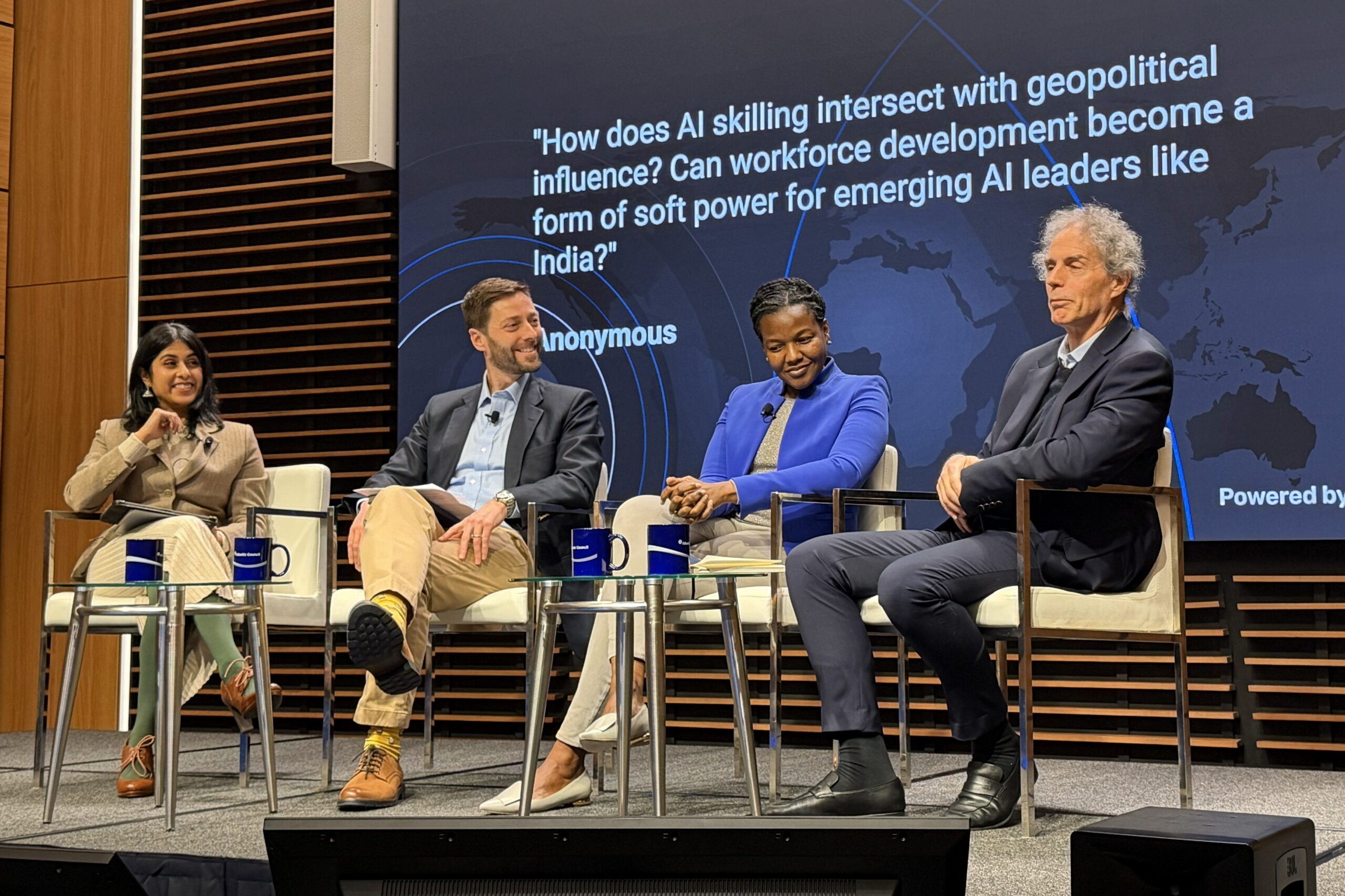
Geopolitical Implications: A Multipolar AI Future
Geopolitically, success shifts global AI to multipolarity, with the India-Europe model inspiring other regions like Africa and Southeast Asia to pursue similar partnerships. This reduces the risk of a bifurcated tech world dominated by two superpowers.

In recap, the India-Europe AI ecosystem builds a sovereign AI stack via chip collaboration and software cooperation, charting a definitive course toward tech independence 2026. As Virkkunen’s statement highlights, this partnership serves as a blueprint for a balanced, multipolar AI world. We urge readers to follow these developments and explore the burgeoning opportunities in India-Europe ties.
Frequently Asked Questions
What is the India-Europe AI ecosystem?
The India-Europe AI ecosystem is a strategic partnership between India and European nations aimed at developing independent AI capabilities to reduce dependency on US and Chinese technology. It involves collaboration in hardware, software, talent, and governance to build a sovereign AI stack.
Why is tech independence important for India and Europe?
Tech independence ensures strategic autonomy, economic resilience, and security. It prevents over-reliance on external AI stacks that may impose restrictions, compromise data privacy, or be used as geopolitical tools. By collaborating, India and Europe can create tailored solutions that reflect their values and needs.
What is a sovereign AI stack?
A sovereign AI stack is a complete, independent technology foundation for AI, encompassing hardware (like chips), software (models and platforms), data, talent, and controlled standards. It allows nations to own and control their AI infrastructure without external dependencies.
How does chip collaboration work between India and Europe?
Chip collaboration involves joint research and development in semiconductor technology, diversified supply chains for critical minerals, and strategic investments in fabrication plants. India’s investments in minerals and Europe’s expertise in manufacturing complement each other to build resilient hardware foundations.
What are the key initiatives from the India AI Impact Summit 2026?
Key initiatives include the European Legal Gateway Office for talent exchange, endorsements of the Leaders’ Declaration for shared benefits, and the Frontier AI Grand Challenge to develop sovereign AI models. These efforts strengthen governance and innovation within the partnership.
How does this partnership affect global AI governance?
The partnership promotes a multipolar AI governance model, where multiple regions have a say in setting standards and rules. It challenges the dominance of US and China, encouraging a more balanced and inclusive global AI ecosystem that prioritizes ethical considerations and human-centric development.