
The Ultimate Guide to Meta AI Advertising in 2025: Updates, Tools & Strategy
Estimated reading time: 12 minutes
Key Takeaways
- Meta AI advertising is now the new standard, not a beta feature, for campaign management in 2025.
- Meta has fully transitioned to an AI marketing platform, with Advantage+ handling over 70% of campaign spend for large advertisers.
- Automated ad creation can generate up to 150 unique ad variations from a single set of inputs, revolutionizing creative workflows.
- Digital advertising AI is converging across platforms like Google and TikTok, sharing core principles of automation and optimization.
- Actionable strategies like data hygiene, creative volume, and broad targeting are essential for mastering social media AI ads.

Table of Contents
- The Ultimate Guide to Meta AI Advertising in 2025: Updates, Tools & Strategy
- Key Takeaways
- The Shift to an AI Marketing Platform
- Deep Dive into Automated Ad Creation
- Not Just Meta: The Broader AI Ecosystem
- Optimizing for Social Media AI Ads
- The Future of Digital Advertising AI
- Frequently Asked Questions
The rapid evolution of AI in advertising is undeniable, and Meta is at the forefront of this transformation. For marketers, keeping up is critical to ROI. Meta AI advertising is no longer a beta feature but the new standard for campaign management. This comprehensive guide provides you with all the latest AI developments from Meta and the broader industry, fulfilling the informational need to understand how digital advertising AI is reshaping the landscape.
The Shift to an AI Marketing Platform
Meta has fully transitioned from a social network to an AI marketing platform. Meta’s Advantage+ suite, which includes Advantage+ audience, Advantage+ placements, and Advantage+ creative, is now the default architecture for most campaign types in Ads Manager. According to Meta Newsroom, Advantage+ handles over 70% of campaign spend for large advertisers. This marks a clear shift in philosophy: marketers must trust the algorithm for audience targeting, budget allocation, and creative optimization instead of manual control. Resisting this shift by over-segmenting audiences or using rigid budgets can lead to 30–50% higher CPAs, as noted by The Verge. Embracing meta ai advertising as part of the default buying engine is essential for efficiency and scale.

Deep Dive into Automated Ad Creation
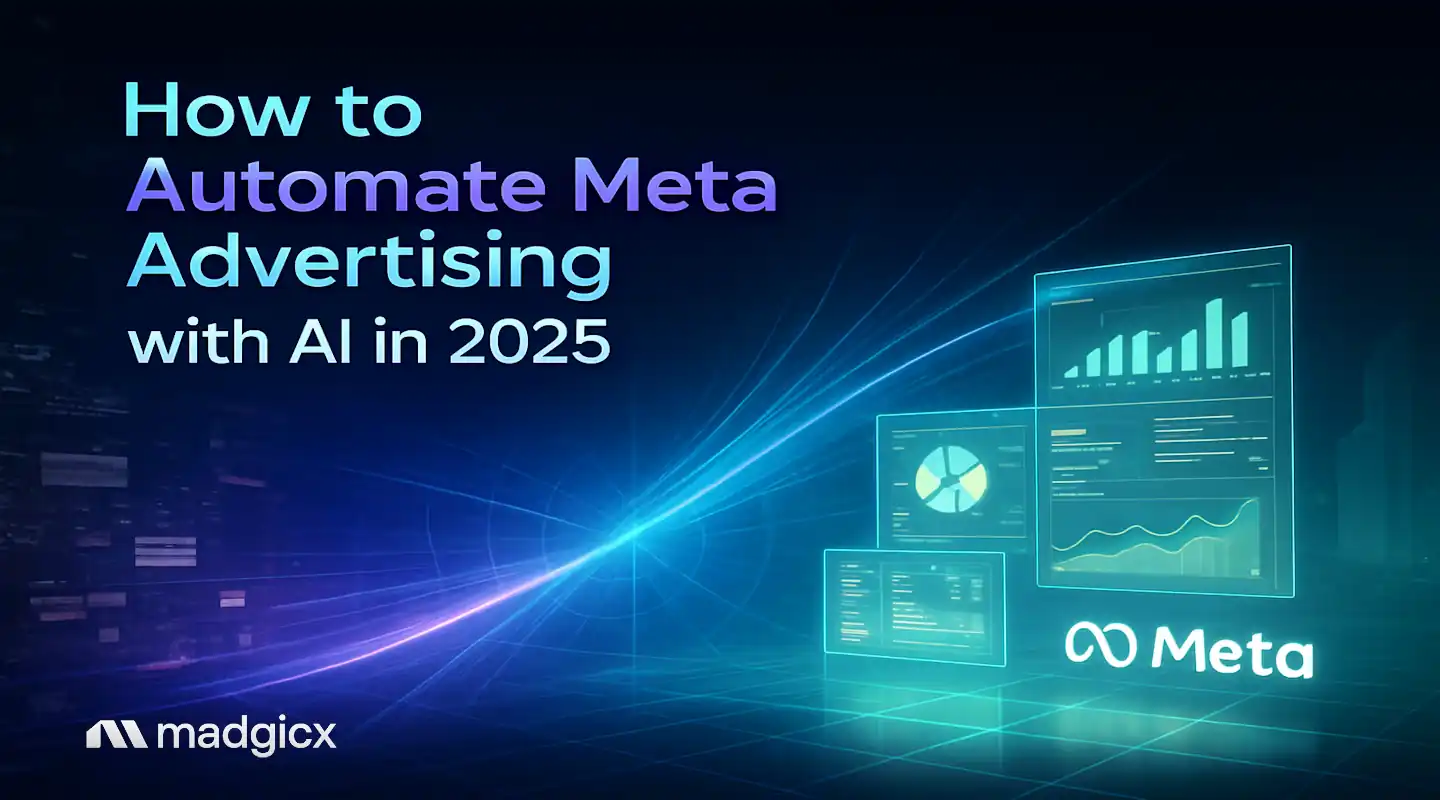
Automated ad creation is a cornerstone of Meta’s AI tools. Generative AI for ad creation can produce up to 150 unique ad variations from a single set of inputs, including headlines, primary text, images, and videos. Meta Newsroom highlights new features like expanding backgrounds or removing objects via text prompts. Dynamic Creative Optimization (DCO) then automatically tests different combinations of creative assets, scoring them in real-time to display the best performing combination to each user. The workflow is straightforward: upload 1 image, 1 video, 5 headlines, 4 descriptions, and 1 CTA, then let the AI do the rest. This approach to social media ai ads customizes each ad per user, driving higher engagement and conversions. For a deeper look at how AI is changing marketing strategies overall, see our guide on Game-Changing AI Marketing Tools.
Not Just Meta: The Broader AI Ecosystem
Digital advertising AI is converging across major platforms. Comparing Meta’s approach to Google Performance Max and TikTok Smart+ reveals shared core principles. According to Marketing Dive, these platforms all focus on automated asset generation, real-time budget allocation, and contextual audience inference. Meta’s unique differentiator lies in its advantage in social media ai ads because it incorporates social signals such as comments, shares, and saves, which Google’s simpler conversion-based system lacks. TikTok, on the other hand, excels in trend prediction. This convergence validates the updates search intent while highlighting Meta’s strengths. To understand how AI influencer marketing further drives social media success, read about How Game-Changing AI-Powered Influencer Marketing Drives Unstoppable Social Media Success.

Optimizing for Social Media AI Ads
To work with the AI, marketers need tactical strategies. Data hygiene is crucial. The Conversion API (CAPI) is being phased in as a requirement for performance campaigns, as noted by Meta Newsroom. TechCrunch advises running monthly signal health audits to maintain data-sharing frequency; otherwise, automated ad creation will underperform. Creative volume is another key factor. The AI needs sufficient assets to test and learn. Best practices from The Verge recommend uploading at least 15–20 creative assets per ad set. Audience signals should leverage broad targeting or lookalikes based on first-party data rather than over-segmenting. Give the AI scope, not constraints. This approach optimizes meta ai advertising with CAPI for campaign success. For more on optimizing your overall digital strategy with AI, explore 5 Innovative Ways to Use AI Strategies to Boost Productivity and Improve Daily Routine.
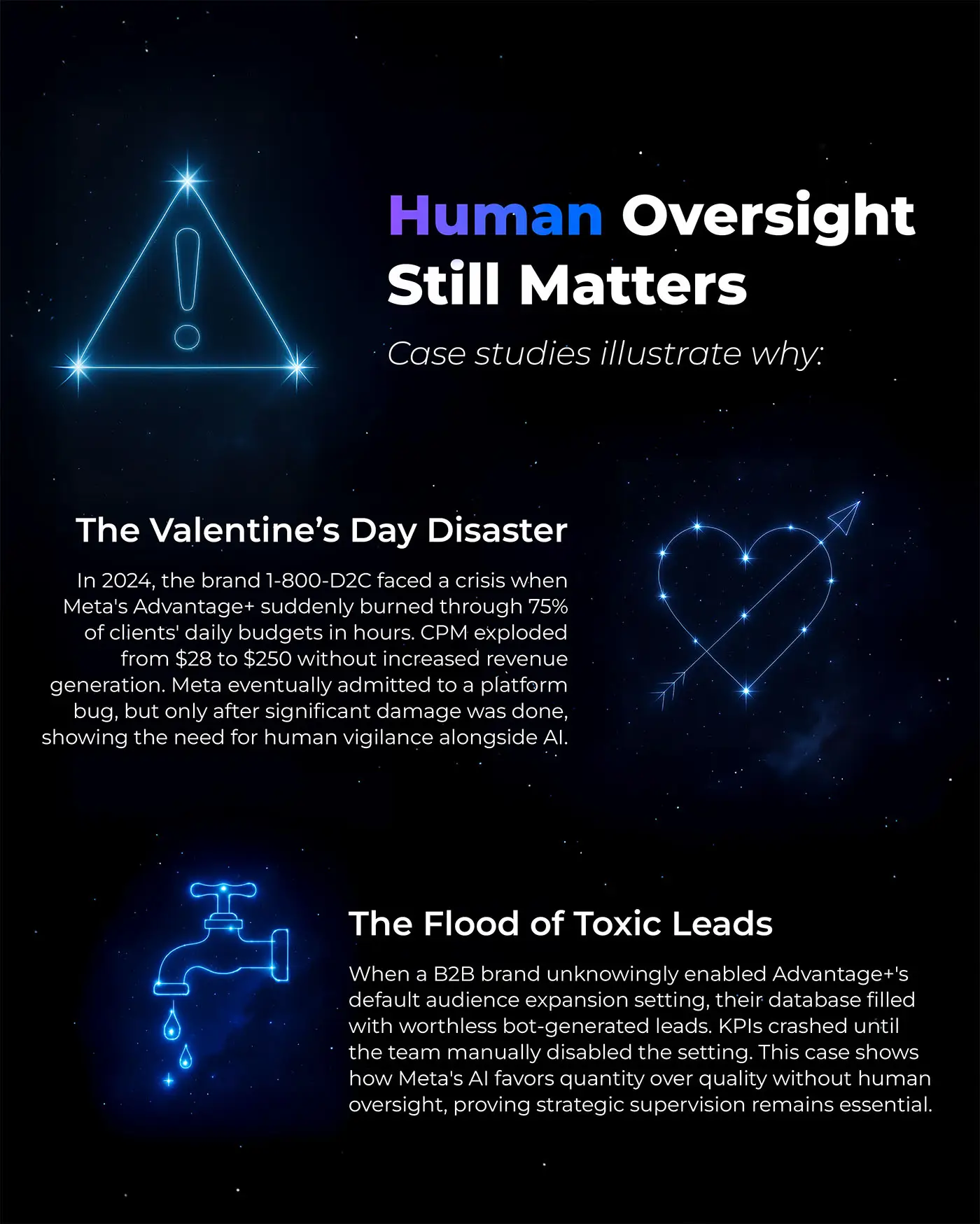
Marketers must also focus on social media ai ads by structuring campaigns to allow the AI to function optimally. Avoid creating overly narrow ad sets. Instead, consolidate targeting into broader groups and let the AI’s audience inference capabilities identify the best prospects. Regularly refresh your creative assets to feed the AI new data points, ensuring it continues to learn and improve performance over time.
The Future of Digital Advertising AI
Looking forward, Meta is pioneering predictive LTV and automated budget pacing. TechCrunch describes a new predictive AI model that calculates lifetime value in real-time to auto-pace budgets. Predictive audiences and autonomous campaigns are also on the horizon. Meta Ads Blog discusses predictive audience targeting that forecasts conversion likelihood without pixel history, along with cross-platform budget automation across Instagram, Facebook, and WhatsApp. AI-as-a-Service integrations through Graph API for enterprise marketers will further expand digital advertising AI capabilities. Meta AI advertising and automated ad creation will continue to evolve, with ai marketing platform capabilities becoming even more sophisticated. Social media ai ads will benefit from these advancements, ensuring that marketers can achieve higher ROI with less manual effort.

Summary checklist for marketers: (1) Update to latest CAPI, (2) Upload 20+ assets per ad set, (3) Run monthly signal audits, (4) Test broad targeting with Advantage+. For a broader view of how AI is reshaping entire industries, including advertising, see The Tremendous Impact of Artificial Intelligence on Industries 2025: Trends, Breakthroughs, and Future Opportunities. Understanding the capabilities of these AI models is also crucial; read more about Unpacking the OpenAI future partnership with Scale AI after Meta deal: What Meta’s $15B Investment Means for the AI Industry.

Frequently Asked Questions
- What is Meta AI advertising and how does it differ from traditional ads?
- How does the Advantage+ suite improve campaign performance?
- What are the key features of automated ad creation in 2025?
- How do I optimize my social media AI ads for better ROI?
- What is the future of digital advertising AI beyond 2025?
What is Meta AI advertising and how does it differ from traditional ads? Meta AI advertising leverages machine learning algorithms to automate campaign management, including audience targeting, budget allocation, and creative optimization. Unlike traditional ads that rely heavily on manual setup and constant tweaking, AI-driven ads continuously learn from performance data to improve results autonomously.
How does the Advantage+ suite improve campaign performance? The Advantage+ suite uses AI to optimize multiple campaign elements simultaneously. It automates audience discovery, placement selection, and creative testing, often resulting in lower CPAs and higher conversion rates by finding the best performing combinations for each user.
What are the key features of automated ad creation in 2025? Key features include generative AI that produces up to 150 ad variations from a single input set, Dynamic Creative Optimization for real-time testing, and text-prompt-based tools for editing images or videos. These features save time and scale creative production efficiently.
What is the future of digital advertising AI beyond 2025? The future includes predictive lifetime value modeling, autonomous cross-platform budget automation, and AI-as-a-Service integrations via APIs. These advancements will make campaign management even more hands-off while improving precision and ROI.