
NVIDIA AI PCs: The Dawn of AI-First Desktop Computing
Estimated reading time: 10 minutes
Key Takeaways
- NVIDIA AI PCs represent the flagship example of a new category of computers where AI is built directly into the hardware, shifting away from cloud reliance.
- AI PCs are projected to account for 40% of all PC shipments by 2027, according to CCS Insight and IDC, highlighting the scale of this transformation.
- Local AI processing on these devices offers major benefits: faster latency, complete privacy, and offline capability, as demonstrated by benchmarks from Ars Technica and reports from Bloomberg.
- The vision of a personal assistant computer is becoming a reality, with NVIDIA hardware enabling complex models that simpler NPUs cannot handle.
- When buying, look for dedicated hardware with at least 40 TOPS and sufficient VRAM; NVIDIA systems with Tensor Cores currently set the gold standard for ai desktop computing.
Table of contents
- NVIDIA AI PCs: The Dawn of AI-First Desktop Computing
- Key Takeaways
- Introduction: The Rise of NVIDIA AI PCs
- What Makes a PC “AI-First”? Defining the New Category
- How Local AI Processing Changes the Experience
- The Vision of a Personal Assistant Computer
- Hardware Deep Dive: NVIDIA’s Role in AI Desktop Computing
- Who Needs an NVIDIA AI PC? Use Cases and Benefits
- What to Look for When Buying an AI-First Desktop
- The Future of AI PCs and What’s Next
- Frequently Asked Questions
Introduction: The Rise of NVIDIA AI PCs
The era of relying solely on cloud-based AI is ending. A new category of computers is emerging where artificial intelligence is built directly into the hardware, transforming the desktop from a passive tool into an active, intelligent partner. Leading this charge are nvidia ai pcs, which represent the flagship example of this new paradigm.

The scale of this shift is staggering. According to IDC (Q4 2024 report), AI PCs will account for 40% of all PC shipments by 2027. This projection underscores that nvidia ai pcs are not a niche product but the vanguard of a mainstream revolution in computing. These are ai-first computing devices powered by specialized hardware, designed to run AI tasks natively and efficiently without sending data to the cloud.

This article explores what makes these machines unique, how they perform through local ai processing, and why they are redefining our expectations of a personal computer. From npu powered pcs to the powerful GPU-based systems from NVIDIA, the future of desktop computing is here, and it is built for AI.
What Makes a PC “AI-First”? Defining the New Category
To understand the significance of nvidia ai pcs, we must first define what makes a computer truly “AI-first.” At its core, ai desktop computing refers to a PC that is optimized to handle machine learning workloads—such as inference and even training—locally, without relying on cloud servers. This is achieved through specialized hardware like GPUs with Tensor Cores or dedicated Neural Processing Units (NPUs).

Npu powered pcs are a key part of this landscape. An NPU is a dedicated chip or block within the CPU or SoC designed specifically for the matrix math used in neural networks. As noted by IDC, most current consumer NPUs come from Qualcomm (Snapdragon X Elite) and Intel (Meteor Lake). However, NVIDIA’s approach is distinct and more powerful. According to NVIDIA’s official documentation, the Tensor Cores found in RTX GPUs act as their equivalent of an NPU for AI workloads, but with far greater computational capability. For a deeper comparison, SemiAnalysis (Jan 2025) delved into this, stating that the real AI desktop hardware battle is between GPU and NPU architectures.
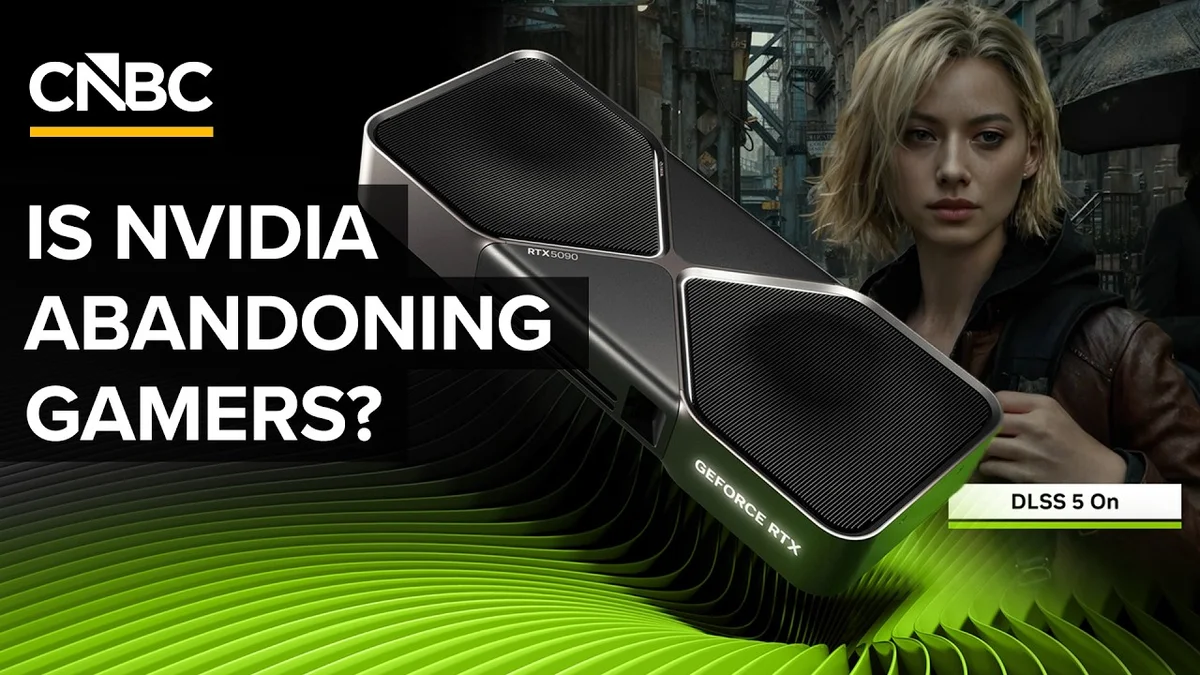
In essence, while npu powered pcs handle lighter, on-device AI tasks efficiently, nvidia ai pcs with their Tensor Cores represent the gold standard for ai desktop computing, capable of running much larger and more complex models locally.
How Local AI Processing Changes the Experience
Local ai processing is the central differentiator of ai-first computing devices. It means all AI computations—inference, model execution, data analysis—happen on the user’s device, not on remote servers. This shift brings transformative improvements in three key areas:
- Latency: Ars Technica (Jan 2025) tested running a 7B-parameter LLM locally on an RTX 4090 and found it was 3x faster than a cloud API call (ignoring network latency), with complete privacy. Near-instantaneous responses transform how we interact with AI.
- Privacy: Bloomberg (Dec 2024) reported that enterprise adoption of local AI PCs is accelerating due to data privacy regulations. When processing stays on-device, sensitive data never leaves your control, eliminating cloud exposure risks.
- Offline Capability: Core AI features—like real-time language translation, AI upscaling, and intelligent search—work without any internet dependency. This reliability is crucial for professionals in constrained environments.
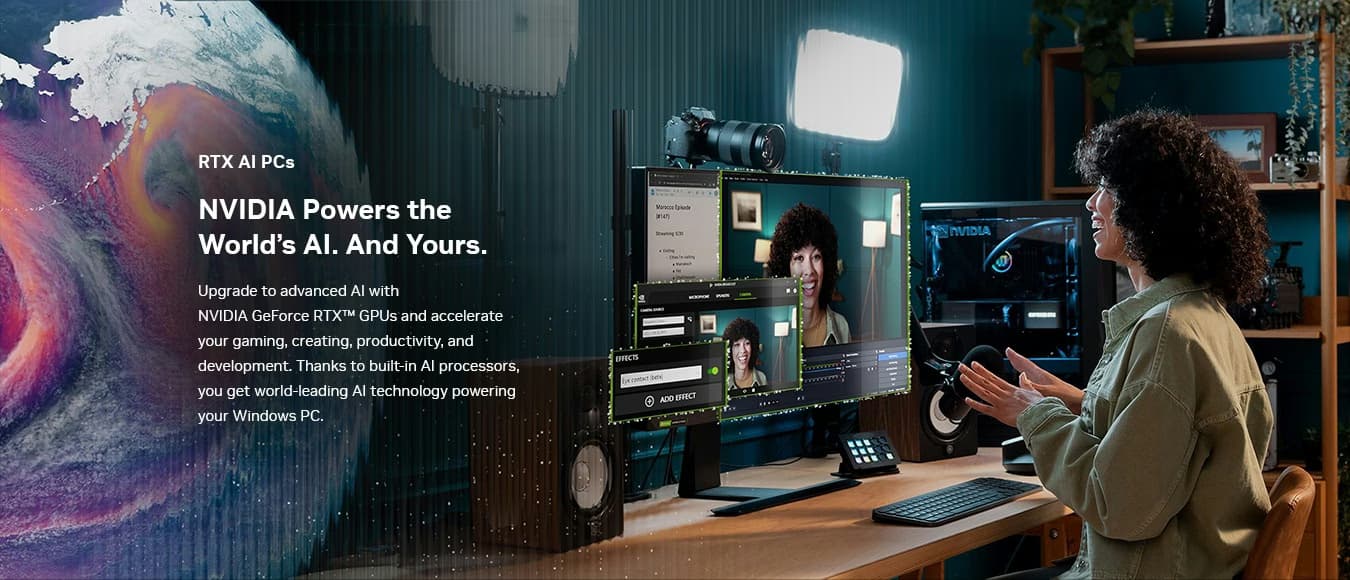
Concrete examples of local ai processing in action include NVIDIA RTX Voice for real-time noise removal, RTX Video Super Resolution for upscaling video content, intelligent search over local files, and personal assistant actions that respond instantly. These capabilities make nvidia ai pcs truly ai-first computing devices that enhance every interaction.
The Vision of a Personal Assistant Computer
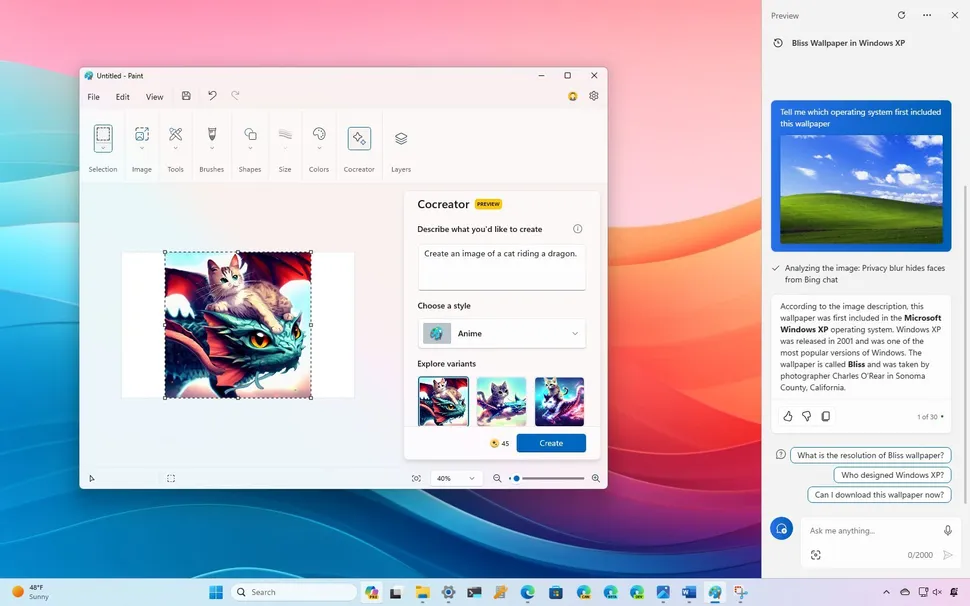
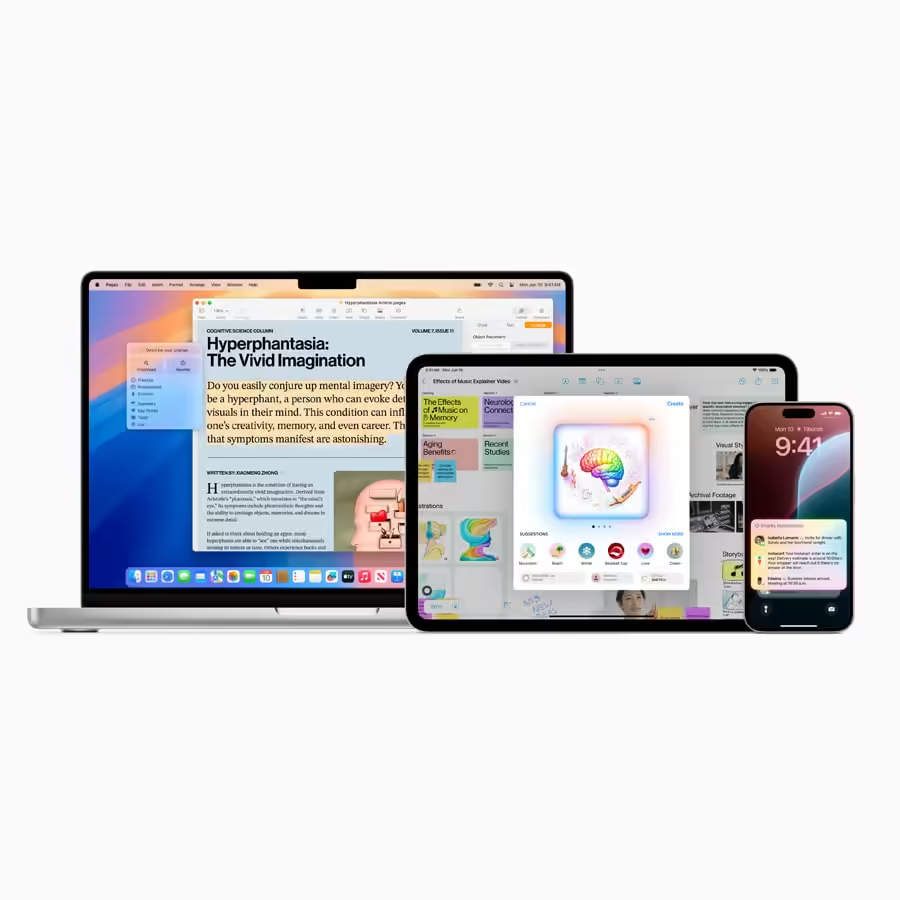
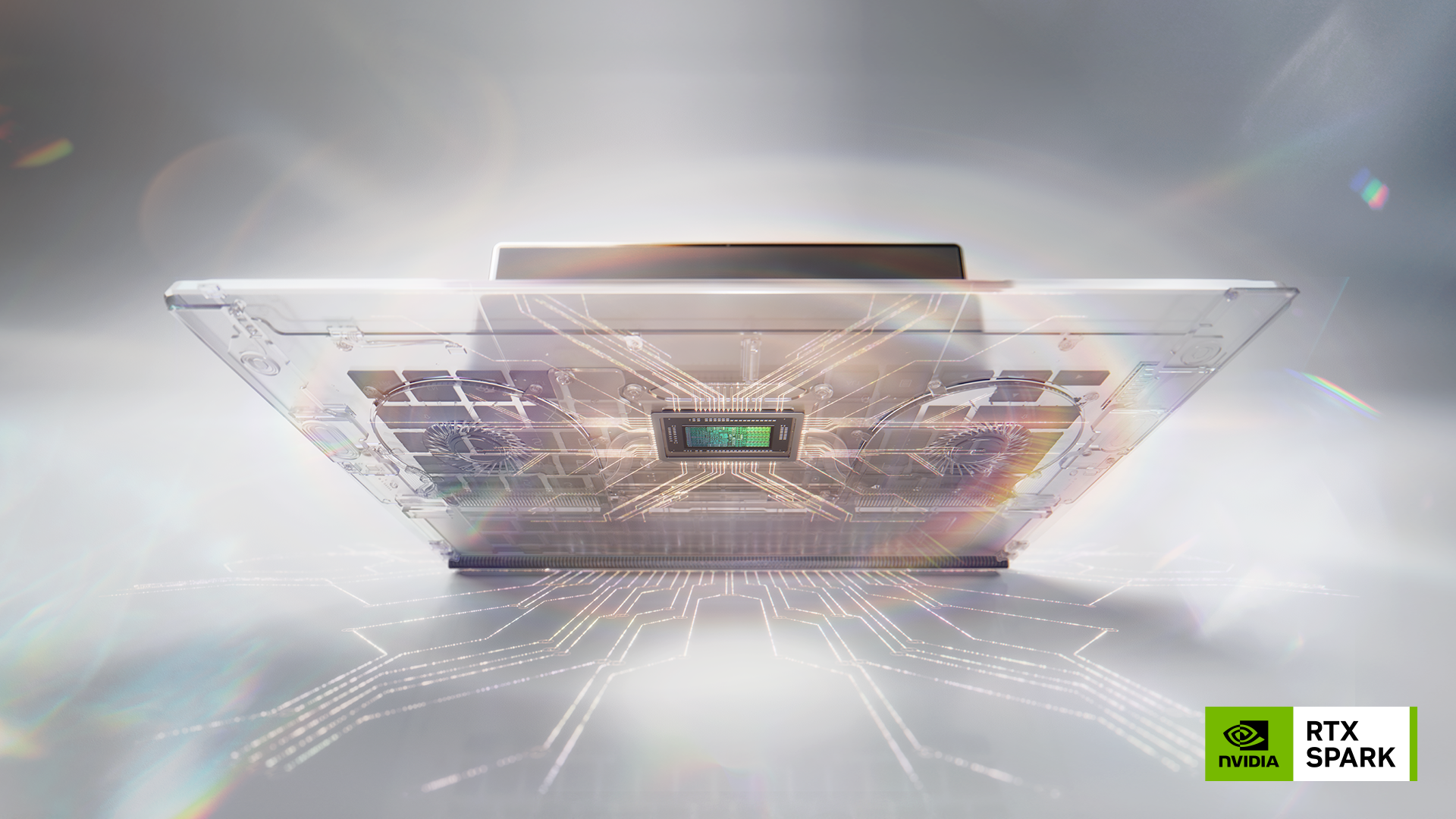
The ultimate promise of nvidia ai pcs is the realization of a personal assistant computer. This is not a passive tool but an active agent that proactively helps the user by understanding context, habits, and intent. Microsoft calls this vision “Windows AI Copilot+ PCs,” but it is NVIDIA hardware that provides the high-performance backbone necessary for truly intelligent assistance.
Consider these scenarios that define a personal assistant computer:
- Automatic scheduling based on email content and calendar conflicts, without manual input.
- Context-aware file organization where AI sorts images by content and projects by semantic tags.
- Voice-controlled workflows that require no cloud processing, such as “Find the spreadsheet from last Tuesday about Q3 forecasts.”
- Predictive AI that pre-loads software for a common task based on usage patterns.
Nvidia ai pcs are uniquely positioned to deliver this vision because their Tensor Cores can run large, complex models locally that simpler NPUs cannot handle. This capability transforms the desktop into a true personal assistant computer, making it an indispensable partner for productivity and creativity.
Hardware Deep Dive: NVIDIA’s Role in AI Desktop Computing
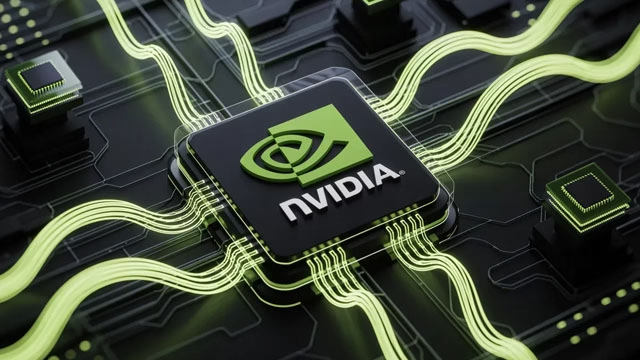
At the heart of nvidia ai pcs are the RTX GPUs containing Tensor Cores. These are specialized hardware units designed for the matrix operations that are fundamental to AI inference and training. This architecture sets NVIDIA apart from standard npu powered pcs by providing dramatically higher performance for demanding tasks.
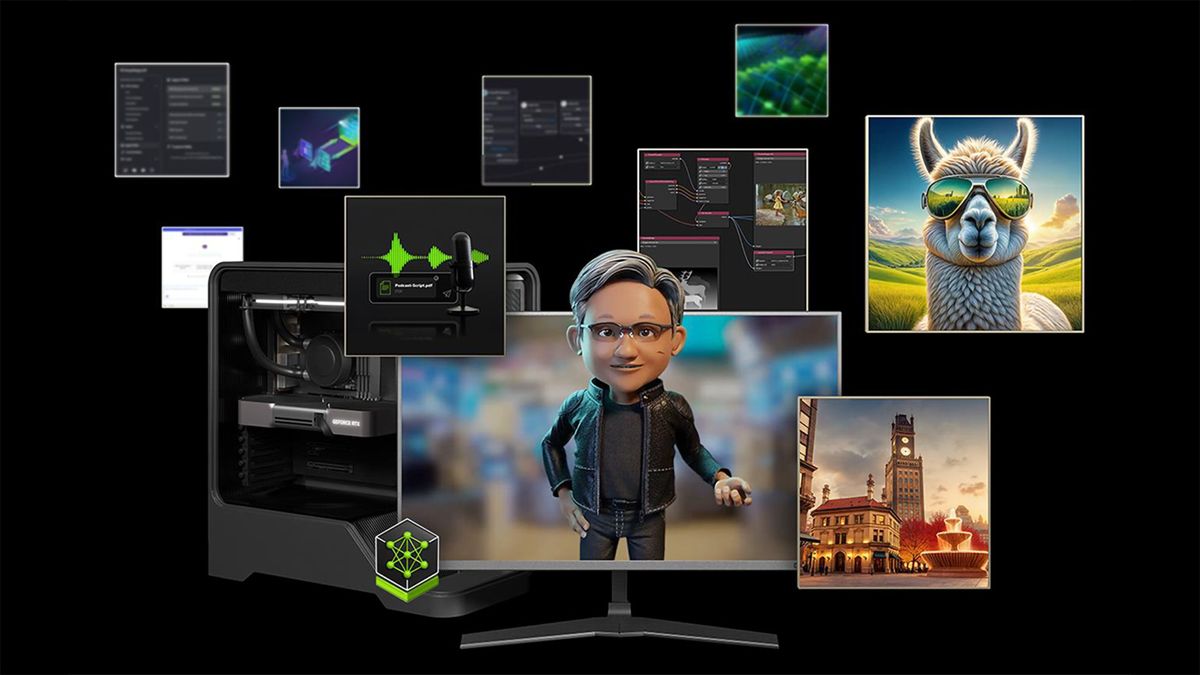
AnandTech (Jan 2025) benchmarked local AI inference and found that an RTX 4090 is dramatically faster than any current standalone NPU for running large language models locally. This performance advantage is critical for professionals who need serious computational power for local ai processing.
Furthermore, NVIDIA’s own Project DIGITS (announced Feb 2025 at CES by The Verge) is a dedicated line of AI desktop PCs featuring the Grace Hopper superchip with integrated NPU and GPU cores. This further solidifies NVIDIA’s commitment to ai desktop computing. The synergy between high-end RTX GPUs and Tensor Cores makes nvidia ai pcs the standard for serious local ai processing and ai desktop computing.
Who Needs an NVIDIA AI PC? Use Cases and Benefits
Nvidia ai pcs cater to a broad range of users, but certain groups benefit most from their capabilities:
- Creators: AI-assisted video editing (NVIDIA Broadcast, DaVinci Resolve AI tools), AI upscaling for photos, real-time noise removal. These tasks are transformed by local ai processing.
- Developers: Local LLM inference for testing, fine-tuning models, running RAG (Retrieval-Augmented Generation) systems offline. GitHub data from late 2024 showed a 60% increase in repositories for local AI tools, many optimized for CUDA/Tensor Cores.
- Power Users: Real-time AI plugins for browsers, smart email sorting, intelligent document analysis without cloud uploads. The personal assistant computer vision becomes a daily reality.
The benefits are clear:
- Speed: Near-instantaneous responses for AI tasks.
- Privacy: Data never leaves the device, as highlighted by Bloomberg.
- Offline Capability: Works without internet.
- Reduced Cloud Costs: No API fees for inference.
For professionals, an NVIDIA AI PC becomes a true personal assistant computer that handles repetitive tasks intelligently, freeing time for higher-value work.
What to Look for When Buying an AI-First Desktop
When shopping for npu powered pcs or ai desktop computing systems, consider this checklist:
- Dedicated NPU or Equivalent: Look for hardware with at least 40 TOPS (trillions of operations per second), which is Microsoft’s Copilot+ standard (per Tom’s Hardware). NVIDIA GPUs with Tensor Cores easily meet this.
- Sufficient VRAM: For NVIDIA systems, at least 16GB VRAM on an RTX card is recommended for large local models.
- Software Ecosystem: Ensure the OS and apps support the hardware (e.g., Windows AI Copilot, NVIDIA Studio drivers).
Be cautious of marketing gimmicks. Tom’s Hardware cautions that many PC makers label systems as “AI PCs” even with minimal NPU support. Verify the TOPS rating and VRAM specifications. Currently, nvidia ai pcs are the gold standard for ai desktop computing because of their proven Tensor Core performance and extensive CUDA ecosystem. For serious local ai processing, they are the recommended choice among npu powered pcs.
The Future of AI PCs and What’s Next
The landscape of nvidia ai pcs is evolving rapidly. Key trends include:
- More NPU Cores: Future chips will have higher TOPS ratings, making npu powered pcs even more capable.
- Tighter OS Integration: Windows AI Copilot is becoming standard, deeply embedding AI into the operating system.
- Specialized AI Hardware: More dedicated hardware for AI tasks will become mainstream, further blurring the line between CPUs, GPUs, and NPUs.
Nvidia ai pcs are leading the transition to ai-first computing devices because of their hybrid GPU+Tensor Core architecture, which is more versatile than standalone NPUs. As the demand for local ai processing grows, these systems will only become more integral to daily computing.
Frequently Asked Questions
- What are NVIDIA AI PCs? NVIDIA AI PCs are desktop computers that integrate specialized hardware, such as RTX GPUs with Tensor Cores, to run AI tasks locally without relying on cloud servers. They are the flagship example of ai-first computing devices.
- How do NVIDIA AI PCs differ from standard NPU-powered PCs? While npu powered pcs use dedicated NPUs for lightweight AI tasks, nvidia ai pcs leverage powerful Tensor Cores in their GPUs for much more demanding local ai processing, offering superior performance for complex models.
- What are the main benefits of local AI processing? The main benefits include lower latency (faster responses), enhanced privacy (data stays on-device), and offline capability (works without internet). These are highlighted by sources like Ars Technica and Bloomberg.
- What is a personal assistant computer? A personal assistant computer is a proactive system that understands context, habits, and intent to assist the user automatically. NVIDIA AI PCs make this vision a reality by running large, context-aware models locally.
- Who should consider buying an NVIDIA AI PC? Creators, developers, and power users who need speed, privacy, and offline capability for AI tasks like video editing, local LLM inference, and intelligent file management will benefit most from nvidia ai pcs.
- What specifications should I look for when buying an AI-first desktop? Look for at least 40 TOPS from an NPU or equivalent GPU Tensor Cores, sufficient VRAM (16GB+ for NVIDIA), and a robust software ecosystem like Windows AI Copilot and NVIDIA Studio drivers, as recommended by Tom’s Hardware.
- Are NVIDIA AI PCs worth the investment? For users who rely on local ai processing and need the best performance for ai desktop computing, nvidia ai pcs are currently the gold standard, offering unmatched capability and a future-proof ai-first computing devices experience.