


Keyword Research: The Foundation of SEO Success
Estimated reading time: 12 minutes
Key Takeaways
- Keyword research is the essential process of discovering search terms to drive targeted traffic, improve rankings, and align content with user needs.
- Understanding search intent (or user intent) is critical for creating relevant content that matches the underlying goal behind queries.
- Effective SEO keyword research involves brainstorming seeds, using tools to analyze search volume and keyword difficulty, and prioritizing keywords for maximum impact.
- Long-tail keywords offer lower competition and higher conversion potential, making them valuable for niche targeting.
- Ongoing monitoring through SERP analysis and competitor research ensures sustained SEO success and adaptation to algorithm changes.
Table of contents
- Keyword Research: The Foundation of SEO Success
- Key Takeaways
- Introduction: What is Keyword Research?
- Understanding Search Intent: The Key to Relevance
- The Step-by-Step Keyword Research Process
- Brainstorming Seed Keywords
- Using Keyword Research Tools
- Prioritizing Keywords for Maximum Impact
- SERP and Competitor Analysis
- Content Optimization with Keywords
- Ongoing Monitoring and Adjustment
- Recap: Summary of Key Steps
- Final Thought and Call to Action
- Frequently Asked Questions
Introduction: What is Keyword Research?
Did you know that over 90% of online experiences begin with a search engine? Without proper keyword research, even the best content fails to rank. Keyword research is the process of discovering and analyzing the search terms people enter into search engines to uncover opportunities for content optimization and traffic growth. It’s the bedrock of SEO, driving targeted traffic, improving rankings, and aligning content with user needs. As one expert notes, “Keyword research isn’t just about finding words; it’s about understanding your audience’s language.”
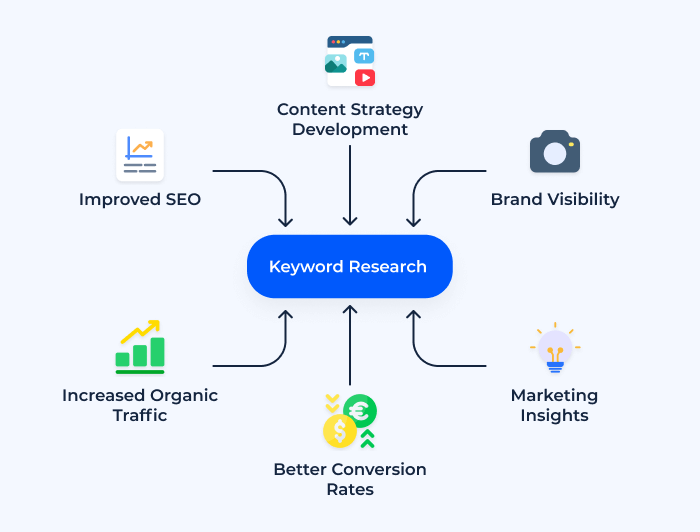
Naturally, SEO keyword research is a specialized form of keyword research focused on search engine algorithms, ensuring your content meets both user expectations and algorithmic requirements. By mastering this, you can transform your online presence from invisible to authoritative.
Understanding Search Intent: The Key to Relevance
Mastering keyword research starts with understanding search intent, which is the underlying goal behind a user’s query. According to industry sources, search intent can be categorized into four main types:
- Informational: To learn or find information, e.g., “what is keyword research” or “how to do SEO.”
- Navigational: To find a specific website or page, e.g., “Facebook login” or “Google Analytics dashboard.”
- Commercial: To research before a purchase, e.g., “best keyword research tools” or “compare SEO software.”
- Transactional: To complete an action or buy, e.g., “buy Ahrefs subscription” or “download keyword checklist.”

Understanding user intent—the “why” behind searches—is crucial for creating relevant content. For example, searching for “keyword research” typically shows informational intent, as users want to learn the process. Ignoring intent is like sailing without a compass; you might move, but not in the right direction.
The Step-by-Step Keyword Research Process
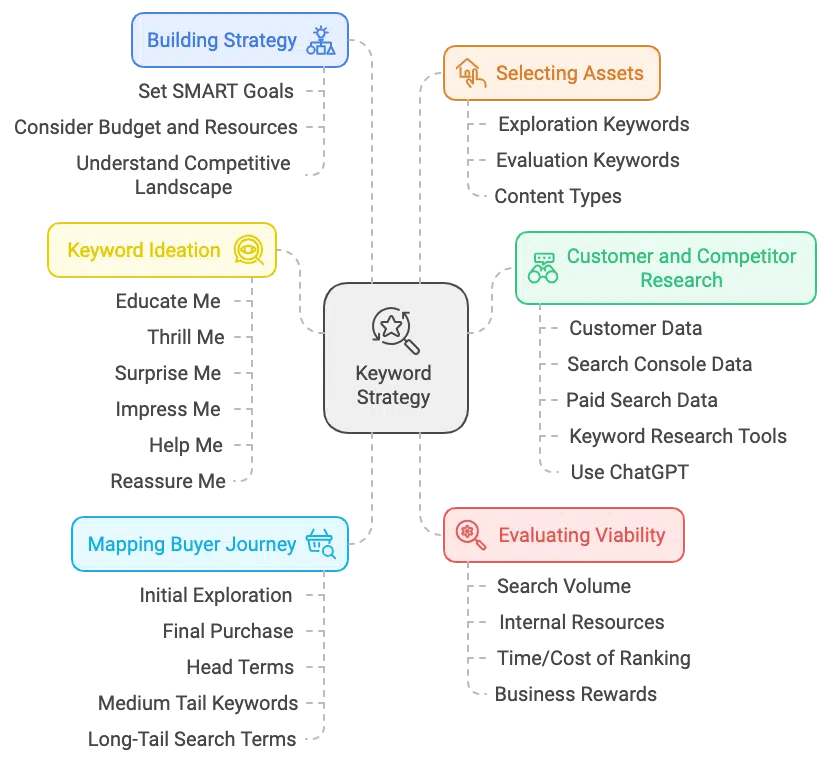
This post serves as a comprehensive guide to satisfy informational search intent by providing actionable strategies, tools, and tips from expert sources. Follow these steps to conduct effective keyword research and build a robust SEO foundation.
Brainstorming Seed Keywords
Start your keyword research by listing business-relevant topics, products, services, and audience pain points to generate seed keywords—broad starting terms like “SEO tips” or “digital marketing.” This aligns content with real user needs when you incorporate search intent analysis upfront to match user intent. For example, filter seeds for informational queries if your goal is to educate, or commercial intent for product pages.

Imagine you run a digital marketing agency: seed keywords could include “digital marketing strategy,” “social media advertising,” or “content marketing tips.” Naturally, SEO keyword research is the method to expand these seeds into a full keyword universe. Pro tip: Use customer feedback, industry forums, and competitor sites to brainstorm seeds that resonate with your audience.
Using Keyword Research Tools
Once you have seed keywords, leverage keyword research tools to gather data. Free tools like Google Keyword Planner offer basic insights, while paid tools like Ahrefs and SEMrush provide advanced metrics. Use these tools to analyze:
- Search volume: The monthly number of searches for a term, indicating demand. For instance, “keyword research” might have a high search volume of 10,000+ per month, signaling strong interest.
- Keyword difficulty: A score from 0 to 100 measuring how hard it is to rank for a term. Beginners should aim for scores under 30 to gain traction without overwhelming competition.
- Competition levels and related terms, which help identify gaps and opportunities.

These tools also help discover long-tail keywords—specific phrases with three or more words, like “best keyword research tools for beginners.” These often have lower keyword difficulty but higher conversion potential due to their specificity.
Here’s a quick comparison of popular tools to guide your selection:
| Tool | Best For | Key Feature |
|---|---|---|
| SEMrush | Search volume and user intent analysis | Comprehensive database with trend data |
| Ahrefs | Keyword difficulty breakdowns | Detailed backlink and SERP analysis |
| Google Keyword Planner | Free basic data | Integration with Google Ads for accurate volume |
| Ubersuggest | Beginners and cost-effective insights | Content ideas and competitor keyword gaps |
Remember: Tools are enablers, but your analysis turns data into strategy. Use them to uncover hidden gems like question-based keywords from “People Also Ask” sections.
Prioritizing Keywords for Maximum Impact
After gathering data, classify keywords by search intent and user intent—informational for guides, commercial for comparisons. Prioritize using metrics like high search volume with low keyword difficulty, relevance to your business, and quick wins versus long-term targets. For instance, a keyword with 5,000 monthly searches and a difficulty of 20 is more actionable than one with 50,000 searches and 80 difficulty.
Group keywords into clusters: for example, core “keyword research” with long-tail keywords like “SEO keyword research tools” or “how to do keyword research for beginners.” A useful scoring system is to multiply search volume by (1 – keyword difficulty/100) to get an opportunity score. For example, if a keyword has 10,000 search volume and 30 difficulty, the score is 10,000 * (1 – 0.3) = 7,000. This helps identify high-potential terms efficiently.
Pro tip: Balance your portfolio with 70% low-difficulty keywords for steady traffic and 30% high-difficulty ones for brand authority.
SERP and Competitor Analysis
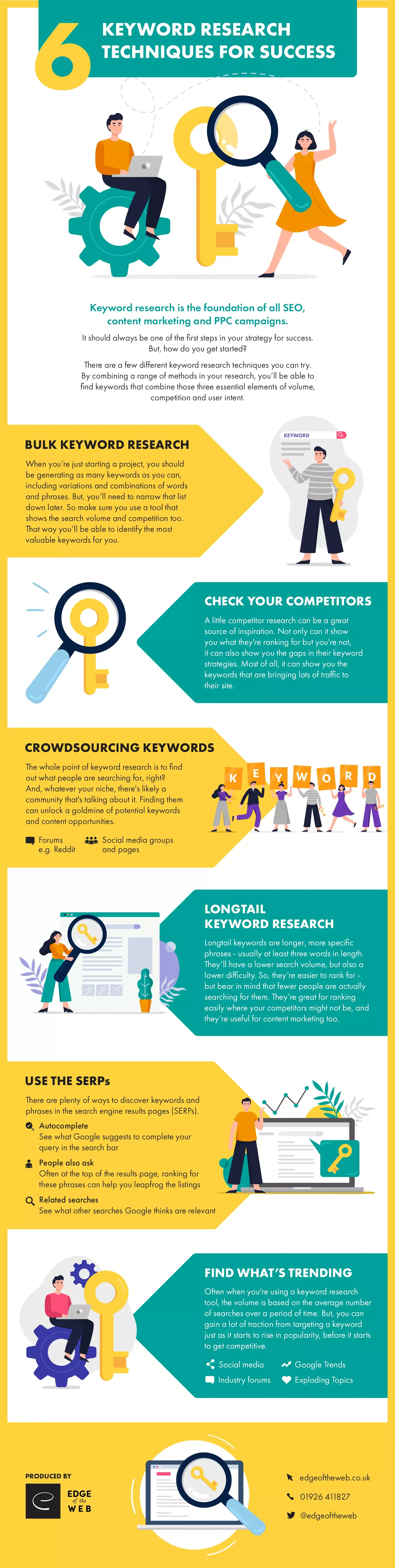
Examine Search Engine Results Pages (SERPs) for top “keyword research” queries. Review “People Also Ask” sections for question-based long-tail keywords, related searches for variations, and top-ranking content types—step-by-step guides often dominate, indicating user preference for detailed information.

Spy on competitors by entering their URLs into keyword research tools like Ahrefs to find gaps—keywords they rank for but you don’t. Focus on content formats that win, such as comprehensive lists with search volume data or video tutorials for visual learners. As the saying goes, “Know thy enemy, and know thyself; in a hundred battles, you will never be defeated.” Apply this to SEO by learning from competitors’ successes and failures.
Content Optimization with Keywords
Naturally integrate your primary keyword “keyword research” and secondary terms like “SEO keyword research” in titles (H1 with “keyword research”), meta descriptions, introductions, headings (H2/H3 with long-tail keywords), and body text—aim for 7-12 uses of the primary keyword, with variations for flow. Avoid keyword stuffing; instead, focus on readability and relevance.

Target featured snippets by answering questions directly under user intent-focused subheadings. Build clusters around long-tail keywords for topical authority, which signals to search engines that your content is comprehensive. Use short paragraphs, bold key metrics like search volume, and lists for tools to enhance readability. For example, in this post, we’ve used bold for emphasis and lists to break down complex steps.
Example optimization: For a blog post on “best keyword research tools,” include H2s like “Top Free Keyword Research Tools” and “Paid Tools for Advanced SEO,” each containing related long-tail keywords.
Ongoing Monitoring and Adjustment
Track keyword performance using Google Search Console or keyword research tools like SEMrush. Use Google Trends for rising search volume shifts—for instance, seasonal trends like “New Year SEO resolutions.” Refresh content annually by updating with new long-tail keywords or adjusting for search intent changes and algorithm updates. Set up alerts for keyword difficulty drops to seize opportunities, such as when a competitor’s domain loses authority.

Remember: SEO is not a one-time task but a continuous cycle of research, implementation, and refinement. Regularly audit your content to ensure it remains aligned with user needs and search engine standards.
Recap: Summary of Key Steps
- Brainstorm seed keywords based on business goals and audience pain points, incorporating search intent analysis.
- Use keyword research tools to analyze search volume, keyword difficulty, and discover long-tail keywords.
- Prioritize keywords using intent classification, metrics, and opportunity scores for efficient targeting.
- Conduct SERP and competitor analysis to identify gaps, winning content formats, and question-based keywords.
- Optimize content by strategically placing keywords in titles, headings, and body text, aiming for natural integration.
- Monitor performance with tools like Google Search Console and update content regularly to maintain rankings.
Final Thought and Call to Action
The transformative power of consistent keyword research and user intent focus cannot be overstated. It’s the difference between shouting into the void and having a conversation with your audience. Start today with one seed keyword using free keyword research tools. Download our free keyword research checklist [link placeholder] or comment your top seed keyword below to kickstart your SEO journey!

Frequently Asked Questions
What is the difference between keyword research and SEO keyword research?
Keyword research is the broad process of finding and analyzing search terms for any purpose, while SEO keyword research specifically focuses on terms that align with search engine algorithms to improve rankings and drive organic traffic.
How often should I update my keyword research?
It’s recommended to review and update your keyword research at least quarterly, or whenever there are significant algorithm updates, shifts in user behavior, or new product launches to stay competitive.
What are the best free keyword research tools for beginners?
Google Keyword Planner, Ubersuggest, and AnswerThePublic are excellent free tools to start with, offering insights into search volume, related terms, and question-based keywords without upfront costs.
How do I find long-tail keywords effectively?
Use keyword research tools to generate related terms, analyze “People Also Ask” sections in SERPs, and consider user questions and pain points from forums like Reddit or Quora to uncover specific, low-competition phrases.
Why is search intent important in keyword research?
Search intent ensures that your content matches what users are looking for, improving relevance, engagement, and rankings. Ignoring intent can lead to high bounce rates and poor conversions, even with optimized keywords.