
The Future of PC Design – Rollable Laptops and Beyond
Estimated reading time: 8 minutes
Key Takeaways
- Rollable laptop concept ideation is transforming static PC design into adaptive, portable workstations.
- The Lenovo ThinkBook Plus Gen 6 Rollable has evolved from concept to shipping product, proving the technology’s viability.
- Ultrawide flexible display tech, particularly flexible OLED, is the engineering backbone enabling rollable and other adaptive form factors.
- Innovations like the Legion Pro Rollable concept and ThinkBook updates signal a rapid transition from premium adoption to mainstream integration.
- The CES PCs trend reveals a industry-wide shift towards versatility, adaptive screens, and AI integration as the future of laptops.
Table of contents
- The Future of PC Design – Rollable Laptops and Beyond
- Key Takeaways
- What Is Rollable Laptop Concept Ideation and Why It Matters
- Use Cases and User Scenarios
- How Ultrawide Flexible Display Technology Powers Rollable Innovation
- Beyond Rollables – Multiple Form Factors Enabled by Flexible Displays
- How Today’s Legion Pro and ThinkBook Innovations Signal Tomorrow’s Designs
- The Timeline: Premium Adoption to Mainstream Integration
- CES as the Crystal Ball: Understanding the CES PCs Trend
- Common Themes Across CES Innovations
- The Path from Future Concept to Your Desk
- The Excitement Is Real – And It’s Happening Now
- Frequently Asked Questions
For decades, the laptop has been a study in compromise. Since the 2000s, design has remained largely static—a rigid clamshell that forces you to choose between portability and screen real estate. But imagine a device that adapts to your needs, expanding for productivity and contracting for travel. This is no longer science fiction. Rollable laptop concept ideation is at the vanguard of a new era in personal computing, solving this fundamental design paradox.

The proof is already here. The Lenovo ThinkBook Plus Gen 6 Rollable has transitioned from a dazzling concept to a shipping product. This isn’t just a prototype; it’s a tangible signal that the future is arriving ahead of schedule. For a deeper dive into this groundbreaking concept, explore our analysis of the Lenovo rollable laptop concept. This blog explores the emerging world of rollable laptop concept ideation, the ultrawide flexible display tech that makes it possible, the real-world innovations from leaders like Lenovo, and the industry trends revealed at CES that are shaping tomorrow’s futuristic PC design.
What Is Rollable Laptop Concept Ideation and Why It Matters
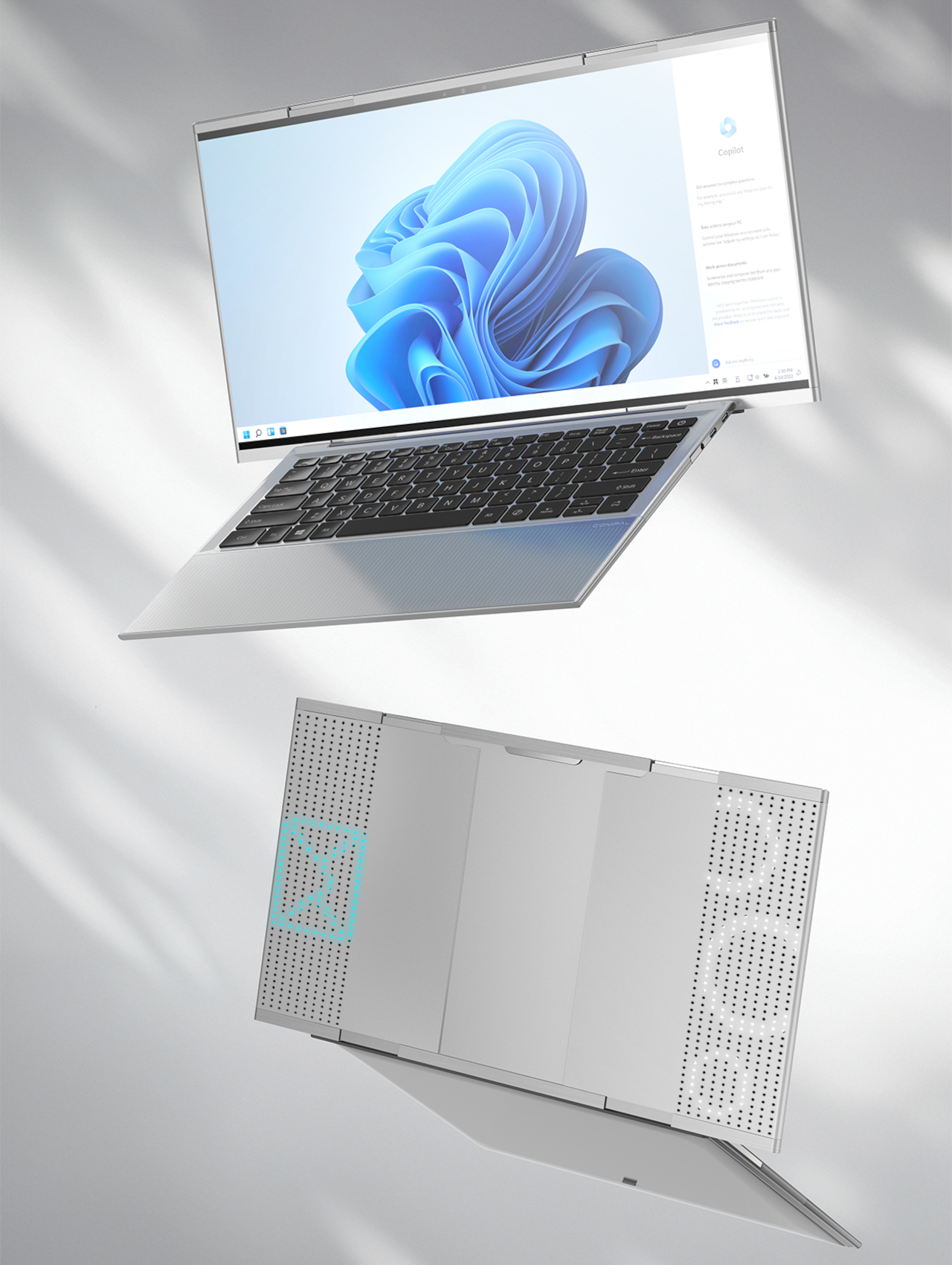
Rollable laptop concept ideation is the creative and engineering process behind developing laptops with displays that roll or retract into the chassis. It’s the answer to a persistent user problem: the tension between needing a large screen for productivity and a thin, light device for mobility. Traditional laptops are static compromises, but rollable designs introduce adaptive design, allowing a seamless shift between a compact mode for carrying and an expanded mode for work.

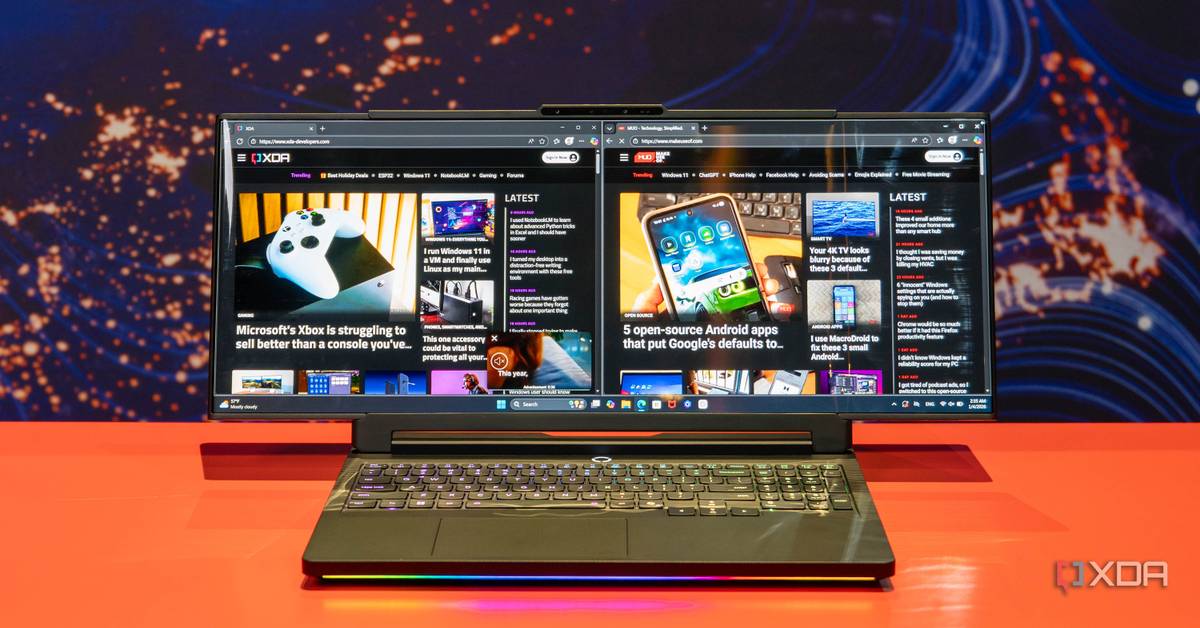
The leading example is the Lenovo ThinkBook Plus Gen 6 Rollable. As demonstrated in detailed showcases, its display can expand from a standard laptop size to an immersive 16.7-inch ultrawide canvas. The user experience benefit is profound: professionals can carry a sleek, portable device that transforms on a desk into a high-productivity workstation. This is the core promise of rollable laptop concept ideation—merging portable computing with expansive screen real estate through ultrawide flexible display tech.
Use Cases and User Scenarios
Who benefits from this rollable laptop design? The applications are wide-ranging:
- Business Professionals: Frequent travelers who need large screens for spreadsheets and presentations can now enjoy a slim carry case without sacrificing workspace.
- Content Creators: Video editors and graphic designers gain the visual real estate they crave for timelines and canvases, eliminating the need for bulky desktop replacements.
- Gamers and Esports Athletes: Ultrawide rollables that expand beyond 20 inches provide a competitive edge with broader field-of-view in fast-paced games.
- Remote Workers: Those in flexible living spaces can adapt one device from a cramped dorm room to a spacious home office, thanks to ultrawide display technology.
How Ultrawide Flexible Display Technology Powers Rollable Innovation
None of this would be possible without the underlying ultrawide flexible display tech. This technology is the critical foundation, enabling screens to roll without damage. At its heart are flexible OLED screen technologies, where organic materials can flex repeatedly without losing functionality, unlike rigid LCDs. These panels are often laminated with protective materials like Gorilla Glass for durability. As seen in the Lenovo rollable demo, this technology shares a lineage with the innovations powering the latest foldable phone technology.

The engineering is complex. Displays must endure thousands of flex cycles while maintaining perfect performance. Manufacturers use protective low-friction materials to guard against abrasion, as noted in Lenovo’s CES announcements. The mechanical systems are equally sophisticated, employing dual-motor, tension-based designs that expand and contract smoothly, maintained by dedicated tensioning systems to keep the panel taut. This adaptive display technology is what turns rollable laptop concept ideation into a viable futuristic PC design.
Beyond Rollables – Multiple Form Factors Enabled by Flexible Displays
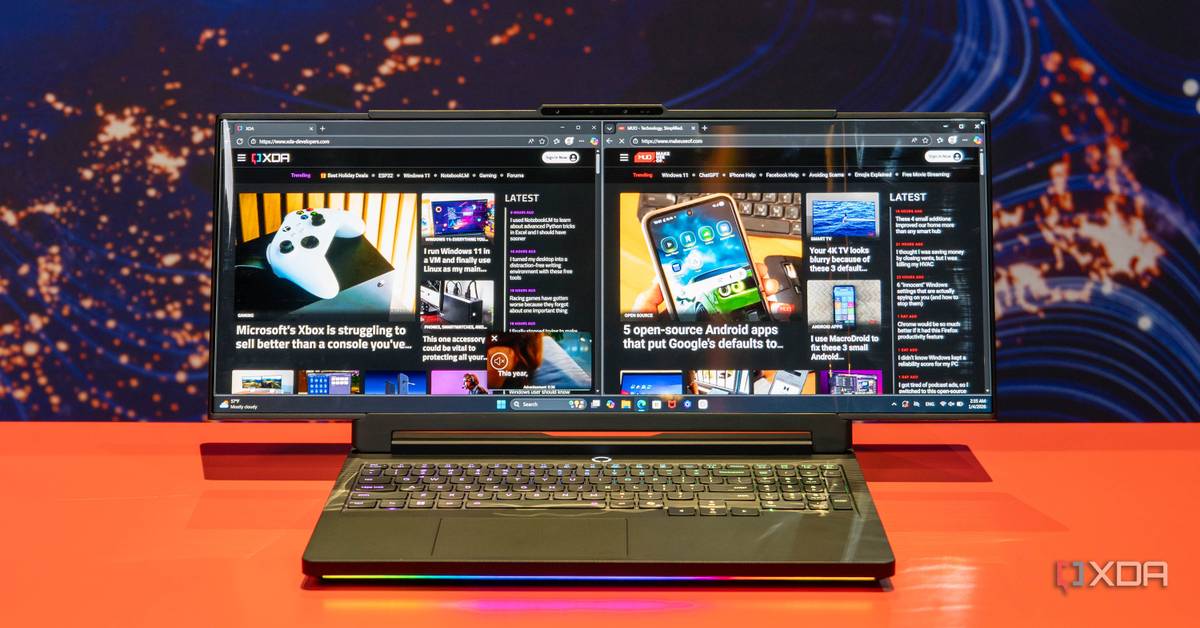
Flexible display technology isn’t limited to rollables. Lenovo’s 2026 lineup shows it enables a spectrum of adaptive form factors. For instance, the ThinkBook Plus Gen 7 Auto Twist features a convertible display with AI tracking and voice control, allowing the screen to rotate based on user position—ideal for presenters. Then there’s the Legion Pro Rollable concept, which expands from 16 inches to 24 inches horizontally for esports athletes seeking ultrawide gaming real estate.

Each design addresses different needs: convertibles for professionals, rollables for maximum expansion. This push for versatile screens is also evident in the latest folding tablet display innovations. The common thread is ultrawide flexible display tech driving diverse rollable laptop concept ideation and beyond.
How Today’s Legion Pro and ThinkBook Innovations Signal Tomorrow’s Designs
The line between concept and reality is blurring. The ThinkBook Plus Gen 6 Rollable is now a shipping product with AI enhancements, proving the technology is commercially viable. Meanwhile, legion pro laptop updates serve as innovation platforms. The Legion Pro Rollable remains a proof of concept, featuring a 16-inch display that expands to 21.5 inches and up to 24 inches for gamers, demonstrating serious engineering investment.
Iteration is key. The ThinkPad Rollable XD concept shows continuous refinement of the original 2025 design, improving form factor and thinness. This evolutionary approach indicates industry confidence. High-end gaming laptops and premium laptops test cooling, materials, and mechanics that inform next-gen designs. Similarly, the integration of sophisticated AI features in foldables points to a future of smart, adaptive devices. These performance laptops are the testing grounds for rollable laptop concept ideation and ultrawide flexible display tech.
The Timeline: Premium Adoption to Mainstream Integration
When will these technologies reach everyday users? The adoption curve is clear:
- Phase 1 (Now – 2-3 years): Premium-tier adoption, with devices like the ThinkBook Plus Gen 6 Rollable targeting professionals and early adopters.
- Phase 2 (3-5 years): Mainstream integration begins as manufacturing scales. Gaming laptops like the Legion Pro concept may accelerate this, as gaming often drives tech democratization.
- Phase 3 (5-10 years): Mass-market affordability, with rollable laptop design appearing in mid-range business and consumer segments.

This timeline is fueled by ongoing legion pro laptop updates and industry momentum, making futuristic PC design an imminent reality.
CES as the Crystal Ball: Understanding the CES PCs Trend
The Consumer Electronics Show (CES) is the industry’s crystal ball, and the CES PCs trend for 2026 reveals a decisive shift. Rollable technology is no longer niche; it’s a central focus of laptop innovation. Lenovo’s dominant presence, with rollable variants across business, gaming, and workstation categories, signals deep commitment. As highlighted in CES coverage, this diversity—from vertical to horizontal rollables—shows the industry exploring multiple approaches, similar to the competitive landscape seen in the latest Samsung Galaxy Z Fold 7 camera upgrade.

This experimental phase is a hallmark of emerging technologies nearing maturity. The CES PCs trend confirms that rollable laptop concept ideation is backed by real investment, pointing towards a future where ultrawide flexible display tech and legion pro laptop updates converge into mainstream PC design trends.
Common Themes Across CES Innovations
Three unifying themes define the CES PCs trend and the future of PCs:
- Versatility: Devices that adapt to multiple use cases, from travel to productivity.
- Adaptive Screen Real Estate: Displays that expand, contract, or rotate based on context.
- AI Integration and Voice Control: Smart systems, as seen in the ThinkBook Auto Twist, that respond to user commands and positioning.

Rollable laptop concept ideation embodies all three—versatility through expansion, adaptive screens via mechanics, and AI-enhanced experiences. This trend towards adaptive design and AI-powered laptops is reshaping futuristic PC design.
The Path from Future Concept to Your Desk
The journey from rollable laptop concept ideation to consumer reality is accelerating. It started with visionary ideas, enabled by ultrawide flexible display tech, evidenced by progressive legion pro laptop updates, and solidified by the CES PCs trend. The ThinkBook Plus Gen 6 Rollable’s shift from concept to shipping product in just two years shows engineering challenges are solvable. Supporting technologies—OLED, AI processors, voice control—are mature now.

Expect premium rollables in the next 2-3 years, gaming and professional adoption in 3-5 years, and mainstream availability within 5-10 years. The convergence of flexible displays, AI, and diverse form factors means the static laptop era is ending. PC innovation is here, driven by rollable laptop concept ideation and adaptive design.
The Excitement Is Real – And It’s Happening Now
While mainstream rollable laptops aren’t on every shelf yet, the transition is actively underway. Early adopters can experience this today with products like the ThinkBook Plus Gen 6 Rollable. For everyone else, the timeline is unfolding rapidly. Stay informed about rollable laptop concept ideation and emerging trends by following CES announcements and manufacturer roadmaps. What was futuristic speculation two years ago is now a consumer product; what’s unveiled at CES 2026 will be in retail channels within years. The future of futuristic PC design is not a distant dream—it’s being built now, with ultrawide flexible display tech and the CES PCs trend lighting the way.
Frequently Asked Questions
What exactly is a rollable laptop?
A rollable laptop is a type of portable computer where the display panel can roll or retract into the device chassis, allowing it to expand for a larger screen when needed and compact for easier portability. This is central to rollable laptop concept ideation.
Are rollable laptops durable?
Yes, thanks to ultrawide flexible display tech. These devices use flexible OLED panels and protective materials like Gorilla Glass, engineered to withstand thousands of rolling cycles. Mechanical systems with tension controls also ensure longevity, as seen in Lenovo’s designs.
When will rollable laptops be affordable for the average consumer?
Based on current trends like the CES PCs trend, premium models are available now, with mainstream affordability expected within 5-10 years as manufacturing scales and costs decrease, following the adoption curve from premium laptops to mass market.
How does rollable technology differ from foldable phones?
Both use flexible displays, but rollables focus on expanding screen size via a rolling mechanism, often for larger devices like laptops. Foldables typically hinge a screen in half. The underlying flexible OLED screen technologies are similar, as seen in the evolution from foldable phone technology to rollables.
What are the main benefits of a rollable laptop for professionals?
Key benefits include enhanced portability without sacrificing screen real estate, allowing for better multitasking with spreadsheets or design software. This adaptive design boosts productivity, making it ideal for business users and content creators, as highlighted in the Lenovo ThinkBook demo.