
Apple AI Smart Glasses Real-Time Translation: Features, Rumors, and the 2025 Roadmap
Estimated reading time: 7 minutes
Key Takeaways
- Apple AI smart glasses real time translation is a rumored feature that could redefine hands-free communication.
- Apple’s existing Live Translation technology in iOS 26 provides the software foundation for this device.
- The glasses are expected to function as both a translator and an apple wearable ai navigation device.
- Rumored release targets late 2025 or later, with a design resembling conventional sunglasses.
- Apple’s key differentiators include on-device privacy, ecosystem integration, and custom AI silicon.
Table of Contents
- Apple AI Smart Glasses Real-Time Translation: Features, Rumors, and the 2025 Roadmap
- Key Takeaways
- Introduction
- The Rise of AI-Powered Wearables and Apple’s Move
- Deep Dive: Real-Time Translation as a Core Feature
- Beyond Translation: Navigation and AI Integration
- Expected Features, Design and Release Window (Grounded Speculation)
- Comparison: Could Apple Make the Best AI Translation Smart Glasses 2025?
- Conclusion / The Verdict
- Frequently Asked Questions
Introduction
Imagine walking into a foreign market and reading every sign, menu, and conversation through your glasses. This is the promise of the rumored apple ai smart glasses real time translation device. In this post, we will break down what to expect from Apple’s entry into the world of smart glasses with language translation features, explore the rumored 2025 release, and see how it could redefine hands-free communication.

The wearable technology landscape is evolving rapidly. From fitness trackers to augmented reality headsets, the focus is shifting toward devices that are less intrusive and more integrated into daily life. Apple, a company known for disrupting markets with refined products, appears to be setting its sights on a device that combines artificial intelligence, augmented reality, and real-time language processing. This could be the ultimate tool for travelers, international business professionals, and anyone living in multilingual environments. The potential of apple ai smart glasses real time translation lies not just in the feature itself, but in how it fits into Apple’s broader ecosystem of devices and services, offering a seamless experience that competitors struggle to match.
The Rise of AI-Powered Wearables and Apple’s Move
The wearable AI race is heating up. While devices like Meta Ray-Ban and Qwen S1 show the potential of smart glasses with language translation features, Apple’s rumored apple augmented reality glasses 2025 would mark a major shift. Apple’s pattern—iPhone, Apple Watch, AirPods, then Vision Pro—suggests a lighter, everyday wearable is the next logical step.

Competitors like the Ray-Ban Meta glasses already offer live translation, but their feature set is limited, only supporting English, Spanish, French, and Italian via the Meta View app. This narrow language support and dependence on a phone app for processing highlights the gaps Apple could fill. At Mobile World Congress 2026, the Qwen S1 showcased real-time translated captions in a waveguide display, proving the technology is maturing. These developments set the stage for Apple to enter with a more polished, integrated solution.
Leveraging its ecosystem (iPhones, Siri, Apple Intelligence), Apple could deliver a more seamless, privacy-focused experience than any competitor. These glasses would represent a major leap in the future of apple wearable technology. Apple’s history of entering mature markets and refining them—consider the iPhone versus earlier smartphones, or the Apple Watch versus earlier smartwatches—suggests that when they do launch smart glasses, they will aim to set a new standard for usability and integration. The combination of custom silicon, a mature operating system, and a loyal user base gives Apple a unique advantage in making apple ai smart glasses real time translation a mainstream reality.
Deep Dive: Real-Time Translation as a Core Feature
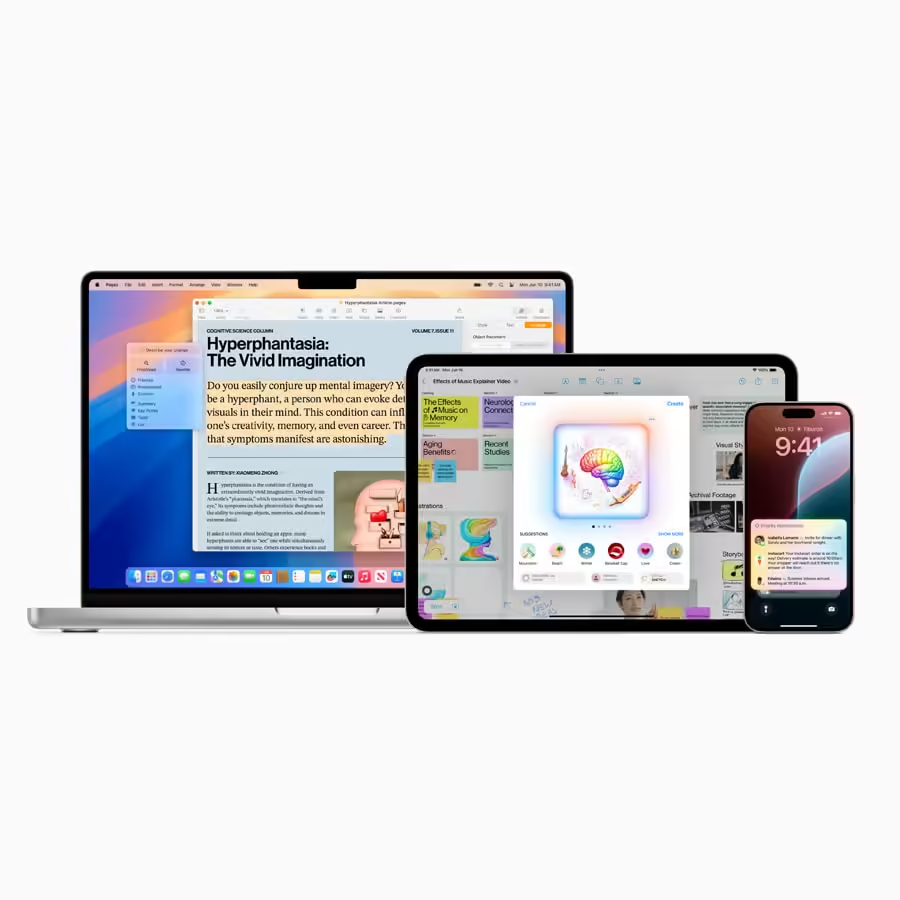
The foundation for apple ai smart glasses real time translation is already here. Apple has already announced Live Translation as part of Apple Intelligence in iOS 26. It works in Messages, FaceTime, and with AirPods Pro 3, offering real-time call translation and live captions—all processed on-device for privacy. This existing technology is the cornerstone upon which the glasses will be built.

Apple’s Live Translation stack uses on-device Apple Intelligence to transcribe and translate speech in real time. For the glasses, the process would be:
- Microphones in the frame pick up conversation.
- The on-device AI engine (or iPhone-assisted) translates it.
- The output appears as AR text overlay in your field of view or is spoken through bone-conduction speakers.
This eliminates pulling out your phone, offering truly hands-free smart glasses with language translation features with lower latency and better context awareness. The on-device processing is critical for privacy, ensuring that conversations are not sent to cloud servers for analysis. Apple’s powerful apple intelligence features 2025 are what will make this all possible, extending the capabilities already seen in iOS to a wearable form factor. Imagine attending a meeting where participants speak multiple languages; the glasses could provide real-time subtitles for each speaker, directly in your vision, without any noticeable delay. This could revolutionize international business communication and remove language barriers in professional settings.
Beyond Translation: Navigation and AI Integration
The glasses are more than a translator; they are an apple wearable ai navigation device. Building on Apple’s Maps and Vision Pro’s spatial computing, directions would appear as arrows on the street or labels over buildings. The AI would offer context-aware guidance like ‘Turn left at the café in 50 meters.’

Combined with apple ai smart glasses real time translation, this becomes powerful: as you navigate abroad, the AI reads and translates local signage in real time, overlaying the translated text onto your view—all without looking at your phone. This is part of a wider trend in latest innovations in wearable tech. For example, while walking through a train station in Tokyo, the glasses could highlight the correct platform, show departure times in your native language, and translate announcement boards as you pass them. This integration of navigation and translation creates a unified assistant that handles multiple layers of information simultaneously.
The AI integration extends beyond translation and navigation. The glasses could identify landmarks and provide historical information, recognize products in store windows and display prices or reviews, and even offer real-time transcription of lectures or presentations for note-taking. The device could also integrate with Apple’s Health app, providing gentle reminders to stand, move, or breathe based on your activity levels throughout the day, all while serving as your primary communication and translation tool. This multifunctionality is what distinguishes the glasses from single-purpose devices and positions them as a true wearable companion.
Expected Features, Design and Release Window (Grounded Speculation)
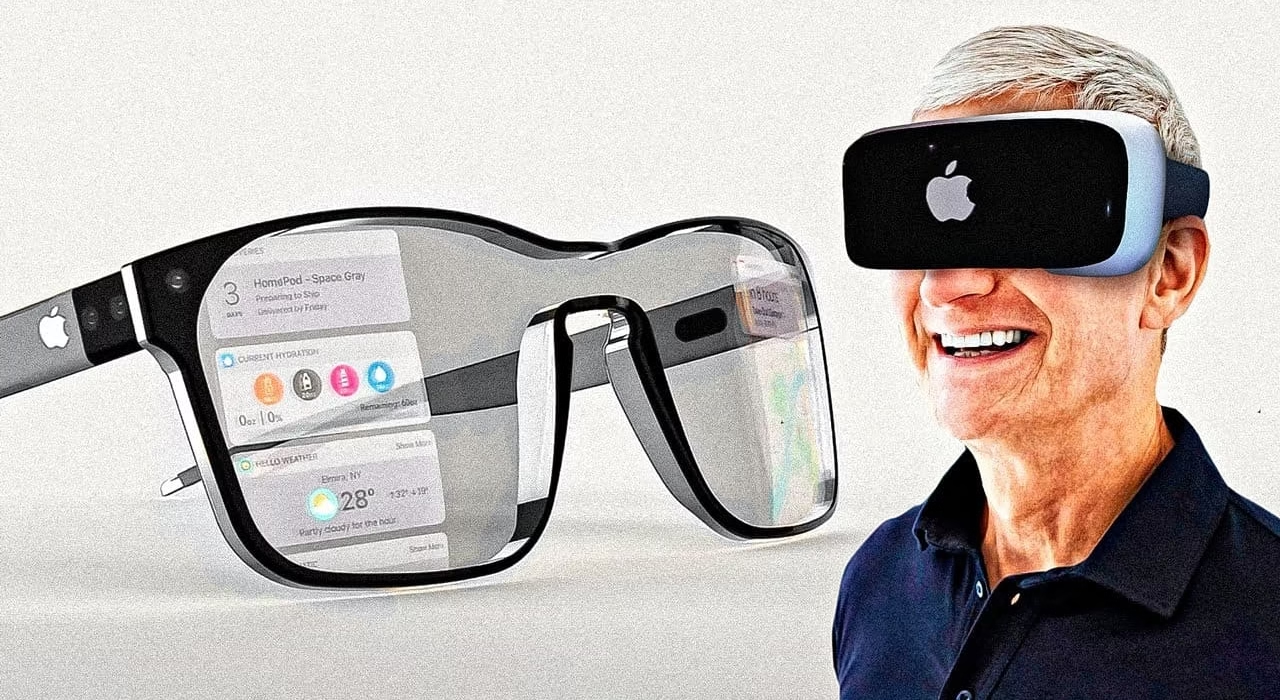
Based on credible leaks, the apple augmented reality glasses 2025 will likely resemble conventional sunglasses—not a bulky headset like Vision Pro. Expect custom Apple silicon optimized for low-power, always-on AI. Battery life is a key challenge; Apple will likely offload heavy processing to the iPhone, just as some current AI glasses do.
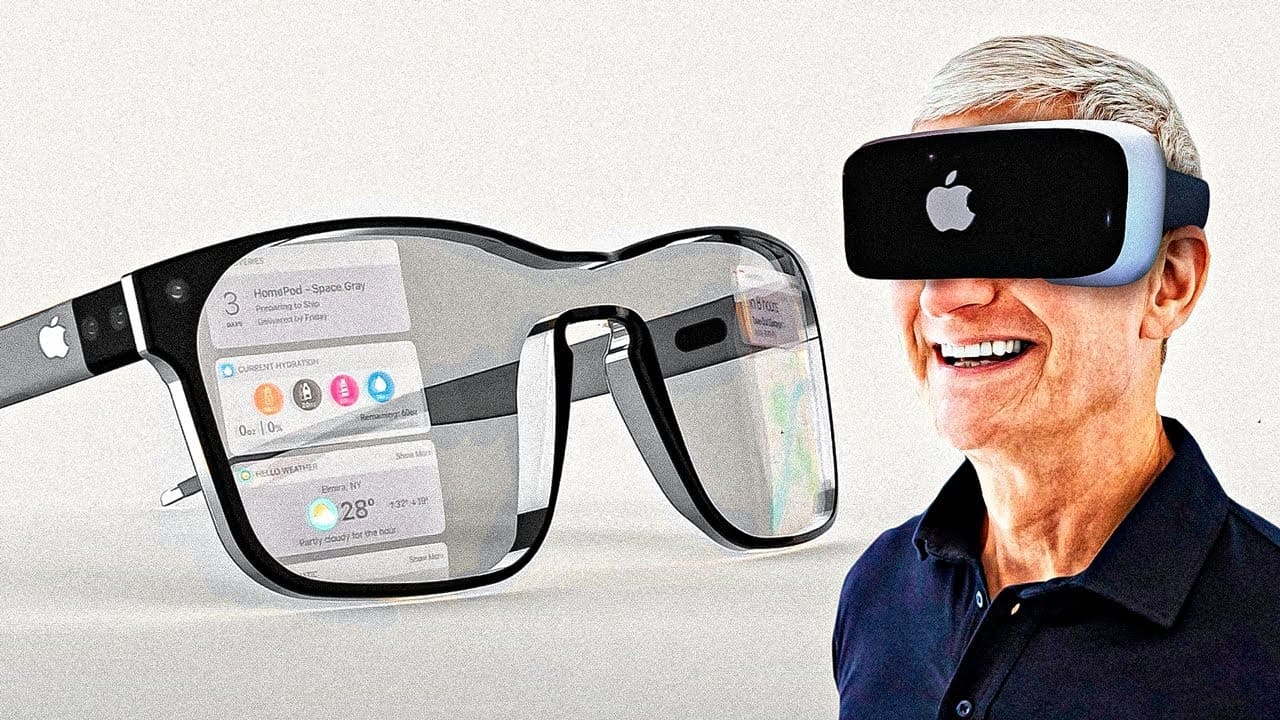
Reports from Bloomberg indicate a target of late 2025 or later for the apple augmented reality glasses 2025, but the timeline is fluid. Apple has reportedly explored features like phone calls, music controls, directions, and live translation, but also paused other projects, such as a camera-equipped Apple Watch, due to privacy and feasibility concerns. This cautious approach suggests Apple is prioritizing quality and user experience over rushing to market.
Privacy will be a differentiator, with the famous ‘opt-in’ philosophy ensuring your conversations remain on-device. The glasses will likely include a visible indicator—such as a small LED light—when recording or translating, transparently notifying those around you. For a broader look at AR wearables, check out our guide to the best smart glasses 2025. Design cues may also borrow from the lightweight titanium frames of high-end sunglasses, ensuring comfort for all-day wear. Multiple frame styles and colors could be offered, allowing users to choose a look that fits their personal style while concealing advanced technology within.
Comparison: Could Apple Make the Best AI Translation Smart Glasses 2025?
So, will these be the best ai translation smart glasses 2025? A comparison is useful:
- Meta Ray-Ban: Already shipping, good translation, but limited app ecosystem and narrower language support (English, Spanish, French, Italian).
- Qwen S1: Impressive waveguide displays, but unproven software support and ecosystem.
- Apple (Rumored): Key differentiators include privacy (on-device processing), ecosystem (seamless handoff with iPhone, Watch, Vision Pro), and AI Silicon (dedicated chips for lower latency offline translation).
If Apple can deliver these, they have a strong claim to the title of best ai translation smart glasses 2025. The Apple ecosystem is a significant advantage. Users already own iPhones, Apple Watches, and AirPods, and the glasses would integrate effortlessly with these devices. For instance, you could receive a call on your glasses, answer it using your AirPods, and have live translation of the conversation appear as captions in your field of view—all without touching any device. This level of integration is something no competitor currently offers.
Furthermore, Apple’s focus on creating a developer ecosystem similar to the App Store could lead to a wide range of third-party applications tailored for the glasses. Imagine apps that provide real-time sign language interpretation, translate museum exhibit descriptions, or offer restaurant menu translation with dietary filters. This potential for extensibility could make Apple’s glasses the platform of choice for AR and translation applications, further solidifying their position as the market leader.
Conclusion / The Verdict
The apple ai smart glasses real time translation concept directly solves real-world pain points—travel anxiety, business communication, living in multilingual cities. Combined with its role as an apple wearable ai navigation device, it becomes an everyday, unobtrusive assistant. While the Apple augmented reality glasses 2025 remain unannounced, the software foundation (Live Translation) is already live. For now, try Live Translation on your iPhone and AirPods to preview what Apple may soon mainstream. Keep an eye on upcoming keynotes for official reveals.

The potential impact of these glasses extends beyond convenience. For the hearing impaired, real-time captions displayed in the glasses could transform daily interactions, making conversations more accessible. For language learners, having instant translations without disrupting the flow of conversation provides an immersive learning environment. The device could also serve as a tool for police, emergency responders, and medical professionals who need to communicate quickly across language barriers in critical situations. As AI continues to advance, the capabilities of these glasses will only expand, potentially incorporating features like sentiment analysis, cultural context notes, and even predictive text suggestions based on the conversation’s direction. The apple ai smart glasses real time translation device is not just a gadget; it is a glimpse into a future where technology dissolves the barriers that divide us.
Frequently Asked Questions
- When will Apple release their AI smart glasses with real-time translation?
- How will the real-time translation feature work on these glasses?
- What languages will be supported by Apple’s translation glasses?
- Will these glasses require an iPhone to work?
- How much will the Apple AI smart glasses cost?
- Will the glasses work with prescription lenses?
Based on reports from Bloomberg, Apple is targeting a release in late 2025 or later. However, the timeline is fluid and depends on overcoming technical challenges, particularly around battery life and miniaturization. Apple has not officially announced the product, so these are speculative dates based on supply chain leaks and analyst reports.
The glasses will use built-in microphones to capture speech. The audio is processed using Apple’s on-device AI engine (Apple Intelligence), which transcribes and translates the speech in real time. The translated text is then displayed as an AR overlay in your field of view, or spoken through bone-conduction speakers. This process is designed to maintain privacy by keeping all data on the device.
While Apple has not confirmed language support, it is likely based on the language support in iOS 26’s Live Translation feature. Current supported languages include English, Mandarin Chinese, Spanish, French, German, Italian, Japanese, Korean, Portuguese, Russian, and Arabic. Apple expands language support regularly, so more languages may be available at launch.
It is expected that the glasses may offload some heavy processing to an iPhone to conserve battery life, similar to how some current AI glasses operate. However, Apple may also include a custom chip in the glasses for basic functions. Full functionality, especially for translation and navigation, will likely require an iPhone for the best experience, especially during initial release.
Pricing has not been announced, but given Apple’s product positioning, expect a premium price point. Competitor devices like Meta Ray-Ban start around $299. Apple’s glasses could cost between $500 to $800, factoring in the advanced technology, custom silicon, and brand premium. The final cost will depend on the features included and frame materials.
Apple is expected to offer customization options, including prescription lenses, similar to how they provide custom options for AirPods Max and other products. Third-party optical partners may also offer lens fitting. This ensures that users who require vision correction can still benefit from the translation and navigation features without wearing separate glasses underneath.